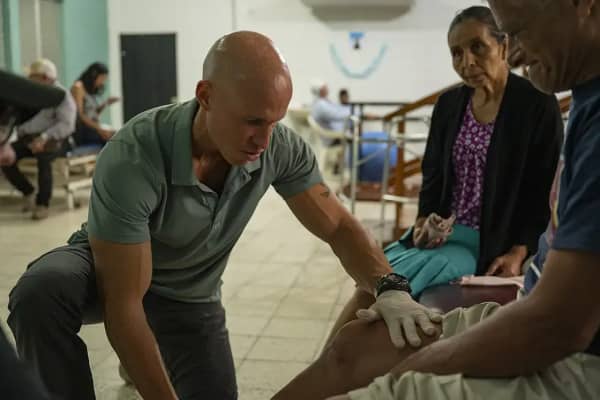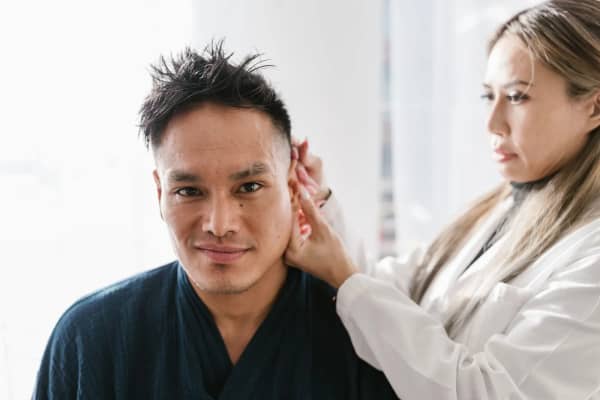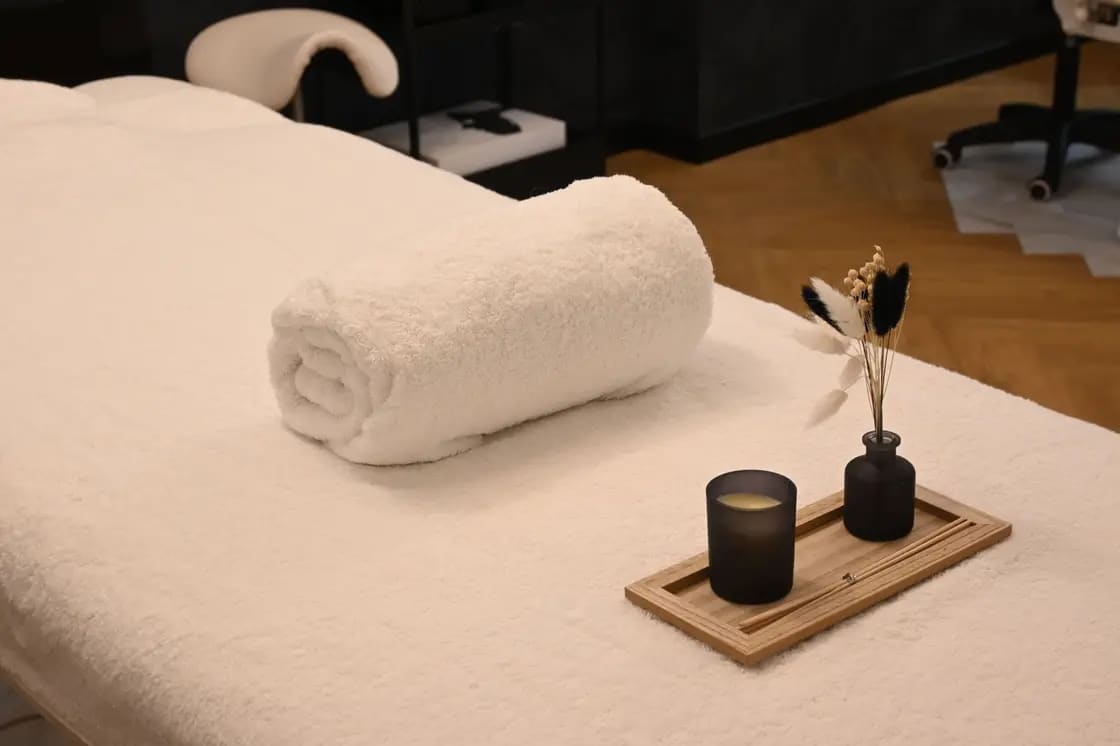

The most useful thing to know before your next massage in Provo has nothing to do with technique, pressure or modality.
The person working on you is required to be wearing their name and their license type.
Not the business's license. Not a certificate in a frame by the door. Their own first and last name, and which of Utah's massage credentials they hold. If you cannot see it, you are allowed to ask — and the answer tells you more about the place than any review will.
Utah rewrote the rules in 2025, and most clients never heard
For years the picture here was simple: massage therapists were licensed by the state, businesses got a city business license like any other shop, and that was roughly that.
That is no longer accurate. Utah legislated substantial changes to massage regulation in 2025, and they landed in three places at once: new name-and-license display rules for practitioners, a registration requirement for the businesses themselves, and a narrower list of who is permitted to supervise trainees.
None of it was consumer-facing. There was no campaign, no notice at reception, no reason for anyone booking an hour on a Tuesday to know it happened. But it changed what a compliant massage business in Provo looks like, which makes it useful for exactly the situation where you need it — walking into somewhere new.
Four tiers, not one
If you assume "licensed massage therapist" is the only credential, you will read a license lookup wrongly.
Massage therapist is the full license. The route runs through a school of massage with a curriculum meeting the standards set in rule — historically a minimum in the range of several hundred instruction hours — plus a national examination and a fingerprint-based background check. There is also a long-standing alternative route through an apprenticeship of at least 1,000 hours of supervised training spread over a minimum of twelve months.
Massage apprentice is a license in its own right, held by someone training under supervision toward the full credential.
Massage assistant and massage assistant-in-training are the two lower tiers, created in 2023. The 2025 law (H.B. 278) schedules both for repeal on July 1, 2029. Until then they sit below the apprentice, with a considerably shorter education requirement, and they exist to give businesses a lawful way to staff a narrower scope of work.
All four are real licenses. All four are lawful. But they are not the same thing, and a business is entitled to have any mix of them on the floor. What matters is that the mix is disclosed, which is precisely what the display rules are for.
What a compliant Provo massage business looks like
Here is the checklist, and it is observable in the first ninety seconds of walking in.
The establishment registration is on the wall. Utah's massage establishment registration requirement carried a compliance date of October 2025. A business offering massage services is expected to hold one, and to display it.
A copy of each therapist's license is displayed. Not a diploma from a school. The state license.
If they use assistants or apprentices, there is a sign saying so. Businesses employing a massage assistant-in-training, a massage assistant, or a massage apprentice are required to post a sign stating that some services may be performed by assistants or apprentices. This is the one most likely to be quietly missing, and it is the one that matters most if you booked expecting a fully licensed therapist.
You are asked to complete an intake form, and you sign it. Before providing massage services, the practitioner is required to obtain a signed intake form from the client. If nobody asks you anything before you are on the table, something is being skipped.
The practitioner is wearing a name and a license type. First and last name, and which credential.
The sole-practitioner exemption
Not every place will have an establishment registration, and its absence is not automatically a red flag.
A sole practitioner — a licensed massage therapist who does not employ or contract with another licensed individual to offer massage services, and who does not employ someone who works at that location on a regular basis — does not need an establishment registration. That covers a large share of the independent therapists in Utah Valley, including people renting a single room inside a salon or a chiropractic office.
So the honest version of the check is: one licensed therapist working alone, no registration needed. More than one person delivering massage at that address, registration expected.
The supervision change that matters in multidisciplinary clinics
This one is easy to miss and has real consequences in Utah Valley, where massage frequently sits inside a chiropractic or physical therapy practice.
The 2025 legislation removed several professions from the list of who may serve as a massage therapy supervisor: physical therapists, physicians, osteopathic physicians, acupuncturists and chiropractic physicians. Supervision of massage trainees now has to come from within the massage credential structure rather than from an adjacent licensed profession.
The numeric limit is also specific. A massage therapy supervisor may supervise up to six individuals at one time, of whom no more than four may be massage apprentices or massage assistants-in-training.
If you are being treated at a combined clinic, this is a reasonable thing to ask about — not because a chiropractor supervising massage staff was ever unsafe, but because a clinic that has not adjusted to the change may not have adjusted to the rest of it either. Our guide to chiropractic versus physical therapy in Utah Valley covers how those two practices differ and which one a given problem calls for.
On the fitness center law, and why we are not giving you a clean answer
Utah has a consumer statute, renamed in 2026 from the Health Spa Services Protection Act to the Fitness Center Services Protection Act, which requires registration with the Division of Consumer Protection, imposes contract-content rules, caps contract terms, and gives buyers a rescission right. It is the law people reach for when a prepaid package goes wrong.
Its definition of a health spa carries a long list of exclusions. One of them covers an individual providing professional services within the scope of the individual's license with the Division of Professional Licensing. A licensed massage therapist providing licensed massage services is squarely inside that exclusion. Their professional services are not health spa services.
What that exclusion does not obviously settle is the facility question. A business selling prepaid membership packages for access to wellness services is doing something the Act was written about, and the exclusion is framed around the individual and their scope rather than around every enterprise that employs one. We have looked at this and we are not confident enough to tell you which way it falls for any given Provo business.
So the practical advice is behavioral rather than legal:
- Ask before you prepay, particularly for multi-month packages, and get the cancellation and refund terms in writing.
- Prefer per-session or short-term at a business you have not used before. The consumer-protection questions all attach to prepayment.
- If a contract is put in front of you, read the cancellation clause first and the price second.
We flag this rather than resolve it because a confident wrong answer about a consumer right is worse than an honest gap — and because we have watched exactly this trap catch a claim before. The Act excludes martial arts businesses by name, and since 2026 it excludes yoga and Pilates studios by name too, which surprises almost everyone who assumes a statute about gyms covers anything with a membership.
The Provo-specific part: a student town with a spa problem
Two features of this market shape it more than anything in the statute.
The first is the school. Utah Valley has trained massage therapists for decades, and a training pipeline produces two things at once: a steady supply of newly licensed practitioners, and student clinics where supervised trainees work at a fraction of the going rate. Those clinics are legitimate and often excellent value — the supervision is the point, and the person working on you is being watched by someone with far more experience than a typical solo practitioner has. If price is the constraint, a student clinic is a better answer than a cut-rate storefront.
The second is less comfortable. Massage is a category that illicit businesses hide inside, nationally and here. Utah's establishment registration requirement, the display rules, the intake-form requirement and the name-and-license-type rule all exist substantially because of it. Cities along the Wasatch Front have been adopting their own massage-business ordinances on top of the state scheme for the same reason, with application requirements reaching into ownership history and operator background.
The practical effect for an ordinary client is that the compliance signals above are not bureaucratic clutter. They are the fastest available read on what kind of business you have walked into. A place with its registration up, licenses displayed, a signage disclosure about assistants, an intake form and named practitioners is telling you something real. A place with none of those, cash-only pricing, no online presence beyond a listing, and hours that run late into the night is telling you something too.
You do not need to make an accusation to act on that. You can leave.
What a session should and should not include
Scope is where most genuine complaints originate, and it is worth knowing the shape of it before you are on the table.
Massage therapy in Utah is defined around manual manipulation of the body's soft tissue — for purposes including promoting therapeutic health and wellbeing, improving circulation of blood and lymph, relaxing and lengthening muscles, relieving pain, and restoring metabolic balance. That is a wide scope and it covers most of what people book.
What it does not cover is diagnosis. A massage therapist can tell you that a muscle is tight, that a pattern of tension is consistent with how you describe sitting at a desk, and that you might want to see somebody. A massage therapist who names a condition, tells you what is wrong with your spine, or advises you against following medical advice has stepped outside the license. That is not a gray area.
Draping is not optional and not negotiable by the practitioner. You should be covered except for the area being worked on, and you should never be asked to consent to less as a condition of the service.
You can stop at any point, for any reason, including no reason. Ending a session early is awkward and entirely permissible, and a professional will not make it harder than it needs to be.
Consent is specific rather than general. Agreeing to a full-body massage is not agreeing to work on any particular area. The intake form is where you record the exclusions, which is a much better place for them than a whispered correction halfway through.
If a session goes wrong in a way that concerns conduct rather than skill, the complaint goes to the Division of Professional Licensing. The division holds authority over the individual license, which is the thing that carries consequences — a review site does not. Note the date, the business address, and the practitioner's name and license type, which they are required to be displaying. That last requirement exists precisely so that this sentence is possible to act on.
Verifying a license, properly
Utah licenses at state level, so this is one search rather than a hunt through city records.
Look up the practitioner through the Division of Professional Licensing's license verification, and check four things:
- The name matches the person who will be in the room, not the business owner.
- The classification — therapist, apprentice, assistant, assistant-in-training.
- The status is active, on the day of the appointment.
- Any disciplinary history attached to the record.
The reason to check the classification specifically is that all four tiers are lawful and none of them is a warning sign in itself. What would be a problem is being told you were booking a massage therapist and finding an assistant's credential on the record.
Choosing well, once the compliance part is done
Licensing tells you the floor. It does not tell you whether somebody is good, and the two questions are separate.
Match the modality to the problem. Deep tissue, sports, prenatal, lymphatic and relaxation work are different jobs. A therapist who is excellent at one may be indifferent at another, and most will tell you if you ask what they specialize in.
Say what you want at the start, not halfway through. Pressure, areas to avoid, whether you want conversation. The intake form is the formal version of this, but the useful version is the sentence you say before you lie down.
Treat the room as evidence. Clean linens changed in front of you, a door that closes, a therapist who leaves while you undress and knocks before returning, proper draping throughout. These are baseline, not luxuries.
Book the same person again if it worked. Continuity is worth more than a slightly better rate somewhere new, because the second session with someone who remembers your shoulder is usually better than the first session anywhere.
Be realistic about pricing. Rates in Utah Valley span a wide range, and the spread reflects overhead, credential level and setting more than it reflects skill. A student-district storefront and a resort spa are pricing different things. We publish no figures here because they move faster than any guide can track — ask what the session costs, what is included, and whether gratuity is expected, at the point of booking.
Gift certificates, and the exemption that catches people out
Massage is bought as a gift more often than almost any other service in Utah Valley, and the rules covering that purchase are federal, specific, and not what most people assume.
The Credit CARD Act of 2009 added 15 U.S.C. Sec. 1693l-1 to the Electronic Fund Transfer Act, implemented by the Consumer Financial Protection Bureau at 12 C.F.R. Sec. 1005.20 — Regulation E, Subpart B. Two protections matter here. First, the funds on a covered gift certificate or store gift card may not expire before the later of five years after issuance, or after the date funds were last loaded, and the card's own stated expiration date. Second, dormancy, inactivity and service fees are tightly limited: there must have been no activity for at least twelve consecutive months, no more than one such fee per calendar month may be charged, and the fee and its frequency have to be clearly and conspicuously disclosed before purchase.
Now the part that matters for a small studio. Section 1693l-1(a)(2)(D) and 12 C.F.R. Sec. 1005.20(b) exempt certain categories from these provisions, and one of those categories is gift certificates issued in paper form only. That is precisely the product a single-location massage practice sells at the front desk — a printed certificate, handwritten with a name and a date, no electronic balance behind it. The five-year floor and the fee rules are written for the plastic-and-code world, and a paper-only certificate can sit outside them.
So the honest summary is that the answer depends on what you were handed, not on what the service was. A digital certificate emailed to the recipient, or a card with a code redeemed against a balance, is the covered kind and carries the five-year protection. A piece of card stock is not necessarily covered at all.
What to do with that, practically:
- Ask at the point of purchase whether the certificate expires, and get the answer in writing on the certificate itself. A studio that puts "no expiration" in ink has settled the question regardless of which category it falls into.
- Redeem sooner rather than later. The commonest way a massage gift certificate is lost is not an expiration clause; it is a business changing hands or closing, which no consumer statute fixes.
- A price increase between purchase and redemption is a separate issue. A certificate sold for a named service and a certificate sold for a dollar amount behave differently when rates move. Ask which one you are buying.
- Keep the receipt as well as the certificate. If a dispute arises about the purchase date, the certificate alone often will not establish it.
States may add protections above the federal floor and several do. We are not characterizing Utah's position here, because the interaction between gift certificate rules and state unclaimed property law is intricate and worth a lawyer rather than a guide. The federal rules above are the floor, and the paper exemption is the gap in it.
Related Guides
- Healthcare in Provo
- Salons & Barbershops in Provo
- Best Gyms in Provo
- Student Health & Wellness
- Tattoo & Piercing in Provo
- Eye Exams & Glasses in Provo: Who Takes What Insurance, and Where to Go
- Pharmacies in Provo: Late Hours, Transfers & What Utah Lets Pharmacists Do
- Finding an OB-GYN or Midwife in Utah Valley
- Adult Orthodontics & Invisalign in Utah Valley: Braces Aren't Just for Kids (2026)
- Finding a Dentist in Provo & Orem: A Practical Guide
- Urgent Care or the ER? Where to Go in Provo & Orem (and When)
Last updated: August 2026. Licensing tiers, display requirements, supervision limits and establishment registration are described from the Utah Massage Therapy Practice Act and associated rules as published, including H.B. 278 (2025), effective October 1, 2025; requirements are amended on a rolling basis, so confirm current rules with the Division of Professional Licensing before relying on them. The fitness center law discussion above is flagged as unresolved by design.
Frequently Asked Questions
Is massage therapy licensed in Utah?
How many kinds of massage license are there?
Does the business itself need to be registered?
What is a massage business required to display?
Who is allowed to supervise an apprentice or assistant?
Does Utah's fitness center law (the former Health Spa Services Protection Act) protect me when I buy a massage package?
What should I do if something goes wrong during a session?
Is massage covered by insurance in Utah?
Sources
The facts in this guide were checked against these sources. Hours, fees and rules change, so confirm anything time-sensitive with the source before you go. How we make Provo.com.
- H.B. 278 Massage Therapy Amendments (2025), Enrolled Copy, Utah Legislature. Checked October 12, 2026.
- Utah Code 58-47b-102 Definitions, Utah Legislature. Checked October 12, 2026.
- Utah Code 58-47b-301, Utah Legislature. Checked October 12, 2026.
- Utah Code Title 13 Chapter 23 Health Spa Services Protection Act, Utah Legislature. Checked October 12, 2026.