
More on Lehi: every guide we have published there, in one place.
A generation ago, Lehi was a quiet farming town best known for its flour mill and a cameo in the movie Footloose. Today it's the beating heart of Silicon Slopes — Utah's answer to Silicon Valley — and one of the fastest-growing cities in the entire United States. It's where Adobe, Microsoft, and a multibillion-dollar Texas Instruments chip plant sit alongside Thanksgiving Point, outlet shopping, and tens of thousands of new homes.
If you're thinking about moving here, you're looking at the most job-rich, amenity-dense city in Utah County. This guide covers what it's actually like to live in Lehi — the tech economy, the housing, the schools, the commute, and the famous traffic — from people who know Utah Valley well.
The short version
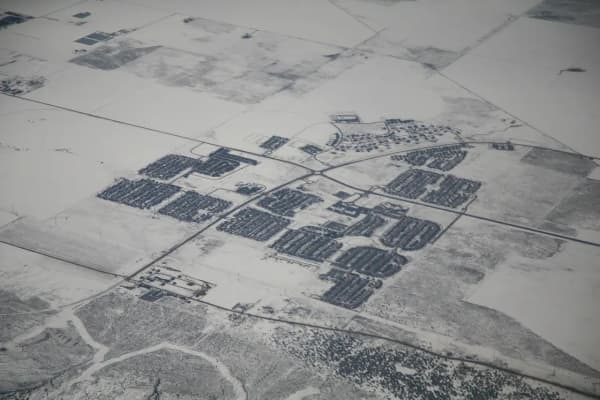
Lehi sits at the north end of Utah County, straddling I-15 roughly halfway between Salt Lake City and Provo. That central location, plus an enormous supply of developable land, turned it into the hub of Silicon Slopes — and into one of Utah's largest cities almost overnight. Its population went from about 47,000 in 2010 to nearly 76,000 in 2020, and has since pushed past 90,000.
What draws people:
- Jobs, jobs, jobs — Adobe, Microsoft, Young Living's headquarters, a giant Texas Instruments semiconductor plant, and a deep bench of tech startups, all within or beside the city.
- Thanksgiving Point, a 3,000-acre family-attraction complex with gardens, museums, and events that anchors the south end of town.
- Two FrontRunner stations plus I-15 frontage, giving commuters more flexibility than almost any other Utah Valley city.
- Big-box and dining convenience — Costco, Target, Trader Joe's, outlet shopping, and restaurant corridors most suburbs would envy.
What to weigh:
- Traffic. Lehi's growth has outpaced its roads; rush hour on I-15, Pioneer Crossing, and the tech-campus corridors can be slow.
- It's busy and building. This is a fast, ambitious city, not a sleepy small town — construction is constant.
- Cost. Strong job market and demand have pushed Lehi housing toward the higher end of Utah County.
From flour mill to Silicon Slopes
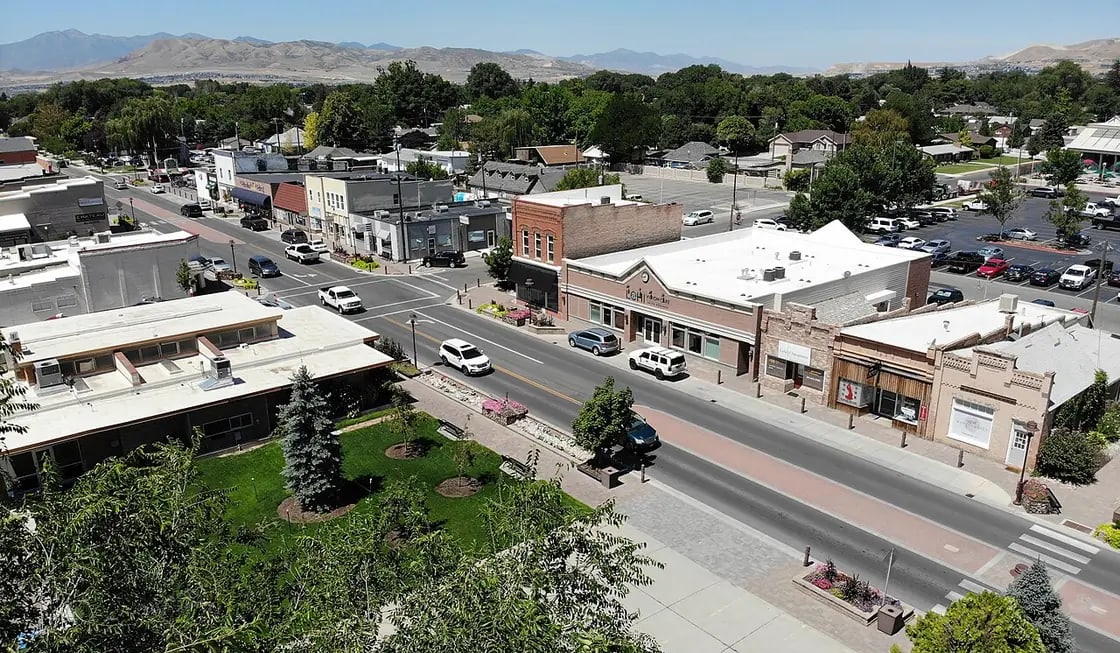
Lehi was settled by Mormon pioneers in 1850 and incorporated in 1852, making it one of the older communities in Utah County — the sixth city incorporated in the territory, and it went through three other names first, a story we tell in a short history of Lehi. For most of its history it was a modest agricultural town — the Lehi Roller Mills, founded in 1906, were famous enough to appear in Footloose in 1984, when the site was still surrounded by open fields.
The turn came with technology. Through the late 1990s and 2000s, the corridor along I-15 in northern Utah County began attracting tech employers, and Adobe's 2012 campus cemented Lehi as the center of what's now called Silicon Slopes. The city's footprint expanded dramatically through annexation, and its population has roughly doubled every decade or two since. That combination — central location, available land, and a magnet tech economy — is why Lehi looks the way it does today: new, large, and busy.
The Silicon Slopes economy
The single most important thing to understand about Lehi is that it isn't just a bedroom community — it's a major employment center in its own right. More people commute into Lehi for work than commute out, which is rare for a suburb.
The roster is genuinely impressive for a city this size: Adobe's large Lehi campus, Microsoft, the global headquarters of Young Living, and a deep ecosystem of tech firms and startups across the Silicon Slopes corridor. The biggest recent headline is Texas Instruments' new 300-mm semiconductor fabrication plant — announced in 2023 as the largest single investment in Utah history at roughly $11.5 billion, with new manufacturing capacity coming online in 2026. For the county-wide picture of who's hiring, see our biggest employers in Utah Valley directory.
For residents, that economy means something concrete: shorter commutes to high-paying jobs, a steady stream of investment in local infrastructure, and a tax base that helps fund city amenities. It's also a big part of why housing demand here stays so strong.
If you're weighing Lehi against other cities in the valley, it helps to see current prices and inventory side by side. You can browse what's on the market — homes for sale, rentals, and student housing — in our real estate marketplace, and if you're relocating from out of state, our moving to Provo guide covers the practical side of settling into Utah Valley.
Housing in Lehi
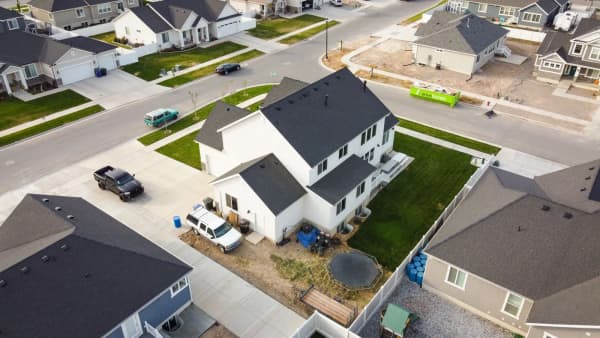
Because Lehi has grown so fast on so much open land, the housing stock skews modern, with a wide range of options: master-planned subdivisions, townhomes, and apartments built largely in the last 10 to 20 years, plus higher-end neighborhoods up on Traverse Mountain with valley and lake views. Areas near the tech campuses and Thanksgiving Point command a premium for their walk-to-work convenience.
Buyers who want the same commute on a much bigger lot tend to look uphill instead — Highland is ten to twenty minutes from the tech campuses and built on notably larger parcels. The flip side of a strong job market is price: Lehi tends to run toward the higher end of Utah County, and demand has kept it competitive. For buyers, the upside is that you're buying into the most economically dynamic city in the valley; for renters, the large and growing apartment supply gives you options close to where the jobs are.
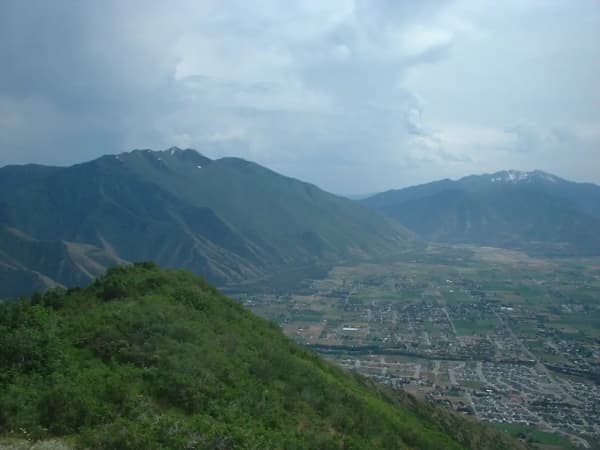
Lehi's geography effectively splits the search in two. Traverse Mountain sits up on the bench with views and a distinctly master-planned character; the valley floor and the older core near Main Street are flatter, closer to the freeway, and far more mixed in age and style. Those function as two different housing markets inside one city, and buyers usually choose between them before they choose a house.
Commute geometry is the city's most durable housing asset. Two FrontRunner stations plus direct freeway access means a Lehi address gives you more ways out than most valley cities can offer, and that does not move with the market.
Schools are changing here as well. Lehi joins Alpine, American Fork, Cedar Hills, Highland and the Utah County portion of Draper in the new Aspen Peaks School District, operational July 1, 2027 — worth confirming for any specific address, since a fast-growing city redraws boundaries more often than a settled one does.
Getting around: two train stations and a freeway
Lehi's transportation picture is unusually flexible for Utah Valley. The city has two FrontRunner commuter rail stations — the Lehi (Thanksgiving Point) station near Pioneer Crossing opened in 2012 — connecting residents north to Salt Lake City and the airport and south to Orem and Provo. Layered on top of that is direct I-15 frontage and major east-west arterials like Pioneer Crossing and 2100 North.
The catch is the one every fast-growing city knows: the roads are still catching up to the people. Rush hour on I-15 and the tech-campus corridors can back up, and a drive that's quick off-peak can stretch out at 5 p.m. The state and city have a long list of road-widening and interchange projects underway to keep pace, but if a short, predictable commute is your top priority, it's worth driving your specific route at rush hour before you buy.
Schools
Lehi is currently served by the Alpine School District — the largest in Utah — but a major reorganization is underway. Utah County voters approved splitting Alpine into three smaller districts. Lehi, along with neighboring American Fork, Highland, Cedar Hills, Alpine, and part of Draper, will form the new Aspen Peaks School District, which officially assumes operations on July 1, 2027 — making the 2027–28 school year the first run by the new district. Aspen Peaks will be the largest of the three, with more than 35,000 students.
For families, the practical takeaway is that local schools are part of a system being actively reorganized to bring governance closer to these specific communities and to keep up with explosive enrollment growth. Because boundaries in a fast-growing city can shift, always confirm current school assignments directly with the district when you're choosing a home.
Things to do
Lehi's quality-of-life anchor is Thanksgiving Point, a sprawling multi-venue complex at the south end of the city. It includes Ashton Gardens (a 50-acre botanical garden), the Museum of Ancient Life — one of the world's largest displays of mounted dinosaurs — the Museum of Natural Curiosity, Curiosity Farms, the Butterfly Biosphere, a golf course, and a year-round calendar of festivals and events. The city also has the hands-on Hutchings Museum and the Traverse Mountain outlet center for shopping.
For a full rundown — including the best of Thanksgiving Point, the Murdock Canal Trail, and the summer Round-Up Rodeo — see our dedicated guide to things to do in Lehi. Beyond the city's own attractions, Lehi puts you minutes from Utah Lake and within easy reach of the canyons, skiing, and the full slate of restaurants, recreation, and events across Utah Valley. When you're ready to eat, our roundup of the best restaurants in Lehi covers everything from Strap Tank's brewpub to farm-to-table at Thanksgiving Point. For ideas just beyond Lehi's borders, browse our guides to things to do in Utah Valley and keep an eye on the Provo.com events calendar for concerts, markets, and festivals happening nearby.
Who actually provides your utilities
For a city best known for tech offices, Lehi's most interesting utility fact is an old-fashioned one: the city owns its electricity.
Lehi City Power is a municipal utility, and Lehi is a member of UAMPS — a cooperative of dozens of member utilities across the Intermountain region through which each participant chooses which generation projects to buy into. Lehi's portfolio is a genuinely mixed one, with ownership shares in hydroelectric generation at Jordanelle, federal Colorado River Storage Project hydropower, a share of the San Juan station in New Mexico, a share of the coal-fired Hunter plant in Emery County, and access to the Nebo natural gas plant down the valley in Payson. Power is wheeled across PacifiCorp's transmission system to reach the city.
That is a different arrangement from the south-valley municipal cities, which buy through the Utah Municipal Power Agency on an all-requirements basis. Lehi picks projects; Provo, Spanish Fork and Salem buy a whole supply. Both are public power, and in both cases the decisions are made by people who answer to voters.
Lehi is not a UTOPIA Fiber city — within Utah County that network reaches Cedar Hills, Lindon, Orem, Pleasant Grove and Payson. In practice, the Silicon Slopes corridor and the newer master-planned neighborhoods tend to be well served by private fiber built in with development, so the age of your street matters more here than the city boundary does.
Natural gas is Enbridge Gas Utah, formerly Questar and then Dominion Energy Utah. Water follows the valley's two-system pattern — treated culinary indoors, untreated secondary water for irrigation where a property is connected — and Utah's statewide metering law now requires every pressurized secondary connection in the state to be metered by January 1, 2030. See secondary water and water shares.
Who responds when you call 911
Lehi runs its own police department and its own fire department, with more than one fire station serving a city whose footprint has grown enormously.
That is worth setting against the alternatives immediately west. Eagle Mountain, across the Cedar Valley, contracts law enforcement to the Utah County Sheriff's Office, which staffs a dedicated Eagle Mountain division. Saratoga Springs runs its own department. Lehi funds both police and fire itself and answers for them at the city council — which, in a city adding residents and commercial square footage at Lehi's rate, is a recurring budget conversation rather than a settled question.
The county layer applies here too: specialist capability sits with the Sheriff's Office for the whole county, including major crimes, forensics, SWAT, K-9, accident investigation and search and rescue. City departments call on those units rather than duplicating them. Fire and medical response operates on mutual aid across boundaries, which is why the nearest appropriate apparatus answers a call regardless of jurisdiction.
Two things specific to Lehi. First, the freeway. I-15 through Lehi and the interchanges around the tech corridor generate a substantial share of the accident and extrication workload, and traffic incident response is a routine rather than exceptional part of what the departments do. Second, growth. A city that has changed size this fast tends to run a continuing argument about station siting and staffing ratios, and those arguments happen in public. For which body decides what and where to find the agenda, see who decides what in Utah Valley.
Who Lehi is right for
Lehi tends to be a strong fit if you want to live near high-paying jobs, you value convenience and amenities, and you don't mind being in a busy, fast-moving city. Tech workers who'd rather walk or make a short drive to the office, families who want new housing near excellent shopping and attractions, and commuters who value having both FrontRunner and I-15 all do well here.
It's less of a fit if your priority is a quiet, finished small-town feel or a short, traffic-free commute — Lehi is the opposite of sleepy, and its roads are still scaling up to match its population. If a newer, more family-paced community on the west side appeals more, the neighboring guide to living in Saratoga Springs is worth a look; for a more established, tree-lined alternative a few minutes south, see living in Pleasant Grove.
If you're a BYU or UVU student, Lehi is a bit farther from both campuses than cities like Orem or Vineyard, but FrontRunner makes the commute manageable, and the job market is a real draw for students and recent grads. Browse current student housing options to compare what's available across the valley.
The bottom line
Lehi is the most economically powerful city in Utah County — the hub of Silicon Slopes, with the jobs, housing, and amenities to match. It rewards people who want to be where the action is and who'll trade a little traffic for a short commute to a great job and a Costco run on the way home. If that's you, there isn't a more central address in Utah Valley.
When you're ready to take the next step, start with current listings in our real estate marketplace, and if you're relocating from out of state, our complete moving guide walks through everything from utilities to neighborhoods across Provo, Orem, and the surrounding cities.
Two of the valley's winter light displays sit inside Lehi and are under two miles apart, which makes a lights night here a short one. Both are on our Christmas lights map.
Related Guides
- Lehi Neighborhoods Guide: Where to Live — area by area, and what the names actually mean
- Cedar Fort & Fairfield: Camp Floyd and Utah County's West Desert Edge
- Aspen Peaks School District: A Parent's Guide to Utah County's New Largest District
- Which School District Am I In? Utah County Before and After the Alpine Split
- Who Decides What in Utah Valley — which Lehi commissions post agendas, and how to subscribe to just one
- Lehi vs Provo
- The chip factory in Lehi
- Lehi Round-Up: The Rodeo Week That Predates Silicon Slopes
- Traverse Mountain, Lehi: The Area and the Subdivision
- Annexation and City Boundaries in Utah County
- Lehi High vs Skyridge High — the city's two high schools compared
- Where to Live in Utah County If You Work in Salt Lake: The Commute Math, City by City
- Orem vs. Lehi — jobs, housing, schools and commute, compared
Frequently Asked Questions
Is Lehi, Utah a good place to live?
How big is Lehi and how fast is it growing?
What is Silicon Slopes and why is Lehi the hub?
What school district is Lehi in?
Does Lehi have FrontRunner train service?
What is there to do in Lehi?
Does Lehi have its own power company?
Is Lehi on the UTOPIA Fiber network?