
More on Vineyard: every guide we have published there, in one place.
Vineyard didn't exist as anything more than a quiet stretch of lakefront a little over a decade ago. Today it's the fastest-growing city in Utah and one of the fastest-growing in the entire country — a brand-new community rising on the site of an old steel mill, with its own commuter rail station, direct access to Utah Lake, and an ambitious 700-acre downtown taking shape from scratch.
If you're thinking about moving here, you're looking at one of the most interesting places to live in all of Utah Valley: genuinely new, walkable by design, and changing month to month. This guide covers what it's actually like to live in Vineyard — the housing, the schools, the commute, the cost of living, and the big developments that are reshaping the city — from people who know Utah Valley well.
The short version
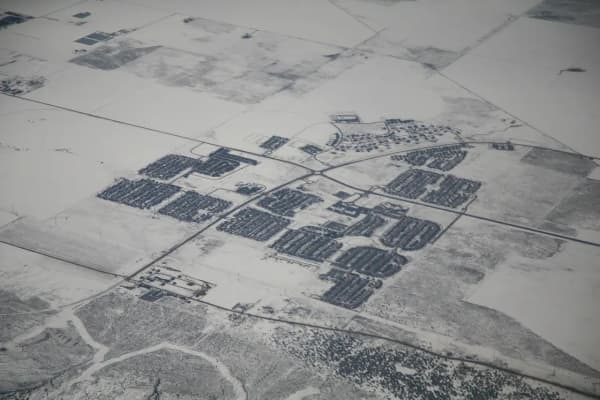
Vineyard is a young, fast-growing city on the east shore of Utah Lake, wedged between Orem and Lindon in northern Utah County. Almost everything here is new construction, because almost everything here is new — the city's population went from roughly 140 people in 2010 to over 12,500 by 2020, and it hasn't slowed down. That makes it a very different place to live than the established neighborhoods of nearby Provo or Orem.
What draws people:
- Modern everything — homes, townhomes, and apartments built in the last decade, with wide roads, new sidewalks, and parks designed in from the start.
- Its own FrontRunner station, opened in 2022, putting Provo, Orem, Salt Lake City, and the airport within an easy train ride.
- Utah City, a 700-acre walkable downtown now opening its first phase — shops, restaurants, parks, and major employers.
- Lake access that most of Utah Valley doesn't have, with trails and waterfront right at the edge of town.
What to weigh:
- It's still being built, so some streets, retail, and amenities are works in progress.
- Rush-hour traffic on the main connectors can back up as the city grows.
- It leans toward young families and first-time buyers more than nightlife or a deep dining scene — though that's exactly what Utah City is changing; see our guide to the best restaurants in Vineyard for what's open now.
A city built on a steel mill
For most of the 20th century, this land was home to Geneva Steel, one of the largest steel producers in the western United States. When the mill closed and the site was cleared, it left behind something almost unheard of in a built-out valley: hundreds of acres of open, developable land right on the lake and right next to the freeway.
That blank slate is why Vineyard looks and feels the way it does. Instead of growing outward from an old town center, it was largely master-planned — which is why the streets are wide, the parks are plentiful, and the housing is uniformly modern. It's also why the city has been able to attract a project as large as Utah City, which simply wouldn't fit anywhere else in Utah Valley.
Housing in Vineyard
Because the city is so new, the housing market here skews modern: townhomes, newer single-family homes, and a growing supply of apartments — much of it built in just the last several years. For buyers priced out of older, more established parts of the valley, Vineyard has often been the place where a newer home is actually attainable.
The mix is broad: starter townhomes for first-time buyers, detached family homes in the newer subdivisions, and an expanding base of rentals as more multifamily comes online — including everything planned inside Utah City. If you're weighing Vineyard against neighboring cities, it helps to see current prices side by side.
What makes the housing here genuinely unusual is where it sits. Vineyard was assembled on a single cleared industrial site rather than growing outward from a pioneer grid, so the street layout, the density and the placement of parks were all designed at once instead of accumulating over a century. That is why the city reads as coherent in a way older valley towns do not, and it is also why almost every neighborhood carries an HOA.
Transit geometry is the second durable factor. Very few Utah Valley addresses put a FrontRunner platform inside an ordinary walk or bike ride, and that access is fixed in the land rather than in a price cycle. Schools are the third: Vineyard joins Orem, Lindon and Pleasant Grove in the new Timpanogos School District, operational July 1, 2027.
One consequence of being this new is a resale market that is thin by age. Very little here has changed hands more than once or twice, so buyers comparing older homes against newer ones are mostly comparing lightly-used against new.
You can browse what's on the market across Utah Valley — homes for sale, rentals, and student housing — in our real estate marketplace, and if you're moving from outside the area, our moving to Provo guide covers the practical side of relocating to the valley.
Utah City: the 700-acre game-changer
The single biggest thing happening in Vineyard is Utah City — a 700-acre, master-planned development on the old Geneva Steel site, designed to be the "urban core" of Utah Valley and the largest walkable, transit-oriented community in the state.
The plans are genuinely ambitious: over 17 million square feet of mixed-use space — homes, shops, dining, entertainment, and hospitality — anchored by a second headquarters of the Huntsman Cancer Institute. At its heart is the Greenline, a 12-acre corridor of parks and public spaces running from the Vineyard FrontRunner station straight to the Utah Lake shoreline, with a waterfront area, a dog park, courts, a playground, and a concert venue.
The first phase began opening in 2026. Early arrivals include the Berliner Play Area — an all-abilities playground with a hot-air-balloon climbing structure — and Bella's Market, an upscale grocery store that became one of the development's first businesses. City and development leaders have called 2026 a banner year of momentum, with residential construction underway and more retail on the way.
For anyone moving to Vineyard, Utah City matters even if you don't live inside it: it's bringing the shops, restaurants, jobs, and gathering places that a young city like this has been missing — most recently Fini Pizza, the Brooklyn pizzeria that made Utah City its first location outside New York in May 2026. For the full story — the Geneva Steel history, the developers, the geothermal experiment, and exactly what's open versus planned — see Utah City, explained.
Getting around: the FrontRunner advantage
Vineyard's standout transportation feature is its own FrontRunner commuter rail station, which opened in August 2022 at 130 East Market Street in the city's core. It connects Vineyard along UTA's 83-mile line to Provo and Orem to the south and Salt Lake City — including the airport — and Ogden to the north. The transit network also links to Utah Valley University and, seasonally, Sundance.
Having a rail station inside the city is rare in Utah Valley, and it's a big part of Vineyard's appeal for commuters who'd rather not fight I-15 every day. The catch worth knowing: like much of the fast-growing west side of Utah County, the main road connectors can slow down at rush hour, and the city is still expanding its road network to keep pace. Once Utah City's Greenline is complete, the station will connect directly into a walkable downtown and the lakefront — closing the "last mile" gap that limits a lot of transit stops.
Schools
Vineyard is currently served by the Alpine School District, but a significant change is coming. Utah County voters approved splitting the large Alpine district into three smaller ones, and Vineyard — together with Orem, Lindon, and Pleasant Grove — will form the new Timpanogos School District (the name was selected in early 2026), expected to begin operating for the 2027–28 school year. The goal is to bring governance closer to these specific, fast-growing communities. Our full explainer on the Timpanogos School District covers the boundary study, the budget picture and what parents should watch.
For families moving here, the practical takeaway is that local schools are part of a system being actively reorganized to keep up with the area's rapid growth, with the new district designed to bring governance closer to these specific communities. As always, check current boundary and enrollment details directly with the district when you're choosing a home, since a fast-growing city means boundaries can shift.
Things to do
Vineyard's quality-of-life pitch is built around the outdoors and the lake. The city's location on the east shore of Utah Lake gives residents trail and waterfront access that's harder to come by elsewhere in the valley, and the master-planned parks mean green space is rarely far from any subdivision.
As Utah City fills in, the recreation picture gets a lot richer — the Greenline alone is set to add a waterfront area, dog park, courts, a playground, and a concert venue, all walkable from the train station. Beyond the city itself, you're minutes from everything Utah Valley offers: the canyons, skiing, and the full slate of restaurants, events, and recreation we cover across the site.
For the full list, see our guide to things to do in Vineyard; for ideas just beyond the city's borders, browse our guides to things to do in Utah Valley and keep an eye on the Provo.com events calendar for concerts, markets, and festivals happening nearby.
Who actually provides your utilities
Vineyard is a Rocky Mountain Power city, and that is a sharper contrast than it first appears given what sits next door.
Provo, immediately to the south, owns Provo City Power and is a member city of the Utah Municipal Power Agency, meaning Provo residents buy electricity from a utility their own elected officials govern. Vineyard, built on the ground of the old steel works and incorporated far more recently, buys from a regulated investor-owned utility. For a household the day-to-day difference is small; for anyone who cares about where rate decisions are made, it is the difference between a city council meeting and a Public Service Commission docket.
Natural gas is Enbridge Gas Utah, the utility that operated as Questar and then Dominion Energy Utah before Enbridge completed its acquisition in 2024.
Water in Vineyard is worth approaching with the city's own documents in hand rather than valley-wide assumptions, because the city is being built almost entirely new. Across Utah Valley, properties are commonly served by two systems — treated culinary water indoors and untreated secondary water for irrigation — and Utah's statewide metering law now requires every pressurized secondary connection in the state to be metered by January 1, 2030. In an area developing from scratch, secondary infrastructure is designed in rather than inherited from the irrigation companies, which is a different situation from the older orchard towns south of here. Our guide to secondary water and water shares explains what to ask about a specific address.
Vineyard is not a UTOPIA Fiber city. In practice, though, new master-planned construction here often arrives with private fiber built into the development, so the build year of your street tends to matter more than the city boundary.
Who responds when you call 911
Vineyard runs neither its own police department nor its own fire department. Both are contracts, and it is the clearest example in the valley of a young, fast-growing city buying services rather than building them.
Police come from the Utah County Sheriff's Office, which operates a dedicated Vineyard division providing round-the-clock coverage. Its staffing plan has run to roughly a dozen sworn personnel — a lieutenant, sergeants, a detective, patrol deputies and a school resource officer — supported by a part-time office specialist. The city's own council materials in 2026 recorded an officer-to-resident ratio of about one officer per 1,281 residents and described that as adequate for a predominantly residential city, with additional sworn officers planned. Fire and emergency medical services come from the Orem Fire Department under a separate contract.
The contract model has real advantages and they are not hard to see. Vineyard gets access to the Sheriff's specialist units — Metro SWAT, K-9, investigations, accident investigation, search and rescue, emergency services — without funding any of them, and it avoids building a police headquarters and a command structure while the city is still filling in. Orem Fire brings a large department's training infrastructure next door.
The trade-offs are equally real, and a prospective resident should weigh them honestly. Contracted services are renegotiated periodically, and the cost drivers are outside the city's direct control — the city's own assessment flagged overtime as a significant and ongoing pressure, covering mandatory annual training, court appearances, vehicle maintenance, shift coverage and city events staffed entirely on overtime shifts. A city department answers to the city council; a contract division answers to an elected county sheriff.
None of this means Vineyard is under-served. It means the accountability path is different, and it is unusually well documented — the city publishes these assessments in its council packets, which is more than most residents anywhere get to read. For how these decisions get made, see who decides what in Utah Valley.
Who Vineyard is right for
Vineyard tends to be a strong fit if you want a newer home near transit, you value walkability and parks, and you're excited to be part of a community that's still taking shape rather than one that's already finished. Young families, first-time buyers, remote workers, and commuters who want the FrontRunner at their doorstep all do well here — the train puts the Silicon Slopes jobs up in Lehi within easy reach without driving I-15.
It's less of a fit if you want a deep, established dining-and-nightlife scene today, or if construction noise and in-progress amenities would wear on you — though both of those are exactly what the next few years of development are addressing.
If you're a BYU or UVU student, Vineyard sits between the two campuses and is commutable to both, especially via FrontRunner — it's a quieter, newer alternative to central Provo. Browse current student housing options to compare.
The bottom line
Vineyard is one of the most dynamic places to live in Utah right now — a genuinely new city with its own rail station, lake access, and a 700-acre downtown rising from the ground up. It rewards people who want modern housing and are energized by being early to something growing fast. If that's you, it's hard to find a more interesting address in Utah Valley.
When you're ready to take the next step, start with current listings in our real estate marketplace, and if you're relocating from out of state, our complete moving guide walks through everything from utilities to neighborhoods across Provo, Orem, and the surrounding cities.
Vineyard moves from Alpine School District to Timpanogos School District on 1 July 2027, along with Orem, Lindon and Pleasant Grove. Our Which district am I in, before and after the split? lays out which district covers every city in the county, before and after.
Related Guides
- Vineyard Neighborhoods Guide: Where to Live — area by area, and what the names actually mean
- The Pros and Cons of Living in Provo, Utah (2026)
- Vineyard and the Geneva site
- Vineyard Days: The Complete Festival Guide
Frequently Asked Questions
Is Vineyard, Utah a good place to live?
How fast is Vineyard growing?
What school district is Vineyard in?
Does Vineyard have a FrontRunner station?
What is Utah City in Vineyard?
Is Vineyard a good place for BYU and UVU students?
Does Vineyard have its own police department?
Is Vineyard on municipal power?