
Provo sits at the base of the Wasatch Mountains with dozens of trails within riding distance of the city. The network spans everything from paved riverside paths to technical singletrack with 2,000+ feet of climbing to 25 miles of lift-served trails at Sundance Resort.
This guide covers the best trails organized by difficulty, plus the practical info you need — where to park, when to ride, and where to rent gear if you don't have your own.
Beginner Trails
Provo River Parkway
Distance: 15 miles one-way · Surface: Paved · Elevation Gain: Minimal
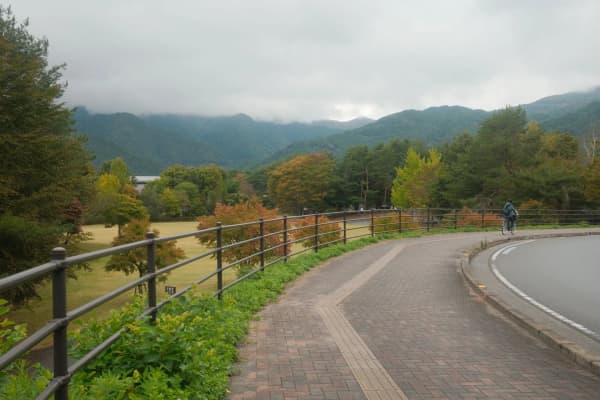
Not technically mountain biking, but the Provo River Parkway is the best starting point for anyone new to cycling in the area. The paved trail follows the Provo River from Utah Lake through the city and up into Provo Canyon past Bridal Veil Falls. It's flat, shaded in sections, and gorgeous — ideal for families, casual riders, and anyone building fitness before hitting dirt. See our Provo River Parkway Guide for the full breakdown. One caveat for 2026: the stretch between Delta Gateway Park and Utah Lake State Park is still rough, with active construction points pending county repaving — current status and detours here.
South Fork Trail
Distance: 3.5 miles round trip · Surface: Dirt/gravel · Elevation Gain: ~300 ft
An easy, scenic singletrack ride in the South Fork of Provo Canyon. The trail is wide, well-maintained, and surrounded by forest. It's the ideal first "real" mountain bike trail — enough dirt to feel like an adventure without the technical features that intimidate beginners. Trailhead is about a mile past Big Springs Park in Provo Canyon.
Murdock Canal Trail
Distance: 17 miles one-way · Surface: Paved · Elevation Gain: Gentle
A paved rail-trail following the enclosed Murdock Canal from the mouth of Provo Canyon to Thanksgiving Point in Lehi. Long, mostly flat, and ideal for endurance rides or commuting between Provo, Orem, and points north. Connects to local trail networks along its entire length. Year-round riding as snow allows.
Intermediate Trails
Bonneville Shoreline Trail (BST)
Distance: 6.8 miles (Provo section) · Surface: Doubletrack/singletrack · Elevation Gain: ~1,200 ft
The BST follows the ancient shoreline of prehistoric Lake Bonneville along the Wasatch foothills. The Provo section runs from Rock Canyon to Slate Canyon with consistent views of the valley and mountains. The Rock Canyon end doubles as the area's main sport-climbing crag — 200-plus bolted routes off a recently renovated trailhead, covered in our rock climbing guide. The trail is mostly wide doubletrack with some singletrack sections — moderate climbing, not overly technical, and accessible to intermediate riders. Connects to multiple trailhead access points along its length.
Best for: Riders wanting a solid workout with views. Rideable after work on long summer evenings. You'll share it with trail runners — the BST's Provo section is a staple in our running routes guide, which rates the hard-packed dirt as easier on joints than pavement.
Dry Canyon Loop (Kris' Loop)
Distance: ~7 miles loop · Surface: Singletrack/doubletrack · Elevation Gain: ~1,400 ft
A loop ride in the foothills on the southwest side of Mount Timpanogos, incorporating a section of the BST. The terrain includes some moderately steep sections but nothing overly technical. Good intermediate ride with varied terrain and solid views of Timp and Utah Valley. Access from Orem.
Archie's Loop
Distance: 2.2 miles · Surface: Singletrack · Elevation Gain: ~600 ft
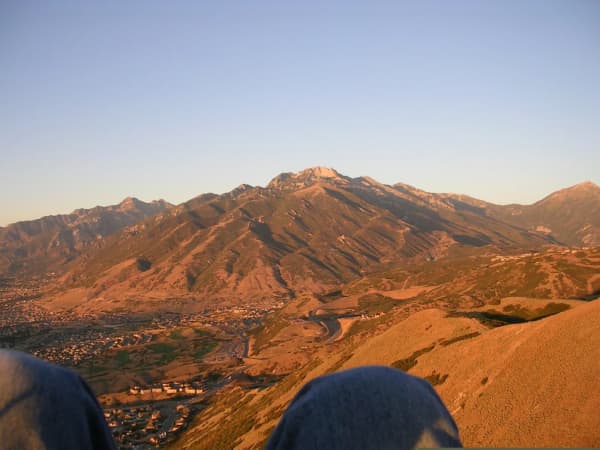
A relatively new trail connecting Scott's Pond loop to the Boneyard loop. Despite its short length, Archie's Loop delivers outstanding panoramic views — Mount Timpanogos, Provo Peak, Cascade Peak, Provo Canyon, Deer Creek Reservoir, and the Heber Valley are all visible from a single vantage point. Great for a quick before-work ride. If you're carrying a camera, our Provo photography spots guide covers when the light works on valley panoramas like this one.
Race Loop (Provo Canyon)
Distance: ~6 miles · Surface: Singletrack · Elevation Gain: ~800 ft
A classic local loop in Provo Canyon between the upper and lower mountain slopes. Varied terrain with views of Timpanogos to the north and Cascade Mountain to the south. The marked race course has additional side trails branching off for extended rides. Popular with local riders for good reason.
Advanced Trails
Slate Canyon
Distance: ~8.8 miles loop · Surface: Singletrack · Elevation Gain: ~3,250 ft
The most popular advanced trail in the Provo area, with a 4.6-star rating on AllTrails. Slate Canyon starts with a punishing uphill that tests your fitness immediately, then rewards you with stunning views of the Wasatch Range, Provo, and Utah Lake. The descent is fast and technical — loose rock, tight switchbacks, and exposure. Not for beginners, but the views and the downhill make the climb worth it. The Slate Canyon guide has the trailhead, parking and access detail.
Kyhv Peak Road Trails (indexed as "Squaw Peak" in some apps)
Distance: Varies · Surface: Singletrack · Elevation Gain: Varies (up to 4,000+ ft)
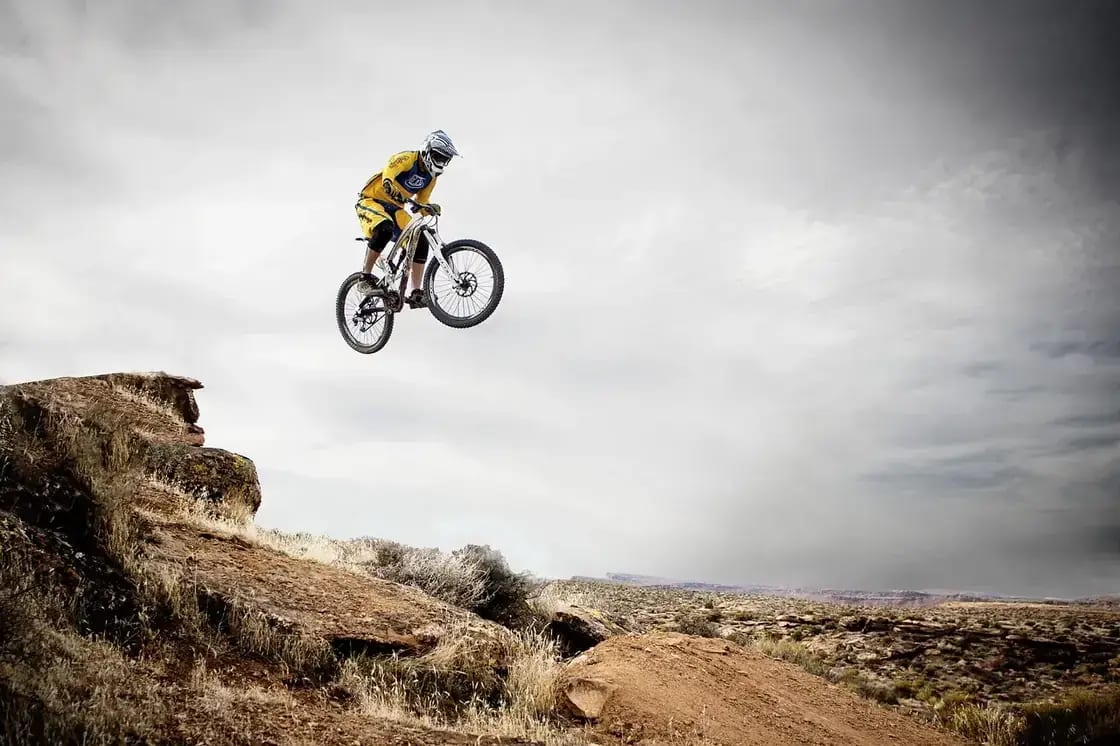
A network of trails radiating from Kyhv Peak Road — renamed from Squaw Peak Road, and still indexed under the old name in some ride apps — above Provo Canyon. The downhill segments (many still carrying "Squaw Peak" names in Trailforks and similar apps) feature gap jumps, steep descents, and technical rock gardens. Multiple route options let you customize your ride length and difficulty. The tree-side trails offer shade and flowy singletrack, while the ridgeline trails provide exposure and views.
Kyhv Peak
Distance: ~7.5 miles out and back · Surface: Singletrack · Elevation Gain: ~2,750 ft
One of the bigger climbs in the immediate Provo area. Kyhv Peak trails are a series of narrow singletracks with significant elevation gain, technical features, and navigation challenges. The descent rewards the climb with varied terrain — loose rock, root-lined trails, and creek crossings. Season is typically June through September due to snow at elevation.
Lift-Served: Sundance Resort
$$ · 20 minutes from Provo
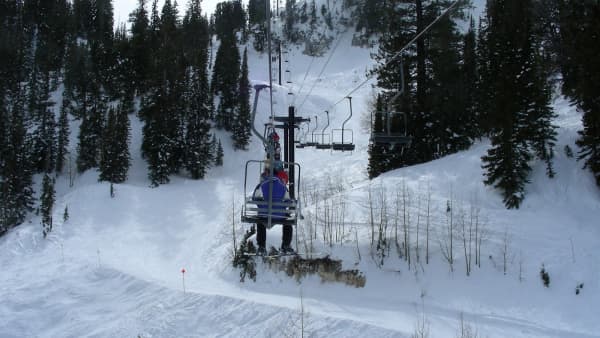
Sundance operates a lift-served mountain bike park during summer months, with 25 miles of lift-serviced trails of varying difficulty. This eliminates the climbing entirely — ride the lift up, bomb downhill, repeat. Trail styles range from flowy singletrack to technical DH runs. Lift passes and bike rentals are available. If you want the adrenaline of mountain biking without the cardio punishment, Sundance delivers. See our Sundance Resort Guide for more.
When to Ride
Peak season: May through October. Lower-elevation trails (BST, canyon mouth trails) open first in spring, while high-elevation trails (the Kyhv Peak Road network) may have snow until June.
Best months: June and September. Summer can be hot at lower elevations — early morning rides beat the heat. September offers perfect temperatures and fall colors.
Off-season: November through March, options are limited to paved trails and lower-elevation doubletrack. Fat biking is possible on packed snow.
Trail conditions: Check Trailforks or local mountain biking forums before riding, especially in spring when trails transition from snow to mud. Riding muddy trails damages the tread — if it's muddy, wait.
Gear & Rentals
Bike Shops
Racer's Cycle Service — The go-to local shop for repairs and knowledgeable advice. Mobile service available.
Taylor's Bike Shop — Full-service shop with mountain bike rentals.
Noble Cycling — Orem-based shop with a strong selection and experienced staff.
Rentals
If you don't own a mountain bike, several shops rent quality hardtails and full-suspension bikes by the day. Day rates vary by bike and shop, so compare before you book. BYU's Outdoors Unlimited program also rents gear at student-friendly prices.
What You Need
At minimum: a properly fitting helmet (non-negotiable), water (dehydration at altitude is serious), and basic repair tools (spare tube, tire levers, multi-tool). For advanced trails, add gloves, knee pads, and eye protection.
Riding North: Lehi, Draper and the Lambert Park Network
Provo's own trails are the start of the valley's riding, not the whole of it, and a rider who never goes north is missing the densest network in Utah County.
Lambert Park in Alpine is the one most Provo riders should know first. It is a compact, well-signed network of flowing singletrack on the bench above Alpine, with a genuine range of difficulty inside a small area — which makes it unusually good for a group where people ride at different levels, because everyone can start and finish at the same trailhead. It also drains and dries earlier in spring than the Provo-side trails, so it opens the season.
Draper's network, just over the Point of the Mountain at the county line, is the largest concentration of purpose-built trail within an hour of Provo. Corner Canyon in particular carries a full spread from beginner-friendly flow to technical descent, and it is the closest thing the region has to a bike park that does not require a lift ticket.
The Lehi and Traverse Mountain side fills the gap between the two, with trail systems threaded through the development on the mountain's western slope.
The practical point: from central Provo, all three are a shorter drive than most riders assume — comfortably inside forty minutes, and closer from north Orem. Treating the valley as one riding area rather than defending Provo's own trails is the way to get the most out of living here.
Trail Etiquette and the Multi-Use Problem
Nearly every trail described on this page is shared with hikers, runners, dog walkers and in places horses, and Utah Valley's trails carry heavy foot traffic close to the cities.
Yield uphill and yield to everything on foot. The convention is that descending riders yield to climbing riders, and that bikes yield to hikers and horses generally. In practice on the busy lower trails, the useful rule is simpler: you are the fastest and quietest thing out there, so the burden of avoiding a collision is yours.
Announce yourself early and gently. Coming up behind a walker at speed and calling out at the last second startles people, and the trail conflicts that end in access restrictions almost always start here.
Do not ride wet trails. This matters more in Utah's clay-heavy soils than in most places. Riding a muddy trail cuts ruts that harden and stay for a season, and it is the fastest way to degrade a trail that volunteers maintain. If your tires are picking up mud, turn around — this is why the spring opening dates matter and why Lambert's earlier drying is a genuine advantage.
The canyon gates are not the trail closures. Riding past a closed vehicle gate is generally permitted where the closure is seasonal road access rather than a trail closure. Our canyon conditions page tracks which gates are which, and it is worth checking rather than assuming either way.
Riding With the Valley's Weather
Utah Valley's riding season is long, but it is shaped by two things that catch newcomers out: heat and inversion.
Summer heat is the real constraint, not winter. Afternoon temperatures through July and August routinely reach the nineties, the sun at this elevation is harsher than the number suggests, and the exposed lower trails hold that heat well into the evening. The riders who put in the most summer miles here ride early — early, finished by nine — or they ride high, where a few thousand feet of elevation buys ten or fifteen degrees. Riding a south-facing bench trail at two in the afternoon in July is a decision, not a plan.
Winter inversion pushes riders up rather than indoors. Utah Valley's inversions trap cold, poor air in the valley floor for stretches of the winter while the benches and canyons above sit in clear air and sunshine. On those days the trails above the inversion layer are not merely rideable but pleasant, and the air is measurably better than at home. Our air quality guidance covers how to read the current conditions, which matters more here than in most places.
Shoulder seasons are the best riding of the year and the shortest. Late April into early June, and mid-September into late October, give you dry trails, comfortable temperatures and — in autumn — the aspen color that draws everyone else to the scenic drives while the trails stay quiet.
Getting Started Here Without a Bike
You do not need to own anything to find out whether you like this.
Rentals are available through the valley's bike shops, and the practical advice is to rent something reasonably capable rather than the cheapest option — an underbuilt bike on Utah's rocky trails makes the sport feel harder and less fun than it is, and a lot of people conclude they dislike mountain biking when what they disliked was the equipment. Our guide to bike shops in Provo and Orem covers who rents, who repairs, and the co-op that will teach you to do it yourself.
For a genuine first ride, the paved and gravel sections of the Provo River Parkway are the honest starting point rather than any trail on this page. They build the fitness and the handling without the consequence, and they connect to enough of the valley that the ride is a destination in itself.
The wilderness boundary, and the strangest rule in American trail law
Every rider here eventually runs into the same wall: some spectacular high country immediately above the valley is permanently closed to bikes. The reason is worth understanding properly, because the rule is more contested and more peculiar than the trail signs suggest.
The high ground on Timpanogos is designated Wilderness, brought into the National Wilderness Preservation System by the Utah Wilderness Act of 1984, Public Law 98-428. The prohibition sits in the Wilderness Act itself, at 16 U.S.C. § 1133: subject to existing private rights and the minimum necessary to administer the area, there shall be no commercial enterprise, no permanent or temporary road, no use of motor vehicles, motorized equipment or motorboats, no landing of aircraft, no other form of mechanical transport, and no structure or installation.
Note what the statute does not say. It does not say "bicycle." The word never appears in the 1964 Act.
The regulation is where bikes get banned
They are banned by regulation, and the regulatory history is odd. A 2018 House committee report recounts the sequence, and it runs like this.
- 1966. The Forest Service defined mechanical transport by reference to a nonliving power source — a definition that, read plainly, left bicycles permitted. The wording survives today at 36 C.F.R. 293.6, which defines mechanical transport as any contrivance traveling over ground, snow or water on wheels, tracks, skids or by floatation and propelled by a nonliving power source carried on or within the device. A bicycle is propelled by a person.
- 1977. The Forest Service issued a new regulation naming bicycles specifically. It is now codified at 36 C.F.R. 261.18, which prohibits, in a National Forest Wilderness, possessing or using a motor vehicle, motorboat or motorized equipment; possessing or using a hang glider or bicycle; and landing aircraft or dropping or retrieving material by aircraft.
- 1981. A further regulation treated bicycles as permissible unless expressly prohibited.
- 1986. A Federal Register notice settled the matter the other way, reading the rule as prohibiting wilderness travel by bicycle.
Regional forest orders have since extended the prohibition to anything with a wheel. The Rocky Mountain Region order barring wagons, carts, wheelbarrows, bicycles and other vehicles — game carts explicitly included — is the standard form.
So the ban is real, it is enforceable, and it rests on a regulation rather than on the plain words of the statute. Congress has been asked more than once to change it: bills in both the 114th and 115th Congresses would have amended section 4(c) to allow human-powered travel or to let local managers open wilderness trails to bikes. Neither passed.
What it means for riding here
The line is legal, not visible. A wilderness boundary is a surveyed line rather than a change in terrain. Some of the best-known routes on this page run close to one without crossing it.
Being human-powered is not a defense. The 1966 definition would have helped you; the 1977 regulation replaced it.
It applies to the bike, not just the riding. The text prohibits possessing or using a bicycle in a National Forest Wilderness, so pushing or carrying it through is not a workaround.
Everything outside the boundary is a local decision. Trail-by-trail bike access on the rest of the Uinta-Wasatch-Cache is set by the forest's own travel designations, which change. Check the specific route with the forest rather than assuming a network-wide rule.
The upside for Utah Valley riders is that almost all of the riding described above sits outside any wilderness boundary. The closure costs you the summit ridges, not the network.
Related Guides
-
Bike Shops in Provo and Orem: Who Fixes What, and the Co-op That Teaches You Instead
-
Utah Valley Hike Finder — filter every trail by difficulty, length, season, dogs and fees
-
Canyon & commute conditions — riding past a closed gate is permitted; the gate table says which ones
-
Road cycling in Utah Valley — the other half of the local scene Last updated: April 2026. Trail conditions change seasonally — check current conditions before riding.
Frequently Asked Questions
Is Provo good for mountain biking?
What are the best mountain bike trails near Provo?
Where can I rent a mountain bike in Provo?
Where is the best mountain biking near Provo?
When does the mountain biking season start in Utah Valley?
Can you ride mountain bikes on Provo hiking trails?
Why should you not ride muddy trails in Utah?
Do you need your own bike to ride in Utah Valley?
Sources
The facts in this guide were checked against these sources. Hours, fees and rules change, so confirm anything time-sensitive with the source before you go. How we make Provo.com.
- 98.2 mile Utah Lake Shoreline Trail, Utah Lake Commission. Checked October 12, 2026.
- 16 U.S. Code 1133 - Use of wilderness areas, Legal Information Institute (U.S. Code). Checked October 12, 2026.
- Utah Wilderness Act of 1984, U.S. Government Publishing Office (GovInfo). Checked October 12, 2026.
- Mountain Biking, Sundance Mountain Resort. Checked October 12, 2026.
- Taylor's Bike Shop. Checked October 12, 2026.
- Slate Canyon Loop, AllTrails. Checked October 12, 2026.
- Kyhv Peak Trail, AllTrails. Checked October 12, 2026.
- Kyhv Peak Road, AllTrails. Checked October 12, 2026.
- Bonneville Shoreline to Betty to Dry Canyon Loop, AllTrails. Checked October 12, 2026.
- Provo River Parkway, AllTrails. Checked October 12, 2026.
- 36 CFR 261.18 Prohibitions in National Forest Wilderness, eCFR (National Archives). Checked October 12, 2026.
- 36 CFR 293.6 Commercial enterprises, roads, motor vehicles, motorized equipment, and mechanical transport, eCFR (National Archives). Checked October 12, 2026.