
Finding gluten-free food in Provo is considerably easier than most published guides suggest, and this one used to be part of the problem. An earlier version of this page opened by telling readers that Provo does not have fully dedicated gluten-free restaurants.
That was wrong. There is a 100% gluten-free restaurant on North University Avenue and a dedicated gluten-free bakery a few blocks south of Center Street, with several more inside a twenty-minute drive. For anyone with coeliac disease, that is the single most important fact about eating in this valley, and it was the one thing this page had backwards.
Here is the corrected picture.
The dedicated kitchens
A dedicated gluten-free kitchen is one where nothing containing gluten comes into the building. It is a categorically different proposition from a restaurant with a good gluten-free menu, because it removes the hazard rather than managing it — no shared fryer, no shared grill, no flour in the air, no chance of a wrong plate leaving the pass.
Utah Valley has a genuine cluster of them.
Locals — 296 N University Avenue, Provo. The business describes itself plainly as a 100% gluten-free restaurant, and it is a brunch-forward menu: waffles, breakfast sandwiches, breakfast tacos, chicken and waffles, cinnamon rolls, and — the thing that matters most to people who have gone without it — proper bread and buns. Founder Jess Boyer was diagnosed with coeliac disease, could not find anywhere to eat, and started developing the recipes at home before opening. Much of the menu is dairy-free as well. Its days and hours are the one thing to check before you go: the published listings disagree with each other substantially, and it does not keep conventional restaurant hours. Our brunch guide has rated it the valley's gluten-free standout for some time.
Ambrosial Bakery — 275 E 300 South, Provo. A dedicated gluten-free bakery run by a classically trained baker who is gluten-free herself, and one with a very Provo origin story: it spent six seasons at the Provo Farmers Market before opening the storefront in February 2023. Cookies, cinnamon rolls, cakes, cheesecake, doughnuts and savory items, all made somewhere wheat does not go. (Note: several sources give a much earlier founding year for the business; the storefront opening is the date we can stand behind.)
Bismarck Doughnuts — University Parkway, Orem. A 100% gluten-free doughnut shop, both yeast and cake styles. There is no equivalent anywhere near here.
Chicken Boy — American Fork. Dedicated gluten-free and dairy-free, built around fried chicken tenders and fries, with the recipe developed by an owner cooking for family members with coeliac disease. Everything is fried in beef tallow, which is a point in its favor for anyone also avoiding seed oils. Worth knowing: the tortillas use almond flour, so it is not a nut-free operation.
Good Hope Bakery — Springville. Dedicated gluten-free, with a bread range that is the usual reason people drive to it.
Mom's Place Gluten Free — Spanish Fork. A dedicated gluten-free grocery rather than a restaurant, which solves a different problem and solves it well.
One caution on all of the above. "Dedicated" is a claim made by a business about its own premises, and it can change — a menu expands, a supplier changes, an operation moves. For coeliac disease specifically, confirm current practice with the business rather than trusting any listing, including this one. Several of these are small operations where the owner will simply tell you.
The menu that marks gluten backwards
This is the local fact most worth carrying, and it is the sort of thing that only turns up if somebody reads the menu.
Bombay House marks the dishes that contain gluten with a G.
Nearly every restaurant that marks gluten at all marks the safe items. A diner who has learned that convention — which is to say, most diners — will scan a Bombay House menu, find the symbol, and order exactly the wrong thing. For someone managing a preference this is annoying. For someone with coeliac disease it is a genuine hazard, and it is on the menu of one of the most popular restaurants in the city.
The rule at Bombay House, therefore: do not rely on the symbol. Ask the server. Our full profile of the restaurant covers this alongside the other two things that reliably confound first-time visitors — you cannot book a table, and there is no lunch service at all.
Restaurants with real gluten-free programs
Outside the dedicated kitchens, these are places where the awareness is genuine rather than performative — where staff understand cross-contact and the kitchen has a process.
Communal — the seasonal menu regularly includes naturally gluten-free dishes and the kitchen is knowledgeable about cross-contact. Tell your server at the start of the meal rather than at ordering. Vegetable dishes and protein mains are often gluten-free by default.
Slate — a modern American menu with a substantial share of naturally gluten-free plates: grilled meats, seafood, vegetable sides. The restaurant states that it tailors menus to dietary requirements. Ask for the current options rather than assuming last year's apply.
Black Sheep Cafe — the Southwestern-influenced menu has a good number of gluten-free options and the kitchen has a local reputation for handling allergies competently.
Cubby's — burgers can be lettuce-wrapped, and there are gluten-free bun options. The fryer is the catch: shared fryers are one of the most common ways people with coeliac disease get caught out, and fries are the single most frequent culprit in any restaurant. Ask specifically.
Café Rio and Costa Vida — build a bowl with rice, protein, beans and toppings, skip the tortilla, and you have a reliable gluten-free meal at a reasonable price. Both are reasonably gluten-free-aware chains.
Guru's Café — several items can be prepared gluten-free, and the açai bowls are naturally so. Ask about specific dishes.
Naturally gluten-free cuisines, and exactly where they break
Whole cuisines are largely gluten-free by construction, which is the cheapest way to eat safely in a city this size. Each of them has a specific failure point.
Indian. Most curries, rice dishes and tandoori meats are gluten-free. The break points are naan and other breads, which are wheat; asafoetida, a common spice that is frequently cut with wheat flour; and thickeners, which vary by kitchen. Since Bombay House is dinner-only, India Palace is the practical lunch option, and our Indian food guide covers the field.
Mexican. Corn tortillas are gluten-free and street tacos are one of the better options in the valley. The break points are the shared fryer, flour tortillas handled on the same surfaces, and seasoning blends. At the taquerias and taco trucks the operation is small enough that asking directly works.
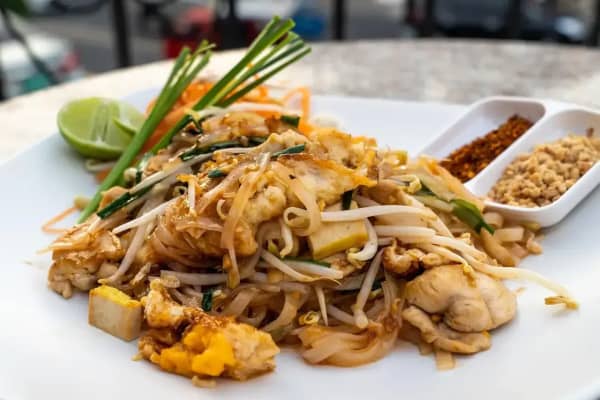
Thai and other Southeast Asian. Rice noodles and rice dishes are naturally gluten-free. The break point is soy sauce, which is almost always wheat-based, and which appears in more preparations than the menu suggests. Kitchens that stock tamari can usually accommodate; those that do not, cannot, whatever the menu says.
Korean. The same soy sauce problem, plus gochujang, which commonly contains wheat.
Steakhouse and grill formats. Grilled meat, potatoes and vegetables are the oldest reliable gluten-free meal there is. The break point is the shared grill surface and marinades.
Gluten-free pizza, bread and buns
These are the three things people miss most, and all three are now solvable in Provo.
Pizza. Several Provo and Orem pizzerias offer gluten-free crusts, and the quality gap against conventional crust has narrowed considerably in the last few years. The menu item is the easy part; the oven is the question. A gluten-free crust baked on the same stone as wheat crust, or cut with the same wheel, is a cross-contact risk regardless of what the base is made of. Ask whether the kitchen uses a separate pan, a separate cutter and a separate prep area. Some do all three and will say so immediately, which is itself a good sign.
Burger buns. Widely stocked now. The bun is rarely the problem — the fryer is. Fries cooked in oil shared with breaded products are one of the most frequent sources of accidental exposure in any restaurant, and it is worth asking about the fryer even when nothing you have ordered is obviously breaded. A dedicated fryer is a genuine differentiator and the places that have one tend to know it.
Bread. This is where the dedicated bakeries change the picture entirely. Supermarket gluten-free bread is a compromise product; a fresh loaf from a bakery that only makes gluten-free bread is not. If you have been eating packaged bread since diagnosis, this is the single upgrade most worth driving for.
Gluten-free is not the same as wheat-free
A distinction that matters and that almost no restaurant guide draws.
Coeliac disease is an autoimmune response to gluten, the protein found in wheat, barley and rye. A wheat allergy is an immune response to wheat proteins generally, not only gluten. Non-coeliac gluten sensitivity is a third thing again.
The practical consequence: a kitchen that has removed gluten has not necessarily removed wheat. Wheat starch processed to remove gluten appears in some gluten-free products, and a dedicated gluten-free kitchen can still be handling it. At least one of the dedicated Provo operations listed above carries exactly that caveat in a national coeliac directory — gluten-free, but not guaranteed wheat-free, and diners with a wheat allergy are asked to inquire.
If you have a wheat allergy rather than coeliac disease, say wheat allergy, not gluten-free. They are different questions and they get different answers.
Eating gluten-free on campus
Both universities feed a large number of students with dietary requirements, and both have moved a long way in the last decade — campus dining operations now routinely label allergens and can usually route a student to a manager who knows the kitchen.
One more campus data point worth having: a dedicated gluten-free stand has operated inside LaVell Edwards Stadium in the southeast corner, which our stadium guide covers alongside the rest of the concessions map. On a game day that is a useful thing to know in advance.
Two practical notes specific to Provo. First, the BYU Creamery functions as a grocery as well as a counter, which makes it a useful stop for anyone assembling safe food rather than ordering it. Second, campus food courts are high-volume shared-equipment environments by design, so for coeliac disease specifically the question to ask is the same one as anywhere else — about the equipment, not the menu.
Weddings, receptions and feeding a crowd
Utah Valley runs an unusual number of large open-house receptions, and catering for one with a gluten-free guest is a question that comes up here far more than it would elsewhere.
Two local advantages are worth knowing. The dedicated bakeries take custom orders, which means a wholly gluten-free cake or dessert table is achievable rather than aspirational — and a dessert made in a dedicated kitchen removes the anxiety that a slice from a mixed kitchen never quite does. And food trucks, a common reception format here, are frequently single-cuisine operations, which makes their cross-contact picture much simpler to establish than a full-service caterer's.
Our wedding budget guide covers the catering economics; the dietary question is worth raising with any vendor at the tasting rather than the week before.
Groceries and bakeries
For home cooking, the supermarket situation in Provo is strong. Smith's, Trader Joe's, Walmart and the local chains all carry substantial gluten-free ranges, and Costco in Orem is good for staples in volume.
For baked goods the gap between a supermarket shelf and a dedicated bakery is enormous, and Utah Valley has four dedicated bakeries or GF-only shops within easy reach — the two in Provo and Orem listed above, one in Springville, and the dedicated grocery in Spanish Fork. If you are new to eating gluten-free here, that circuit is worth doing once.
How to ask, and what to say
Say coeliac if it is coeliac. "Gluten-free preference" and "coeliac disease" produce different levels of kitchen care almost everywhere, and staff are not being careless — they are triaging.
Say it at the start of the meal, not when the order is taken. It gives the server a chance to route you before you have chosen something that cannot be made safe.
Ask about the fryer and the grill, not about the menu. The menu tells you what is in the dish. The equipment tells you what else has been in it.
Call ahead for a serious allergy. A kitchen given notice can prepare properly rather than improvising mid-service, and in a valley with this many small independent restaurants, a phone call is usually answered by someone who can decide.
Why the old advice keeps getting repeated
It is worth naming how a page like this gets it wrong, because the mechanism is general.
Ten or fifteen years ago, "Provo has no dedicated gluten-free restaurants" was true. The dedicated bakery on 300 South opened its storefront in 2023 and spent years at a farmers market before that. The gluten-free restaurant on University Avenue is newer still. These are recent businesses, several of them small, several of them opened by people who were themselves diagnosed and could not find anywhere to eat.
What happens next is the ordinary failure of local guides: the oldest claim about a place is the one that has propagated furthest and been copied most. It outlives the conditions that made it true, and it takes years to correct because every new article is written partly from the old ones. This site was carrying the outdated version until this rewrite, and the correction came from checking against a page elsewhere on this same site that had it right.
If you are new to eating gluten-free in Utah Valley, the practical implication is simple: assume any guide you read, including this one, is at least a season behind the ground.
What this guide cannot do
Menus change, suppliers change, staff turn over, and a restaurant that handled cross-contact carefully last year may not this year. Nothing written down — here or anywhere — substitutes for asking on the day.
This guide is general information, not medical advice. Anyone managing coeliac disease should follow the guidance of their own clinician.
What "gluten-free" legally means, and where the definition stops
The phrase on a menu and the phrase on a package are not governed by the same thing, and the gap between them is the single most useful fact for anyone eating gluten-free in a restaurant.
The packaged-food rule is precise. 21 C.F.R. § 101.91 is the FDA's gluten-free labeling regulation. A food bearing the claim must contain less than 20 parts per million of gluten, and must either be inherently free of gluten-containing grains or contain no ingredient derived from such a grain that has not been processed to remove gluten below that threshold. Twenty ppm is not arbitrary — it is the level at or below which available analytical methods can reliably detect gluten, and below which most people with celiac disease do not react. FDA issued a further final rule in 2020 extending the framework to fermented and hydrolyzed foods, where the standard test cannot measure intact gluten, requiring manufacturers to keep records demonstrating compliance before fermentation instead.
The restaurant position is different. Section 101.91 is a food labeling regulation, and restaurant menus are not labels in the same sense. FDA has stated that restaurants making a gluten-free claim should be consistent with the regulatory definition, and state and local authorities enforce menu claims through their own food codes and consumer protection statutes. What that means in practice: a bag of chips marked gluten-free has been made to a measurable standard, and a menu item marked gluten-free is a statement of intent by a kitchen. Both can be trustworthy. Only one is measurable.
This is why the distinction between "gluten-free" and "no gluten-containing ingredients" matters so much, and why the better restaurants use the second phrase. A dish built without wheat, cooked in a shared fryer with breaded items, honestly has no gluten-containing ingredients and is not gluten-free in any sense useful to someone with celiac disease. A kitchen that says the second thing is being more accurate, not less committed.
The allergen rules did change, and recently
FALCPA — the Food Allergen Labeling and Consumer Protection Act of 2004, Public Law 108-282 — created the major food allergen framework. The FASTER Act of 2021 added sesame as the ninth major allergen, effective 1 January 2023. The 2022 Food Code carried the change into retail: the definition of major food allergen at ¶ 1-201.10(B) now reads milk, egg, fish, crustacean shellfish, tree nuts, wheat, peanuts, soybeans and sesame.
Utah enforces that Food Code through Utah Admin. Code R392-100-4, and the 2022 edition brought two further changes that a diner can use.
Written notification for unpackaged food. The 2022 edition added a requirement for written notification to consumers of major food allergens as ingredients in unpackaged food, and labeling of major allergens in bulk food available for consumer self-dispensing. That is the provision behind allergen matrices appearing on menus and behind labeled bulk bins.
A training duty on the person in charge. ¶ 2-103.11(O) requires the person in charge to ensure employees are properly trained in food safety, including food allergy awareness, specifically describing which foods are major allergens and the symptoms an allergen could cause.
Sesame deserves a footnote of its own, because the outcome was perverse. The FDA has said that, rather than keep sesame out, some manufacturers intentionally added sesame to products that had not contained it and labeled it, which complies with the law but leaves fewer safe choices. The FASTER Act made sesame declarable; it did not make sesame-free bread easier to find. If you have a sesame allergy, that history is worth knowing: check labels on products you have bought safely for years.
How to use all of this in a Provo restaurant
Say celiac, not gluten-free. The words carry different weight in a kitchen, and the second one has been diluted by preference dieting to the point where it often reads as a request rather than a medical constraint. This is practical advice rather than legal advice, and every kitchen in this guide will tell you the same.
Ask about the fryer and the grill, not the recipe. Cross-contact is a process question. The recipe is almost never the failure point.
Ask whether there is a written allergen matrix. Since the 2022 edition, more operations have one, and a kitchen that can hand you a document is a kitchen that has thought about it.
Treat a dedicated gluten-free preparation area as the real signal. Separate utensils, separate cutting boards, a separate fryer. Those are the things that close the gap between the packaged standard and the plated one.
None of this is a reason to eat out less. It is a reason to ask better questions — and the questions above are answerable at the table in under a minute. For the permitting and training layer behind them, see food permits and inspections in Utah County.
Related guides
- 30 Best Restaurants in Provo
- Brunch in Utah Valley
- Bombay House, Provo
- Best Indian Food in Provo & Orem
- Black Sheep Cafe, Provo
- Best Healthy Food in Provo & Orem
- Best Desserts & Bakeries in Provo & Orem
- Best Vegetarian & Vegan Restaurants in Provo & Orem (2026)
Hours, menus and preparation practices change. Confirm directly with any restaurant before relying on it.
Ordering Gluten-Free for Delivery
Delivery removes the part of gluten-free ordering that does the work, which is the conversation.
A gluten-free tag in an app comes from the restaurant's own menu entry. It means the dish is made without gluten-containing ingredients. It does not tell you whether the kitchen has a separate preparation area, whether the fryer is shared, whether the same pasta water or grill surface is used, or whether staff are trained on cross-contact. For someone avoiding gluten by preference, the tag is enough. For someone with celiac disease, those are exactly the questions that matter, and none of them is answerable from a menu listing.
In person or on the phone you can ask and get a real answer, and you can tell whether the person answering understands the question — which is often as informative as the answer itself. Through an app you are relying on a note in a box.
The pattern that works is the same one this page recommends generally: establish which kitchens handle it properly by asking them directly, once. After that you know, and delivery becomes a logistics question rather than a trust question, which is what a platform is good at.
Two further notes. A shared fryer is the most common hidden problem, so anything fried deserves a specific question. And dedicated gluten-free bakeries and kitchens, where they exist, remove the issue entirely and are worth knowing about for that reason alone.
This is general information rather than medical advice; anyone managing celiac disease should follow their own clinician's guidance.
Our food delivery guide covers how the platforms work here.
Related Guides
Frequently Asked Questions
Are there fully dedicated gluten-free restaurants in Provo?
What does 'dedicated' mean, and why does it matter?
Which Provo restaurant marks gluten backwards on its menu?
Is Indian food a safe gluten-free option in Provo?
Are corn tortillas at Provo taquerias gluten-free?
Can you get gluten-free pizza and burgers in Provo?
Where do you buy gluten-free groceries in Provo?
What should I say to a server in Provo about gluten?
Sources
The facts in this guide were checked against these sources. Hours, fees and rules change, so confirm anything time-sensitive with the source before you go. How we make Provo.com.
- FDA Food Code 2022: Full Document, U.S. Food and Drug Administration. Checked October 12, 2026.
- An Update on Sesame Allergen Labeling on Food Packages, U.S. Food and Drug Administration. Checked October 12, 2026.
- R392-100 Food Service Sanitation Rule (2022 Food Code edition), Utah Department of Health and Human Services (via Southeast Utah Health Department). Checked October 12, 2026.