
There is a particular kind of restaurant that a college town produces and then quietly takes for granted. It sits downtown. It has been there long enough that students assume it has always been there. It gets recommended constantly, by everyone, in a slightly vague way — oh, you have to go to Black Sheep — and almost nobody who recommends it can tell you where it came from.
Black Sheep Cafe is the most-named restaurant on this entire site. It appears in guide after guide, in the burger roundup and the date-night list and the downtown walk and the where-to-eat-before-the-game piece. And it has never had a page of its own.
This is that page: the family, the food, the deliberate afternoon closure, and the one detail about its frybread that no other restaurant in Utah Valley can claim.
The story starts on the Navajo Nation
Black Sheep opened at the beginning of 2012, and by the restaurant's own account it was started by two sisters on a shoestring budget — Bleu Adams and Jovanna Mason, who also appears in coverage as Katt Mason.
They grew up partly on the Navajo Nation, in a traditional one-room hogan, without running water or electricity, before the family moved to Provo. The family is Navajo and Mandan Hidatsa.
That background does a lot of work in the way the restaurant gets written up, and it is worth being careful with it, because the interesting part is not hardship. It is the specific commercial lesson. Their mother sold homemade pies and burritos to keep the household going. What the sisters learned early and practically was that cooking was something you could build a living out of — not as an abstraction, but as the thing that was actually happening at the kitchen table.
The kitchen has been led by their older brother, Chef Mark Daniel Mason, who came up from Scottsdale, Arizona — where he had worked at Marcellino Ristorante — to help launch the restaurant, and whose training runs through Italian and French cooking rather than through Southwestern food. And the frybread recipe is their mother Alberta Mason's.
That combination is the whole restaurant in one sentence: a family recipe from a Navajo kitchen, executed by someone with classical European technique, in a dining room in downtown Provo. It is not Native American cooking used as a theme on a menu. It is a specific family's food put through professional training.
A note on who owns it now. Public accounts indicate the business changed hands after the founding years, and the restaurant continues to describe itself as family owned and operated with Mark Daniel Mason in the kitchen. What the current ownership structure is cannot be determined reliably from outside, so this page does not assert it. The founding story above is well documented; today's paperwork is not.
The frybread detail
Frybread appears on a fair number of menus around the West, usually as a novelty carbohydrate. Black Sheep uses Blue Bird flour.
If that means nothing to you, it means a great deal on the Navajo Nation. Blue Bird is the flour — the specific brand, in the specific cloth-print sack, that has been the standard for frybread in Navajo kitchens for generations. Households buy it by the sack. The empty sacks get sewn into things. It is close to a cultural marker.
Using it is a small, specific, checkable decision that separates a restaurant cooking from inside a tradition from one cooking at it. It costs more than using whatever bulk flour the supplier delivers, and virtually no diner would notice if they swapped it. That is precisely why it is worth printing.
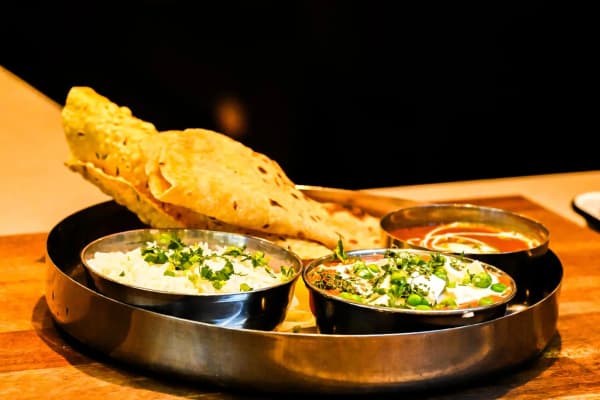
The frybread is made fresh to a family recipe, and it is the base of the dish most people come for.
What frybread actually is, since nobody in Provo explains it
This is the part every restaurant list in Utah Valley skips, and it is the most interesting thing on the menu.
Frybread is not an ancient dish. Its origin is documented and recent, and it is not a happy story.
In 1864, the United States forcibly removed more than 8,000 Diné — the Navajo people's name for themselves — from their homelands in what is now Arizona and New Mexico, and marched them over 300 miles east to Bosque Redondo, an internment camp in eastern New Mexico. Hundreds died on the way from starvation, exposure and exhaustion. The event is called the Long Walk.
The Diné diet had been built on corn, beans, squash, mutton and wild game. At Bosque Redondo, none of that was possible — the land could not support the farming they knew, and the game was not there. The government issued rations instead: white wheat flour, lard, salt, sugar, sometimes powdered milk or canned goods. These were ingredients most of them had never cooked with, and the rations were widely described as inadequate and often spoiled.
Frybread is what people made out of them. Flour, salt, water, sometimes baking powder, fried in fat. It kept people alive until an 1868 treaty allowed a return home.
The same ration system was imposed across Indian Country as other nations were relocated, and frybread traveled with it. Today it appears across the 574 federally recognized tribes — a genuinely pan-Indian food that is, precisely, not indigenous to pre-contact Native cooking.
In Navajo it is bááh dah díníilghaazh. Bááh refers to baked goods; dah díníilghaazh describes the bubbling sound the dough makes as it hits the oil. The name is onomatopoeia for the moment of cooking.
And it is genuinely contested within Native communities, which is the part outsiders most often flatten. For many people it is a symbol of survival and family — the thing your grandmother made, the thing served at every powwow and gathering, proof that people endured. For others it is a food of imposed poverty, made of exactly the processed ingredients that fuel the diabetes and heart disease rates that Native communities carry disproportionately, and celebrating it means celebrating the ration line. The Diné poet Esther Belin has written about holding both of those at once. Chefs working in contemporary Native cooking routinely describe it as the most argued-over dish in the cuisine.
None of that is Black Sheep's argument to settle, and the restaurant does not pretend to. But it is worth knowing what you are eating, and it makes the choice to use Blue Bird flour and a family recipe read as something other than decoration.
A last practical note: a Navajo taco and an "Indian taco" are the same dish under two names, and both are frybread-based rather than tortilla-based. If you have eaten one at a powwow or a state fair, you have eaten the same thing in a much less careful version.
What to order
Navajo tacos are the signature. Frybread instead of a tortilla, braised meat, chile sauce, cheese, tomato, sweet onion, crema. The green chile pork version is the one that gets named most often. They are large, and they are the thing to order if you are only coming once.
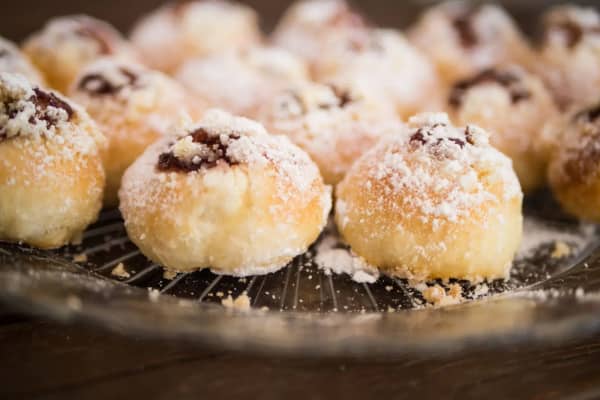
Honey lavender frybread, added in 2015, is what carried the restaurant's name outside Provo. It is sweet and floral and works as a shared starter or a dessert depending on your discipline. One consistent note from regulars is worth passing on: the lavender is assertive, and a bite that catches a concentrated pocket of it tastes quite different from a bite that does not. Tear rather than bite whole.
The Black Sheep burger comes on a nanniskadii bun — Navajo flatbread as the vehicle. It is the most quietly ambitious thing on the menu, because a burger is the dish where a Provo diner has the strongest fixed expectation, and this one deliberately breaks it.
Green chile stew is the plainest thing on the menu and the best test of the kitchen.
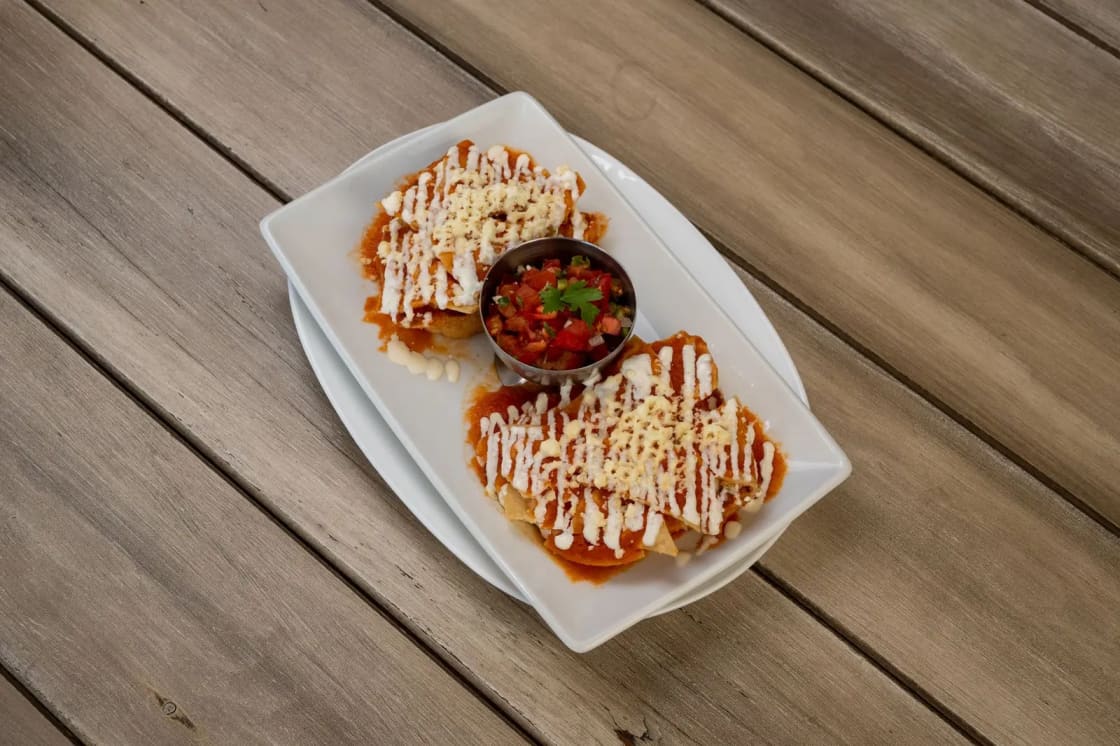
The Buffalo Nickel Burger and the blue corn enchiladas are the two dishes long-time regulars name that rarely make the visitor lists. The buffalo is the point of the first one; the enchiladas have a vegetable version built around squash and mushrooms rather than a meat dish with the meat removed.
Elsewhere: hog jowl nachos, cactus pear lemonade, orange-habanero creme brulee. The dessert and drink list is where the fusion label earns itself.
Blue cornmeal appears through the menu, traditionally grown and prepared, and local ingredients including Utah honey do real work rather than decorative work.
The afternoon closure is a policy, not an accident
Black Sheep runs lunch, then shuts, then reopens for dinner. Visitors turning up at three in the afternoon find a closed door and often assume something has gone wrong.
Nothing has. The restaurant has published its reasoning: closing after lunch is what allows the kitchen to prepare properly for the evening.
This is downstream of how the place actually cooks. Their own description of what from-scratch means is unusually concrete — fries peeled and cut the day of service, meat bought whole and ground and portioned in house, sauces built as needed rather than opened from bulk cans, recipes adjusted for how the produce is actually tasting that week. That is a labor-intensive way to run a restaurant, and it requires a block of time in the day when nobody is firing tickets.
So the gap in the middle of the afternoon is the reason the food is what it is. It is one of the few cases where a restaurant's most annoying operational quirk is directly load-bearing for its quality.
It is closed Sunday, which in Provo needs no explanation but catches out-of-town visitors constantly. If you are planning a weekend around it, the Sunday problem is a valley-wide constraint rather than a Black Sheep one.
The bar
Black Sheep holds a full liquor license and operates a full bar.
In Provo, that is a differentiator rather than a footnote. The city's restaurant scene skews heavily toward places that do not serve alcohol at all, for reasons that have everything to do with the town's makeup and nothing to do with the quality of the food. For anyone planning a business dinner, an anniversary, or a night out with visiting family who expect a wine list, the list of Provo restaurants that can do that is short, and this is on it.
Utah's alcohol rules are their own subject and they are genuinely more complicated than in most states — what can be poured, when, and in what relationship to a food order. Worth reading up on separately if it matters to your evening.
Pop-ups
Periodically the restaurant runs pop-up dinners — one-night, four-plus-course events built around a particular idea, with the kitchen showing off rather than executing the standing menu.
These are announced through the restaurant's own channels and do not run on a fixed schedule, which means there is no way to plan around them from a guide. If the idea appeals, follow the restaurant directly. It is the closest thing Provo has to a chef's-table format.
Where it sits, and why that matters
19 N University Avenue puts Black Sheep in the historic core of downtown Provo, a block north of Center Street.
That address is not incidental. University Avenue is the line Provo's entire address grid is measured from, and the blocks around its intersection with Center Street are the densest concentration of independent restaurants in Utah County — the Provo Downtown Historic District, listed on the National Register in 1980.
Practically, it means Black Sheep is a walking destination rather than a driving one. You can park once and reach a dozen other places on foot, which is the argument for the Center Street dining walk generally. It also means parking is street parking, and downtown Provo on a Friday evening is busier than visitors expect.
The practical layer
Parking. There is parking behind the restaurant in the Provo Town Square parking garage, on the north-west corner of the block — which is the single most useful thing to know and is not obvious from the street. Beyond that it is street parking, and the blocks around Center Street and University Avenue fill on Friday and Saturday evenings. During downtown events — the Rooftop Concert Series in summer, the Freedom Festival in early July, farmers market mornings — assume it will be worse than you expect.
What it costs. Black Sheep sits above the student-budget tier and below fine dining. Mains land in the mid-teens to low twenties, with the signature Navajo tacos and the burger both in the mid-teens range at recent menu prices. Prices move, so treat that as a bracket rather than a quote. A couple ordering a shared starter, two mains and a dessert is a real dinner out rather than a casual weeknight stop.
Timing, ranked. Weekday lunch is the easiest. Weekday dinner is fine if you arrive early. Friday and Saturday evenings are the hardest, and BYU event weeks — Education Week in August, graduation, home football Saturdays — stack on top of the normal weekend pressure because downtown Provo absorbs the overflow from campus.
Groups. The dining room is genuinely small — diners commonly describe it as around a dozen tables. A party of six or more on a weekend evening without calling ahead is optimistic.
Getting there without a car. The UVX line runs the University Avenue corridor and stops in downtown Provo, which puts Black Sheep within a short walk of a bus stop from the BYU area, University Place and UVU. Worth remembering that UVX has not been free to the general public since August 2024 — current BYU and UVU students still ride at no charge with a school ID.
Is it worth it?
The honest reading of a decade of public response: the food is very good and the wait can be long.
Those two facts are related. A kitchen that grinds its own meat and cuts its own fries and builds its own sauces is not a fast kitchen, and a small downtown dining room with a from-scratch kitchen behind it will produce a wait on a Friday night. The recurring complaint about Black Sheep across the years is timing, not quality. The recurring praise is that the food justifies it.
Prices sit above the Provo student-budget tier and below fine dining. It is a place you go deliberately.
If you want it at its best: go at lunch on a weekday. The kitchen is the same, the room is calm, and the wait that people complain about mostly is not there.
Where it fits in the valley
Black Sheep is on almost every list this site keeps — the best restaurants in Provo, date night, hidden gems, before a BYU game — and it is on them for different reasons each time, which is a reasonable definition of an institution.
What it is genuinely alone in doing is the cuisine itself. Utah Valley has good Mexican, good Indian, an increasingly serious Asian scene and a lot of very competent American cooking. It has exactly one restaurant working seriously in contemporary Southwestern Native American food, and the person who built it learned the foundation of it from her mother selling pies on the Navajo Nation.
The short version
A family-run downtown restaurant, open since around 2013, cooking Navajo, Pueblo and Hopi influences through a modern kitchen — with a full bar, which in Provo is rarer than the food.
Order the Navajo tacos. Share the honey lavender frybread and tear it rather than biting it whole. Do not turn up at three in the afternoon, because the kitchen is deliberately shut and that closure is the reason the food is worth queuing for. Do not turn up on Sunday at all.
And if you want the good version without the wait: Tuesday lunch.
Delivery: Mind the Fry Bread and the Afternoon Closure
Two things about Black Sheep shape how an order works, and both catch people out.
The first is the kitchen's schedule. It closes in the middle of the afternoon on purpose, and that gap is real rather than an error in a listing. A delivery app will sometimes show the restaurant during those hours because a platform listing is a profile rather than a status light. Ordering into a closed window is the most common way an order here goes wrong, and checking the actual service hours before you order costs nothing.
The second is fry bread. It is the foundation of the dishes most people come here for, and it is at its best within minutes of leaving the oil. Enclosed in a container with hot toppings, it softens from above and steams from below, and by twenty minutes it has gone from crisp-edged and light to dense and slightly greasy. There is no way to fix that at your end.
If fry bread is what you are ordering, this is a collection job. Downtown Provo is a short drive from most of the city and the difference in the food is large.
What does travel: stews, braises, beans, rice dishes, anything saucy, and the dishes built around slow-cooked meat rather than a fried base. Ask for any crisp garnish or sauce separately.
For a first order, it is worth eating here once before ordering delivery, simply so you know what the dish is supposed to be.
Our food delivery guide covers the platforms and the difference between a listed restaurant and an open kitchen.
Related Guides
- River Rock Cafe: Eating at Utah Valley Hospital When You Did Not Plan To
- The Best Seafood in Utah Valley: Boils, Ceviche & Eating Fish 700 Miles From the Ocean
- Tommy's Burgers: The Provo Chili Burger Institution That Became a Truck
- Bombay House: Utah's First Indian Restaurant, and the Rules That Trip People Up
- Brick Oven: Seventy Years on One Provo Corner
- Five Sushi Brothers: How Two Brothers and a Borrowed Kitchen Became Provo's Late-Night Institution
- The Provo & Orem restaurant directory — every place we cover in these two cities, with its address, filterable by cuisine
Frequently Asked Questions
What kind of food is Black Sheep Cafe?
Where is Black Sheep Cafe and when is it open?
Why does Black Sheep Cafe close in the middle of the afternoon?
What should I order at Black Sheep Cafe?
Does Black Sheep Cafe serve alcohol?
Do you need a reservation at Black Sheep Cafe?
Is Black Sheep Cafe good for dietary restrictions?
What are Black Sheep's pop-up dinners?