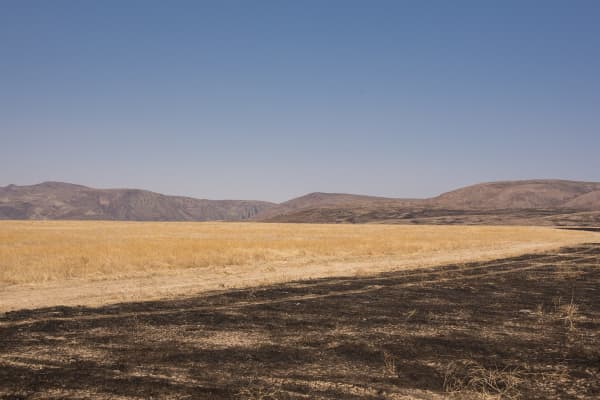

Utah Valley sits at about 4,500 feet in a high-desert basin, with a lake on one side and an eleven-thousand-foot wall of mountain on the other. Summers run hot and extraordinarily dry. Winters bring cold, snow, and an inversion that parks pollution over the valley floor for a week at a stretch.
That combination produces heating and cooling problems that don't quite match what national advice assumes. Here's what matters for a house in this valley.
The swamp cooler question
Newcomers to Utah are routinely baffled by evaporative coolers — the boxy units on the roof, the open window requirement, the smell of wet pads in June. In most of the country they'd be useless. Here they're a legitimate primary cooling system, and understanding why explains a lot about the valley.
Fetched live from AirNow when this page loads, so it is current whichever day you are reading this.
Evaporative coolers work by pulling outside air through water-saturated pads. Water evaporates, the air cools, and that cooled air is pushed into the house. The physics only works when the outside air is dry enough to absorb the moisture — and Utah Valley summer air is very dry.
What they're good at: cooling for a fraction of the electricity an air conditioner uses, constantly bringing in fresh outside air, and running cheaply through the long dry stretch from roughly June into August.
Where they fall down:
- Late-summer humidity. When monsoon moisture pushes into Utah, typically in the back half of summer, effectiveness drops noticeably. Those are the weeks people curse their swamp coolers.
- They need an open window. Air has to go somewhere. This is a genuine downside during wildfire smoke episodes or high-pollen days.
- Seasonal maintenance is mandatory. Startup in spring, shutdown and drain in fall. Skip the fall drain and you risk freeze damage to the water line.
- Humidity indoors. They add moisture, which is pleasant in a dry climate and a problem if your house already has moisture issues.
The hybrid approach — air conditioning plus a swamp cooler, running whichever suits the week — is common in the valley and makes sense if you already have both. Installing both from scratch is harder to justify.
Furnaces, dry air, and the inversion
Winter here is cold enough that heating is not optional, and the dry air creates a set of side effects people often don't connect to their HVAC system.
Dry air is the theme. Winter indoor humidity in Utah Valley homes routinely drops to levels that cause static shocks, cracked lips, nosebleeds, poor sleep, and separating wood floors and trim. Whole-house humidifiers integrated with the furnace are far more common here than in most of the country, and for good reason. They also require maintenance — a neglected humidifier is a mold problem waiting to happen.
Inversion is the other theme. During a strong inversion, the valley's air is bad for days at a time, and that outdoor air becomes indoor air. Filtration is the lever you control:
- Use a better filter than the cheapest option, and change it on schedule — during inversion season, that may mean more often than the box suggests.
- Don't automatically buy the highest-rated filter you can find. Very restrictive filters can strain systems that weren't designed for the airflow reduction. Check what your equipment supports, or ask a technician.
- Portable purifiers in bedrooms are a reasonable supplement for households with asthma or young children.
Our Utah Valley air quality context touches on the seasonal pattern; the practical HVAC takeaway is that January is when your filter earns its keep.
The seasonal service calendar
The single most valuable thing in this article is a calendar, because the valley's HVAC demand is brutally seasonal and the people who plan around it get better service for less money.
Late summer / early fall — service the furnace. Before the first cold snap. This is the highest-leverage appointment of the year.
Fall — shut down and drain the swamp cooler. Before the first hard freeze. A cracked supply line discovered in April is a preventable expense.
Spring — start up the swamp cooler, service the AC. Same logic in reverse. New pads, check the float, check the belt, look at the roof mount.
Any time — change filters. More often during inversion season and during wildfire smoke.
What to avoid: calling during the first heat wave or the first cold snap. Everyone else is calling then too. If your system fails at that moment you have no choice, which is precisely the argument for the preventive appointment.
Hiring HVAC without getting oversold
HVAC is one of the trades where the gap between a repair and a replacement is measured in thousands of dollars, and the person telling you which one you need is the person selling both. That's not an accusation — it's a structural conflict that exists in every market, and it means the burden of care is on you.
Verify the license. Utah licenses HVAC contractors through the Division of Professional Licensing, and the lookup is free. Our guide to hiring home pros in Utah Valley covers the full vetting process, and it applies here in full.
Get a second opinion on any replacement recommendation. A repair diagnosis you can usually take at face value. A five-figure replacement recommendation deserves a second technician's eyes, especially if it arrives during the busy season or with urgency attached.
Ask for the sizing calculation. Equipment that's too large for the house short-cycles, wears out faster, and dehumidifies poorly. "Bigger is better" is wrong for HVAC. A contractor who sizes by square footage alone rather than a proper load calculation is guessing.
Ask what happens to the old equipment, whether the permit is included, and whether the bid covers ductwork modifications — the three most common places for a bid to quietly exclude something.
Be skeptical of maintenance-plan pressure. Some are good value. Some are subscription products with a tune-up attached. Read what's included.
Ducts, insulation, and the things that matter more than equipment
A recurring frustration for homeowners: they replace a furnace, and the house still has cold rooms. Usually the equipment was never the problem.
Duct leakage is the quiet efficiency killer, especially in older Provo homes where ducts run through unconditioned crawlspaces and attics. Air you paid to heat leaks into a space you don't live in.
Insulation in older valley housing stock is often well below current standards. Attic insulation is typically the cheapest meaningful upgrade available and pays back faster than most equipment swaps.
Air sealing — the gaps around windows, doors, outlets, and penetrations — matters more than people expect in a climate with a 100-degree swing between summer highs and winter lows.
If your house is uncomfortable, the order of operations is usually: air sealing and insulation first, ductwork second, equipment third. Most homeowners do it exactly backwards, because equipment is the thing that visibly broke.
For renters and students
A note for the large share of the valley living in rentals, particularly the student housing around both campuses.
You generally can't replace equipment, but you can control filters (ask the landlord who's responsible — often it's you), you can control window coverings, which matter enormously in a valley with intense summer sun, and you can document heating failures in writing. Utah landlord-tenant law addresses habitability, and heat in winter falls under it. Put requests in writing and keep copies.
For everything else about renting in the valley, see our first-time renter's checklist.
The short version
- Swamp coolers work here. They struggle in late-summer humidity, and they need seasonal startup and shutdown.
- Service the furnace in early fall, the AC in spring, and never call during the first hot or cold week if you can avoid it.
- Winter dry air and inversion are the two climate facts that shape indoor comfort — humidification and filtration are the responses.
- Verify licenses through DOPL, get a second opinion on any replacement, and ask for a load calculation rather than a square-footage guess.
- Insulation and air sealing usually beat new equipment for comfort per dollar.
Reading your energy bill
Understanding what drives your heating and cooling costs makes the improvement decisions much easier to prioritize.
Utah Valley's bills are seasonally lopsided. Natural gas heating dominates winter costs, while summer costs shift to electricity — dramatically so in homes with air conditioning rather than evaporative cooling. Comparing a January bill to a July bill tells you very little; compare January to last January.
Look for the year-over-year comparison most utilities print. A meaningful jump against the same month last year, with similar weather, points at either equipment degradation or a change in the building envelope.
Thermostat setbacks work, and the savings are larger in a climate with big temperature differentials. A programmable or smart thermostat pays for itself relatively quickly here — though note that setbacks behave differently with heat pumps than with gas furnaces, so check what you have before programming aggressive swings.
Ceiling fans help in both directions. In summer they let you hold a higher thermostat setting comfortably. In winter, run in reverse at low speed, they push warm air down off the ceiling — which matters in the vaulted ceilings common in newer valley construction.
Heat pumps, and whether they work here
Heat pumps have improved substantially and are increasingly promoted in Utah, including through utility incentive programs. The honest assessment for this valley:
They work well in the shoulder seasons and through much of a typical Utah Valley winter. Modern cold-climate heat pumps maintain useful efficiency at temperatures that would have defeated older equipment.
Deep cold reduces efficiency, and most installations here pair a heat pump with a backup heat source for the coldest stretches — commonly a gas furnace in a dual-fuel configuration that switches based on outdoor temperature.
They provide cooling too, which makes them a single-system answer for homes currently running a furnace plus a swamp cooler or aging AC.
Incentives change. Utility rebates and federal tax credits for efficient equipment have shifted repeatedly. Verify what's currently available before assuming a quoted incentive still exists — and get any incentive claim in writing from the contractor rather than taking it verbally.
Maintenance plans, and the renewal law that governs them
At the end of a service call the technician will usually offer a plan. Three different products get sold under similar names, and they are not interchangeable.
An equipment warranty comes from the manufacturer and covers parts on a specific unit for a specific term. A maintenance agreement buys scheduled visits, typically a spring cooling check and a fall heating check, sometimes with a discount on repairs and priority scheduling. A home service or repair contract is closer to insurance: it pays toward breakdowns rather than buying visits. Only the second and third are things you can be renewed into, and those are the ones Utah regulates.
Utah's Service Contracts Act, Title 15, Chapter 10, applies to a contract for service, maintenance, or repair in connection with real property or providing a benefit to it. A maintenance agreement on the furnace attached to your house is exactly that. The Act's definition of an automatic renewal provision has a threshold worth noticing: it applies where the renewal carries the contract more than six months past the day it started and takes effect unless you give notice. A plan billed monthly that simply keeps going crosses that line quickly.
Where the Act applies, the company has to do two things. For an agreement executed on or after July 1, 2011 with a renewal period exceeding 12 months, the automatic renewal must be prominently displayed on the first page of the contract. And the company must separately deliver written notice of the renewal by one of exactly three methods: in person, by certified mail, or prominently displayed on the first page of a monthly statement. That notice must be in clear language and readable type, and it must land no later than 30 and no sooner than 90 calendar days before the last day you can give notice to terminate. Delivered any other way, or outside that window, it does not satisfy the statute.
If the company gets it wrong, Utah Code § 15-10-202 makes the automatic renewal provision void and unconscionable as a matter of public policy and converts the contract to a month-to-month renewal.
Two limits, so this is not oversold. The Act governs renewal, not price. A properly delivered notice can accompany a substantial increase and the increase stands; your remedy is to cancel on time, not to dispute the number. And the Act excludes contracts affecting an interest in real property, which is why a rooftop solar lease or a power purchase agreement is a different instrument governed by different terms. If you are weighing one of those, our home solar guide covers what changed in the economics.
For renters, none of this is yours to manage. Your landlord holds any maintenance agreement on the building's equipment, and the repair obligation that matters to you runs through the lease and Utah's habitability rules rather than through a service plan. Our renters' rights guide is the right starting point.
The practical version: when the plan is offered, ask for the first page rather than a verbal summary, ask what date the termination notice is due, and put that date in a calendar before you sign. This is general information rather than legal advice.
The six-month threshold, worked through, because it decides whether any of this applies. Buying a fall furnace check in October and separately buying a spring cooling check in April is not a renewing contract at all; it is two purchases, and nothing here governs it. Signing a plan in March that rolls into a second year the following March plainly crosses the line. The middle case is the common one: a plan billed monthly with no stated end, which reaches past six months from the day it started the moment it is allowed to continue without your say-so. If you cannot tell from the paperwork which of the three you bought, that is itself worth asking about before you sign.
Equipment lifespans, service pricing, and available filtration options vary. Consult a licensed HVAC contractor for recommendations specific to your home.
Related Guides
- Appliance Repair in Utah Valley: Utah Deliberately Does Not License the Person Fixing Your Dryer
- Finding an Electrician in Provo: The Supervision Rule Nobody Explains
- Hiring Movers in Utah Valley: How to Vet One, What Protects You, and the Two-Week August Crunch
- Pest Control in Utah Valley: What You'll Actually Deal With
- Finding a Plumber in Provo: Who Owns Which Pipe, and What Actually Breaks Here
- Waterwise Landscaping in Utah Valley: Lawns, Localscapes & Actually Saving Water
- Asbestos and Lead in Older Utah Valley Homes: The Exemption Turns on Whether You Live There
- Garage Doors in Utah Valley: Two Federal Dates, One Spring, and the Test You Should Run Tonight
- Fences, Sheds and Setbacks in Utah Valley: Why Every City Answers Differently
- Sprinkler Repair and Winterization in Utah Valley: The 30-Inch Number That Decides It
- Allergies and Asthma in Utah Valley: The Nine-Month Season, and Why the Air Here Makes It Worse
- Frozen Pipes in Utah Valley — what happens when the heat goes off
Frequently Asked Questions
Do swamp coolers work in Utah Valley?
When should I service my furnace in Utah?
How does winter inversion affect indoor air quality?
How long does a furnace or AC last in Utah Valley?
Should I replace my swamp cooler with air conditioning?
Are HVAC maintenance plans in Utah subject to automatic renewal rules?
How is a company required to notify me before my maintenance plan renews?
Can my HVAC company raise the price of my maintenance plan at renewal?
Sources
The facts in this guide were checked against these sources. Hours, fees and rules change, so confirm anything time-sensitive with the source before you go. How we make Provo.com.
- Utah Code Title 15 Chapter 10 Service Contracts Act, Utah Legislature. Checked October 12, 2026.