
The valley is full of a category of business that most people believe no longer exists.
Ask around and you will be told there is nowhere to get shoes resoled anymore, that nobody fixes watches, that a sewing machine is a disposable object. None of that is true here. What is true is that the shops doing this work are one-person operations with short hours, no marketing, and in several cases no meaningful web presence — so the only way to know they are there is to be told.
This is that list, plus the more useful half: how to tell in advance whether a given object is worth repairing at all.
Shoes and boots
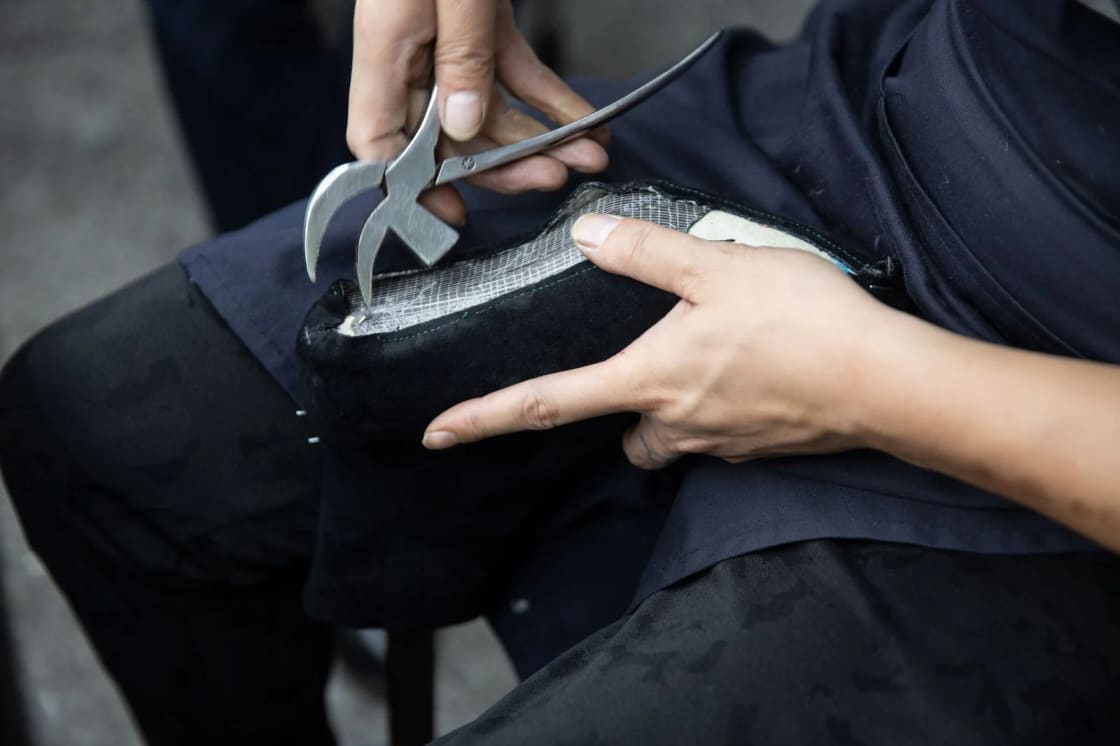
Blue Stone Shoe Repair, Provo. This is the cobbler. Mark works on resoles, boot rebuilds, heel replacement, belts, bags and leather generally, and the customer record is about as strong as a small trade business gets — before-and-after photographs from construction workers, wedding-week emergencies turned around the same day, and a striking number of people describing work another shop had already botched.
The hours are the thing to plan around: afternoons Tuesday through Friday, a short Saturday morning, closed Sunday and Monday. That is a one-person schedule and it makes sense once you understand why (see below).
Several customer accounts mention something that reads as a small piece of local history: that a longstanding downtown shoe store used to offer repair and stopped, and that this shop is where the capability went. Modern Shoe is still very much in business and is worth knowing about for a different reason — it is the valley's serious fitting store, with staff who measure feet and know their inventory, which is the front half of the same problem. Buy shoes worth repairing there; get them repaired down the road.
Is your shoe repairable?
Turn it over and look at where the sole meets the upper.
A visible line of stitching running around the perimeter means a welted construction — Goodyear welt, stitchdown, or a variant. This is a shoe designed from the start to be taken apart and resoled, and the upper will typically outlive several soles. Resoling is not a rescue here; it is scheduled maintenance, and the economics are obvious.
A smooth join with no stitching means the sole is cemented — glued directly to the upper. A good cobbler can often still help: re-gluing, a new outsole, a rebuilt heel. But the shoe was not built for the operation and the result is a repair rather than a renewal.
Heels, in either case, are almost always worth doing and are cheap relative to the shoe. The rule that saves the most money is to bring shoes in when the heel is worn but before the wear reaches the structure underneath it. Past that point you are paying for a rebuild instead of a heel.
Boots are the strongest case of all. Work boots, hiking boots and quality western boots are frequently welted, and a rebuild costs a fraction of replacement on anything decent.
Watches
Mullett-Hoover Jewelers, Provo, is a family business with a watchmaker on the bench. The review record includes an instructive case: a customer with a thirty-year-old watch whose manufacturer said the parts no longer existed was referred here by a chain jeweler, and was told the part could be sourced or made.
That is the actual value of an independent watchmaker, and it is worth stating clearly. A manufacturer's service department is in the business of replacing modules. A watchmaker is in the business of repairing mechanisms. When a brand says a watch is unserviceable, that frequently means unserviceable within their process, not unserviceable.
Two limits worth knowing. The hours are weekday-only and the shop is closed Saturday as well as Sunday, which rules it out for anyone who cannot get downtown on a workday. And no independent takes every movement — the review record includes a customer turned away on a perpetual-calendar piece who had it done elsewhere. Call and describe the watch before you drive over.
For a plain battery change, you do not need a watchmaker. The jewelry counters at University Place in Orem do batteries quickly, and several will do it while you wait.
Two things worth paying for on a watch you care about: a proper gasket and pressure test after any case opening, because a battery change by someone who does not reseal the case is how water gets in; and a full service on a mechanical watch every several years, which is lubrication and cleaning rather than repair, and which is what keeps the movement from wearing itself out.
Jewelry
The question that determines everything is whether the shop has a bench jeweler on the premises or sends work out. On-site means hours or days and a person you can talk to; sent-out means a shipping schedule in both directions.
The Jeweler's Bench, Provo. Repair alongside custom work, weekday hours, closed Saturday and Sunday. The review record is heavy with people describing being sat down and walked through options before anything was quoted, which is the behavior you want.
Forge Jewelry Works, Provo. Larger, does custom design and manufacture as well as repair, and open six days including Saturday.
Jewelry Doctor, inside University Place, Orem. The long-hours option — open until late, six days a week — and the review record is full of same-hour resizes, prong repairs and quotes that came in far under what people had been told elsewhere. One account describes the shop identifying that a ring sold as silver was plated copper, and saying so before doing the work rather than after.
Bring jewelry in when a prong looks bent or worn, not when a stone is already gone. A retipped prong is a small job; a replaced stone is not, and a lost stone is frequently unreplaceable in kind. Have anything you wear daily checked periodically — the settings that fail are almost always the ones nobody looked at.
Sewing machines and vacuums
These two trades sit in the same shops nationally and they do here as well, for a straightforward reason: both are small motorized mechanisms with belts, bearings and drive trains, and the diagnostic skills overlap.
Dave's Bernina, Provo. Service and repair alongside sales, six days a week. Reviews describe multi-machine cleanings turned around inside a day, which for anyone driving in from outside the valley is the difference between one trip and two.
A-1 Vacuum & Sewing, Orem. Both trades, and a long local track record. One review worth repeating on principle: a fifty-five-year-old machine that a shop elsewhere had declared scrap was repaired here. That is the central fact about this category.
Wimmer's Sewing & Vacuums 360, Orem. Both trades, six days, and a review record notably heavy on transparent up-front pricing.
Nuttall's Sewing Centers, Pleasant Grove. The north-valley option, with the longest evening hours of the group on some days.
A pattern runs through all four sets of reviews and it is worth naming: a lot of the work these shops do is cleaning, oiling and tension adjustment, and a lot of it gets done at the counter for little or nothing. A machine that "stopped working" has usually accumulated lint in the race, lost its timing slightly, or been threaded through a worn tension disc. Before you buy a replacement, take the machine in. The number of people whose problem was solved in twenty minutes at a counter is remarkable, and none of them expected it.
Small engines
Mowers, trimmers, snowblowers, generators. The problem with this category is not the repair, it is the logistics — a mower does not fit in most cars, and the repair costs less than the hassle of getting it there.
Two Wheels Plus, Provo, works on small engines alongside motorcycles, dirt bikes and ATVs, and the review record specifically includes mowers. Weekday hours, closed Saturday and Sunday.
There are also mobile operators in Orem who collect equipment, service it and return it, which solves the transport problem entirely. Availability among these changes from season to season and the operators are small, so confirm before relying on one.
The seasonal point matters more than the shop choice: get it serviced in the off season. Every small-engine shop in the valley is buried in the first warm week of spring and again in the first snow, and both times the queue is full of machines that were fine three weeks earlier when nobody was busy.
Knives, zippers, bags and the odd jobs
A category of small repair falls between the trades above, and the answer is usually a shop that does something adjacent.
Knife and tool sharpening. Sharpening is offered as a sideline by several kinds of business rather than by dedicated shops — hardware stores, butchers, some outdoor retailers, and mobile sharpeners who work farmers markets and by appointment. The mobile route is often the best of them for kitchen knives, because a sharpener working a market will do a set while you walk the rest of the stalls. Ask before handing over a knife you care about whether it will be ground on a belt or on stones, since aggressive belt work removes a great deal of steel and a good chef's knife has a finite number of those in it.
Zippers. A failed zipper is one of the most repairable failures there is and one of the most commonly used as a reason to throw out a good bag or coat. Most of the time the teeth are fine and the slider has spread — a slider replacement is quick and cheap. Cobblers routinely do zipper work on bags and boots; alterations shops do it on garments.
Bags, luggage and belts. Blue Stone takes leather goods generally, not just footwear. Handles, stitching, linings and hardware on a decent bag are all straightforward bench work, and a well-made bag is worth several rounds of it.
Eyeglasses. Small hinge screws and adjustments are handled free or near-free at most optical counters in the valley, including for frames bought elsewhere. This is worth remembering before ordering a replacement pair over a loose arm.
What Utah's climate does to the things you own
There is a local dimension to all of this that people arriving from wetter states do not anticipate, and it changes what fails and when.
Dry air is hard on leather. Utah Valley sits in a high desert and indoor winter air is drier still. Leather that would stay supple for years elsewhere dries, stiffens and cracks along flex points here — the vamp of a shoe, the fold of a bag, the hinge of a belt. Conditioning leather two or three times a year is not fussiness in this climate; it is the difference between a resole and a write-off, because a cobbler can replace a sole and cannot replace a cracked upper.
Road salt and winter chemicals attack stitching and finish. The white tide line on a boot after a storm is salt, and left on it will keep working. Wipe it off with a damp cloth when the boots come inside rather than in April.
Irrigation water is hard across much of the valley, and hard water is unkind to small mechanisms — it is one reason steam irons and some appliances fail earlier here than the manual predicts.
Summer sun at this elevation is fierce. Ultraviolet degrades adhesives and synthetic soles, which is why a pair of shoes stored in a hot car or a sunlit window can develop crumbling soles without ever being worn. If a rarely-used pair has failed while sitting still, that is usually what happened, and it is a genuine repair candidate rather than a mystery.
Why the hours are like this
It is worth understanding rather than being annoyed by, because it changes how you approach these shops.
Almost every business on this page is one person, or one person plus family. A cobbler at the bench is not at the counter. A watchmaker with a movement open cannot stop to sell a strap. So the counter opens for part of the day and the rest of the day is production — which is why you see afternoon-only hours, closed Mondays, and shops that shut on Saturday when retail is busiest.
This is not decline. It is the ordinary shape of a skilled trade run by a single pair of hands, and it has looked like this for a century.
What it means practically:
- Call first. Every time. Posted hours are the start of a conversation.
- Do not expect a website. Several of the best shops here have essentially no online presence, and their review pages are more informative than anything they publish themselves.
- Do not expect an instant quote by phone. These trades price by looking at the object. A phone quote is a guess and a good tradesperson will tell you so.
- Expect the work to be personal. The person quoting is usually the person doing it, which is exactly why these shops outperform on complex jobs and exactly why they cannot be rushed.
When repair loses
Honesty is more useful than romance here. Repair is not always right.
It loses when the part is unobtainable and cannot be fabricated — some electronics, some proprietary modules, which is its own separate calculation. It loses when the labor exceeds replacement value for something with no sentimental weight and no quality advantage. It loses when the object was cheaply made and the failure is one of several that are coming.
It wins when the object was well made in the first place, when the failure is one component rather than general fatigue, when a replacement of equivalent quality would cost many times the repair, and whenever the object is irreplaceable to you — which is a real category that a spreadsheet does not capture.
The good tradespeople on this page will tell you which situation you are in. Several of the reviews quoted above are from people who were told not to spend the money. Take that seriously when you hear it: someone declining paid work is giving you the most reliable information available.
The short version
Blue Stone in Provo for shoes and leather, afternoons only. Mullett-Hoover for watches, weekdays only. The Jeweler's Bench and Forge in Provo and Jewelry Doctor in Orem for jewelry, with Jewelry Doctor holding the longest hours. Dave's Bernina in Provo, A-1 and Wimmer's in Orem, Nuttall's in Pleasant Grove for sewing machines and vacuums. Two Wheels Plus for small engines, plus mobile mower operators if transport is the obstacle.
Look for stitching around the sole before writing off a shoe. Get the quote and the timeframe before work starts. Ask whether work stays on the premises. Service small engines in the off season. And call first — every one of these places is somebody's hands, and hands are not always at the counter.
Related Guides
- Dry Cleaning & Alterations in Provo: Suits, Missions & Wedding Deadlines
- Phone & Computer Repair in Provo: Who Fixes What, and When Not To
- Hardware Stores in Utah Valley: Three Formats, and the One Most People Under-Use
- Thrift & Vintage in Provo and Orem: The Complete Secondhand Guide (2026)
- Provo Weather by Month: Seasons, Snow, Inversion & the Best Time to Visit (2026)
- Finding a Trustworthy Mechanic in Utah Valley
- Sprinkler Repair and Winterization in Utah Valley: The 30-Inch Number That Decides It
Frequently Asked Questions
Is there a shoe repair shop in Provo?
Who repairs watches in Provo?
Where can I get a ring resized or a broken prong fixed?
Who fixes sewing machines in Utah Valley?
Is it worth repairing shoes rather than replacing them?
Why are the hours at these shops so strange?
Where can I get a lawn mower or small engine repaired?
How do I avoid a bad repair experience?
Sources
The facts in this guide were checked against these sources. Hours, fees and rules change, so confirm anything time-sensitive with the source before you go. How we make Provo.com.
- Dave's Bernina. Checked October 12, 2026.