
Every region has its own pest profile, and Utah Valley's is distinctive enough that advice written for the Southeast or the Midwest will send you chasing problems you don't have while missing the ones you do. No termite-swarm season to speak of. No cockroach culture. Instead: a nuisance insect that arrives by the thousands, rodents that come down out of the fields, wasps that peak exactly when you want to be outside, and the valley's own particular relationship with door-to-door pest sales.
Here's the real list.
Boxelder bugs: the valley's signature pest
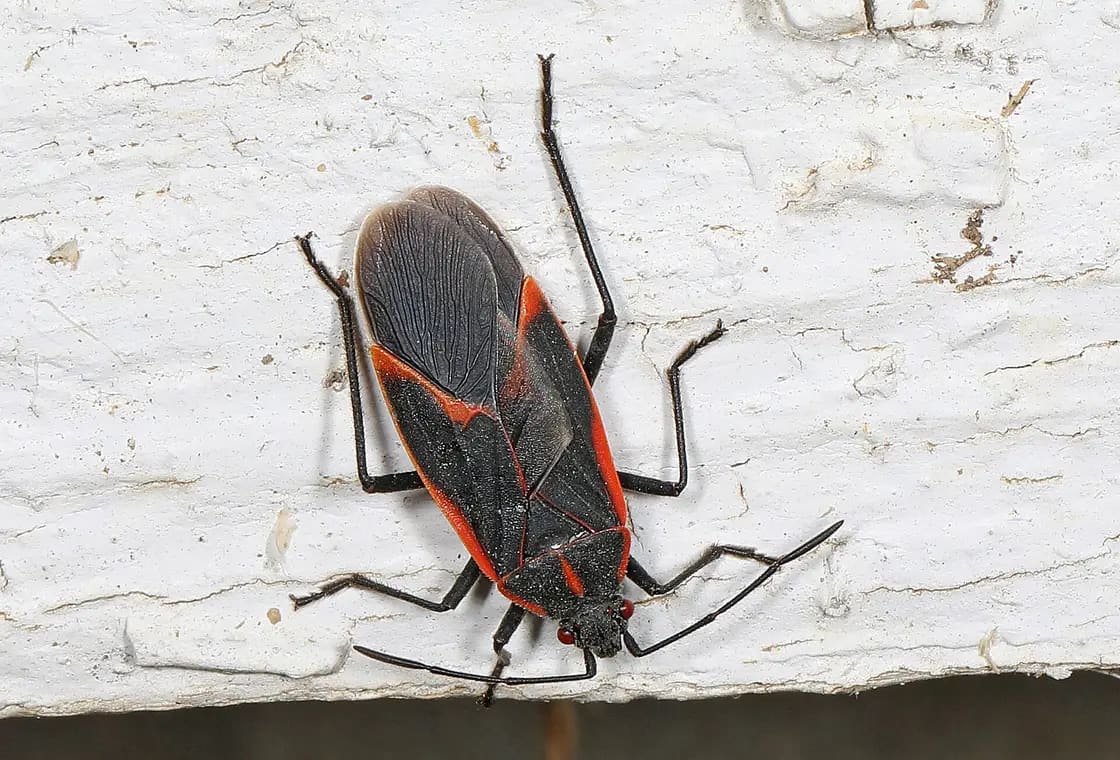
If you're new to Utah and there are hundreds of black bugs with red markings covering the sunny side of your house, that's a boxelder bug, and the news is better than it looks.
They are harmless. They don't bite or sting. They don't damage the structure. They don't eat your plants in any meaningful way. They don't breed indoors, and they don't infest food. They are, in every practical sense, a visual nuisance — an overwhelming one, but only that.
They appear in force twice a year: spring, when they emerge and gather on warm surfaces, and fall, when they cluster on south- and west-facing walls seeking a place to overwinter. Some get inside, where they wander around looking confused and eventually die.
What works:
- Exclusion, above all. Seal cracks, gaps around windows and doors, utility penetrations, and foundation gaps. This is the durable fix.
- Vacuum the indoor ones. Don't crush them — they can stain surfaces and have an unpleasant odor.
- Soapy water on outdoor clusters kills on contact and costs nothing.
- Remove nearby female boxelder trees if you're planning landscaping anyway — though given they fly readily, your neighbor's trees will still supply plenty.
What doesn't: perimeter spraying as a primary strategy. New bugs arrive continuously from surrounding trees, so you're paying to kill a wave that gets replaced tomorrow. This is one of the most common services sold to new Utah residents who don't yet know the bug is harmless.
Wasps and hornets
Utah Valley gets paper wasps, yellowjackets, and bald-faced hornets, and the seasonal curve matters enormously.
Colonies start small in spring and reach peak population and peak aggression in late summer and early fall. By August, yellowjackets in particular shift their foraging toward sugars and protein scraps, which is why they suddenly appear at every barbecue, garbage can, and soda cup in September.
The high-leverage move is early-season removal. A nest the size of a golf ball in May is a two-minute job. The same colony in September is a mature nest with hundreds of defenders. Walk your eaves, deck underside, playground equipment, and shed in late spring.
Hand these to a professional: nests inside wall voids or attics, nests high on the structure, large mature nests, and anything at all if someone in the household has a sting allergy. Wall-void nests in particular are worth not improvising on — sealing the entrance without treating drives them into the house.
Rodents: mice, and the vole problem
Mice come indoors in fall as temperatures drop, and Utah Valley's mix of older housing stock and homes bordering open land makes this routine rather than exceptional. Exclusion is the answer: mice fit through remarkably small gaps, so sealing entry points, weatherstripping doors, and screening vents does more than any amount of trapping. Trap the ones already inside; seal so the next ones can't follow.
Voles are more specifically a Utah Valley story. They're small rodents that tunnel at the surface, and their damage shows up dramatically at snowmelt — a lawn crossed with winding surface runways where they traveled under the snow all winter. Properties near fields, canals, and open space get hit hardest.
Turf damage is mostly cosmetic and grows out. The real concern is young trees, which voles will girdle at the base over winter, killing them outright. Trunk guards on young trees are cheap insurance.
The durable fix is habitat: voles need cover to move under. Mowed edges, mulch pulled back from trunks and foundations, and cut-back ground cover near the lawn remove the corridors they use. Worth settling before a yard redesign rather than after — our waterwise landscaping guide arrives at the same mulching rule from the other direction, because mulch piled against bark holds moisture and invites rot.
Deer mice deserve a specific mention: in the Intermountain West they can carry hantavirus, which is rare but serious. The relevant precaution is not sweeping or vacuuming dry rodent droppings in enclosed spaces like sheds, cabins, and crawlspaces — wet the area with disinfectant first and ventilate. This is worth knowing before you clean out a shed that's been closed all winter.
Spiders
The two names people ask about:
Black widows are present in Utah Valley and venomous. They favor undisturbed, sheltered spots — window wells especially, plus woodpiles, garages, crawlspaces, under outdoor furniture, and inside rarely-moved storage. Bites are uncommon but warrant medical attention. Practical response: gloves when reaching into stored items, keep window wells clear, and reduce clutter in garages and crawlspaces.
Hobo spiders have a complicated reputation in Utah. They were widely blamed for necrotic bites for years, but that claim has substantially weakened in the scientific literature, and current consensus is far more skeptical. They're common; the alarm was likely overstated.
Everything else you find indoors is almost certainly harmless, and most of it is actively useful. Cellar spiders and jumping spiders eat other insects.
Ants, and the rest
Ants are the most common reason valley households call for treatment. Odorous house ants and pavement ants are typical, and the pattern is seasonal — they come inside seeking water in the heat of summer and again after heavy rain. Because colonies are usually outside the structure, effective control means baiting so workers carry the bait back to the colony, not spraying visible trails, which kills foragers and accomplishes little. Spraying an ant trail is the single most common self-defeating pest control action.
Earwigs thrive in irrigated Utah Valley landscapes and turn up in mulch, under pots, and in damp basements. Ugly, harmless, and mostly a moisture-management issue.
Elm seed bugs are a newer arrival that behaves much like boxelder bugs — nuisance clustering, no damage.
Mosquitoes are heavily influenced by proximity to Utah Lake, wetlands, and irrigation. Utah County operates mosquito abatement, and the household-level lever is eliminating standing water — a neglected bucket or clogged gutter produces a startling number.
Termites exist in Utah but are far less prevalent than in warmer, wetter states. Don't buy fear on this one without evidence.
Hiring, and the door-to-door problem
Utah Valley is the national epicenter of the door-to-door summer sales industry — pest control in particular. Crews of college-age salespeople work neighborhoods across the valley every summer, and the industry is deeply woven into the local economy.
That's not an accusation of fraud. Plenty of these companies do fine work. But it does mean you will be sold to, repeatedly, at your front door, by someone trained in closing, and the offer will usually be an annual contract.
Before signing anything:
- Name the problem first. If you can't identify a specific pest issue, you probably don't need a year of quarterly service.
- Read the contract term and cancellation terms. Multi-visit agreements with early-termination fees are standard in this industry, and the initial discounted visit is often followed by higher recurring charges.
- Verify licensing. Commercial pesticide application in Utah is regulated and requires certification. Ask, and verify rather than accept a business card.
- Ask what they're applying and where. A company that can't tell you plainly is a company to skip — this matters if you have kids, pets, a garden, or pollinator plantings.
- Don't buy under time pressure at the door. "We're doing your neighborhood today" is a sales technique. A legitimate company will happily come back.
Our guide to hiring home pros in Utah Valley covers the general vetting framework, and the same red flags apply.
The approach that works for most households
Almost all of Utah Valley's pest pressure responds to the same three unglamorous habits:
- Seal the building. Gaps around utility penetrations, foundation cracks, door sweeps, window screens, vents. This addresses boxelder bugs, mice, spiders, and elm seed bugs simultaneously.
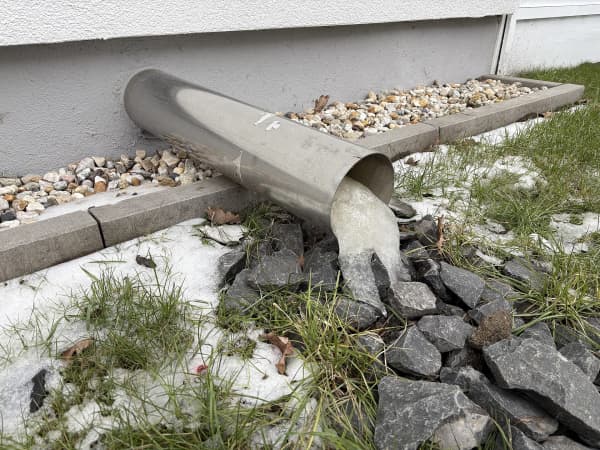
- Manage moisture and cover. Fix leaks, direct downspouts away, clear standing water, pull mulch back from the foundation, and keep vegetation trimmed off the structure.
- Deal with things early. A small wasp nest in May, an ant trail in June, a vole population in the first fall — all vastly easier than the mature version.
Do those, and most households in this valley need occasional targeted treatment rather than a standing contract. That's the honest version, even if it's not the one being pitched on your porch in July.
A month-by-month calendar
Pest pressure here is predictable enough to plan around.
March–April. Boxelder bugs emerge and cluster on warm walls. Voles reveal winter turf damage at snowmelt — repair and assess tree damage. Check for wasp queens starting nests.
May–June. The highest-leverage month: remove small wasp nests before colonies build. Ants come indoors seeking water. Seal exterior gaps while the weather is good.
July–August. Peak ant and earwig activity. Mosquitoes near water and irrigated areas. Door-to-door pest sales season is at its height.
September–October. Wasps at peak aggression around food and garbage. Boxelder bugs cluster on south and west walls seeking overwintering sites. Mice begin moving indoors — this is the month to seal entry points, before they're already inside.
November–February. Mostly quiet outdoors. Indoor mouse activity continues. Spiders in undisturbed storage. Good season for the exclusion work you didn't get to in the fall.
When the animal is bigger than a mouse
Everything above concerns insects and commensal rodents. Raccoons, striped skunks, squirrels, bats, snakes and birds are a different trade with a different rulebook — Utah lets you take some of them without a license of any kind, and specifically does not let you trap and relocate them. Our guide to wildlife removal in Utah Valley covers which animal falls in which category, why bats are handled separately, and how to hire an operator registered with the state.
Exclusion, done properly
Since exclusion is the answer to most of the valley's pests, it's worth being specific about what it involves.
Mice can pass through gaps far smaller than seems plausible. Steel wool or copper mesh packed into gaps, then sealed, works because they can't chew through it. Focus on utility penetrations — where pipes, wires, and vents enter the structure — plus garage door seals, which are the single most common entry point in the valley's newer homes.
Door sweeps and weatherstripping address mice, boxelder bugs, spiders, and earwigs simultaneously, and improve your heating bill.
Window screens and vent screens, intact and properly fitted, handle most flying insects.
Foundation and siding gaps, caulked. Pay attention to the sunny south and west walls, which is exactly where boxelder bugs congregate before finding their way in.
Crawlspace and attic access points are worth checking annually — they're out of sight, which is precisely why they get missed.
The annual contract, and what Utah's Service Contracts Act does to it
The advice above is to read the cancellation terms before signing. This is the part that reading the contract will not tell you: Utah has a statute that governs how these agreements are allowed to renew, and a company that ignores it loses the renewal.
Utah's Service Contracts Act, Title 15, Chapter 10 of the Utah Code, applies to a contract for service, maintenance, or repair in connection with real property, or that provides a benefit to the real property. Quarterly pest treatment at your house is squarely inside that definition. The Act then defines an automatic renewal provision narrowly: the renewal has to carry the contract past six months from the day it started, and it has to take effect unless you give notice to terminate. A standard annual pest agreement that rolls over on its own is exactly that shape.
Where the Act applies, Utah Code § 15-10-201 imposes two separate requirements.
Disclosure on the contract. For an agreement executed on or after July 1, 2011 whose renewal period exceeds 12 months, the automatic renewal provision must be prominently displayed on the first page of the contract.
A separate renewal notice, delivered one of only three ways. The seller must also give written notice of the automatic renewal in person, by certified mail, or prominently displayed on the first page of a monthly statement. Those three are the whole list. An email, a text, a note on an invoice's back page, or a line in a company newsletter is not one of them. The notice has to be in clear and understandable language and printed in an easy-to-read size and style, and it has to arrive inside a specific window: no later than 30 calendar days, and no sooner than 90 calendar days, before the last day you can give notice that you intend to terminate. A notice sent outside that window does not count.
The remedy is the part worth remembering. Under Utah Code § 15-10-202, if the seller did not comply, the automatic renewal provision is void and unconscionable as a matter of public policy, and the contract instead renews on a month-to-month basis. In plain terms: the additional year you were told you owe, and the early-termination fee calculated against it, may rest on a renewal that the statute does not recognize.
Three habits make this usable rather than theoretical. Keep the signed first page, since that is where the required disclosure has to appear. When you sign, work out the last date you can give termination notice and put it in a calendar with a reminder a month ahead of it. And when a renewal notice arrives, keep it along with the envelope, because how and when it was delivered is the whole question.
This is general information, not legal advice, and the statute has exemptions and definitions worth reading in full before relying on it. Complaints go to the Utah Division of Consumer Protection.
Pest pressure varies by location, season, and year. For infestations involving stinging insects, rodents in living spaces, or any structural damage, consult a licensed professional.
Related Guides
- Finding a Plumber in Provo: Who Owns Which Pipe, and What Actually Breaks Here
- Chimneys and Fireplaces in Utah Valley: Even an EPA-Certified Stove Is Illegal on a Mandatory Day
- Asbestos and Lead in Older Utah Valley Homes: The Exemption Turns on Whether You Live There
- Hiring Movers in Utah Valley: How to Vet One, What Protects You, and the Two-Week August Crunch
- Heating & Cooling in Utah Valley: What This Climate Does to Your HVAC
- Radon in Utah Valley: One in Three Homes, and the Only Way to Know Is to Test
- Tree Removal in Utah Valley: The Tree Out Front Probably Isn't Yours
- Appliance Repair in Utah Valley: Utah Deliberately Does Not License the Person Fixing Your Dryer
- Handyman Services in Utah Valley: The Dollar Threshold Everyone Quotes and Nobody Agrees On
Frequently Asked Questions
What are those black and red bugs all over my house in Utah?
Do I need a pest control contract in Utah Valley?
Are there dangerous spiders in Utah?
How do I get rid of voles in my lawn?
When are wasps worst in Utah Valley?
Can a Utah pest control company automatically renew my annual contract?
What happens if the company never sent a proper renewal notice?
Does the Service Contracts Act cover every service I buy for my home?
Sources
The facts in this guide were checked against these sources. Hours, fees and rules change, so confirm anything time-sensitive with the source before you go. How we make Provo.com.
- Utah Code Title 15 Chapter 10 Service Contracts, Utah State Legislature. Checked October 12, 2026.