
Utah County has roughly the population of Salt Lake City and a fraction of its public charging. That is the honest starting point, and it shapes every practical decision below.
Public fast charging here is thin, clustered along the I-15 and State Street corridor, and heavily weighted toward one network. Away from that corridor — up the canyons, out toward Eagle Mountain, south of Spanish Fork — it drops off quickly. None of that makes an EV impractical in the valley. Most owners here charge at home and touch a public charger only on road trips. But it does mean that the assumptions you might import from California or the Wasatch Front's north end do not transfer cleanly.
If you are weighing an EV against a conventional car more broadly, the car ownership guide covers registration, inspection and insurance in Utah County.
First, the distinction that matters most
There are two fundamentally different things called charging, and confusing them is the single most common source of frustration.
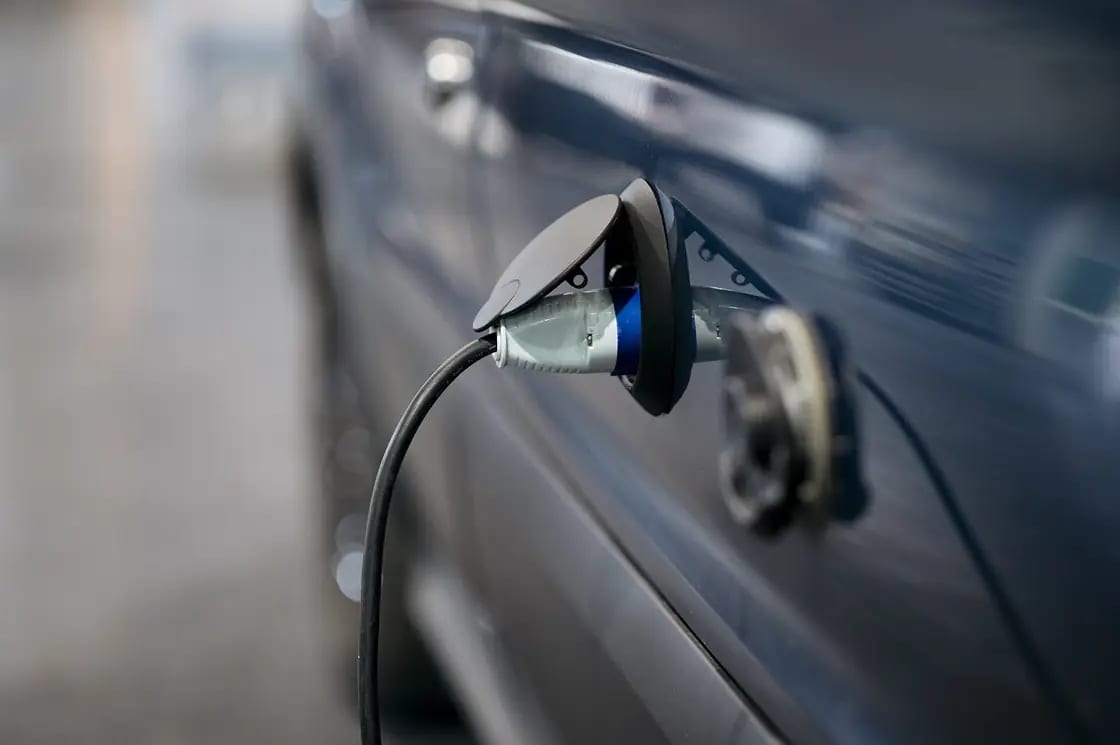
Level 2 is the everyday kind — 240 volts, the same class of circuit as an electric dryer. It adds something in the region of twenty to forty miles of range per hour depending on the vehicle. This is what you install at home and what most workplaces, hotels and parking garages provide. It is designed for a car that sits for hours.
DC fast charging, sometimes called Level 3, is the road-trip kind. It bypasses the car's onboard charger and can move a typical EV from twenty to eighty percent in twenty to forty minutes. It is expensive to install, which is why there are comparatively few sites.
When somebody says Utah County lacks charging, they mean DC fast charging. Level 2 is scattered fairly widely. The point matters because a Level 2 charger listed on a map at your destination is not going to rescue a car that arrives with eight percent.
The DC fast charging sites, by usefulness
Rocky Mountain Power, State Street in Orem is one of the utility's own company-built fast-charging sites and is arguably the best public charging in the valley and the least known. Drivers report strong delivered speeds when the site is not busy. Check the utility's site for current payment options and any customer discount.
The no-app-required part deserves emphasis. Anyone who has stood in a parking lot at night creating an account on a phone with one bar of signal will understand why a station that simply takes a credit card is worth driving past two others for.
Tesla Supercharger, south Provo is one of the larger installations in the county, tucked into a hotel parking lot directly off I-15, and reviewers describe it as uncrowded compared with the Salt Lake area sites. The tradeoff is the surroundings: two hotels, and everything else across a road busy enough that you will not want to cross it on foot. Bring something to do.
Electrify America, Canyon Creek Parkway in Spanish Fork is the fastest option in south county, and the reviews describe the classic pattern of a busy site with too few stalls — all posts occupied, cars queuing, and the occasional unit out of service. Amenities nearby are good, which partly compensates.
Tesla Supercharger, University Parkway in Orem is the weakest of the fast options. It is an older installation with fewer stalls and lower speeds than the Provo site, awkward to pull into, and — the detail worth knowing before a night stop — check the parking signs, because the hotel whose lot it occupies controls the spaces overnight.
Blink, American Fork rounds out the county's fast charging, with reviews reporting individual ports out of service and at least one vehicle model failing to charge there at all. It works, and it is the north county option, but it is not one to plan a tight arrival around.
The slower public sites in Provo
ChargePoint, South University Avenue in Provo has carried both CCS and CHAdeMO connectors — the latter now rare, and useful if you drive an older Nissan Leaf. Reviews are mixed on delivered speed, and one describes idle fees dominating the final bill.
ChargePoint, downtown parking garage is Level 2 with business-day access. Useful if you are parking downtown for the working day; useless in an emergency.
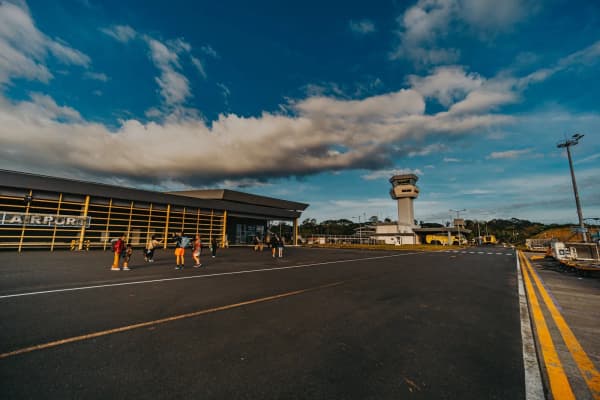
ChargePoint, near the airport, is Level 2. Slow, quiet, and occasionally exactly what you need if you are leaving a car parked while you travel.
Beyond these, the valley has a scattering of Level 2 units at hotels, dealerships, workplaces and a few retail lots that do not consistently appear in map searches. Treat the list above as the reliable public backbone rather than a complete inventory, and cross-check a live app before relying on any single site.
The apartment problem
Provo and Orem have an unusually high share of rental and student housing, and this is where EV ownership in the valley gets hard.
If you rent, you very likely cannot install a charger. Assigned stalls in older complexes rarely have power. Landlords are often unwilling to run a circuit for one tenant, and in many buildings the electrical service would need upgrading before anyone could. There is no workaround that makes this easy, so the honest options are:
- Ask before you sign. Whether charging is permitted, and whether any stall has a live outlet, are questions with clear answers that are far easier to get before a lease than after one.
- Use a workplace charger if your employer has one. This is the most common solution among valley EV owners who rent.
- Build a public routine. Charging once or twice a week at a DC fast site is workable if you accept it as a scheduled errand rather than a nightly convenience. It costs more per mile than home charging and it is the main reason the ownership economics are worse for renters.
A 120-volt household outlet — Level 1 — adds only a few miles per hour and is useless for a long commute. For a short one, and for a plug-in hybrid, it can be enough. Do not extend a household cord across a shared parking lot to reach one.
Charging at home, which is where the economics live
Almost everything good about EV ownership costs comes from the home charger, so it is worth understanding what installing one involves in a Utah Valley house.
The equipment is a 240-volt circuit and a wall unit, and the work is a licensed electrician's job requiring a permit from your city. The cost driver is almost never the charger itself — it is the distance from your electrical panel to where the car parks, and whether the panel has capacity. A garage on the other side of the house from the panel is a much bigger job than a garage next to it. Older Provo housing stock, particularly near campus and in the older east-side neighborhoods, is more likely to have a panel that needs upgrading first, which can cost more than the charger.
Two things worth doing before you get quotes. Photograph the inside of your panel door and count the free breaker slots and the main breaker rating; an electrician can tell you a great deal from that photograph alone. And check with Rocky Mountain Power about current residential rate options, because time-of-use plans that make overnight charging cheaper have a large effect on the running cost and the details change.
If you are in a house with solar already, the interaction is worth thinking through: daytime charging pairs naturally with generation, but most people charge overnight, so the benefit runs through net metering rather than direct self-consumption. Our home solar guide covers how that side works in Utah.
Buying an EV here: three questions that decide it
Setting aside the vehicle itself, three local questions predict whether ownership will feel easy or annoying in this valley.
Can you charge where you sleep? This is the whole thing. An owner with a home charger touches public infrastructure a few times a year and finds the valley's thin coverage almost irrelevant. An owner without one interacts with it weekly and finds it the defining feature of the car. Everything else is secondary to this question.
What is your longest routine trip? A Provo–Salt Lake commute is comfortably within any modern EV's range in both directions, even in winter, and the corridor is well covered. Regular trips to St. George, Moab or rural Utah are a different calculation, and worth mapping against actual charger locations before buying rather than after.
Do you drive the canyons in winter? If a meaningful share of your driving is up American Fork Canyon or Provo Canyon between December and March, apply the cold-weather and elevation penalties together and size the battery accordingly. This is the use case where owners most often report the range falling short of what they expected.
None of these argue against an EV in Utah Valley. Plenty of people here run one happily. They argue for answering the questions before signing, because the failure mode is not the car — it is a mismatch between how the car charges and how the household lives.
Winter, canyons and altitude
Three local factors bear on range, and only one of them is the obvious one.
Cold is the big one. Battery chemistry delivers less usable capacity at low temperatures, cabin heating draws real power, and winter tires add rolling resistance. Losses in the range of twenty to forty percent over a Utah Valley winter are commonly reported by owners, varying with temperature and how the car is driven. The countermeasure is preconditioning — heating the cabin and battery while the car is still plugged in, so the energy comes from the grid rather than the pack.
Canyon driving costs more than flat mileage, and the gauge falls fast on the way up Provo Canyon or toward Sundance. Regenerative braking recovers a meaningful share of it coming back down, so a round trip is less punishing than the outbound leg suggests. Plan on the outbound number anyway.
Inversion season compounds the cold problem in a way specific to this valley: the coldest stretches are also the ones with the worst air quality, when driving less is the community ask. That is one of the genuine arguments for electric vehicles here, and it is worth noting that the electricity itself is not carbon-free — but tailpipe emissions in the valley floor during an inversion are a local pollution problem in a way that generation elsewhere is not.
The apps, and why you need more than one
Public charging in Utah County runs across at least five separate networks, and none of them shows you the others. That fragmentation is the practical reason a single app is not enough here.
PlugShare is the one to install first. It aggregates across networks and — more usefully — carries user check-ins, so you can see whether somebody successfully charged at a given post recently. In a county with this few stalls, a station's real status matters more than its listed existence, and a run of failed check-ins is the clearest warning you will get.
Beyond that you will end up with the network apps themselves: Tesla for the Superchargers, Electrify America for both the Spanish Fork site and the Rocky Mountain Power station in Orem, which bills through it, ChargePoint for the Provo sites, and Blink for American Fork. Setting up accounts and payment methods at home, before you need them, is worth the ten minutes. Creating an account in a dark parking lot with poor signal and a nearly flat battery is the specific experience everyone who does this regularly has learned to avoid.
Your car's own navigation is a fifth source and often the best one for routing, because it knows the battery state and can precondition on approach. It also tends to know only its own manufacturer's preferred network, which is why it is a supplement rather than a replacement.
Etiquette, because stalls are the constraint
With this few fast chargers, availability matters more than speed, and a handful of habits make the difference.
Move the car when it is done. Most networks bill idle time by the minute and it accumulates quickly, but the stronger reason is that at a four-stall site one parked car is twenty-five percent of the capacity. Do not charge past eighty percent at a busy site unless you need it — the last twenty percent is the slowest and most expensive part of the curve, and you will spend as long on it as you did on the first sixty. Do not park a gasoline car in a charging stall. And if a station has an out-of-service unit, report it in the app; these are fixed when somebody says so.
What is missing, stated plainly
There is no DC fast charging on the east bench, none at the canyon mouths, and nothing at the ski resorts within the county. Public charging thins dramatically west of Utah Lake and south of Spanish Fork. The BYU and UVU campus areas, with tens of thousands of students between them, have far less charging than the density suggests — campus provision is limited and generally permit-restricted rather than public.
The infrastructure is being added faster than it once was, and any list of stations dates quickly. If you are planning a trip that depends on a specific charger, check a live app for status the same day rather than trusting an article, this one included.
Leaving the valley: the three directions, and what each one asks of you
Everything above is about living here. The trips that generate range anxiety are the ones that leave, and they are not equivalent — the direction you point the car changes the problem completely.
North, toward Salt Lake and beyond. This is the easy direction and the one that makes people overconfident. The corridor is dense with population, which means it is dense with charging, and the elevation profile is undramatic. A car that manages the valley comfortably manages this without planning. The failure mode here is not range; it is congestion at the popular stops during holiday travel windows, when every stall at the obvious site is occupied and the queue is the delay.
South, toward the desert. This is the direction that punishes casual planning. The distances between towns grow, the towns get smaller, and the number of stalls at each stop drops accordingly. A site with two stalls is a fundamentally different proposition from a site with twelve: one vehicle already charging plus one broken connector means an indefinite wait with no realistic alternative within range. Going south, the question to ask is not "is there a charger" but "how many stalls, and what is my fallback if it is down."
East, over the mountains. This is the direction where physics gets involved. Sustained climbing consumes energy at a rate that has little to do with the mileage on the map, and cold multiplies it — battery chemistry is less willing at low temperature, cabin heat is a real and continuous draw, and both peak on exactly the winter days you most want the car to be predictable. The compensating factor is regeneration on the way back down, which recovers a useful fraction. The trap is treating the outbound and return legs as symmetrical when planning. They are not.
The habits that make all three manageable
- Plan to arrive with a real reserve, not a technical one. The number that matters is what you have left if the stop you were counting on is unusable.
- Precondition while still plugged in. Warming the cabin and battery on wall power rather than on the pack is the cheapest range you will ever buy in winter, and it costs only forethought.
- Check station status the morning of, not the week before. Reliability, not coverage, is the live variable, and it changes daily.
- Know one non-fast fallback per leg. A slow charger you can reach beats a fast charger you cannot. On a long day it converts a stranding into an inconvenient dinner.
- Treat the first trip in a new direction as reconnaissance. Do it with margin, in daylight, and in a season that forgives you. Every subsequent version of that trip is then routine.
Related Guides
- Car Ownership in Utah Valley
- Home Solar in Utah
- Provo Weather & Air Quality
- Getting Around Provo Without a Car
- Scooters & Bikes in Provo
- The UVX Bus Guide
- Downtown Provo Parking
- Moving to Provo: The Complete Guide
- I-15 Through Utah County: Exits and Express Lanes
Frequently Asked Questions
Where are the fast EV chargers in Provo?
What is the fastest EV charger in Utah Valley?
Can non-Tesla cars use the Superchargers in Provo and Orem?
How do I charge an EV if I live in an apartment in Provo?
Does cold weather affect EV range in Utah Valley?
How much does public EV charging cost in Utah?
Are there idle fees at Utah Valley charging stations?
Does Utah charge an extra fee for electric vehicles?
Is it hard to take an EV out of Utah Valley on a road trip?
Sources
The facts in this guide were checked against these sources. Hours, fees and rules change, so confirm anything time-sensitive with the source before you go. How we make Provo.com.
- Rocky Mountain Power 2024 annual report on EV programs (Docket 25-035-23), Utah Public Service Commission. Checked October 12, 2026.
- Direct testimony of Matt Pernichele (Docket 20-035-34), Utah Public Service Commission. Checked October 12, 2026.