
Utah Valley has a lot of housing stock from the decades when the materials in this article were ordinary. Central Provo, the older Orem grid, the neighborhoods around the university, Springville and Spanish Fork and Payson town centers — mid-century and earlier houses, many of them now on their third or fourth round of renovation as they cycle through owners who want the kitchen opened up.
Every one of those renovations is a decision point about two materials that were used precisely because they were good at their jobs, and that are regulated now because of what they do to lungs.
The regulatory picture is not complicated, but it is counterintuitive in one specific way that catches people, and it is muddled by a date that almost everyone applies to the wrong substance. Both are worth getting straight before a reciprocating saw goes into a wall.
The date everyone gets wrong
Ask around and you will be told, confidently, that if the house was built after 1978 you have nothing to worry about.
That is the lead rule, and it is only the lead rule.
Residential lead-based paint was banned in the United States in 1978. The date is a genuine bright line for lead — it is the pivot for federal disclosure requirements and for the EPA's renovation rule, and a house built after it is very unlikely to have lead paint.
Asbestos does not work that way. It was never banned in a single comprehensive stroke. Its use was restricted in stages across decades, product category by product category, with significant materials remaining legal well past 1978. EPA issued a rule in 2019 to keep discontinued asbestos products from returning to the market, and in March 2024 it finalized a ban on ongoing uses of chrysotile asbestos.
Utah's own regulators say so in writing. In the rulemaking documents accompanying amendments to the state asbestos rule, the Division of Air Quality noted that although asbestos has fallen out of favor in building materials, the most recent ban did not occur until 2019, and that asbestos-containing materials could still be identified in newer construction over time.
The practical translation: 1978 clears a house of lead concerns. It clears a house of nothing where asbestos is concerned. A 1985 house can have asbestos floor tile. A 1993 house can have asbestos-containing roofing or cement products. Treat the two substances as having different timelines, because they do.
The Utah rule, and the line that matters
Utah's asbestos framework lives at Utah Administrative Code R307-801, administered by the Division of Air Quality through its Air Toxics, Lead and Asbestos Section. Utah is also the enforcement agency for the federal Asbestos NESHAP — the national emission standard at 40 CFR 61 Subpart M — which applies to "facilities" and expressly excludes a single purely residential building of four or fewer dwelling units from that definition.
R307-801-2 sets out who is covered, and this is where the counterintuitive part lives.
Not covered — R307-801-2(1)(c):
Homeowners or condominium owners performing renovation or demolition activities in or on their own residential facilities where they live, that are otherwise not subject to the Asbestos NESHAP, are not subject to the requirements of this rule.
With an immediate limit in the same subsection: a condominium complex of more than four units is subject to the rule, and may also be subject to NESHAP.
Covered — R307-801-2(1)(a)(iv):
Persons who perform regulated work activities or renovation projects in single or multifamily residential structures where they do not live or intend to live immediately after the regulated work activity or renovation project is complete.
Read those two together and the operative distinction becomes clear, and it is not the one most people assume. The test is occupancy, not professional status.
- Owner-occupant doing their own work: outside the rule.
- Landlord renovating a rental unit: inside the rule as an operator.
- Investor renovating a house to sell without living in it: inside the rule as an operator.
- Owner-occupant hiring a contractor: the contractor is separately covered under 2(1)(d).
That third case is the one worth pausing on, because Utah Valley has a very active renovate-and-sell market and a very large rental sector around two universities. An investor who buys a 1960s house in Provo, guts it over eight weeks and lists it has not done a homeowner project in the eyes of R307-801. They have done a regulated renovation, and they never lived there.
R307-801-2(1)(a) also brings in persons who contract for hire to conduct asbestos abatement, renovation or demolition projects in regulated facilities, and persons conducting such projects in areas where the general public has unrestrained access.
What contractors owe you
If you are the owner-occupant hiring out the work, R307-801-2(1)(d) is your section. Contractors for hire performing renovation or demolition activities are required to follow the inspection provisions of R307-801-9 and R307-801-10 and the notification provisions of R307-801-11 and R307-801-12.
In plain terms: the obligation to inspect before disturbing, and to notify the division, sits with the contractor — not with you, and not nowhere. A contractor who tells you no inspection is needed because it is a private home is describing your exemption, which is not theirs.
There is a second, quieter requirement that is easy to overlook and useful to know about. R307-801-17 requires Utah asbestos abatement and renovation companies to provide owners and occupants of single and multifamily residential structures with the state pamphlet on asbestos hazards during abatement and renovation, where those structures will be reoccupied after the work. The company must either obtain written acknowledgment from the owner that the pamphlet was received, or obtain a certificate of mailing at least seven working days beforehand. The same section addresses notifying occupants and updating them if the scope, locations or dates change.
If a company doing abatement in your home has never mentioned a pamphlet, that is a reasonable thing to ask about.
The 2026 amendment, and what it did and did not change
Utah's Division of Air Quality amended R307-801 to reduce regulatory burden while preserving protection, and the division now says the change is in effect. It changes the answer for a common case.
The change: residential facilities with four or fewer units built on or after January 1, 1992 no longer require an asbestos inspection prior to renovation or demolition. This does not apply to facilities subject to the federal Asbestos NESHAP. The division's supporting analysis surveyed how other states handle residential buildings and set Utah's approach against them.
Two limits stated in the same materials, and both matter:
- Demolition notification still applies. Residential facilities of four or fewer units built after 1992 remain subject to the demolition notification requirements of R307-801 — partly to maintain adherence to other DAQ rules such as fugitive dust requirements, and partly to keep monitoring newer demolitions in case newer asbestos-containing materials are identified over time.
- The handling obligation survives the inspection exemption. The division was explicit that even with the exemption, proper procedures for handling and disposing of any encountered asbestos-containing material must still be followed. Not having to look is not the same as being allowed to ignore what you find.
On currency: the division's documentation had described the amendment as expected to take effect in January 2026, and the Division of Air Quality's asbestos program page now states that the rule change is in effect. If your project turns on the post-1992 inspection question, confirm the details with the Division of Air Quality before proceeding.
Where asbestos is in a Utah Valley house
The materials to be suspicious of, in rough order of how often they turn up in a residential renovation here:
- Vinyl floor tile, particularly nine-inch square tiles, and the black mastic adhesive beneath it. This is the single most common find in a mid-century Utah house, and it is frequently under two later layers of flooring.
- Sheet vinyl flooring and its felt backing.
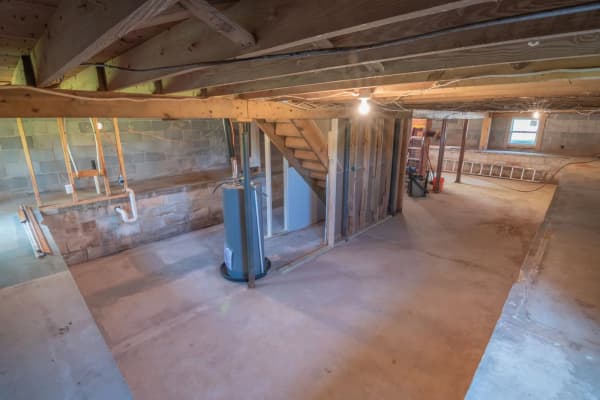
- Pipe insulation and boiler insulation, especially the wrapped fittings and elbows in a basement mechanical room.
- Duct wrap and duct tape on older forced-air systems.
- Textured ceiling treatments, the sprayed-on kind.
- Joint compound and some plasters.
- Cement board siding and roofing products, including corrugated panels.
- Insulation around wood stoves and furnaces, and old stove-board.
- Attic insulation in the specific case of vermiculite, which warrants particular caution.
None of these can be identified visually. Not by you, not by a contractor, not by a home inspector. Age, appearance and pattern narrow the odds; laboratory analysis of a properly collected sample is the only thing that answers the question.
Friable is the word that decides everything
The concept that organizes all asbestos risk is friability — whether a material can be crumbled, pulverized or reduced to powder by hand pressure, and therefore release fibers into air.
Intact, sealed, undisturbed asbestos-containing material sitting where it was installed is generally not releasing fibers. That is why the standard guidance for material in good condition is manage it in place rather than remove it. Removal is a disturbance event; a well-executed leave-alone decision often carries less risk than a badly executed removal.
Disturbance is what creates exposure: sanding, sawing, drilling, scraping, breaking, dry sweeping, demolition. And the specific amateur failures are consistent enough to name — removing friable material dry, and sweeping up debris. Both convert settled material into airborne fiber and distribute it through a house that was previously fine.
There is a related hazard worth naming plainly: secondary contamination. Fibers travel on clothing, on shoes, on tools, through an HVAC system running during the work. A poorly contained project in a basement can put fibers in a bedroom on the second floor. This is the practical reason the homeowner exemption is a legal fact rather than a good idea — the rule stops applying to you, and the physics does not.
Lead: a different framework, a different risk profile
Lead is federally driven and its logic is different, because the population at risk is different.
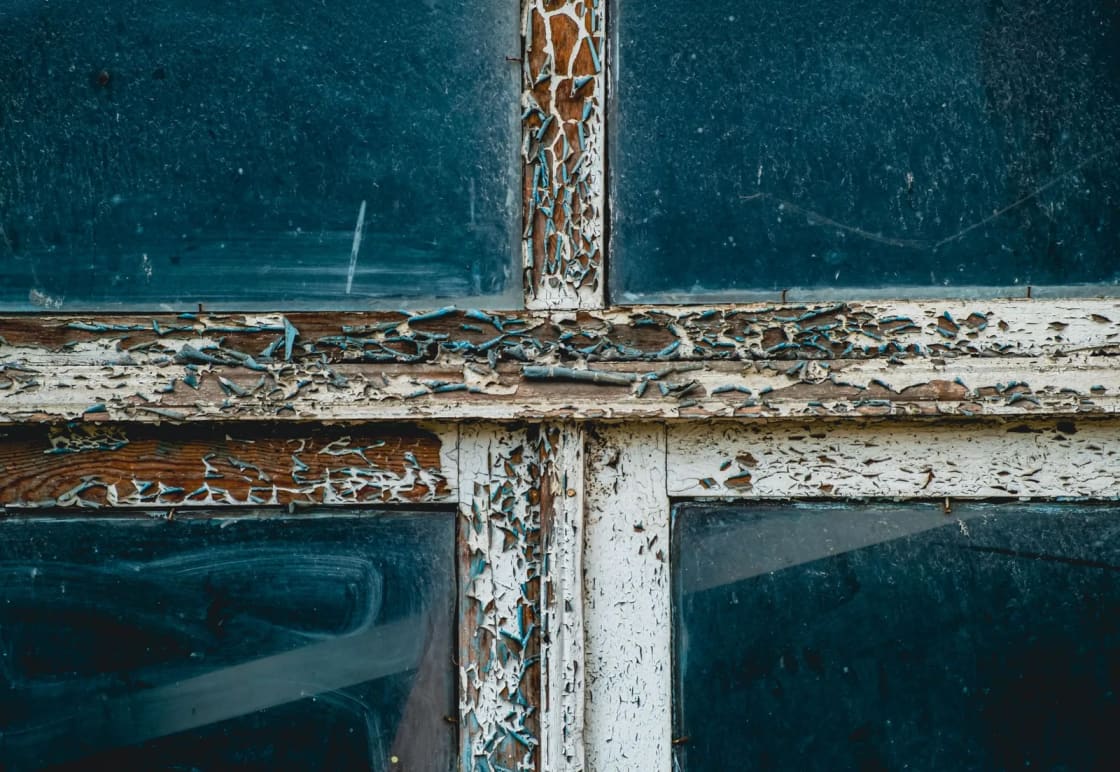
The core concern is children under six, for whom lead exposure is associated with irreversible effects on cognitive development, and pregnant women. And the primary exposure route is not what most people picture. Intact painted surfaces are not the main problem. The problems are deteriorating paint — chipping, peeling, chalking — and, above all, friction and impact surfaces: window sashes that grind in their tracks, doors, stair treads, painted floors. Those generate lead dust, and lead dust on a floor at toddler height is the classic exposure pathway.
Two federal frameworks apply:
Disclosure. Sellers and landlords of most pre-1978 housing must disclose known lead-based paint and hazards, provide records they have, provide the federal lead pamphlet, and generally give buyers an opportunity to conduct an inspection. This is a live obligation in Utah Valley's rental market, not a formality.
The Renovation, Repair and Painting rule. Firms performing covered renovations that disturb painted surfaces in pre-1978 housing and child-occupied facilities must be certified and must use lead-safe work practices — containment, prohibited practices such as open-flame burning and uncontained power sanding, and specified cleanup and verification.
Practical measures for an older home even without a renovation: wet-clean floors and window wells rather than dry-sweeping, keep painted surfaces intact and repair deterioration promptly, use doormats and remove shoes, wash children's hands and toys, and — the clinical step that matters — ask your pediatrician about blood lead testing if you live in older housing with young children. Testing the child is more informative than speculating about the paint.
Disposal is its own problem
One step gets skipped in nearly every do-it-yourself account of this work, and it is the one with the longest tail: where the material goes afterward.
Asbestos-containing waste is not ordinary construction debris. It is not a curbside item, it does not belong in a rented roll-off mixed with framing lumber, and it is not something a transfer station will knowingly accept unlabeled. Handling generally requires wetting the material to suppress fibers, double-bagging in heavy polyethylene, sealing and labeling, and delivering it to a facility permitted to receive it. Utah County landfill and waste operations have specific procedures and advance-notice requirements for asbestos loads, and those procedures differ between a homeowner bringing a small quantity and a contractor delivering a project's worth.
Call ahead. That single phone call establishes whether the site takes the material at all, what packaging it requires, whether an appointment is needed, and what documentation must accompany the load. Discovering the answer after the material is already loose in your truck bed is the wrong order.
The parallel point for lead: paint chips and dust generated by a renovation in pre-1978 housing are also not general household waste, and the cleanup materials — plastic sheeting, disposable coveralls, HEPA vacuum contents, wash water — are part of the waste stream rather than incidental. Lead-safe work practices treat the cleanup as a step of the job with its own verification, not as tidying up at the end.
Both substances share a structural feature that is worth naming: the expensive failures happen at the boundaries. Not in the middle of the work, where people are paying attention, but at the beginning, when nobody sampled, and at the end, when the debris went somewhere it should not have.
Putting it together before you start work
A short sequence that fits almost any older-home project in Utah Valley:
- Establish the age of the structure and of the specific materials you will disturb — including later renovations, since a 1955 house may have 1975 flooring over 1955 flooring.
- Decide which side of R307-801 you are on. Owner-occupant doing their own work in a single-family home: exempt from the rule. Landlord, flipper, or anyone not living there: regulated operator. Hiring a contractor: their inspection and notification duties apply regardless of your status.
- Sample before demolition, not during. The cost of a few laboratory samples is trivial against the cost of stopping a gutted project halfway or remediating a contaminated house.
- Prefer managing intact material in place over removing it, unless the project requires disturbance.
- Keep inspection and abatement separate where practical. A firm that both diagnoses and sells the cure has an incentive worth neutralizing.
- Verify certification with the Division of Air Quality, not from a certificate handed to you.
- For pre-1978 housing with children, treat lead as the more urgent of the two and start with a conversation with your pediatrician.
The framing that makes this whole subject tractable: these are not haunted materials. They are ordinary building products that are inert until someone disturbs them, and the entire regulatory apparatus exists to govern the moment of disturbance. Know which materials you are about to disturb, know whether the state considers you an operator, and the rest is procedure.
Rule text cited in this guide — R307-801-2, -9, -10, -11, -12 and -17 — was read from published sources of the Utah Administrative Code, together with Division of Air Quality materials on the Air Toxics, Lead and Asbestos Section and the division's own analysis accompanying the R307-801 amendment. Administrative rules change; confirm current text with the division before relying on it for a specific project.
Related Guides
- Funeral Homes, Obituaries and Death Records in Utah County: The Practical Guide
- Finding an Electrician in Provo: The Supervision Rule Nobody Explains
- Garage Doors in Utah Valley: Two Federal Dates, One Spring, and the Test You Should Run Tonight
- Radon in Utah Valley: One in Three Homes, and the Only Way to Know Is to Test
- Appliance Repair in Utah Valley: Utah Deliberately Does Not License the Person Fixing Your Dryer
- Hiring Home Pros in Utah Valley: How to Vet Anyone Who Works on Your House
- Pest Control in Utah Valley: What You'll Actually Deal With
- Chimneys and Fireplaces in Utah Valley: Even an EPA-Certified Stove Is Illegal on a Mandatory Day
- Hiring Movers in Utah Valley: How to Vet One, What Protects You, and the Two-Week August Crunch
- Home Solar in Utah: Is It Still Worth It in 2026?
- Heating & Cooling in Utah Valley: What This Climate Does to Your HVAC
- Getting Rid of the Big Stuff in Utah Valley: Mattresses, Paint, TVs and the Couch
- Hiring a Roofer in Utah Valley: The License Class Most Homeowners Check Wrong
- Wildlife Removal in Utah Valley: You Can Kill the Raccoon. You Can't Drive It Up the Canyon.
Frequently Asked Questions
Do I need an asbestos inspection to renovate my own house in Utah?
Does the asbestos exemption cover landlords and house flippers?
Is asbestos only in houses built before 1978?
What in an older Utah home is likely to contain asbestos?
When is asbestos dangerous?
Do contractors have to do anything different in Utah?
What are the rules for lead paint in a rental or a home with children?
How do I find a certified asbestos or lead professional in Utah?
Sources
The facts in this guide were checked against these sources. Hours, fees and rules change, so confirm anything time-sensitive with the source before you go. How we make Provo.com.
- Asbestos Program, Utah Department of Environmental Quality, Division of Air Quality. Checked October 12, 2026.
- Amendments to the Utah Asbestos Rule UAC R307-801 Overview, Utah Division of Air Quality. Checked October 12, 2026.
- Biden-Harris Administration finalizes ban on ongoing uses of asbestos, U.S. Environmental Protection Agency. Checked October 12, 2026.
- Asbestos Laws and Regulations, U.S. Environmental Protection Agency. Checked October 12, 2026.
- Propose for Public Comment: Amend R307-801, Utah Air Quality Board. Checked October 12, 2026.