
More on The North Bench: every guide we have published there, in one place.
Cedar Hills is the youngest city in north Utah County — in two different senses. Cedar Hills' own early-June celebration is covered in our Cedar Hills Family Festival guide.
It's young by founding: established in 1974, incorporated as a town in 1977, and only made a city in 1999. Most of what's there was built in the last thirty-five years. And it's young by residents: the median age is 28.2 (Census ACS 2020-2024), and about a third of the population is under 18. Walk a Cedar Hills street on a summer evening and the demographic story tells itself.
It's also the most compact of the three bench cities. Alpine, Highland, and Cedar Hills all share mountains, schools, and a general reputation — but Cedar Hills fits roughly the same population as Alpine into about a third of the land. That single fact explains most of what makes it different.
The short version
Cedar Hills had 10,019 residents at the 2020 census, up from 9,796 in 2010. It covers just 2.73 square miles at about 4,935 feet, sitting east of Highland on the lower slopes below Mount Timpanogos.
Its density — roughly 3,680 people per square mile — is nearly three times Alpine's, despite nearly identical population. Cedar Hills is a small, tightly built city, not a large-lot one.
What draws people:
- The most accessible entry point among the north-valley bench cities.
- Very young, family-dense community — easy to find neighbors in the same life stage.
- Lone Peak High School and the north-county school system.
- A city golf course and quick canyon access.
What to weigh:
- Smaller lots than Alpine or Highland.
- Minimal commercial base — you drive for nearly everything.
- Little housing variety; the stock is fairly uniform.
- School district in transition through 2027.
A newer city with a specific shape
Cedar Hills' name comes from the junipers on its hillsides — called cedars throughout the American West, though botanically they aren't. That's a small detail that says something about the place: it's named for what was there before the subdivisions.
The city's development timeline is unusually compressed. Founded in 1974, incorporated as a town in 1977, it stayed small for years before growing rapidly through the 1990s and incorporating as a city in 1999. Because so much was built in a concentrated window, the housing stock is more consistent in age and style than in older communities like American Fork or Pleasant Grove.
Being hemmed in by Highland, American Fork, Pleasant Grove, and the mountain means Cedar Hills has limited room to expand outward. It filled in rather than spread out — hence the density.
Housing in Cedar Hills
The market here is premium relative to Utah County generally, and the most approachable of the three bench cities.
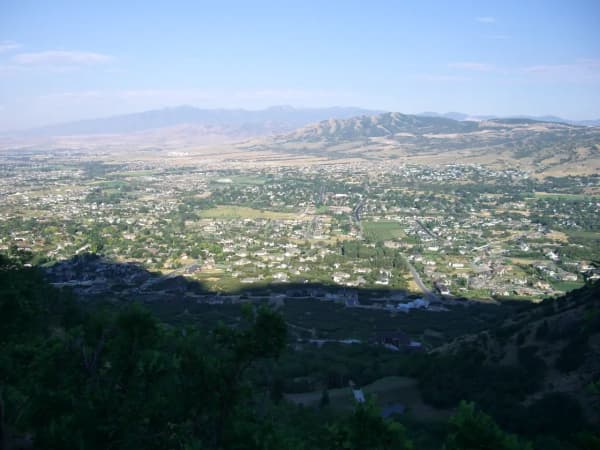
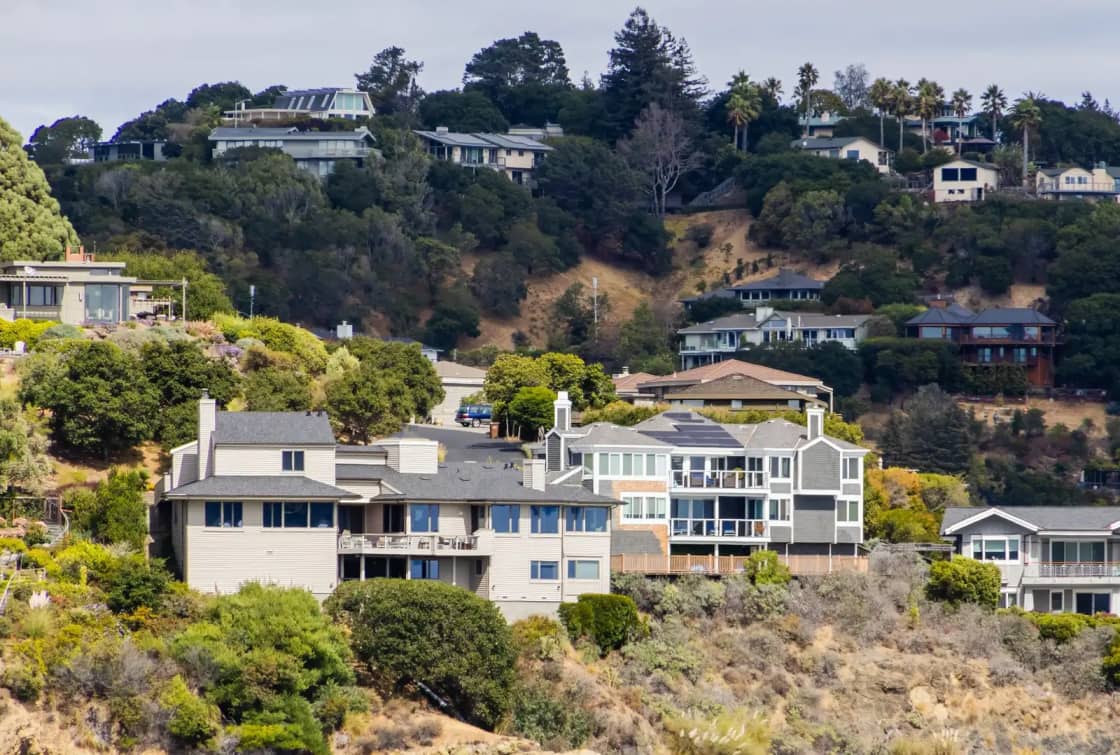
Homes are predominantly single-family, largely built from the 1990s onward, on smaller lots than Alpine or Highland. Many sit on hillside terrain with genuine valley and mountain views — the elevation does real work here, and view lots command a premium within the city.
For buyers comparing the three:
- Alpine: biggest lots, highest prices, most isolated, most snow.
- Highland: large lots, best freeway access, most inventory.
- Cedar Hills: smallest lots, densest, youngest, generally the easiest to get into.
All three feed the same high school and face the same district change. If the schools are the reason you're looking north, Cedar Hills is often the version of that decision that fits the budget.
Terrain does more work here than almost anywhere else in the valley. The city climbs the bench, so orientation and slope vary noticeably from street to street — which side of a rise a house sits on affects its view, its afternoon light, and how much hill sits between the driveway and the main road out. That is worth walking rather than reading off a listing.
Cedar Hills is also close to built out. New construction arrives as infill and the occasional small development rather than the phase-after-phase pipeline running in the west-county cities, so buyers here are almost always shopping resale, and inventory can be thin.
Schools are the other durable variable, and Cedar Hills sits inside the biggest change coming to north Utah County — the move into the new Aspen Peaks School District on July 1, 2027, covered in the section below. Since that transition is why many families look at these three cities in the first place, it belongs inside the buying decision rather than beside it.
Browse current listings in our real estate marketplace, and see the buying a home guide for the process.
Schools and the Aspen Peaks transition
Cedar Hills sits in the Alpine School District — for now.
After a 2024 ballot measure, Utah's largest district is splitting into three. Cedar Hills joins the new Aspen Peaks School District, alongside Alpine, American Fork, Highland, Lehi, and a portion of Draper. The new districts become operational July 1, 2027, serving students in the 2027-28 school year. Boards were elected in November 2025 and the name was finalized shortly after.
Cedar Hills students have traditionally attended Lone Peak High School.
Given a transition of this scale — with no recent precedent in Utah — families should confirm the school assignment for a specific address directly rather than relying on city-level generalizations. Boundaries can move. Our best schools in Provo and Orem guide offers wider valley context.
Given that over a third of Cedar Hills residents are school-age, this transition matters here as much as anywhere in the county.
Recreation
Cedar Hills Golf Course is the city's signature amenity — a municipal course on the hillside with views out over the valley. It's part of a strong north-county golf cluster that also includes Fox Hollow in American Fork and Thanksgiving Point in Lehi; our Utah Valley golf guide covers all of them, and our north bench things-to-do guide has more on the Cedar Hills course specifically.
City parks and trails serve the everyday needs of a very family-heavy population, and the paved Murdock Canal Trail runs nearby along the bench for walking and cycling.
East and north, American Fork Canyon is minutes away — Timpanogos Cave, the Alpine Loop, and the Timpooneke trailhead for summiting Mount Timpanogos, the mountain Cedar Hills sits beneath.
For families, Thanksgiving Point in Lehi is the region's biggest draw, and our family activities guide covers the rest of what's within range.
Getting around
Cedar Hills has no freeway of its own. Commuters route out through Highland or American Fork to reach I-15, typically via SR-92.
Approximate drive times:
- American Fork: under 10 minutes
- Lehi / Silicon Slopes: 15–20 minutes
- Pleasant Grove: about 10 minutes
- Provo: 25–30 minutes
- Salt Lake City: 40–50 minutes
That puts Cedar Hills firmly in the north-county commute pattern — excellent for the Lehi tech corridor, long for daily Provo trips. The FrontRunner commuting guide covers rail options, with American Fork and Lehi the nearest stations.
Winter driving deserves a mention: Cedar Hills sits on a hillside, and hillside neighborhoods mean graded residential streets that get slick. It doesn't get Alpine's snow totals, but the terrain still argues for proper tires.
Shopping, dining, and daily life
Cedar Hills is residential almost entirely. Groceries, restaurants, and services are in American Fork and Pleasant Grove, both close, with Lehi's expanding retail base a bit further north and Orem's University Place about 20 minutes south.
Our north bench restaurant guide covers the handful of places in Cedar Hills itself, best restaurants in Lehi covers the nearest large concentration, and the valley restaurant guide covers the rest.
What the city offers instead is the thing its demographics imply: an unusually dense network of young families, active youth sports, busy parks, and neighbors in the same season of life. For people moving here with small children, that's frequently the deciding factor — it's easy to find your people.
The density trade-off, honestly
Cedar Hills' defining number — roughly 3,680 people per square mile against Alpine's 1,320 — is worth sitting with, because it's the whole difference between these cities.
What density gives you. Lower prices, for the obvious reason that land is the expensive part. Shorter distances to everything within the city. A neighborhood where kids have a dozen friends within walking distance rather than three within driving distance. And a community that feels social, because people are simply closer together.
What density costs you. Smaller yards. Less privacy. Neighbors visible from most windows. Less room for the workshop, the trailer, the garden, or the animals that some Utah County buyers specifically want.
Neither is objectively better. But buyers frequently arrive in north Utah County with a mental image formed by Alpine or Highland listings and then look at Cedar Hills pricing without registering that the price difference is mostly lot size. Walk a street in each before deciding. The three cities are ten minutes apart and feel meaningfully different in person in a way listings don't convey.
One practical consequence: in a compact hillside city, the specific street matters more than usual. View lots, grade, sun exposure, and proximity to the golf course or a park all vary considerably within a small footprint.
Who provides your utilities
Cedar Hills sits in the part of Utah County served by Rocky Mountain Power, the investor-owned utility that covers most of the state. That puts it in a different position from the municipal-power cities down the valley — Provo, Lehi, Springville, Spanish Fork, Payson and Salem all own their own electric utilities and set their own rates through elected officials. In Cedar Hills, electricity is a regulated private utility and rate changes are argued in front of the Public Service Commission rather than the city council.
Where Cedar Hills does have a municipal advantage is internet, and it is a real one. The city is part of UTOPIA Fiber, the open-access network founded by a group of Utah cities in the early 2000s and now operating in roughly twenty of them. The model is worth understanding because it is unusual in American broadband: the city-affiliated agency owns the fiber to the home, and private internet providers compete to sell service across it. In practice that means a Cedar Hills household chooses among a list of providers on the same physical line, rather than choosing between one cable company and one telephone company. Among northern Utah County cities, only Cedar Hills, Lindon, Orem, Pleasant Grove and Payson are on the network — Alpine and Highland next door are not.
Water in Cedar Hills, as across the valley, can arrive through two separate systems: treated culinary water for the house, and untreated secondary water for irrigation where a property is connected to it. Whether a given address has a secondary connection is a parcel-level question, and Utah's statewide metering law is steadily changing what secondary water costs. Our guide to secondary water and water shares covers the mechanics and the buyer's checklist.
Natural gas is Enbridge Gas Utah, formerly Questar and then Dominion Energy Utah. Garbage, sewer and stormwater are city services and appear on the municipal bill.
Who responds when you call 911
Cedar Hills buys its public safety from a neighbor, and new residents routinely assume the wrong agency.
Police, fire and paramedic service come from American Fork City under contract. Cedar Hills does not operate its own police or fire department, and it is not served by the Lone Peak Public Safety District that covers neighboring Alpine and Highland. American Fork's police department describes itself as serving about 46,000 people, roughly 10,000 of them in Cedar Hills.
That matters for anything that is not a 911 call. A parking complaint, a stray dog, a records request, a fire inspection or an ambulance billing question all route to American Fork. Even municipal sources get this muddled — a neighboring city's public safety page still lists Cedar Hills among the communities Lone Peak serves, while Cedar Hills' own page and American Fork's both describe the contract. Trust the city you live in.
Anyone who cares about response times and staffing levels can follow the arrangement through American Fork and Cedar Hills council budgets, where the yearly public safety contract cost appears; Cedar Hills notes that American Fork raises it each year for inflation and growth.
For the wider picture of which body governs what in a Utah Valley city, see who decides what in Utah Valley.
Library access, which is not what you expect
Cedar Hills has no city library of its own, and the reason is structural rather than local: Utah County has no county-wide library system. Each city funds library access for its own residents out of its own property tax, which is why a card that is free in one city costs money in the next one over.
For Cedar Hills residents that produces two practical routes. The first is the Utah County Bookmobile, a genuine library service with a published schedule rather than a consolation prize, open to Utah County residents and connected to the same digital consortium as the buildings. The second is a nonresident card at the Highland City Library, which sits a few minutes away — and here is the part worth acting on: Cedar Hills reimburses its residents for part of that card's cost, as does Alpine. Confirm the current fee with Highland before paying, because Highland's own pages have published it as both $70 and $90 a year.
One further wrinkle if you end up with a Highland card. Highland belongs to the northern Utah County library cooperative alongside Lehi, American Fork, Pleasant Grove and Eagle Mountain, so a registered card borrows from all five — but items must be returned to the library they came from, and program registration stays with the home library. Our guide to libraries in Utah County covers the full picture.
Who Cedar Hills is right for
A strong fit if: you have young kids, you want the north-valley bench experience at a more reachable price, you work in Lehi or Draper, and a smaller lot is an acceptable trade.
Look elsewhere if: land is your priority — Alpine and Highland offer more — or you want walkable amenities, or you commute daily to Provo.
Compare against: Highland for more space and better freeway access, Alpine for the most land and mountain, American Fork for full amenities, Pleasant Grove for a more established community at a lower price point.
Cedar Hills is the practical version of the north-valley dream: the same mountain, the same high school, a smaller yard, and a price that more families can reach.
For the full comparison, see our Utah Valley city guides, and the moving to Provo guide for the logistics of getting here.
Related Guides
- Aspen Peaks School District: A Parent's Guide to Utah County's New Largest District
- School Boundaries and Open Enrollment in Utah Valley: How to Actually Change Schools
- Which School District Am I In? Utah County Before and After the Alpine Split
- Who Decides What in Utah Valley — seventeen registered bodies in a city of this size
- Highland, Alpine and Cedar Hills neighborhoods
- Two high schools, one district: Lone Peak vs American Fork High
Frequently Asked Questions
Is Cedar Hills, Utah a good place to live?
How big is Cedar Hills, Utah?
What school district is Cedar Hills in?
Why is Cedar Hills called Cedar Hills?
Is Cedar Hills cheaper than Alpine or Highland?
Does Cedar Hills have a golf course?
Who polices Cedar Hills?
Can I get fiber internet in Cedar Hills?
Sources
The facts in this guide were checked against these sources. Hours, fees and rules change, so confirm anything time-sensitive with the source before you go. How we make Provo.com.
- Public Safety Fee, City of Cedar Hills. Checked October 12, 2026.
- American Fork City: Police, American Fork City. Checked October 12, 2026.
- American Fork Selects Next Police Chief (press release), American Fork City. Checked October 12, 2026.
- Cedar Hills - Utah History To Go, Utah Department of Cultural & Community Engagement. Checked October 12, 2026.
- ACS 5-Year Data Profile DP05, 2020-2024, U.S. Census Bureau. Checked October 12, 2026.