New this season in Lehi
Coming up
- Cornbelly's at Thanksgiving Point 2026 — Lehi — Sept 21 – Oct 31 · closed Sundays
- Luminaria 2026 — Thanksgiving Point, Lehi — Mon–Sat evenings, roughly 5:00–8:30 PM entry
- Tulip Festival 2027 — Thanksgiving Point — Dates not yet confirmed
- Imaginaria 2027 — Thanksgiving Point — See the organizer for daily times
- Lehi Round-Up 2027 — Dates not yet confirmed
- Timpanogos Storytelling Festival 2027 — Lehi — Dates not yet confirmed
Everything dated across the valley sits on the events calendar, and openings and closings are tracked at openings and closings. Neither is a scrape: an entry appears on the tracker only when this site has already published the reporting behind it.

More on Lehi: every guide we have published there, in one place.
Lehi has quietly become one of the most entertaining stops in Utah Valley. A generation ago it was a farming town best known for its flour mill; today it sits at the center of Silicon Slopes — and it's packed with things to do, from one of the best museum-and-garden complexes in the state to outlet shopping, miles of paved trail, and a rodeo that has been running since 1937.
Whether you're visiting for an afternoon or you've just moved here and want to know what's worth your time, this guide covers the best of Lehi — organized so you can build a half-day, a full day, or a weekend around it.
Thanksgiving Point: the main event
If you do one thing in Lehi, make it Thanksgiving Point. This large campus at the south end of the city is the single biggest attraction in Utah County, and it is really several destinations in one.
It is also, and this surprises people, a nonprofit rather than a commercial theme park — which is why the ticketing works the way it does and why so much of the programming is aimed at school groups.
- Ashton Gardens — a large themed botanical garden, home to the Tulip Festival each spring, when hundreds of thousands of tulips fill the grounds. We've written it up in full, including which of the widely-quoted facts about it are out of date.
- Mountain America Museum of Ancient Life — the dinosaur museum, with 60 complete mounted skeletons, more than 50 hands-on exhibits, a Carboniferous forest and a Cretaceous ocean.
- Museum of Natural Curiosity — a hands-on children's museum with more than 400 interactive exhibits, including a rainforest with a canopy walk, a water-works area, and the outdoor Kidopolis "mini-city." Adults end up as absorbed as the kids.
- Butterfly Biosphere — a butterfly conservatory and insect zoo, a quick and genuinely magical stop for younger children.
- Curiosity Farms — a working-farm experience with animals, wagon rides and food-origin programming. (It was called Farm Country until 2024; older write-ups still use the old name.)
- Jurassic Jungle — a separate, five-story indoor prehistoric playground next to the dinosaur museum, and the newest thing on campus. If you have children with energy to burn after a museum, this is where it goes.
The one practical thing to get right: admission is time-ticketed with limited availability, across the campus and not only at the Butterfly Biosphere. Buy online, choose your window, and plan the day around it. Turning up at eleven on a summer Saturday and expecting to walk in is the most common way to waste a drive out here. There's a farm-to-table restaurant on site using produce from the gardens, which is a good way to cap a museum day.
Two details worth knowing at the dinosaur museum
First, the live fossil preparation. You can watch the museum's paleontologists and volunteers working on a Barosaurus roughly 150 million years old — actual preparation, in view, not a video loop of it. For a certain kind of eight-year-old it is better than the mounted skeletons, and almost nothing published about the museum mentions it.
Second, a note on the superlative. The museum's own current materials describe it as "one of the world's largest displays of mounted dinosaurs." A great deal of third-party material — directories, ticket resellers, listicles — still carries the older absolute version, the world's largest. The operator has hedged and the internet has not caught up. We print the operator's version, and it is a useful reminder that a claim getting softer on an official page while staying loud everywhere else is usually the claim to distrust.
The campus also owes its existence to a name that shows up elsewhere in this valley's story: Alan and Karen Ashton, co-founders of WordPerfect, bought the property on Valentine's Day 1995, when it was a working dairy with several hundred cows and a few hundred acres of hay, barley and alfalfa. It was meant to be somewhere their children could keep horses.
The mill from Footloose, and the name it goes by now
The flour mill on East Main Street is the most photographed building in Lehi, and almost every guide to it, this one previously included, describes it slightly wrong.
The facts. A co-op of local farmers built the mill in 1906; George G. Robinson bought it in 1910, and his family ran it for a century. In 1984 it appeared in Footloose as Ren McCormack's workplace, with the round silos painted with the turkey and peacock flour-sack murals — put there by a local artist in 1930, more than fifty years before the film crew arrived. It went onto the National Register of Historic Places in 1994.
Now the parts that go stale:
- The Robinson family sold the mill in 2012.
- It rebranded as "Lehi Mills" in 2018, and again refreshed its branding in 2021. The historic name Lehi Roller Mills is still what everyone says and still what the building is known for, but it is not the trading name any more.
- It is not downtown. It sits east along Main Street, closer to the freeway than to the old town center — which is why people looking for it in downtown Lehi don't find it.
What has not changed is the interesting bit: it still mills flour. At the turn of the last century there were thousands of family-scale mills across the United States, and only a few dozen survive. This one runs at industrial scale — its own account puts output around 100,000 pounds of flour a day, drawn from wheat grown by farmers generally within about a hundred miles — and supplies grocery chains across the region. Accounts of its history also credit it with supplying the first Kentucky Fried Chicken franchise, which opened in Salt Lake City in 1952; that link is widely reported rather than something we have confirmed against a primary source, so treat it as a good story pending better evidence.
For visitors: there's a retail store selling flour, baking mixes and syrups, and the silos are the photograph. One period detail that makes the film footage strange to watch now — when Footloose was shot, the mill was surrounded by empty fields. The city has grown around it since.
Silicon Slopes and Point of the Mountain
"Silicon Slopes" gets said about Lehi constantly and explained almost never. It is the informal name for the tech corridor running along I-15 between north Utah County and the south end of Salt Lake County, and Lehi is its physical center — the stretch of glass office buildings you pass on the freeway between the outlets and Thanksgiving Point is most of what people mean by it.
For a visitor this is scenery rather than an attraction; there is no tour. But it explains three things you will notice. The traffic, which is severe northbound in the morning and southbound in the evening and is unlike anything else in Utah Valley. The restaurant scene, which skews newer, pricier and more chain-adjacent than Provo's, because it grew to feed offices rather than students. And the newness of everything — a city that was farmland thirty years ago does not have an old commercial core to walk, which is why the mill and the older streets stand out as much as they do.
The northern boundary is Point of the Mountain, the gap in the ridge where Utah County meets Salt Lake County. It is best known for two things: world-class paragliding, thanks to reliable thermals off the ridge, and the long redevelopment of the former state prison site into a new district. Neither is a stop you build a day around, but the flyers are visible from the freeway on a good afternoon and are worth a glance up.
For the record on age, since the tech story tends to erase it: Lehi was settled in 1850 and incorporated in the early 1850s, putting it among the oldest cities in Utah County — older than the mill by half a century and older than most of what surrounds it by a great deal more.
Shopping at the Outlets at Traverse Mountain
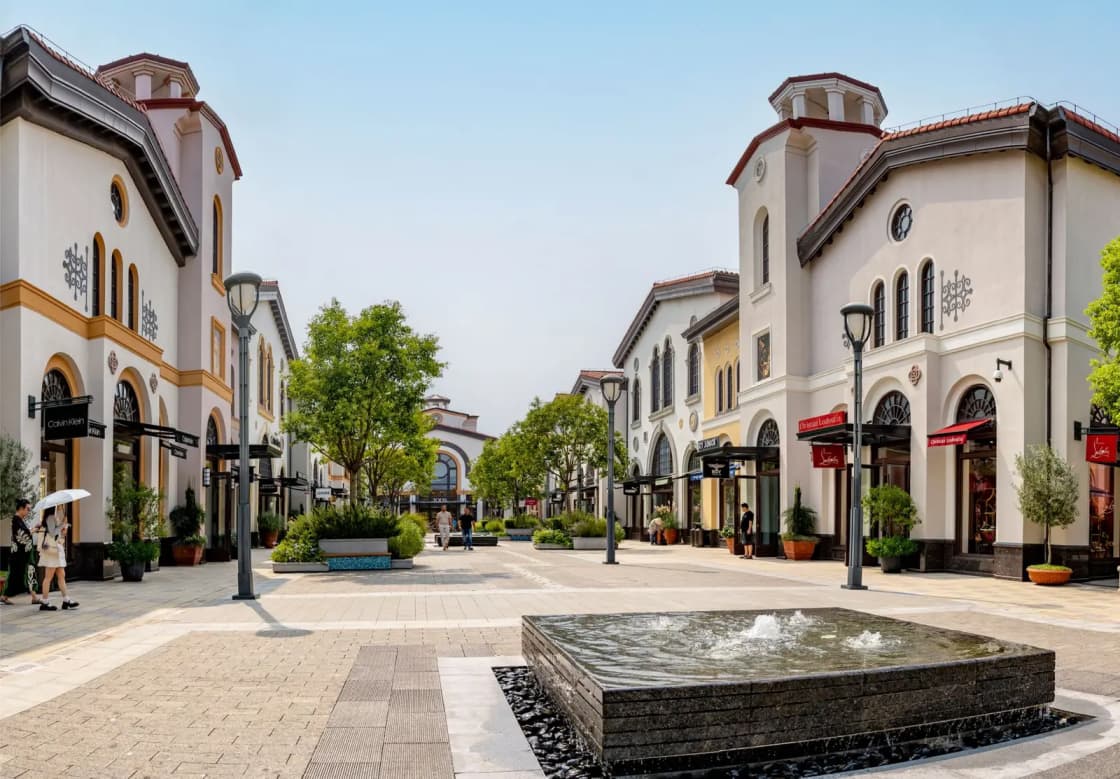
Just off I-15 at the north end of the city, the Outlets at Traverse Mountain is the only outlet mall in Utah County. It's an open-air center with the usual roster of brand-name outlet stores, mountain views and easy freeway access — good on its own or paired with a Thanksgiving Point day. Because it sits right by the freeway, it's also a convenient break if you're driving between Salt Lake City and Provo.
The Murdock Canal Trail and the outdoors
Lehi is a genuinely good base for getting outside. The paved Murdock Canal Trail runs for miles right through the city — past Thanksgiving Point and on into neighboring communities — flat, wide and accessible for walking, running, biking or strollers. It's one of the best easy-mileage trails in northern Utah County, and the story of what is underneath it is better than the trail surface suggests. The Lehi end is also where the trail stops, which catches out riders who expect it to continue to Point of the Mountain.
For water, Utah Lake is about 20 minutes south. The paved Utah Lake Shoreline Trail begins at North Lake Park here in Lehi and runs south toward Saratoga Springs — part of a long-term collaboration between the lake's cities to eventually ring the whole shoreline. The most developed shoreline access is over in Saratoga Springs on the lake's northwest corner.
And because Lehi sits at the mouth of the canyons to the east, American Fork Canyon — Timpanogos Cave, Tibble Fork, the Alpine Loop — is a short drive away. Our things to do across Utah Valley hub has the wider outdoor picture.
History and local landmarks
Lehi's name is itself a small piece of local trivia: the settlement went through several working names in its first years — the creek it sat on gave it one, and an early postmaster gave it another — before it settled on Lehi, taken from the Book of Mormon. It is the only city in the county named that way, which is why visitors mispronounce it. It is LEE-hi.
Beyond the mill, the Hutchings Museum is a quirky, kid-friendly natural-history and pioneer museum with rocks, fossils and local artifacts; it is small, volunteer-flavored and much loved, and its hours are more limited than a major museum's, so check before driving out. The Lehi Utah Temple, announced in April 2024 for a site northwest of 3950 North and Center Street, is not built — as of this update it remains in planning with no groundbreaking date announced, so there are no grounds to visit yet. And the Lehi Historical Society has been installing interpretive markers around town — the mill got one, with a public unveiling — which makes an unstructured wander through the older streets more rewarding than it used to be.
Lehi's summer events calendar
Lehi has one of the fullest community calendars in Utah County, and summer is when it comes alive. The centerpiece is Round-Up Week in late June, built around the Lehi Round-Up Rodeo — a PRCA rodeo running since 1937, one of the longest-standing community traditions in the valley. The week brings a grand parade, an all-horse parade, a golf tournament and family events. The rodeo's concessions are run by volunteers, and the "Rodeo Burger" is a local rite of passage.
Beyond Round-Up, the city runs a weekly summer farmers market and a Fourth of July celebration. The neighboring cities stack their own weeks around it — American Fork's Steel Days in July, Pleasant Grove's Strawberry Days in June, and Eagle Mountain's Pony Express Days rodeo about two weeks before Lehi's — so a June or July visit can usually catch more than one. For what's on week to week, keep an eye on the Provo.com events calendar.
Getting here, including without a car
Lehi sits on I-15 roughly halfway between Provo and Salt Lake City, with several exits of its own — which is why the attractions feel close together despite the city being large. Thanksgiving Point, the outlets and the mill are each near a different exit; check which one before you set off rather than after.
Lehi is also one of the few Utah Valley cities that works without a car. It has two FrontRunner commuter rail stations, putting it within a single train ride of both Provo and Salt Lake City. One hard constraint: FrontRunner does not run on Sundays, at all — the corridor is largely single-tracked and the operator concentrates maintenance into that day. A car-free Sunday visit to Lehi is not a plan.
When the weather is bad
Lehi is the best rainy-day and cold-day destination in Utah Valley, and it is worth knowing that in advance because the obvious summer plan collapses in February.
Almost the entire Thanksgiving Point campus works indoors — the dinosaur museum, the children's museum, the Butterfly Biosphere and Jurassic Jungle are all weather-proof, and the Biosphere in particular is kept warm and humid year-round, which makes walking into it in January genuinely startling. The outlets are open-air but the stores are not. Ashton Gardens is the one venue that is straightforwardly seasonal, though it runs a large winter lights display that turns the off-season into its own event. In summer, the gardens host Imaginaria, Thanksgiving Point's play festival for families.
The trade-off: school holidays and bad-weather weekends are exactly when the time-ticketed slots sell out. The worse the forecast, the earlier you should book.
Twenty-seven places in Lehi, in one list
Everything below is a place you can go, inside Lehi. Every entry points at a guide already published on this site that names the place in its own title or in a section of its own — the same rule the openings tracker runs under — so nothing is here to round the number up. The list stops at twenty-seven rather than reaching for forty because twenty-seven is what the coverage honestly supports today.
Three things are deliberately missing, and the reasons are worth stating because they are the errors this list is most likely to make. The Point of the Mountain flight park is not on it: our own guide places it just north of Lehi, which means adjacent to the city rather than in it, and it is described in the section above instead. Lambert Park is not on it either — it gets grouped with Lehi in riding guides, but it is in Alpine. And North Lake Park is not on it, despite sitting on the shoreline here, because the only page on this site that names it is this one, and a list that cites the page it sits on is not sourced at all.
Sit-down restaurants are not numbered here; the Lehi restaurants guide ranks those, and it opens with a warning worth carrying — a large share of the places search engines file under Lehi are actually in American Fork, Draper or Saratoga Springs. Opening times and prices are left out on purpose: both move, and a list carrying them is wrong within a season while still looking authoritative.
1. Thanksgiving Point
The nonprofit campus at the south end of the city, and the largest single attraction in Utah County — several destinations behind one set of gates and one time-ticketed admission. Our guide
2. Mountain America Museum of Ancient Life
Sixty complete mounted skeletons, live fossil preparation you can stand and watch, and a superlative the operator has quietly softened while the rest of the internet has not. Our guide
3. Museum of Natural Curiosity
More than 400 interactive exhibits, a rainforest with a canopy walk, and the outdoor Kidopolis mini-city. Adults end up as absorbed as the children. Our guide
4. Ashton Gardens
Fifty acres of themed botanical garden on the Thanksgiving Point grounds, and the venue that carries the campus's two biggest seasonal events. Our guide
5. Butterfly Biosphere
A butterfly conservatory and insect zoo kept warm and humid year-round, which makes walking into it in January genuinely startling. Our guide
6. Curiosity Farms
The working-farm side of the campus, with animals, wagon rides and food-origin programming. It was Farm Country until 2024 and older write-ups still say so. Our guide
7. Mountain America Jurassic Jungle
A five-story indoor prehistoric playground beside the dinosaur museum, with the carousel alongside it. This is where the energy goes after a museum morning. Our guide
8. The Tulip Festival
Ashton Gardens in spring, when hundreds of thousands of tulips come up at once. Our guide
9. Luminaria
The winter walk-through in Ashton Gardens, and the one display in the valley that closes on Sundays. Our guide
10. Cornbelly's at Thanksgiving Point
The original and the spectacle: more than sixty attractions, fireworks, and the corn maze that started the whole thing. A Thanksgiving Point membership does not admit you. Our guide
11. Timpanogos Storytelling Festival
The West's largest storytelling festival fills Ashton Gardens the weekend after Labor Day — a Lehi festival named after a Provo mountain that started in an Orem backyard. Our guide
12. Thanksgiving Point Freedom Celebration
The north valley's free Fourth of July fireworks, on the Thanksgiving Point grounds. Our guide
13. Lehi Roller Mills
The 1906 mill from Footloose, with the turkey and peacock silo murals painted in 1930, half a century before the film crew arrived. It has traded as Lehi Mills since 2018 and it still mills flour. Our guide
14. The Hutchings Museum
A small collection assembled by one curious person and explained by a human being standing next to you — the argument the big museums structurally cannot make. Our guide
15. Old Town Lehi and the Main Street grid
The older streets, and the part of the city that reads as a town rather than a corridor. It is not the dining strip; plan food as a separate leg. Our guide
16. Lehi Bakery
Home of the square doughnut since 1969, and the reason a detour into the old streets pays for itself. Our guide
17. Jack and Jill Lanes
A 1957 bowling alley named after two daughters, still running under the same name. Our guide
18. Seven Peaks Fun Center Lehi
Mini golf at 1320 North 300 West, and one of the two name changes that make searching for it harder than it ought to be. Our guide
19. Strap Tank Lehi
Looks like a filling station from outside and is decorated as a circus inside, rhinoceros statue included. The motorcycle museum is at the Springville building, not this one. Our guide
20. Outlets at Traverse Mountain
The only outlet center in Utah County: open-air, at the north end of the city, right off the freeway. Our guide
21. Cabela's
The flagship store next to the outlets, with an aquarium, a mountain replica and wildlife displays. Free to walk through, which is most of the appeal. Our guide
22. Murdock Canal Trail
Seventeen paved miles up from Orem on top of a buried water main. It stops here rather than carrying on to the county line, which catches out riders who assume otherwise. Our guide
23. Dragonfly
Lehi's disc golf course, and the northern anchor of the county's competitive scene alongside Art Dye in American Fork. Our guide
24. Lehi Family Park
Playground, splash pad and open gathering space — the north county's general-purpose family destination. Our guide
25. Ivory Ridge Park
Worth naming for an unglamorous reason: good restrooms, positioned close to the splash pad and the pavilion. Our guide
26. Lehi Legacy Center
The north-county rec workhorse, and one of the valley's indoor tracks — which is the feature that matters from November onward. Our guide
27. Lehi Round-Up
A PRCA rodeo running since 1937, with a grand parade, an all-horse parade, and a volunteer-run concession stand whose Rodeo Burger is a local rite of passage. Our guide
If you only have three hours
Three hours in Lehi is one Thanksgiving Point venue and nothing else, and the useful advice is to accept that rather than fight it.
Pick the venue before you leave the house, because they are not interchangeable and the admission is time-ticketed with limited availability across the whole campus. With children under about eight, the Museum of Natural Curiosity or the Butterfly Biosphere. With older children, the dinosaur museum, and go looking for the live fossil preparation rather than only the mounted skeletons. Without children at all, Ashton Gardens.
The version that does not involve a ticket: park in the old streets, walk Old Town and the historical society's interpretive markers, stop at Lehi Bakery, then drive five minutes east along Main Street to photograph the mill. That is a genuine three hours and it costs nothing but the doughnuts.
If it is a Sunday, read the next-but-one section before you plan anything, because the campus is shut.
Lehi with kids
Lehi is the strongest city in the valley for a day out with children, and the reason is concentration rather than variety — four of the county's better children's attractions sit on one campus, ten minutes from the freeway.
The Museum of Natural Curiosity is the one to build a day around for the under-tens, with the outdoor Kidopolis mini-city attached for when the indoor exhibits have been exhausted. Jurassic Jungle is where the leftover energy goes afterwards, and Curiosity Farms is the gentler alternative for a child who has had enough of crowds. The Butterfly Biosphere is short, which is a feature rather than a limitation with a three-year-old.
Away from the campus and free: Lehi Family Park pairs a playground with a splash pad, and Ivory Ridge Park has been praised repeatedly for having good restrooms close to the splash pad and the pavilion — which anyone who has taken a newly toilet-trained three-year-old to a park will understand ranks higher than it sounds. Splash pad seasons are short and the operating dates vary by city, so check before driving out in May or September. On a wet afternoon, Jack and Jill Lanes and Seven Peaks Fun Center Lehi are the indoor fallbacks, and Cabela's is free to walk through with an aquarium and a mountain replica that hold a child's attention longer than a shop has any right to.
The booking point is worth repeating because it is the most common way a family day here goes wrong: school holidays and bad-weather weekends are exactly when the time-ticketed slots sell out. The worse the forecast, the earlier you should book.
Lehi on a Sunday
Lehi has the sharpest Sunday problem of any city in this valley, and it is worth understanding before you drive up.
Thanksgiving Point is closed every Sunday, along with Thanksgiving Day and Christmas Day. That single fact removes most of the list above — the dinosaur museum, the children's museum, the Butterfly Biosphere, Curiosity Farms, Jurassic Jungle and Ashton Gardens all go with it, and Luminaria is the one winter display in the county that closes on Sundays too. This catches out visiting families more than anything else about the place, because a Sunday is exactly when a family with a free day would think to come.
The second constraint is transport. FrontRunner does not run on Sundays at all, so the one Utah Valley city you can reach comfortably without a car on a weekday is not reachable that way on a Sunday. A car-free Sunday visit to Lehi is not a plan.
What is left is genuinely decent, provided you plan for it rather than discovering it. The Outlets at Traverse Mountain open on Sundays, which makes the north end the valley's reliable Sunday default alongside Orem. Cabela's sits next door. The outdoor options are unaffected: the Murdock Canal Trail, Lehi Family Park, Ivory Ridge Park and Dragonfly are all open air and open all week. For food, a large share of Lehi's independents close — the restaurants guide names which, and makes the point that Sunday closure here is a location fact rather than a brand fact, so check the branch you are actually driving to.
Lehi in winter
Winter is the season Lehi is quietly built for, and it is the argument for coming here rather than staying south in the valley.
Almost the whole Thanksgiving Point campus works indoors — the dinosaur museum, the children's museum, Jurassic Jungle and the Butterfly Biosphere are all weather-proof, and the Biosphere is kept warm and humid year-round. Ashton Gardens is the one straightforwardly seasonal venue, and it answers that by turning the off-season into its own event: Luminaria is the winter walk-through, and it is one of two displays the city carries within about two miles of each other. Both are on our Utah Valley Christmas lights map.
Indoors and away from the campus, the Lehi Legacy Center carries an indoor track, which is the feature that earns a rec center its keep between November and March. Jack and Jill Lanes and Seven Peaks Fun Center Lehi cover the cold Saturday afternoon. The outlets are open-air but the stores are not, and Cabela's is entirely indoors.
The Murdock Canal Trail stays walkable through much of the winter — flat, paved and low enough to clear early — which is the thing people from snowier places do not expect. And the season's own trade-off is the booking one: the worse the weather, the faster the timed slots go.
Make a day of it
A good Lehi day: start the morning at one Thanksgiving Point venue — the dinosaur museum or the children's museum with kids, Ashton Gardens without — grab lunch on site or at one of the restaurants near the outlets, spend the afternoon shopping at Traverse Mountain or walking a stretch of the Murdock Canal Trail, and finish with a sunset drive down to Utah Lake. In late June, build the evening around the rodeo.
Because so many of Lehi's attractions cluster near the same freeway exits, you spend less time driving between stops than you might expect for a city this spread out.
Thinking about staying?
A lot of people discover Lehi as a day trip and end up wondering what it would be like to live in the middle of all this. Our complete guide to living in Lehi covers the housing market, schools, the famous commute, and what daily life is actually like in the hub of Silicon Slopes.
Lehi has come a long way from its flour-mill days — though the flour mill, name change and all, is still grinding.
Lehi carries two of the valley's winter displays, and they are under two miles apart. Both are on our Utah Valley Christmas lights map.
Related Guides
- Dinosaur Museums in Utah Valley: The Big One in Lehi, the Free One in Provo, and Which Your Kid Actually Wants
- Thanksgiving Point's Freedom Celebration: The North Valley's Free Fourth of July Fireworks in Lehi
- Paragliding at Point of the Mountain
- The Point development — what is being built on the old prison site at the top of the valley
- Lehi Round-Up: The Rodeo Week That Predates Silicon Slopes
- Traverse Mountain, Lehi: The Area and the Subdivision
- Sphere of Light at Thanksgiving Point — the planned 300-window stained-glass building
Frequently Asked Questions
What is Lehi, Utah best known for?
What is there to do at Thanksgiving Point?
Do you need to book Thanksgiving Point tickets in advance?
How many dinosaur skeletons are at the Museum of Ancient Life?
Is the flour mill from Footloose still there?
When is the Lehi Round-Up Rodeo?
Is Lehi good for a family day trip?
How far is Lehi from Provo and Salt Lake City?