
More on The North Bench: every guide we have published there, in one place.
Highland occupies a specific and enviable position in north Utah County: high enough to feel like a mountain town, close enough to the freeway that you're not paying for the view with your commute.
That balance is the whole pitch. Alpine, just up the road, gets more dramatic terrain and pays for it in drive time and snow. American Fork and Lehi below get more amenities and more traffic. Highland sits between them — spacious, quiet, family-heavy, and about ten minutes from the on-ramp.
If you're comparing north-valley cities, here's what Highland offers.
The short version
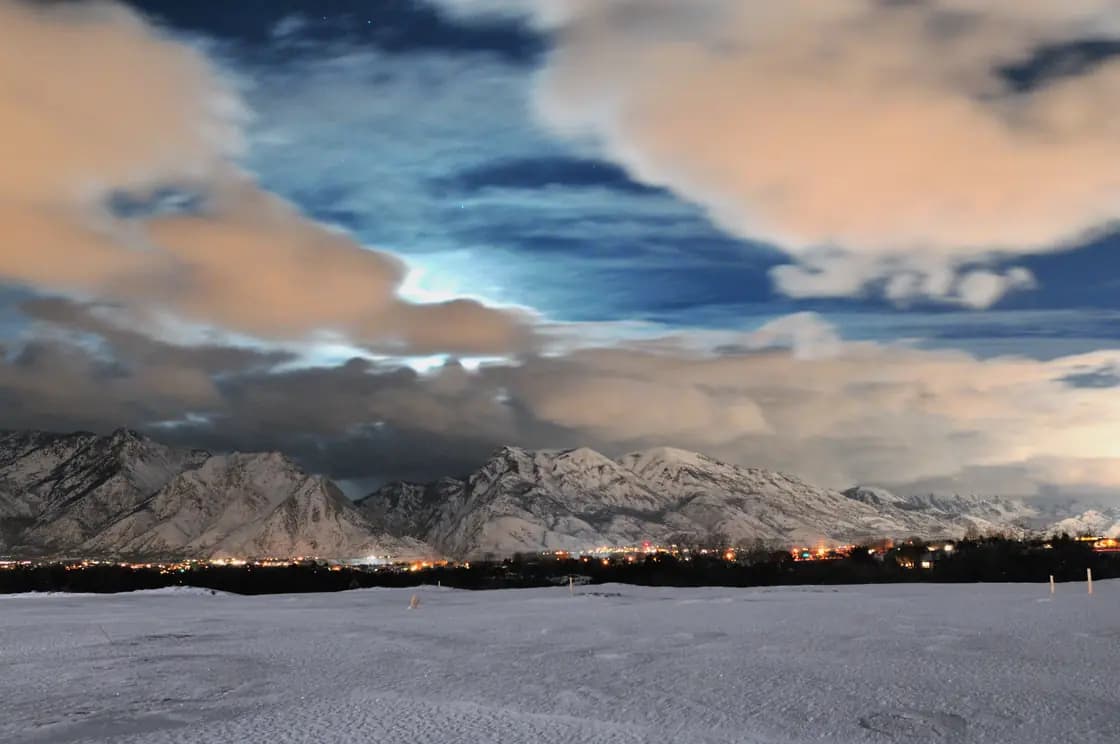
Highland's population was about 21,600 in the Census Bureau's 2025 estimate, making it roughly the size of Alpine and Cedar Hills combined and one of the larger of the valley's bench communities. It sits above American Fork to the south, with Alpine to the north, Lehi to the west and Cedar Hills next door to the east, with Mount Timpanogos dominating the view east.
What draws people:
- Larger lots and a spacious feel without Alpine's price ceiling.
- Strong schools and a heavily family-oriented community.
- Excellent freeway access via SR-92, the Timpanogos Highway.
- Trails and canyon access minutes from home.
What to weigh:
- Above-average housing costs for Utah County.
- Very limited in-city retail and dining — you drive for most things.
- Quiet by design, which reads as "nothing to do" to some buyers.
- School district in transition through 2027.
A suburb that kept its space
Highland's character comes from a zoning history that favored larger residential lots at a time when much of Utah County was filling in with denser subdivisions. The result is a city that feels open — wider yards, more separation between homes, more sky — while still being fully suburban rather than semi-rural.
That's a genuine middle ground, and it's rarer in the valley than you'd think. Mapleton achieves something similar on the south end. Alpine goes further toward rural. Lehi and Saratoga Springs went the other direction entirely, absorbing enormous growth in master-planned density.
Highland's growth has been steady rather than explosive, which has spared it much of the infrastructure strain that faster-growing neighbors have absorbed.
Housing in Highland
Highland is a premium but not stratospheric market — expensive relative to Utah County generally, more accessible than Alpine specifically.
The housing stock leans toward larger single-family homes on generous lots, with a meaningful share built from the late 1990s onward as the city developed. Mountain views are common. There's more variety in price point and home size than Alpine offers, which is part of why Highland typically has more inventory moving at any given time.
For buyers running the three-city comparison — Highland, Alpine, Cedar Hills — the practical differences usually come down to:
- Alpine: largest lots, highest prices, most isolated, most snow.
- Highland: large lots, high prices, best freeway access, most inventory.
- Cedar Hills: smaller and denser, generally the most accessible entry point of the three.
All three share Lone Peak High School and the same district transition — all three land in the new Aspen Peaks School District in 2027, which our guide to the district split explains in full. If schools are the driver, the choice is really about lot size, price, and commute.
Two durable things about the stock itself are worth knowing before a tour. First, Highland's defining zoning legacy is the large residential lot — the city's zoning history long favored them at a time when the rest of the county was densifying, which is why the streetscape reads as space and grass rather than density, and why yard care and water bills are part of the honest cost of living here. Second, because so much of the city built out in one generation, whole neighborhoods age together: homes from the late-1990s wave are now reaching the years where roofs, furnaces and water heaters come due, so a buyer comparing two similar listings should compare what has already been replaced, not just the finishes.
On commute geometry, Highland's advantage is real but specific: the city sits along the SR-92 corridor between I-15 and the mouth of American Fork Canyon, which makes the Lehi tech corridor a short, mostly-arterial drive — the practical reason so many Silicon Slopes households land here. The trade is that Highland itself keeps commercial development thin by design; daily errands mostly run to the edges of town or into Lehi and American Fork.
Our real estate marketplace shows what's currently on the market across the valley, and the buying a home guide covers the process end to end.
Schools and the Aspen Peaks transition
Highland families need to know this, and it applies across north Utah County.
Highland currently sits in the Alpine School District, historically Utah's largest. That district is dissolving. After a 2024 ballot measure, it splits into three, and Highland joins the new Aspen Peaks School District with Alpine, American Fork, Cedar Hills, Lehi, and part of Draper.
Timeline: new districts become operational July 1, 2027, teaching students in the 2027-28 school year. Boards were elected in November 2025; the name was made official in late November 2025.
Highland students have traditionally attended Lone Peak High School, shared with Alpine and Cedar Hills.
The standard caution applies with extra force during a transition this large: verify the school assignment for a specific address rather than relying on general city-level information. Boundaries can move. Our best schools in Provo and Orem guide provides broader valley context, and the school boundary picture is worth reviewing before committing to a neighborhood.
Getting around: Highland's practical advantage
This is where Highland separates itself from Alpine.
SR-92, the Timpanogos Highway, runs through the area, connecting I-15 on the west to American Fork Canyon on the east. That single road is the reason Highland commutes well: freeway access is quick, and so is canyon access, without the extra descent Alpine residents make.
Typical drive times, traffic depending:
- American Fork: under 10 minutes
- Lehi / Silicon Slopes: 10–20 minutes
- Provo: 25–30 minutes
- Salt Lake City: 40–50 minutes
- Salt Lake City International Airport: roughly 45 minutes
For the Lehi and Draper tech corridor, this is close to ideal — you can live on a large lot beneath Timpanogos and still be at a Silicon Slopes office in twenty minutes.
For anyone commuting daily to Provo, BYU, or the south valley, Highland is a longer haul, and cities like Orem, Lindon, or Pleasant Grove make more sense.
The FrontRunner commuting guide covers rail for Salt Lake commuters; American Fork and Lehi stations are closest.
Outdoors and recreation
Highland Glen Park is the city's central green space and gathering point — the site of community events and everyday family use. Our north bench things-to-do guide goes into the park, its pond and the rest of what there is to do across Highland, Alpine and Cedar Hills.
The Murdock Canal Trail, a paved multi-use path, runs through the area and is one of north Utah County's best assets for walking, running, and cycling. It connects a string of cities along the bench and gives Highland residents a useful car-free corridor. Our running routes guide covers the valley's options more broadly.
East, American Fork Canyon opens up minutes from town — Timpanogos Cave, the Alpine Loop, the Timpooneke trailhead for the Mount Timpanogos summit, and camping and fishing throughout.
Golfers have Fox Hollow in American Fork and Cedar Hills Golf Course both within a short drive, plus Thanksgiving Point up in Lehi.
Winter brings skiing within range in several directions, and Highland's own snowfall — while real — is more manageable than Alpine's.
Shopping, dining, and daily life
Highland is residential first. Its commercial base is modest, and residents accept that as part of the deal.
Daily needs get met in American Fork and Lehi, both minutes away and both increasingly well served. Lehi in particular has added substantial retail and dining alongside its tech growth. Orem's University Place and the broader Orem retail corridor sit about 20 minutes south, and Thanksgiving Point in Lehi is a major family destination in its own right.
For dining, our north bench restaurant guide covers what is in Highland itself, best restaurants in Lehi covers the closest large concentration, and the valley-wide restaurant guide covers the rest.
What Highland has instead of retail is community: parks, youth sports, active neighborhood networks, and the family-centered rhythm that defines much of north Utah County.
Growth, water, and what residents argue about
Highland's local politics run on the same questions as most of north Utah County, and they're worth understanding before you buy in.
Density is the perennial fight. A city built on the premise of larger lots faces continuous pressure to approve smaller ones, and every proposed development that deviates from the established pattern draws a crowd to city council. Buyers who chose Highland specifically for its spacing tend to be vocal about keeping it, and that shapes what gets built.
Water is the quieter, more serious issue. Utah is a desert state in a long-running drought, and large-lot suburbs with substantial landscaping are water-intensive by design. Secondary water systems, irrigation restrictions, and conservation requirements have all become live topics across the valley. Expect landscaping expectations to keep shifting toward lower-water design over the next decade, and factor that into plans for a big lawn.
Traffic on SR-92 is the third recurring subject. The Timpanogos Highway is Highland's greatest practical asset and also the corridor that carries canyon recreation traffic, commuter traffic, and growth from Lehi all at once. Summer weekends going up American Fork Canyon can back it up meaningfully.
None of these are reasons not to move to Highland. They're the conversations you'll be joining.
Who provides your utilities
Highland is a Rocky Mountain Power city, which puts it on the investor-owned side of Utah County's split electricity map.
That split is sharper here than most residents realize. Six valley cities — Provo, Lehi, Springville, Spanish Fork, Payson and Salem — own their electric utilities and buy wholesale power through joint agencies their own mayors and council members govern. Highland does not. Electricity here comes from a regulated private utility, and the venue for a rate argument is the Public Service Commission rather than a Tuesday night council meeting. The trade is local control against the scale, crews and capital of a very large system, and reasonable people land on both sides of it — but it is a genuine governance difference between Highland and the towns at the south end of the valley.
Highland is also not a UTOPIA Fiber city. This one is worth stating plainly because Cedar Hills, sharing a boundary and a fire district, is. UTOPIA is an open-access network founded by a group of Utah cities in the early 2000s: the network agency owns the fiber to the home and private providers compete to sell service over it, so households pick from a list rather than from a duopoly. In northern Utah County it reaches Cedar Hills, Lindon, Orem and Pleasant Grove. It does not reach Highland or Alpine. If competitive fiber matters to you, that is a concrete reason a house two miles away may be a materially different proposition.
Water is the utility Highland residents argue about, and the city's growth debates keep returning to it. Properties may be served by both treated culinary water and untreated secondary water for irrigation, and whether a particular parcel has a secondary connection is a property-level fact. With Utah's statewide metering law now changing what the second pipe costs, this is worth understanding before you buy rather than after your first July bill. See our guide to secondary water and water shares.
Natural gas is Enbridge Gas Utah, formerly Questar and then Dominion Energy Utah.
Who responds when you call 911
Highland hosts the Lone Peak Public Safety District, the shared agency that provides police, animal control and fire services to Highland and Alpine from a base on Civic Center Drive.
The district is governed by a board drawn from its member cities, with a police chief and a fire chief reporting to it, and it posts agendas and minutes to the state public meeting notice site. That transparency is more useful than it sounds: a resident who wants to know about staffing levels, vehicle replacement, response coverage or the FY budget can read the board packets directly instead of relying on impressions.
The membership needs stating carefully, because official sources are inconsistent about it. Highland and Alpine share both police and fire through the district. Cedar Hills shares fire only, buying police and animal control from American Fork City under contract. At least one neighboring city's public safety page describes Lone Peak as serving all three communities for police, while Cedar Hills' own page says otherwise. When comparing the three north-bench cities on public safety, the city's own page is the one to trust.
The financing formula between Highland and Alpine has been live business at the district board, which has worked through amendments to the interlocal agreement covering how the fire department is funded. For a prospective resident this is not gossip — how two cities split the cost of a shared department is exactly the kind of arrangement that eventually reaches a tax notice, and it is being decided in meetings that anyone can read.
Highland's position against the mountains also means wildland fire and remote-area access are operational realities for the district rather than abstractions, and it equips for canyon response accordingly. For how municipal decisions of this kind get made across the valley, see who decides what in Utah Valley.
Who Highland is right for
A strong fit if: you want a larger lot and a quiet neighborhood, you have school-age kids, you work in Lehi or Draper, and you want mountain access without Alpine's isolation or snow load.
Look elsewhere if: you want walkable amenities and nightlife, you're buying a first home on a tight budget, or you commute daily to Provo and south.
Compare against: Alpine for more land and more mountain, Cedar Hills for a more accessible price, American Fork for full amenities and the freeway, Lehi for the center of the tech corridor.
Highland is the north valley's comfortable compromise — and comfortable compromises are underrated. You get the mountain, the lot, and the schools, and you still make it to the office before your first meeting.
For a broader comparison, our Utah Valley city guides cover every community in the valley, and the moving to Provo guide walks through the practical side of relocating.
Related Guides
- Aspen Peaks School District: A Parent's Guide to Utah County's New Largest District
- School Boundaries and Open Enrollment in Utah Valley: How to Actually Change Schools
- Which School District Am I In? Utah County Before and After the Alpine Split
- Who Decides What in Utah Valley — Highland registers 27 bodies, more than Orem does
- Highland, Alpine and Cedar Hills neighborhoods
- Two high schools, one district: Lone Peak vs American Fork High
Frequently Asked Questions
Is Highland, Utah a good place to live?
How big is Highland, Utah?
What school district is Highland in?
How is the commute from Highland?
Is Highland more affordable than Alpine?
What is there to do in Highland?
Who provides police and fire services in Highland?
Is Highland on UTOPIA Fiber?
Sources
The facts in this guide were checked against these sources. Hours, fees and rules change, so confirm anything time-sensitive with the source before you go. How we make Provo.com.
- Highland History, Highland City. Checked October 12, 2026.
- American Fork City Transportation Element of the General Plan, American Fork City (Utah Public Notice Website). Checked October 12, 2026.
- City and Town Population Totals: 2020-2025 (sub-est2025_49), U.S. Census Bureau. Checked October 12, 2026.