
Utah County has quietly built one of the better government processes in the state, and almost nobody arrives expecting that.
The marriage license here is entirely digital. There is no line, no notary, no paper form filled in with a pen chained to a counter. Two people scan their IDs from their own phones, pay by card, and a license appears by email. The county won a national government experience award for the system in 2024, which is not a sentence anyone expects to write about a county clerk's office.
What still catches couples out is not the technology. It is the fee arithmetic, the expiration clock, and one step at the end that nobody thinks about until the honeymoon.
The short answer
Most couples pay $71.75. The license is valid for 32 days and there is no waiting period — you can marry the hour you receive it.
Everything happens online at the Clerk's application portal. If you would rather do it in person, the Utah County Passport and Marriage License Office at 111 South University Avenue in Provo handles it during business hours, and applying there removes $20 from the price.
What the fee is actually made of
The published figure is one number, but it is three things stacked, and knowing which is which tells you where the savings are.
The base license fee is $50, and $10 of that is a statutory contribution to the children's defense fund. That part is fixed.
On top of it sits a $20 fee that funds the Utah Marriage Commission, charged only to couples who apply online. The remainder is card processing.
That $20 is the only genuinely optional piece — and there are two separate ways to remove it.
Two ways to save the $20
Complete a marriage education course. The Utah Marriage Commission, run through Utah State University Extension, offers free podcasts, webinars, courses and relationship assessments. Finishing a qualifying one produces a discount code that you enter at the payment screen.
Or simply apply in person. The $20 commission fee is not charged to couples who complete their application at the Provo office. Walking in is, in effect, a $20 discount for anyone who was going to be near the county building anyway.
Both routes end at the same license. Neither changes anything about the ceremony.
What you need before you start
The online application generates a unique URL that both applicants use, from whatever device each of them happens to have. Before starting, assemble:
- A valid email address for each applicant — not a shared one, since each person completes a separate portion
- A government-issued photo ID for each applicant
- A smartphone capable of scanning that ID and the applicant's face
- A credit or debit card — Visa, Mastercard or Discover
The identity check is the step most likely to stall. It wants a clear scan of the document and a live capture of the face, and it is unforgiving about glare, expired IDs and cracked phone cameras. If it refuses to verify either of you twice, stop fighting it and book the in-person route or a video appointment rather than burning an evening.
The 32-day clock, and the mistake of being early
A Utah marriage license expires 32 days after issue. An expired license cannot be renewed or extended; the couple applies again and pays again.
This produces the single most common failure in the process, and it is committed by the most organized couples. Someone who books the venue eleven months out and orders invitations in February will apply for the license in March, because that is what being on top of things feels like. The license then expires in April, five weeks before the wedding.
Apply roughly seven to ten days before the ceremony. That is late enough that the clock cannot run out and early enough to absorb a failed ID scan without touching the date.
Watch the source you are reading, too. Archived Utah County pages still say 30 days in places. The current Clerk pages say 32 — an example of the general rule that an official-looking government subdomain is not the same thing as a current one.
There is no waiting period
Utah imposes none. The license is usable the moment it is issued.
This matters more than it sounds for two groups: couples who need to marry quickly for immigration, insurance or deployment reasons, and couples whose original date collapses and who reschedule inside a week. Neither has to wait out a statutory delay, because there is not one.
Any Utah county, any Utah wedding
A license from any county clerk in Utah works for a ceremony anywhere in Utah.
Couples routinely get this backwards and assume the license must come from the county where the venue sits. It does not. If your reception is at a barn in Wasatch County and you live in Orem, apply in Utah County and stop thinking about it. The reverse holds too — plenty of ceremonies in Provo run on licenses issued in Salt Lake or Davis.
Doing it in person
Utah County Passport and Marriage License Office, 111 South University Avenue, Provo. Phone (801) 851-8109. Email marriage@utahcounty.gov.
In person is the right call when you want to pay by cash or check, when the online identity verification will not cooperate, or when something about the situation is unusual enough that you would rather ask a human. The office also handles certified copies and the officiant paperwork questions that the website answers less well than a person does.
If you cannot get to the building, the Clerk also schedules video appointments over Microsoft Teams, which covers most of what an in-person visit would.
Age, and the rules that changed
Eighteen and older: no consent from anyone is required.
Sixteen and seventeen: signed consent from a parent or guardian, delivered in person to the county clerk, plus approval from the juvenile court in the county where one party resides. The court must find the marriage voluntary and in the minor's best interests, and premarital counseling is generally required.
Under sixteen: not permitted.
Utah raised its floor in recent years, and a great deal of older wedding-planning content on the internet still describes the previous rules. If a guide says fifteen, it is out of date and everything else on that page deserves suspicion too.
The step everyone forgets: the officiant submission
Here is where couples actually lose time, and it happens after the wedding.
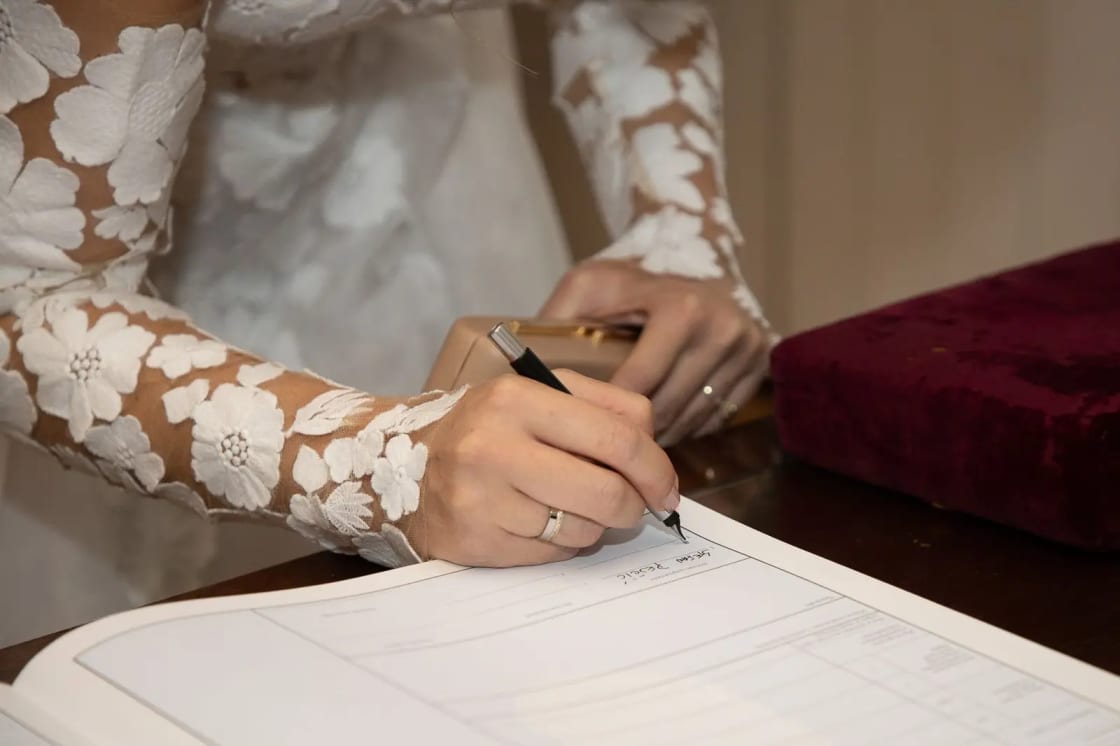
The license does not become a marriage on its own. Your officiant has to complete the online Officiant Submission and Affidavit, entering the ceremony details and the names of two witnesses. Until that submission lands, you are, on paper, not married.
When your license is issued, you are directed to an officiant information page from which you can email the details straight to whoever is performing the ceremony. You can also print an officiant worksheet if they want something physical to work from.
Send it the moment you have it, and confirm they received it. A bishop, judge or friend who has never done this before will not know the step exists, and the couple is usually on a plane by the time anyone notices. Chasing a submission from a beach is a bad use of a honeymoon.
Who can actually perform the ceremony
Utah's list is broad: clergy of essentially any faith, judges and court commissioners, county clerks, mayors, the governor, certain legislators, and Native American spiritual advisers.
Utah County also lets you designate a friend or relative as a one-time officiant through the Clerk's office — an option that gets used constantly here and produces better ceremonies than a stranger reading a script.
Two witnesses aged eighteen or older must be present. Their names go into the officiant's submission, so pick people who will still be reachable that evening if a name gets misspelled.
License versus certificate
Two documents, and people conflate them constantly.
The license is permission. It says no legal barrier exists to this marriage. It is what you hold before the ceremony and it is the thing with the 32-day clock.
The certificate is the record that the marriage happened, generated after the officiant files. It is what the Social Security Administration, the DMV, the passport office, your bank and your insurer will ask for.
Digital copies of the certificate arrive by email automatically after the officiant submits. Paper copies are mailed the next business day. One certified copy is included with the license fee.
How many certified copies to order
More than one, and order them early.
A name change touches Social Security first, then a driver license, then a passport, then banks, then employers and insurers. Some of those accept a digital copy; several want a certified paper one and will not return it quickly.
Additional certified copies can be ordered from the Clerk's website or in person at any time afterward, so this is not a decision you can get permanently wrong. It is only a question of whether you order them now or discover you need them during the week you are also changing your address.
Note that in Utah your name does not change automatically because you married. The certificate is the evidence that lets you change it; it is not the change itself.
The remote-appearance warning worth reading
Utah permits marriage by online remote appearance, and this has made the state a destination for couples who cannot travel.
The Clerk publishes a warning about it in six languages, which tells you how often it matters: a marriage solemnized under Utah law through online remote appearance may be invalid in the country where the couple actually lives.
If either of you is not a United States resident, or if the marriage will need to be recognized abroad for immigration or inheritance purposes, verify recognition in that country before choosing the remote route. Utah's willingness to issue the license says nothing about anyone else's willingness to honor it.
Temple weddings and the license
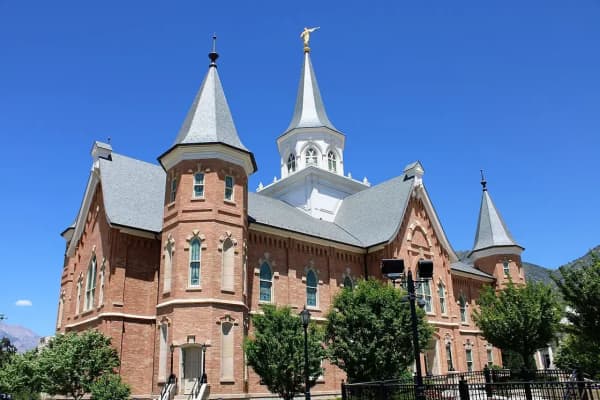
Utah County's ceremony mix is unlike almost anywhere else, and the license question comes up constantly for temple weddings.
The license works the same way. A sealing is a solemnization like any other under state law: an authorized officiant performs it, the officiant files the submission, the certificate issues. The 32-day window and the seven-to-ten-day timing advice apply unchanged.
What differs is coordination. Temple scheduling, a ring ceremony and a separate reception can spread across two days and two venues, and the license needs to be in hand for the event where the legal solemnization happens. Our temple wedding logistics guide covers the sequencing in detail.
If you do not have an officiant yet
This is a more common position than couples admit, and the county solves it three different ways.
Schedule a ceremony with Utah County. The Clerk's office performs marriages, and for couples who want the legal part handled cleanly and separately from a larger celebration later, it is the simplest route in the valley.
Designate someone you know. The one-time officiant designation turns a sibling, a former roommate or a favorite professor into a legally authorized officiant for your ceremony alone. It costs a form and produces a ceremony nobody forgets.
Use the Clerk's officiant list. The office maintains a directory of people who do this regularly, which is useful when you want someone experienced and have no particular connection to any faith tradition.
None of the three changes the license, the fee or the clock. They only change who says the words.
Shipping, and the international case
Paper certificates are mailed the next business day to a United States address at no additional charge, which covers the overwhelming majority of couples.
International addresses are the exception. The Clerk publishes separate shipping rates for certificates sent abroad, and the international fee is meaningful rather than nominal — it is a tracked courier service, not a stamp. Couples with a mailing address outside the country should check the published rate before assuming the $71.75 figure is their total.
The practical workaround, when it fits: have paper copies mailed to a relative or friend in Utah and collected later, and rely on the automatic digital copies in the meantime. Digital copies arrive by email regardless of where anyone lives.
The failures worth planning around
The ID scan will not verify. Usually glare, a worn document or a bad camera. Try daylight and a different phone before assuming the system is broken; then book in person.
The card declines. Large unfamiliar charges from a county government trip fraud rules regularly. Tell your bank first, or bring cash to the office.
The license expires. Almost always caused by applying too early. Seven to ten days out.
The officiant never files. The most consequential one, and the least visible. Confirm the submission actually went in before you leave for the honeymoon.
The names are wrong. Legal names, spelled as they appear on the ID — not the version anyone goes by. A certificate with a wrong name is fixable and the fix is tedious.
The short version
Apply online about a week before the wedding. Expect $71.75, and take $20 off it either by finishing a free marriage education course or by walking into 111 South University Avenue in Provo instead of applying from your couch.
The license lasts 32 days and there is no waiting period. It works anywhere in Utah regardless of which county issued it.
And when the ceremony is over, make sure your officiant actually files the submission. Everything else on this page is a convenience. That one is the marriage.
- Temple wedding logistics in Utah Valley
- The Utah Valley wedding timeline
- What a Utah Valley wedding actually costs
- Wedding venues in Utah Valley
- The DMV in Provo — for the name change that comes next
- Honeymoon Ideas for Utah Valley Couples (2026)
- The Utah County Clerk: Ballots, Marriage Licenses & Passports
- Engagement Rings in Utah Valley: A Buyer’s Guide
- Vital Records in Utah County
The Marriage Utah Recognizes Without a License — and the Door Closing on It
Everything above assumes you want a license. Utah has long recognized a second, much rarer route to a legal marriage: asking a court to declare that one already exists, even though no license was ever issued and no ceremony ever held. That route is being closed, on a fixed date, and the date is close enough to matter.
What the provision does. People call it common-law marriage, which is not quite right — Utah does not treat a couple as married simply because they have lived together for some period. What the statute allows is a petition. A court may enter an order validating a marriage that was never solemnized where it finds the relationship arises out of a contract between two people who are of legal age and capable of consenting, are legally able to marry, have cohabited, mutually assume marital rights, duties and obligations, and hold themselves out as spouses with a general reputation as such. Every element has to be present. Living together, even for many years, satisfies exactly one of them.
Where it lives in the code now. This provision used to sit at
former section 30-1-4.5. Utah recodified its domestic relations law into a new
Title 81 effective September 1, 2024, and the section is now
Utah Code § 81-2-408. A great deal of published material still cites the old
number. Our guide to civil officiants
covers that recodification and the stale citations it left behind across the web.
The closing date, and a wrinkle in how it was reported. The Legislature repealed and reenacted the section in the 2026 general session. The current text permits a petition to be filed before May 5, 2027, and provides that on and after that date a petition may not be filed. There is a trap here for anyone reading secondary sources: the bill as introduced would have made an unsolemnized marriage invalid unless already recognized by an order before May 6, 2026 — a hard immediate cutoff. That is not what was enacted. The version in force runs a wind-down instead. Guides quoting the introduced language will tell you the door shut in 2026; the statute says otherwise.
The other limit, which catches more people than the deadline will. A petition must be filed during the relationship, or within one year after it ends. That one-year window has always been the provision's sharpest edge. Couples typically discover the whole subject exists at exactly the moment it is least available to them — after a separation, or after a death, when someone needs the relationship to have been a marriage for a purpose that has already arisen.
Who this actually affects. Not couples planning a wedding. If you are reading this guide because you are getting married in Utah County, get the license and disregard all of it. It matters to people who have lived as spouses for years without a ceremony and who may need the legal status recognized — for inheritance, for a benefits claim, for immigration, for a property question. For them the combination of a hard statutory sunset and a one-year filing window is unusually unforgiving, and the sunset is now inside the ordinary time it takes to notice a problem and see a lawyer about it.
This is general information rather than legal advice, and this is precisely the kind of question where the details of an individual situation decide the outcome. Anyone who thinks this provision might apply to them should speak to a Utah family law attorney rather than to a website, and should do it well before the filing window closes.
Related Guides
Frequently Asked Questions
How much does a marriage license cost in Utah County?
How long is a Utah marriage license valid?
When should we apply for our marriage license?
Do we both have to go to the office in person?
Can we use a Utah County marriage license anywhere in Utah?
How old do you have to be to marry in Utah?
Who can perform a wedding ceremony in Utah?
What is the difference between a marriage license and a marriage certificate?