
Fall is the season Provo does best, and it is not close.
Summer gets the tourism and winter gets the skiers, but autumn is when the mountains that surround this valley put on the show, the trails become comfortable, and the city itself reorganizes around football Saturdays and harvest weekends. If you live here and have not deliberately planned around it, you are missing the place at its peak.
This guide covers what to do and where to go. But it opens with the thing that decides whether any of it works, because almost nothing written about Utah fall color explains it properly.
The one thing to understand: color is an elevation staircase, not a date
Every autumn, people ask when the leaves change here, and every autumn they get given a week. That framing is why so many color trips land wrong.
In Utah Valley the leaves do not change on a date. They change on an altitude, and the change walks downhill over about six weeks.
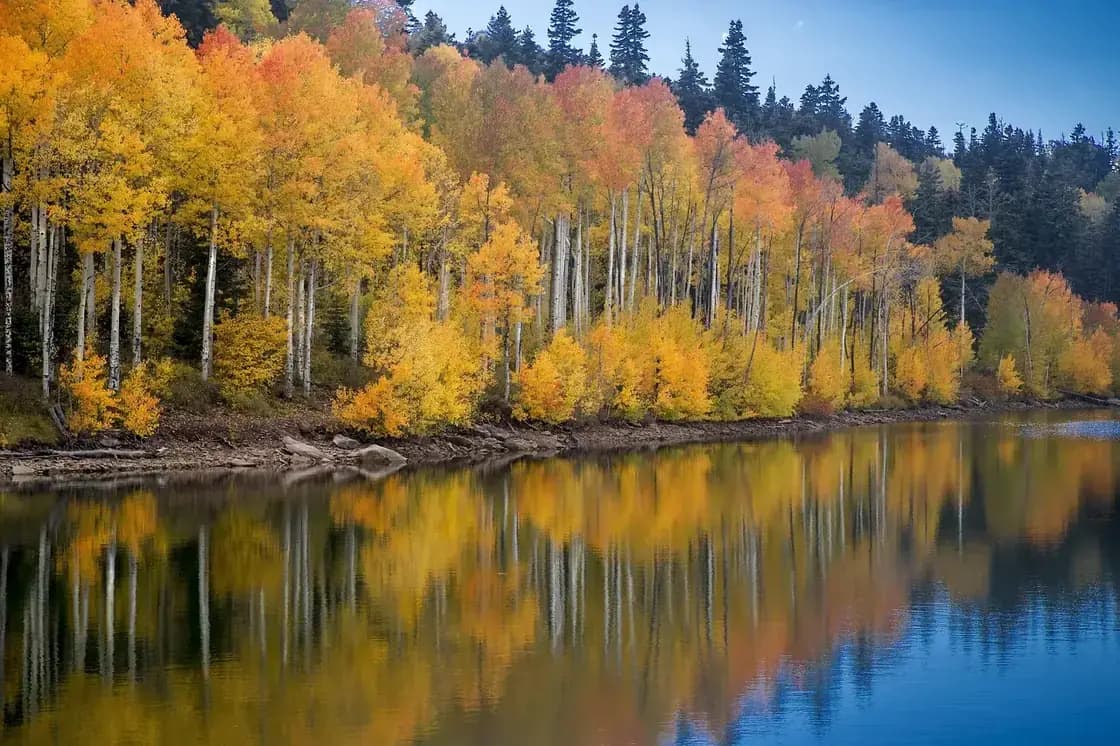
The high country — the top of the Alpine Loop, the aspen stands near the summit, the Nebo Loop's upper reaches above 9,000 feet — typically starts turning from around mid-September. The canyon floors follow. Provo Canyon on US-189, sitting lower, turns later. The valley floor, the lower foothills and the oak on the benches are last, often holding into the second half of October.
That has a practical consequence most guides never state: you do not get one weekend, you get a season, and you chase it by driving down rather than up. Go high in late September. Drop to the canyon roads in early October. Finish on the valley floor and the foothill trails later in the month.
It also explains why published peak dates disagree so violently. They are not contradicting each other — they are describing different elevations, and often different years. Temperature and moisture shift the whole staircase by a week or more annually.
We are not going to name a peak week, because anyone who does is guessing. What we can tell you is that if you get exactly one trip on the Alpine Loop, the end of September into the first week of October is the highest-probability window, and the state tourism office and local news outlets publish color reports weekly from mid-September that will beat any advance prediction.
The two things that go wrong
Before the destinations, the two failures that ruin autumn plans here.
1. The high roads gate for the season, on snow rather than on a date
The Alpine Loop closes for winter, typically in late autumn, reopening in late spring — and both ends move with conditions rather than following a fixed calendar. The Nebo Loop does the same thing, and its published closure window varies dramatically by source because it too depends on snowpack.
The failure mode is specific: someone plans a color drive for late October or early November, drives to the canyon mouth, and finds the gate down. A late-season loop drive is a coin flip. Check before you commit, especially if the drive is the entire plan.
The same applies to the Kyhv Peak Road above Provo Canyon, which gates for winter on similar logic.
2. "Free scenic drive" and "free to stop" are different questions
This one costs money rather than time.
American Fork Canyon is a designated recreation fee area. Traveling through does not require a pass, but a vehicle stopped at a developed site does — and on a peak-color weekend, stopping at developed sites is precisely what everybody wants to do. Pull-outs, picnic areas and trailheads inside the fee area are not free parking.
Provo Canyon on US-189 does not work that way. Neither do the trailheads reached directly from Provo streets.
So the honest version is: the Alpine Loop is a free road with paid stops at one end, and the guides that call it a free scenic drive are describing only half of it.
Fall foliage: where to go, in the order the color arrives
The Alpine Loop
Roughly 20 miles · 1–2 hours without stops · turns from around mid-September at the top
The headline drive in Utah Valley and one of the best short mountain drives in the state. It connects Provo Canyon to American Fork Canyon on a winding road at the base of Mount Timpanogos, through dense maple, oak and aspen.
Go on a weekday, or early on a weekend morning. Peak-color weekends put more traffic on this road than any summer weekend, and it is two lanes with limited passing and small pull-outs — one car stopping for a photo backs up the ones behind it. Morning light is better anyway.
The stands between Sundance and Cascade Springs hold some of the most concentrated color on the route. Full detail in our Alpine Loop guide.
Provo Canyon (US-189)
Turns later — generally early to mid-October
You do not need to drive a mountain road at all. The main canyon highway is lined with trees that turn well, framed against limestone walls, and it stays open all winter. Drive it slowly, use the pull-outs, and walk down to the river where the color reflects off the water. Bridal Veil Falls sits directly on this route.
This is the accessible option: no seasonal gate, no fee area, no mountain driving.
Kyhv Peak Road
Late September into early October
The road above Provo Canyon — formerly signed under the peak's old name — gives you the layered view that photographs best: golden aspens at altitude with red maples still burning below and the valley beyond. It gates for winter, so it is an early-autumn option rather than a late one.
The Nebo Loop
Higher, quieter, further south
The byway south of Payson climbs higher than the Alpine Loop and carries a fraction of the traffic. If the Alpine Loop looks like a car park on the weekend you have free, this is the answer. Its seasonal closure window is contested between sources and depends on snow — the same caution applies, harder.
Hobble Creek Canyon
The quiet local option out of Springville: shorter, gentler, family-friendly, and pretty without any of the peak-weekend circus.
Fall hiking — the season the summer rule disappears
Provo's summer hiking rule is to be on the trail by 7 a.m. and down before noon. In autumn that rule simply goes away, which effectively doubles the usable hiking day and is the single biggest quality-of-life change of the season.
Rock Canyon — the maples turn deep red and form a canopy over the lower trail. The most accessible serious fall hike from town, and no fee area to worry about.
Y Mountain — climb above the treeline and look down on the whole patchwork: color on the bench, the grid of streets, the lake beyond. Short, steep, and the best value view in the city.
Bridal Veil Falls — a waterfall surrounded by color on a paved, flat path. Maximum payoff for minimum effort, and it works for any fitness level.
Bonneville Shoreline Trail — foothill terrain with panoramic views over a valley in color. Excellent on a bike; see our mountain biking guide. ⚠ Part of the Orem–Provo Canyon stretch crosses a state wildlife management area with a seasonal closure that runs through winter and early spring, so check current status as the season turns.
Stewart Falls — reached from the Alpine Loop, which makes it the natural stop on a color drive rather than a separate trip. Note the loop's seasonal gate.
Mount Timpanogos — if you are fit for the summit, late September before snow closes the upper trail gives you fall color seen from above. This is a serious day, not a casual one.
Provo River Parkway — flat, paved, riverside, and it holds color later than the canyons because it sits low. The last good color of the year is usually here.
The early-autumn festival cluster nobody plans around
Fall here does not begin with pumpkins. It begins on Labor Day weekend, and three of the largest community events in the region land in that same early-September window — which means the busiest fall weekend in Utah Valley arrives before most people have thought about autumn at all.
Payson's Golden Onion Days runs over Labor Day weekend at the south end of the county. It is one of a family of Utah town festivals named after a local product, alongside American Fork's Steel Days and Pleasant Grove's Strawberry Days. Payson's dates to 1929. ⚠ Check dates at paysonutah.gov rather than at a national listing site — several are currently republishing last year's dates on pages labeled for this year.
Swiss Days in Midway is the same weekend, over the mountain in the Heber Valley, and it is enormous relative to the town hosting it. The collision with Golden Onion Days is the useful planning fact: they are the same weekend, and you cannot properly do both.
The Timpanogos Storytelling Festival follows shortly after at Ashton Gardens in Lehi — a professional live-storytelling festival that began in 1990 as a library fundraiser in a private backyard and grew into one of the largest of its kind in the country.
If you are new here, that early-September cluster is the real start of the season, and the canyons are still green when it happens.
Sundance in the fall
The resort's off-season identity is worth knowing about, because most people only think of it in winter.
Ask about the lift. When Sundance runs scenic lift rides in the fall, they get you up into the aspens without a hike, which helps if mobility, small children or a limited afternoon rule out the trails. Operating days are seasonal and weather-dependent, so confirm before driving up.
The mountain is also the natural anchor for a color day: it sits on the Alpine Loop, and it has food. Full detail in our Sundance guide.
Practical notes for a color day
A short list of things that make the difference between a good autumn trip and a frustrating one.
Go early. Not for the light, although the light is better — for the parking. Pull-outs on the Alpine Loop are small and they fill. By late morning on a peak weekend the good stopping points are taken and you are driving past the thing you came for.
Dress for the top, not for town. The temperature difference between the valley floor and the high point of the loop is substantial, and it is larger in a car you keep getting out of than the forecast suggests.
Fill the tank first. There is no fuel on the loop.
Bring a paper plan. Cell coverage is patchy in the canyons, so decide your stops before you lose signal rather than after.
For photographers: the layered shots — gold above, red below — come from elevation, which is what makes the Kyhv Peak Road and the higher sections of the loop worth the drive. Overcast days are better than bright ones for saturated color. Our photography spots guide covers the specific vantage points.
Take the second half of the day slowly. The single most under-rated autumn plan here is a canyon drive in the morning and the Provo River Parkway in the late afternoon, when the low sun comes through the trees along the river and the crowds have gone home.
Harvest: the other half of autumn
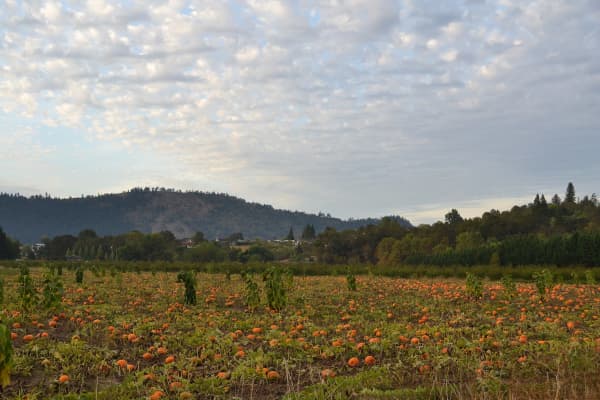
Pumpkin patches and corn mazes. Farms across the valley open for the season with pumpkin picking, mazes, hayrides and family programming, generally from mid-September through 31 October. Cornbelly's is the largest by a wide margin and runs two separate sites with different seasons — Lehi at Thanksgiving Point and a cheaper, quieter one in Spanish Fork that opens first. Both are covered in the Cornbelly's guide, and the wider farm circuit, including how the three pricing models work, is in pumpkin patches and fall farms in Utah Valley.
Apple picking. Orchards in the Payson and Salem areas south of Provo run U-pick through September and October. This is one of the better-kept local secrets and it is a different experience from a supermarket bag.
The farmers market's harvest weeks. The Provo Farmers Market runs into October, and the late-season stock — squash, pumpkins, apples, root vegetables — gives the last few weeks a distinctly autumn character worth catching before it closes for the year.
Halloween. The valley does Halloween seriously, with trunk-or-treats, haunted attractions and city events across October, and most neighborhood dates are published close to the season rather than in advance. One thing about 2026 is worth knowing early: Halloween falls on a Saturday and BYU hosts Arizona State the same day, which changes the evening considerably near campus. The full October circuit is in Halloween in Utah Valley.
Autumn Saturdays belong to BYU football
It would be dishonest to write about fall in Provo without this. BYU football reorganizes the city on home Saturdays — traffic, parking, restaurant waits and the general mood of the place all shift.
If you are going, the parking is the hard part and it is worth solving in advance: our BYU football parking guide exists for that reason, and our Big 12 visitors' guide covers the away-fan version.
If you are not going, the useful version of the same information is simply this: check the home schedule before planning a canyon trip or a downtown dinner on an autumn Saturday, because you will be sharing the roads either way.
The arts season starts in the fall
Provo's indoor calendar wakes up as the outdoor one winds down. The Covey Center opens its season, BYU's performing arts programming runs through the semester, and the galleries and museums move into their autumn exhibitions. On a wet October evening this is where the city is, and it is consistently under-used by residents who think of Provo as an outdoor town only.
See our things to do in Provo hub for the full picture, and the date ideas guide for the autumn-specific version.
Fall weather, and the thing that arrives at the end of it
September is warm and dry and reads like a gentler summer. October is the transition and the best month of the year here for being outdoors. November tips into winter, and the valley's first snow usually lands in that window.
Two local specifics matter more than the averages:
Elevation changes conditions fast. The canyon can be significantly colder than the valley floor on the same afternoon, and a pleasant walk at the trailhead can be an unpleasant one two thousand feet higher. Bring more layers than the forecast for Provo suggests, because the forecast for Provo is not the forecast for where you are going.
Late autumn is when inversions begin. The valley's winter inversions trap cold air and pollution below a warm layer, and their onset — not the temperature — is what makes late November feel different from early October. Our Provo weather guide explains the mechanism, including why widely published Provo weather figures disagree with each other.
Related Guides
- Alpine Loop Scenic Drive
- Nebo Loop Scenic Byway
- Complete Provo Hiking Guide
- Provo Weather
- BYU Football Parking
- Winter Activities in Provo
- Summer Activities in Provo
- Date Ideas in Provo
- Provo Farmers Market
- Spring in Provo & Utah Valley: The Complete Guide
- Utah Valley Hike Finder — filter every trail by difficulty, length, season, dogs and fees
- Canyon & commute conditions — foliage season ends when the gates do, and they close top-down
- Every Fall Farm Festival in Utah Valley
- Sundance Oktoberfest and the Harvest Mini Markets: the resort's autumn, and what changed this year
Last updated: August 2026.
Frequently Asked Questions
When do the leaves change in Provo?
Where is the best fall foliage near Provo?
Does the Alpine Loop close in the fall?
Is the fall drive through American Fork Canyon free?
What is there to do in Provo in the fall besides looking at leaves?
What is the weather like in Provo in the fall?
When is the best week to see fall colors in Utah Valley?
Are the trails less crowded in Provo in the fall?
Sources
The facts in this guide were checked against these sources. Hours, fees and rules change, so confirm anything time-sensitive with the source before you go. How we make Provo.com.
- Alpine Scenic Loop Backway, USDA Forest Service, Uinta-Wasatch-Cache National Forest. Checked October 12, 2026.
- Seasonal Roads, Utah Department of Transportation. Checked October 12, 2026.
- Golden Onion Days, Payson City. Checked October 12, 2026.
- BYU, Big 12 announce 2026 football schedule, BYU Athletics (byucougars.com). Checked October 12, 2026.
- Timpanogos Storytelling Institute: TSI History, Timpanogos Storytelling Institute. Checked October 12, 2026.
- Midway's Swiss Days festival returns to Heber Valley over Labor Day weekend, TownLift. Checked October 12, 2026.