The best restaurants in Utah Valley are not always the ones with signs.
Dumpling Bao operates inside the Asian Market at 266 North State Street in Orem — a grocery store, not a restaurant building. There is no street frontage, no patio, no separate entrance. You walk in past the produce and the noodle aisle, and there is a kitchen making dumplings and bao by hand.
It is the kind of place that develops a following through word of mouth and short videos rather than through search, which is exactly why it is worth writing down.
The short version
Handmade dumplings, steamed and pan-fried bao, potstickers, noodles and rice bowls, made fresh daily inside a grocery store on State Street. Closed Sundays. Cheap, fast once the food is up, and better than its obscurity suggests.
Finding it, which is the hard part
The single biggest practical problem with Dumpling Bao is that people cannot find it. They arrive at the address, see a grocery store, assume the mapping app is wrong, and drive on.
It is not wrong. The restaurant is inside the store. Go in and head toward the back. The kitchen and counter are a distinct area within the building rather than a deli case at the front.
State Street in Orem runs north–south as the city's main commercial artery, and 266 North puts the market north of Center Street, in a stretch of older strip retail rather than the newer development further south. Parking is in the store's own lot.
What the menu actually is
The restaurant's own description is specific: buns, dumplings and pan-fried potstickers, made fresh daily, in the register of authentic homemade Chinese street food at affordable prices for quick dine-in and takeout meals.
In practice that means the categories are dumplings, bao, noodles and rice bowls. The distinction that matters for a Utah Valley diner is that this is not the American-Chinese combination-plate format — no sweet-and-sour bins, no lunch-special numbering. The reference points are northern Chinese street formats.
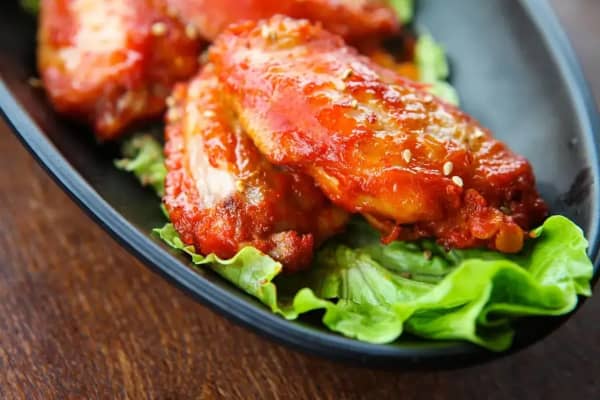
Items reviewers name most often are the bao — both the steamed and the pan-fried versions — and the popcorn chicken, which is the one crossover item that gets ordered by people who came in for something else.
The bao-versus-dumpling distinction
Because the restaurant's name contains both words, it is worth being clear about what you are ordering.
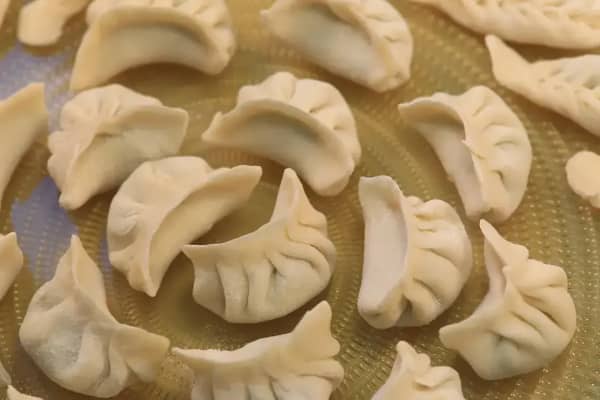
Dumplings here are the thin-wrapped, filled, boiled or pan-fried format — the potsticker family. Bao are the leavened steamed buns, thicker and breadier, filled and either steamed soft or pan-fried so one face crisps.
They are different eating experiences and both are on the menu. Ordering one of each is the reasonable first visit, and it is cheap enough that this is not an extravagant strategy.
Why "made fresh daily" is the load-bearing claim
Almost every dumpling served in the United States is frozen. That is not an insult — frozen dumplings are a legitimate and often excellent product, and most restaurants serving them are not pretending otherwise.
A kitchen that folds its own is doing something structurally different, and it is the reason a counter this small can appear on the same shortlists as full-service restaurants. It is also the reason the food takes longer than a counter format leads you to expect. The most common complaint in reviews is exactly this: the food took a while.
That trade is the entire proposition. If you need lunch in six minutes, this is the wrong counter.
The grocery store is half the reason to go
The Asian Market is a genuine full grocery store, and it stocks the categories Utah Valley's general-market supermarkets handle thinly or not at all: rice varieties, fresh and dried noodles, sauces and pastes, frozen dumplings and seafood, produce that does not appear elsewhere in the county.
For anyone cooking Asian food in Utah Valley, this store and its equivalents are the supply chain. Our best grocery stores in Provo guide places it in the wider retail picture.
The practical consequence is that a trip here is efficient in a way that a restaurant visit is not. Eat, then shop. Most regulars do both.
Hours and the Sunday problem
Listings show Dumpling Bao open from late morning until roughly 8:30 in the evening, Monday through Saturday, closed Sunday.
Sunday closure is unremarkable in Utah Valley — it is the regional norm rather than the exception. What makes it firmer here is that the restaurant sits inside another business, so its access depends on the host store being open too. There is no scenario in which the counter is serving and the store is shut.
As always with in-store operations, hours can drift without any listing site noticing. A phone call before a special trip is cheap insurance.
What it costs
Cheap, and that is a large part of the appeal. This is a counter operation inside a grocery store, without the rent, staffing or fit-out costs of a standalone restaurant, and the pricing reflects that.
We do not print specific prices on venue pages because menu prices move faster than any other restaurant fact. The relevant comparison is that a full meal here sits well below what the same food costs in a full-service dining room.
Takeout, delivery and how well the food travels
Takeout is the dominant format, and the food suits it. Dumplings and bao hold up in a container considerably better than fried or sauced dishes — steam is the enemy of anything crisp, and most of this menu is not trying to be crisp.
The one item to eat immediately is anything pan-fried, where the whole point is the contrast between the crisped face and the soft body. That does not survive a twenty-minute drive.
The restaurant runs its own ordering site, and third-party delivery listings exist. Ordering direct is generally better for a small independent operation.
Seating, atmosphere and what kind of meal this is
There is seating, and it is what you would expect: tables inside a grocery store rather than a dining room. Reviewers describe the atmosphere as relaxed and the service as quick once food is ready.
This is a lunch place, a fast-dinner place, and a stop-on-the-way-home place. It is not a date-night restaurant, and treating it as one sets up a disappointment that has nothing to do with the food. For that, our best restaurants in Orem guide covers the rooms built for it.
Where it sits in Utah Valley's Chinese food landscape
Orem has a denser Chinese and broader Asian restaurant scene than its size suggests, driven partly by the student population at nearby Utah Valley University and partly by long-established immigrant communities across the valley.
Dumpling Bao occupies the specialist end. It does not attempt breadth — it does dumplings, bao and a short supporting cast. That focus is what distinguishes it from the general Chinese restaurants on the same shortlists, and our best Chinese and Asian food roundup places it against them.
The hidden-gem framing, and its limits
Restaurants inside grocery stores get called hidden gems reflexively, and the label does real work here — the place is genuinely hard to find and genuinely good. Short-form video has done more for its visibility than any conventional marketing could.
But "hidden gem" can also flatten a business into a novelty. The reason to go is that the dumplings are made by hand that morning, not that the location is quirky. If the same kitchen had street frontage on University Parkway it would still be worth the trip.
Accessibility and practicalities
The restaurant is inside a single-level grocery store with its own parking lot, which makes the basics easier than at many older Utah Valley storefronts. Card payment is standard.
Anyone with a specific access requirement should account for the fact that reaching the counter means crossing the retail floor. It is a normal supermarket aisle layout rather than a tight specialty shop, but it is a longer indoor walk than a restaurant entrance.
Ordering for a group or a first visit
The efficient first order for two people is one steamed bao, one pan-fried item, one dumpling order and the popcorn chicken to share. That covers all four textures the kitchen produces and costs little enough that a miss is not painful.
For a larger group, order in waves rather than all at once. Items come up as they are finished rather than plated together, and a large simultaneous order is what produces the wait times reviewers mention.
The wider in-store restaurant category
Restaurants operating inside grocery stores are a small but real category in Utah Valley, and they exist for a specific economic reason. A kitchen inside an existing retail building carries no separate rent for frontage, no signage cost and no fit-out for a dining room. That cost structure is what allows a very small operation to serve handmade food at counter prices.
It also explains why these kitchens tend to be specialists. A tenant with four hundred square feet cannot run a broad menu, so it picks one thing and does it properly. The trade-off for the customer is obvious: excellent food, no atmosphere, and a business that is genuinely hard to find.
The pattern is common in cities with larger Asian populations and comparatively rare here, which is part of why Utah Valley diners find it novel rather than ordinary.
Language, ordering and the counter
Ordering is straightforward and does not require any knowledge of Chinese. The menu is in English with the dish names transliterated, and staff are used to customers who have never eaten bao before.
If you are unsure, the useful question is not "what is good" but "what is steamed and what is pan-fried" — that single distinction determines most of the eating experience here, and staff can answer it instantly.
Payment is at the counter, and orders are called when ready rather than delivered to tables.
Parking and the State Street approach
The store has its own lot, which removes the main practical obstacle. State Street carries steady traffic through this stretch and left turns across it can be slow at peak times, so approaching from the direction that lets you turn right is worth a moment's thought.
For anyone coming from Provo, this is a short drive north on State Street rather than a freeway trip. From the north end of Orem it is equally quick going south. The store sits close enough to the UVU corridor to be a realistic lunch option for students and staff with a car.
What to buy in the store while you are there
If the counter has convinced you, the aisles are the follow-up. The categories worth a look are the frozen dumpling section, the fresh and dried noodles, the sauce and paste shelves, and the produce that does not appear in general-market supermarkets.
Buying a bag of frozen dumplings on the way out is the standard move for anyone who wants to reproduce some of the experience at home. They are not the same as the handmade ones at the counter, and they are dramatically better than the supermarket alternative.
Who this is for
It suits anyone who wants real dumplings without driving to Salt Lake, anyone cooking Asian food who needs the grocery run anyway, and students who need a cheap meal that is not fast food. It suits families fine, with the caveat that it is a counter rather than a room built for a long sit.
It suits you less well if you are in a hurry, if you want a dining room, or if you are looking for the familiar American-Chinese menu — none of which are faults, just a mismatch.
Storing and reheating leftovers
Dumplings and bao both keep overnight and both reheat badly in a microwave, which turns the wrapper gummy. The better method for dumplings is a hot dry pan with a splash of water and a lid, which re-crisps the base and re-steams the top in about three minutes.
Bao reheat best steamed — a colander over simmering water, covered, for a few minutes. It is more effort than a microwave and the difference is not subtle.
This matters here because portions are generous relative to price, and leftovers are a normal outcome rather than an accident.
Comparing it with what else is nearby
Within a short drive on State Street and University Parkway there are several long-running Chinese restaurants working in the general full-service format, plus ramen, Korean and Thai kitchens. Yelp's Orem shortlists place Dumpling Bao among them despite the difference in scale.
The distinction to hold onto is format rather than quality. A full-service Chinese restaurant gives you a table, a broad menu and a server. This gives you a narrow menu made by hand, at a lower price, in a grocery store. Those are different evenings.
Our best ramen in Provo and best Chinese and Asian food guides cover the surrounding field.
Verifying before you go
The durable facts on this page are the address, the in-store location and the Sunday closure. Everything else — precise hours, the current menu, prices — belongs to the restaurant and moves without notice.
For a small in-store operation, the business's own ordering site and social accounts are far more reliable than any aggregator listing, which may not have been touched since the counter opened.
The bottom line
Dumpling Bao is a small kitchen doing one thing seriously inside a grocery store on State Street, and it is the kind of place a local guide exists to point at. Go in the front, walk to the back, order more than you think you need, and buy noodles on the way out.
Not on a Sunday.
Ground pork, steamed twice: the two rules a dumpling kitchen runs on
A dumpling is a specific technical problem. The filling is comminuted meat, the wrapper insulates it from heat, and the whole thing is very often cooked partially, chilled, and finished later. Each of those facts maps onto a numbered provision of the code Utah enforces, and together they explain why dumpling kitchens are run the way they are.
Utah incorporates the 2022 FDA Food Code at Utah Admin. Code R392-100-4.
Comminuted meat has its own temperature. Under Food Code § 3-401.11(A)(2), comminuted meat — anything reduced in size by chopping, flaking, grinding or mincing, plus injected or mechanically tenderized cuts — must reach 155°F for 17 seconds. Equivalent combinations are permitted: 158°F instantaneous, 150°F for one minute, or 145°F for three minutes. A whole cut of pork, by contrast, needs only 145°F for 15 seconds under ¶ (A)(1). Grinding is what changes the number, because grinding distributes surface bacteria through the interior. Pork belly sliced for a bao is one food; the same pork ground into a filling is another.
A wrapper is an insulator, and the thermometer has to go inside it. This is where a dumpling differs from almost everything else on a line. The steam that brings a basket to temperature reaches the dough first, and a dumpling that looks done — translucent skin, pleats set — can be well short of 155°F in the middle of the filling. The reason the good kitchens in this category run consistent batch sizes and consistent timers is not tradition. It is that the visual cue is unreliable and the internal reading is the one the code cares about.
Cooking in two stages is a regulated process. Food Code § 3-401.14 governs non-continuous cooking — the practice of intentionally halting the initial heating so that food can be cooled and finished later. It is lawful, and it is conditional. The initial heat may last no more than 60 minutes; the food must be immediately cooled after the initial heating in accordance with the cooling rule; it must be held frozen, or cold at 41°F or below, until the final cook; the final cook must bring it to the full temperature required for the food under § 3-401.11; and — the part that catches operations out — the establishment must maintain written procedures approved by the regulatory authority and available on site, describing how the food is marked and separated so partially cooked product is never mistaken for finished product.
That is precisely how a par-cooked dumpling program works, and it is why it is a documented process rather than a shortcut.
Reheating is a fourth number. Under § 3-403.11, food that was cooked, cooled and is being reheated for hot holding must reach 165°F for 15 seconds within two hours. Dumplings held in a steamer for service sit at 135°F or above under § 3-501.16(A)(1). So the daily cycle here — cook, cool, hold, reheat — passes through four separate provisions with four different numbers, and the ones that fail in practice are the cooling and the reheating rather than the cooking.
Why frozen is not an insult in this category
Dumplings freeze better than almost any other prepared food, and the code treats freezing as the clean way out of every timing problem above. Food held frozen is outside the date-marking rule at § 3-501.17 while it stays frozen; the seven-day clock applies to refrigerated ready-to-eat TCS food, not to frozen product. A kitchen that makes dumplings in batches, freezes them raw and cooks to order is running the lowest-risk version of this cuisine and usually the best-tasting one, because a frozen dumpling holds its pleats and its filling texture through the steamer better than a chilled one does.
The corollary is worth saying: a house that freezes its own dumplings is not cutting corners. A house that buys them in is doing something different, and the difference shows up in the wrapper rather than in the filling.
What to ask, and what not to bother asking
Worth asking: are the dumplings made here, which is a texture question with a safety corollary; and is anything par-cooked, because the answer tells you there is an approved written procedure behind the operation.
Not worth asking: anything about the pork's temperature. No kitchen will quote you 155°F across a counter, and the number is not the point — the point is that a specific number exists, that it is higher for ground meat than for whole cuts, and that the reason your dumpling arrives scalding is that the filling had to get there before the wrapper looked ready. For the permitting side, see food permits and inspections in Utah County.
Related Guides
- Haveli Modern Cuisine: North Indian Cooking on Orem's State Street
- 18 Best Asian & Sushi Restaurants in Utah Valley (2026)
- Best Indian Food in Provo & Orem (2026)
- Best Korean Food & BBQ in Provo & Orem (2026)
- Pupusas and Salvadoran Food in Provo: Where to Go and What to Order
- 16 Best Mexican Restaurants in Utah Valley (2026)
- Best Pizza in Provo & Orem (2026)
- The Provo & Orem restaurant directory — where this place sits among everything else we cover, with the address and the city
- Asian Markets and Grocers in Utah Valley
Frequently Asked Questions
Where exactly is Dumpling Bao?
Is Dumpling Bao open on Sundays?
What does Dumpling Bao serve?
Is it actually good, or just novel?
Can I shop and eat in the same trip?
Does Dumpling Bao do takeout and delivery?
Is there seating?
Is this the same as the other Asian restaurants in the market?