
The Butterfly Biosphere is the newest of Thanksgiving Point's venues and the one most likely to be misjudged before you go. People book it expecting a butterfly house and find that roughly half the building is an insectarium. People bring a pushchair and discover they cannot take it into the part they came for. People turn up on a Saturday afternoon in July without a ticket.
None of that is anyone's fault — the attraction has a genuinely unusual shape. This guide covers what is in there, how the ticketing actually works, and the two or three decisions that separate a good visit from a flat one.
What it is
The Butterfly Biosphere sits at Thanksgiving Point's Water Tower Plaza in Lehi, in a purpose-built venue of roughly 40,000 square feet. Thanksgiving Point describes it as Utah's only butterfly conservatory and insectarium, and we have not found anything in the state that contradicts that.
The building divides into three parts, and you meet them in a fixed order.
The Discovery Zone comes first. This is the insectarium — hundreds of live invertebrates in a hands-on setting built for children. It holds around twenty species of tarantula, beetles described fairly as fist-sized, and a cast of the sort of animals that make adults step backwards and children step forwards. Species on exhibit have included blue morphos, atlas moths, black widows and goliath beetles.
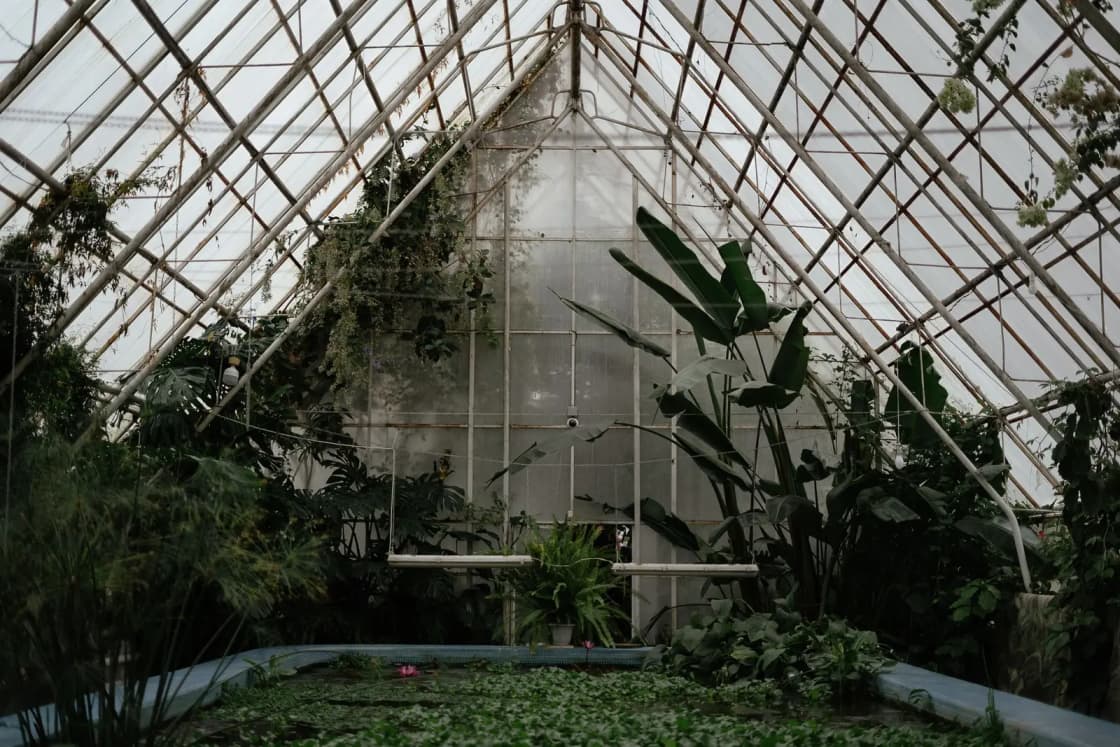
The Beverley Taylor Sorenson Butterfly Conservatory is the reason most people come — a heated, humid, densely planted glasshouse holding over a thousand live butterflies from around the world, free-flying. You walk through it. They land on people, regularly and without warning, which is the moment the whole venue exists to produce.
The Costa Rica Climber is the play structure, and it is the release valve. On a busy day it is where the energy goes.
Just past the main entrance there is a photo set-up that lets you pose as though you are an insect inside a giant specimen jar. It is silly and every family does it.
The leafcutter ants are the newest thing, and they are the best thing
Thanksgiving Point's most recent permanent addition to the Biosphere is a colony of around 120,000 female leafcutter ants.
If that sounds like a footnote, it is not. Leafcutters, native to South and Central America, run one of the most complex animal societies on the planet — Thanksgiving Point's own framing is that they are second only to humans on that measure, and while that is the operator's claim rather than a settled scientific ranking, it is not a wild one. Leafcutter colonies practice agriculture. They cut leaves not to eat but to feed a fungus they cultivate underground, and the fungus feeds the colony. They maintain castes with sharply different body plans doing sharply different jobs, including tiny workers whose main function is riding on cut leaf fragments to fend off parasitic flies.
What you get to watch is the supply chain: a continuous moving line of ants carrying leaf sections along a transparent route between chambers. It runs all day, it needs no feeding time or show schedule, and it holds children who have already decided they are bored.
Ask an Explorer — Thanksgiving Point's floor staff — about it. This is the exhibit they most want to talk about and the one where the difference between reading a placard and having it explained is largest.
How the ticketing actually works
Three things matter here, and they trip up more visits than anything else.
One: every admission is time-ticketed. Thanksgiving Point sells entry in slots with limited availability and says plainly on its own booking page to purchase in advance. This is not a formality on a busy day. Weekend slots and school-holiday slots genuinely sell, and the venue is small enough that they have to be capped.
Two: buying online is cheaper than buying at the gate. This is the durable rule across Thanksgiving Point's venues and it holds tier by tier — child, adult, senior. We are deliberately not printing figures here, because Thanksgiving Point's prices have moved and any number we set down would be wrong within a season. The structure is what you can rely on: book online and you pay less than the person in front of you at the window. That is worth doing even if you are booking from the car park.
Three: Butterfly's First Flight is bought in person, not online. This is the one that catches families out. First Flight — releasing a newly emerged butterfly yourself — runs Monday to Saturday at 11:30 a.m. and 5:30 p.m., and it is purchased at the Butterfly Biosphere front desk. You cannot add it to an online booking. If it is the reason a six-year-old is in the car, ask at the desk on arrival, not after you have drifted through the Discovery Zone and missed the 11:30.
And a fourth, for anyone visiting more than one venue. Thanksgiving Point has seven venues, and it periodically runs a multi-venue All-Access Pass — in summer 2026 it offered three consecutive days across all seven for the price of a single-day pass, running from 1 June to 22 August. Promotions like that come and go, and the specific one above expires. The habit to build is checking the Thanksgiving Point site for a current pass before buying single-venue tickets, because on a two-venue day the pass usually wins.
Where the butterflies come from — and the sign you should read
The most interesting thing about a butterfly conservatory is the logistics behind it, and Thanksgiving Point is unusually open about theirs.
The butterflies are not bred on site. The entomology team's own explanation is a practical one: raising caterpillars takes an enormous amount of plant biomass, far more than a Utah building can grow. So instead the Biosphere works with family farms that raise the caterpillars in their native habitats overseas. Once those caterpillars pupate, the chrysalides are shipped to Lehi, where staff glue them individually to lengths of string and hang them in the Emergence Chamber.
That chamber is a public exhibit, not a back room, and it is the part of the visit adults tend to like most. Behind glass you can see chrysalides at every stage at once — some untouched, some darkening as the wings become visible through the case, some split open with a butterfly hanging beneath, pumping fluid into its wings and waiting to dry. On an average morning staff release somewhere between a hundred and two hundred newly emerged butterflies into the conservatory.
Numbers for the conservatory itself vary by who is counting and when: published figures run from around 60 to 76 species and from roughly 800 to 1,200 individual butterflies at any given moment. Thanksgiving Point's own materials say "over 60 species" and "over a thousand butterflies," which sits comfortably inside that range. Do not expect any single number to be exactly right on the day you visit — a conservatory's population is a flow, not a stock.
Now the sign. The conservatory is a USDA-regulated containment facility, because federal law governs the purchase, transfer, importation and life of non-native insects. Every butterfly in there arrived as a chrysalis under permit, and none of them is allowed to leave. Thanksgiving Point states the consequence in plain terms on its own page: removing a butterfly from the conservatory carries a penalty of up to $25,000 or up to nine years in prison.
That is not decorative signage. It is why you are held in a small vestibule on the way in and on the way out, why staff will look you over as you leave, and why the doors work the way they do. Nobody is going to prison over a butterfly on a jumper — the checks exist precisely so that does not happen — but it explains a design that otherwise looks like fussiness.
Which species you actually see depends on what emerged that week. Regulars from Central and South America include the blue morpho — the big, slow, impossibly blue one that even indifferent toddlers stop for — along with longwings, malachites, glasswings and owl butterflies. Papilio memnon, native to southern Asia, is one of the more common residents.
The things staff do that are easy to miss
The feeders are Gatorade. Butterflies get most of their liquid and nutrients from nectar feeders, which the entomology team fills with Gatorade and fruit juice, supplemented with slices of fruit left out around the conservatory. There is also a small waterfall and pond, and the planting is maintained by Thanksgiving Point's horticulture team rather than bought in as decoration. The practical consequence for a visitor: the feeding stations are where the butterflies are. Find one, stand near it, stop moving.
Free programs run through the day. Meet the Entomologists is an interactive session with the people who actually care for the invertebrates, with questions at the end. Insect Investigators is the hands-on children's version — magnifying glasses, close observation, small experiments. Critter Encounters bring animals out onto the floor. None of these is the sort of thing you find out about after the fact and wish you had known, so ask at the desk what is running while you are there.
The Trading Post is free and nobody knows about it. Thanksgiving Point runs a Community Insect Collection: photograph an interesting bug you have found anywhere — your own garden counts — bring or send the photo in, and trade it for points toward prizes. The more information you can give about where and when you found it, the more points you earn, which is a quietly clever way of teaching children to record observations rather than just collect them. If you have a child who is already the sort of person who turns over rocks, this converts a one-off visit into an ongoing project.
Butterfly's First Flight is an add-on, and it is cheap. Thanksgiving Point lists it at $4 per person, $3 for members, on top of admission — released twice a day, Monday to Saturday, at 11:30 a.m. and 5:30 p.m. You buy it at the front desk in person. For most families that is the best four dollars spent on the site.
One claim to be careful with
You will find listings describing the Butterfly Biosphere as the largest butterfly conservatory in North America. We are not repeating that, because Thanksgiving Point does not make it. The operator's own claim is the more modest and more defensible one: Utah's only butterfly conservatory and insectarium. Where a venue's own marketing is more restrained than the write-ups about it, the venue is usually the one to believe.
The building is a conversion rather than a new build — an existing retail center reworked into a two-story exhibit space, with the original wood beams and ceiling paneling kept in what is now the ticketing area. The design brief was "look closer," which is why so much of the interior plays with scale: you shrink to insect size in one room and examine insects at micro scale in the next.
Timing: when the butterflies are actually flying
Butterflies are ectothermic. They do not generate their own body heat, so their activity tracks warmth and light directly, and a butterfly that is cool is a butterfly sitting still on a leaf with its wings shut.
The conservatory is kept warm and humid all year, so the seasonal worry most people have is misplaced — a January visit is not a lesser visit. What does matter is the time of day. Butterflies are most active around the middle of the day, and a mid-morning to mid-afternoon slot will show you noticeably more movement than an opening or closing one.
This creates a straightforward trade-off, and there is no way around it: the busiest slots are also the best slots. If you want butterflies in the air, book midday and accept company. If you want quiet, book the first or last slot and accept a calmer conservatory.
One tip that costs nothing: stand still. Butterflies do not land on moving people. Families who walk a slow loop and then stop for two minutes near a feeding station get landings; families who keep moving do not, and then report that the butterflies were not interested.
For photographers, the useful window is the opposite of the fun one — butterflies at rest early or late are far easier to photograph than butterflies at midday, when they will not hold still.
Practical notes
Pushchairs. Fine everywhere in the building except the conservatory itself, where you will be asked to leave them outside. Plan to carry.
Coats. The conservatory is warm and humid. In winter you will want somewhere to put a coat, and there are hangers for that purpose. Dress in layers you can shed at the door.
Doors. The conservatory uses controlled entry to keep butterflies from escaping. Expect a short wait at the vestibule and expect staff to check your clothing on the way out, because a butterfly hitching a ride on a shoulder is a common event rather than a rare one.
Touching. Staff brief you on the rules in the vestibule before you go in, and that briefing is the authority — follow it. The general principle is that a butterfly may walk onto an offered finger but should never be grabbed: the scales on a butterfly's wings come off on human skin and do not grow back.
Ages. The venue works from about eighteen months upward. Under that, it is pleasant enough for the adult carrying them but you are paying for a walk.
Sundays. Thanksgiving Point venues do not operate on Sundays. If you are visiting Utah Valley for a weekend, the Biosphere is a Saturday plan.
Where it fits at Thanksgiving Point
Thanksgiving Point is a campus, not a building, and the venues are far enough apart that "we'll just walk over" is sometimes wrong. The Butterfly Biosphere is at Water Tower Plaza, on the southeastern side of the campus. Ashton Gardens and the Museum of Ancient Life have their own entrances elsewhere on the site. Navigate to Water Tower Plaza specifically rather than to "Thanksgiving Point", or you will arrive at a car park with a long walk attached.
The pairing that works best is Biosphere plus Museum of Natural Curiosity, because they sit together and because they complement rather than repeat: the Biosphere is living animals, the Museum is hands-on physics and play. The two of them make a full day for a family with primary-age children.
The pairing to be careful with is Biosphere plus Ashton Gardens in high summer. One is indoors and shaded, the other is a large outdoor garden, and doing the gardens after midday in July is a harder afternoon than people expect. Note that the conservatory itself is deliberately not air-conditioned — the design uses automatic venting, natural convection and fans to shed heat without conditioning the air, because chilled air is exactly what a tropical butterfly does not want. It is warm in there in August.
Our full Thanksgiving Point guide covers all seven venues and how to sequence them. If you are coming from the south end of the valley, the drive is the main cost of the day — Lehi is the far northern end of Utah County, and from Provo you should budget the better part of half an hour each way before traffic.
Is it worth it?
For a family with children between roughly three and eleven, yes, comfortably — and it is the Thanksgiving Point venue that gets the strongest reaction from the youngest end of that range. The moment a butterfly lands on a small child is the thing people are still talking about weeks later, and it is not manufacturable anywhere else in Utah.
For adults on their own, it is a pleasant hour rather than a destination, and worth booking off-peak.
For anyone visiting more than one Thanksgiving Point venue, check for a current multi-venue pass before you buy anything. And if First Flight matters to you, ask at the desk the minute you walk in.
The valley has no shortage of things to do with children, but very few of them involve a live animal choosing to land on your kid.
Related Guides
- Lehi Roller Mills: The Footloose Landmark That Quietly Changed Its Name
- All-Together Playground: The Park 4,100 Volunteers Built in Six Days
- Museum of Natural Curiosity: A Complete Guide to Thanksgiving Point's Play Museum
- The Bean Museum: Provo's Free Natural History Collection
- Cascade Springs: The Complete Visitor Guide (2026)
- The Soap Factory in Provo: What It Is and Whether It Is Worth It
- Timpanogos Cave National Monument: The Complete Visitor Guide (2026)
- Hines Mansion: Provo's Victorian Landmark, and the B&B That Says It Isn't One
- Peaks Ice Arena: The Olympic Venue Provo Got Because Utah County Held Out
Frequently Asked Questions
Do you need to book Butterfly Biosphere tickets in advance?
What is Butterfly's First Flight?
How long do you need at the Butterfly Biosphere?
Are the butterflies always flying?
Can you take a pushchair into the Butterfly Biosphere?
What is there besides butterflies?
Is the Butterfly Biosphere worth it if you're not visiting with kids?
Where exactly is it?