New this season in Provo
Opening, closing or changing
- Provo Towne Centre — A $500M redevelopment of the mall site. Parts are planned, parts are decided, and a good deal is neither.
- Provo Airport — Mainline jet service, additional routes, and a phased build to ten gates: North Concourse (gates 6-8) expected operational December 2027, South Concourse (gates 9-10, plus shell space for a future CBP facility) targeted for 2029, per the airport's June 25, 2026 statement.
- BYU Wymount Terrace — Rebuild delivering 240 new apartments for married students.
- Provo River Delta — Old Provo Channel amenities built but not finished: two non-motorized boat ramps functional, three fishing piers fenced pending inspector-ordered reinforcement, county repaving Lakeshore Drive to Utah Lake State Park not yet started as of 2026-09-01. Mid-summer 2026 target slipped.
- Vesper Amphitheater — A proposed canyon amphitheater, formally before the city and contested. Planning Commission recommended denial 5-2 on June 24; council held work meetings Aug 11 and Aug 25 with no votes; the city says the proposal and development agreement have changed and the earliest decision is Sept 8 (very tentative). No approval.
Coming up
- Provo Farmers Market — Saturdays at Pioneer Park — Saturdays, 9:00 AM – 2:00 PM (10 AM from October)
- Provo City Council Meeting — Typically 5:30 PM
- Early Voting in Utah County — November 2026 Election — Times vary
- FilmQuest Film Festival 2026 — Oct 21 to Nov 1 at Velour — 21 October – 1 November
- HAUNTED Provo Friday Night 5K — Fri Oct 30, 2026 — Friday evening 30 October
- HAUNTED Provo Half Marathon, 5K & Kids Run — Sat Oct 31, 2026 — Saturday 31 October · Half 8 a.m., 5K 8:30 a.m., Kids Run 11 a.m.
Everything dated across the valley sits on the events calendar, and openings and closings are tracked at openings and closings. Neither is a scrape: an entry appears on the tracker only when this site has already published the reporting behind it.

More on Provo: every guide we have published there, in one place.
Provo is a difficult city to summarize, which is probably why so many visitors underrate it. It is a college town with roughly the population of Charleston, a mountain town with a six-hundred-foot waterfall twenty minutes from its main street, and a lake town on the shore of the largest freshwater lake in Utah. None of those descriptions is wrong and none is sufficient on its own.
What follows is organized the way people decide what to do — by whether you want to be on a mountain, in the water, downtown, indoors, or somewhere your kids will be tired by four o'clock. Everything here is inside Provo or close enough to reach in under half an hour.
Start on the mountain, because everything else looks better afterward
The single most Provo thing you can do is walk up to the Y.
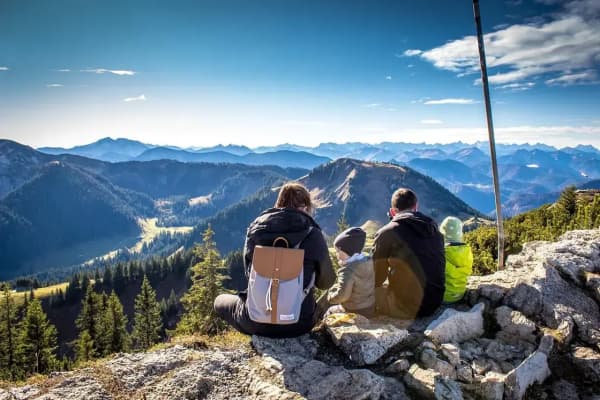
The trail leaves from the foothills above BYU and switchbacks up to the enormous white block letter that has been visible from the valley floor since 1906. It is steep, it is not long, and it is busy — sunrise and just before sunset are when locals go, partly for the light and partly because there is no shade to speak of. From the top, the whole valley opens up: the city grid below, Utah Lake spread out west, and the Wasatch running north and south behind you. Our full Y Mountain trail guide covers parking, which is the part people get wrong.
Rock Canyon is the other trailhead locals use constantly, and it suits a different mood — a canyon walk rather than a climb, with limestone walls that draw climbers year-round and a gravel path gentle enough for a casual afternoon. The Rock Canyon guide goes into how far you can reasonably get before the trail turns serious.
If you want the view without the climb, the drive-to overlook on Kyhv Peak Road delivers most of it from a parking area. Worth knowing before you search for it: the 2022 renaming of the old "Squaw Peak" name touched several separate features — the summit, the road, the overlook and a benchmark ridge — and most people asking about it mean the overlook, not the summit. Search results conflate them constantly.
Beyond those three, Provo's trail network runs deeper than the famous names suggest. The Bonneville Shoreline Trail traces an ancient lake bench across the mountain front, and there is a whole tier of less-crowded canyon hikes that locals guard mildly. Our complete Provo hiking guide is the place to start if hiking is the reason you came.
Provo Canyon is the drive to make time for
Head east on US-189 and within ten minutes the city is gone and you are in a canyon.
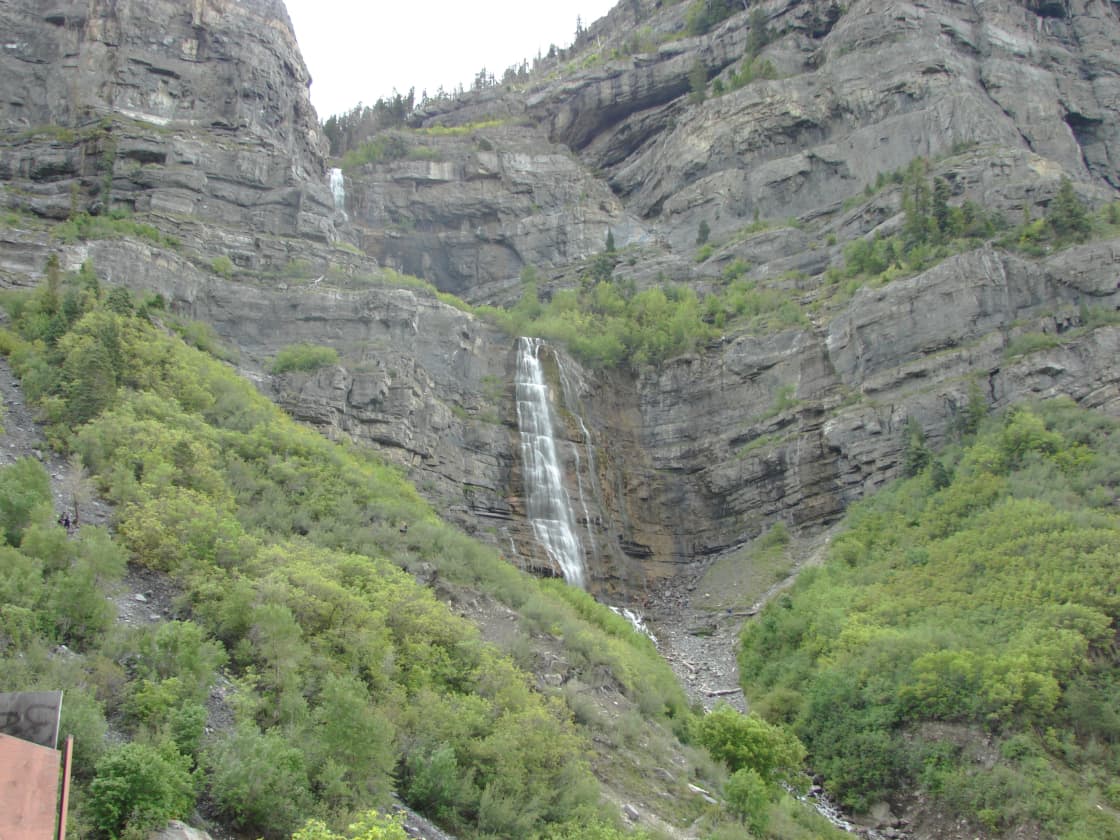
Bridal Veil Falls is the headline — a double cataract dropping several hundred feet down the canyon wall, visible from a paved section of the Provo River Parkway and reachable without any real hiking. It is impressive in spring runoff and frozen into something stranger in deep winter. The falls guide covers the parking situation and the seasons.
Further up, the canyon splits toward Sundance Mountain Resort — skiing and lift-served mountain biking depending on the month, plus a lift you can ride just for the view. Our Sundance guide covers what the resort costs to visit casually versus as a skier.
The turnoff for the Alpine Loop is up here too. It is one of the best scenic drives in the state and it closes with snow — typically late fall through late spring, weather-dependent at both ends, so confirm before you commit to it. The Alpine Loop guide explains the seasonal gate and what is worth stopping for along the way.
And running the length of it all, the Provo River Parkway is the piece locals use most — a paved trail following the river from the mouth of the canyon down through the city toward the lake. Flat, shaded in stretches, good for a run, a ride, or a stroller.
Downtown: Center Street is the whole answer
Provo's downtown is small, walkable and considerably better than its reputation among people who last visited fifteen years ago.
Center Street is the spine. Restaurants have accumulated along it to the point where the city has a real dining identity — our Center Street dining guide walks the block, and the broader best restaurants in Provo roundup covers the city as a whole. The street also carries Velour Live Music Gallery, a small venue with an outsized record of launching bands that went national, and it remains one of the distinctive things about the city.
The Provo City Center Temple anchors the downtown skyline. Its history is the interesting part: it was built inside the shell of the Provo Tabernacle after a 2010 fire gutted the building, which is why it looks like a nineteenth-century meetinghouse rather than a modern temple. The grounds are open to walk regardless of faith; our temple visitor guide explains what is and is not open to the public.
Two blocks over, the Provo City Library at Academy Square occupies a restored 1890s academy building and is worth going into even if you have no intention of borrowing anything — the restored building itself is the draw. Full library guide here.
On summer Saturday mornings, the Provo Farmers Market fills Pioneer Park downtown. It is the reliable social event of the warm season and it stacks well with a Center Street breakfast.
BYU's campus, and the free museums nobody tells visitors about
Brigham Young University runs three museums that are free and open to everyone, which is an unusual thing for a city this size:
- The BYU Museum of Art — one of the larger university art museums in the western United States, with rotating exhibitions alongside the permanent collection.
- The Monte L. Bean Life Science Museum — wildlife dioramas, a world-record liger, and the one that works best with young children.
- The Museum of Paleontology — a working fossil collection with mounted dinosaur material.
Our Provo museums guide covers hours and which one suits which kind of visitor. Campus itself is pleasant to walk, and the Creamery is a local rite of passage that costs a few dollars.
In autumn, the campus calendar takes over the city entirely. Home football Saturdays at LaVell Edwards Stadium change traffic, parking and restaurant waits across the whole east side — our game-day guide is written for exactly that.
On the water
Utah Lake sits on Provo's western edge and is much less visited than it should be. It is shallow, large, and better for paddling, sailing and sunsets than for swimming. Provo's own harbor and the state park give you access, and our Utah Lake guide is honest about the water-quality caveats that regularly come up.
For getting on it, kayaking and paddleboarding covers rentals and put-ins. Anglers should start with fishing near Provo, which distinguishes the river fisheries from the lake.
In high summer, Splash Summit on the east side is the family default — over a dozen slides and a large wave pool. Note the name: it operated as Seven Peaks for decades and a great many directories, ticket resellers and old blog posts still list it that way. Same address, same park, different brand since 2020. It runs a summer season only, and hours and pricing move around enough that the operator's own site is the only thing worth trusting on the day.
Arts, music and the stage
Provo's cultural scene is the part that most consistently surprises people, and it is disproportionately concentrated downtown.
Velour is the reason Provo has a national music reputation at all. The small venue at 135 N University Avenue — a block above Center Street, which is where almost every listing wrongly files it — has been the launching point for a striking number of bands that went on to real careers, and its calendar is the single best indicator of whether something interesting is happening in town on a given night.
The Rooftop Concert Series came back in 2026, and this is worth flagging because most of what is written about it online is a decade old. The free outdoor series ran from 2010 to 2019 — starting, as the name suggests, on the roof of a downtown parking garage before moving to Nu Skin Plaza at Center Street and 100 West in 2014 — then went dark for six years. Provo City and the original founders relaunched it in May 2026 as a five-show summer season at the Nu Skin Plaza, with free admission and a 7:00 p.m. start. If you are reading this in late summer, there are usually shows left on the calendar; confirm dates with the series directly, because a rebooted event's schedule is exactly the kind of thing that shifts.
The Covey Center for the Arts is the city's main performing-arts venue, running theater, concerts and touring work through the year. Beyond it, Utah Valley has an unusually dense theater scene for its population — our live theater guide covers the venues across the valley, several of which are a short drive from Provo.
BYU's own performing-arts calendar is substantial and frequently cheap or free, and it runs from September through April in step with the academic year.
The food is a reason to come, not an afterthought
This deserves its own heading because Provo's dining scene has changed faster than its reputation has.
Center Street and the blocks around it carry most of it, and the range is wider than a city this size normally supports — our Center Street dining guide is the walking version. The city also has a serious food truck culture that clusters around downtown and around events.
A few specific entry points depending on what you want: the best restaurants in Provo as the general roundup, cheap eats under $10 for the student-budget version, date-night restaurants for the other end, and food near BYU campus if you are based on that side of town.
One planning note that trips visitors up constantly: Sunday closures hit the restaurant scene hard. Restaurants open on Sunday in Provo exists because the question comes up that often.
Just outside the city
Several of the things people associate with Provo are not technically in it, and are worth the short drive.
Timpanogos Cave National Monument sits up American Fork Canyon, about forty minutes north — a strenuous paved climb to a spectacular cave system, and tickets are limited and sell out. The cave guide covers booking, which is the whole game.
Thanksgiving Point in Lehi is the region's biggest family attraction, with several museums and gardens across one campus. Full guide here.
Mount Timpanogos itself — the mountain dominating the northern skyline — has a summit trail that is one of the classic Utah hikes and a serious full-day undertaking. Stewart Falls, off the Alpine Loop, is the much gentler alternative to a big day out.
The Nebo Loop Scenic Byway runs south from Payson and is the less-famous counterpart to the Alpine Loop, with better fall color in some years and a fraction of the traffic.
Forty places in Provo, in one list
Everything below is a place you can go, inside Provo or in Provo Canyon directly above it. Places in Orem, Lehi and American Fork are deliberately absent even where they are twenty minutes away; they belong on their own city pages, and the ones worth the drive are described in the section above. Hours and prices are left out on purpose: both move, and a list that carries them is wrong within a season while still looking authoritative. If you want the city rather than the itinerary, living in Provo is the resident's front door and visiting Provo is the visitor's.
1. Y Mountain Trail
The switchback climb to the block letter above campus — steep, shadeless, and the definitive view over the city and Utah Lake. Our guide
2. Rock Canyon
A canyon walk rather than a climb, with limestone walls that draw climbers year-round and a gravel path gentle enough for an afternoon. Our guide
3. Provo Peak
The high summit above the city; the climb from the saddle is short and punishing, and the mountain road decides whether you get to try it. Our guide
4. Slate Canyon
The least-crowded of Provo's four canyon trails, and the one with a live land story at its mouth. Our guide
5. Bonneville Shoreline Trail
The bench of an ancient lake, walkable across the mountain front as a set of fragments rather than one continuous trail. Our guide
6. Kyhv Peak Overlook
The drive-to view most people mean when they search the old name, which attached to four separate features. Our guide
7. Provo Canyon
Ten minutes east on US-189 and the city is gone; this is the valley's front yard and its main mountain highway at the same time. Our guide
8. Bridal Veil Falls
A double cataract off the canyon wall, reachable without any real hiking, and stranger still when it freezes. Our guide
9. Vivian Park and Nunn's Park
The canyon's two day-use parks, six miles apart, carrying most of its picnics, reunions and tubing takeouts between them. Our guide
10. Provo River Parkway
Fifteen paved miles from Utah Lake to Vivian Park — flat, shaded in stretches, and the piece locals use most. Our guide
11. Utah Lake State Park
Shoreline access to the largest freshwater lake in the state, better for paddling, sailing and sunsets than for swimming. Our guide
12. Provo River Delta
A wetland restoration that began construction in 2020, with Delta Gateway Park opened by Provo City in June 2025, minutes from downtown. Our guide
13. The Provo River float
The lower river from Deer Creek down to Vivian Park, run with outfitters and a two-car shuttle. Our guide
14. Splash Summit Waterpark
Provo's summer waterpark, still filed under its old Seven Peaks name by a great many directories and ticket resellers. Our guide
15. Center Street
The downtown spine, and the most walkable concentration of restaurants and cafes in the city. Our guide
16. Provo City Library at Academy Square
A restored 1890s academy building worth walking into even if you have no intention of borrowing anything. Our guide
17. Provo City Center Temple
Built inside the shell of the burned Provo Tabernacle, which is why it reads as a nineteenth-century meetinghouse; the grounds are open to walk regardless of faith. Our guide
18. Velour Live Music Gallery
A twenty-year-old room on University Avenue that has never sold a drink and keeps turning out bands with national careers. Our guide
19. Covey Center for the Arts
The city-run performing-arts center downtown and the busiest room in the valley, running theater, concerts and dance through the year. Our guide
20. Dry Bar Comedy
The Center Street room people fly in for, and the reason Provo is a real node in American clean comedy. Our guide
21. ComedyBox Utah
Competitive short-form improv a few blocks east, trading for years as ComedySportz Provo. Our guide
22. The Soap Factory
A make-your-own bar soap workshop above a Center Street thrift store, and one of the busiest date bookings in town. Our guide
23. Pioneer Park
The downtown park that carries the farmers market on summer Saturdays and a good playground the rest of the year. Our guide
24. Hines Mansion
Provo's Victorian landmark and a getaway since 1995, whose own site now disputes the bed-and-breakfast label every listing gives it. Our guide
25. BYU Museum of Art
Free, holding around 17,000 objects, and one of the best-attended university art museums in the country. Our guide
26. Monte L. Bean Life Science Museum
Free, home to the world-record liger, and the campus museum that works best with young children. Our guide
27. BYU Museum of Paleontology
Free, specialized, and built mostly out of Utah excavation sites rather than out of a catalog. Our guide
28. Museum of Peoples and Cultures
A free archaeology and world-cultures collection on campus, small enough to see properly in half an hour. Our guide
29. LaVell Edwards Stadium
The largest stadium in the Big 12, grown from an orchard, with a bag policy stricter than visiting fans expect. Our guide
30. Crandall Historical Printing Museum
Working replicas of historically significant presses, including a Gutenberg, shown as a guided demonstration rather than a walk-through. Our guide
31. Provo Pioneer Village
Restored pioneer-era buildings and artifacts covering the city's settlement, small and volunteer-shaped, so check before going. Our guide
32. Provo Recreation Center
Indoor and outdoor pools, a lazy river, a wave pool, climbing, four basketball courts and a free skatepark under one roof. Our guide
33. Peaks Ice Arena
Provo has an Olympic ice sheet because Utah County refused to back the 1989 referendum without one; public skating runs year-round. Our guide
34. Epic Sports Park
A 100-acre west-side complex of tournament-grade fields, with a free drop-in field and perimeter walking paths. Our guide
35. Provo Beach
The FlowRider indoor surf simulator at Riverwoods, plus a ropes course, laser tag and bowling. Our guide
36. The Quarry Climbing Gym
Indoor bouldering, top-rope and lead routes that rotate regularly, with rental gear and staff used to beginners. Our guide
37. Fat Cats
Bowling, arcade, billiards and laser tag under one roof — not fancy, and reliable for groups. Our guide
38. The Shops at Riverwoods
Provo's open-air village at the mouth of the canyon, with splash pads in summer and fire pits in winter. Our guide
39. Bicentennial Park
About 15 acres in the southeast of the city, named for the 1976 U.S. Bicentennial, with the city's only off-leash dog park and a spring-fed wetland in its quiet southern corner. Our guide
40. Kiwanis Park
A shaded neighborhood park near BYU with a stream feature and mature trees, built for spending a whole afternoon. Our guide
If you only have three hours
Three hours is one neighborhood and one view. It is not a tour of the city, and trying to make it one is how people end up seeing nothing properly.
The version that works: park downtown and walk Center Street, which takes about forty minutes end to end if you stop. Then drive fifteen minutes up Provo Canyon to Bridal Veil Falls, which is visible from a paved stretch of the Provo River Parkway, so nobody in the car has to hike to see it. Downtown and the canyon are the two things Provo does that nowhere else in the valley does, and three hours is exactly enough for both.
If the weather has gone against you, swap the canyon for the campus. The Museum of Art and the Bean Museum sit a short walk apart, both are free, and three hours covers both without rushing either.
If you are here with small children, use the library at Academy Square as the indoor half instead — it is a destination building rather than somewhere you borrow books, and it costs nothing.
Doing Provo with kids
The city is built for this, and most of it is cheap.
The Bean Life Science Museum and the library are the two indoor anchors. The Provo Recreation Center has indoor pools and open-gym time. Outdoors, the city's parks are unusually good — several with substantial playgrounds and splash pads that run through the hot months.
For a fuller list built around ages and weather, family activities across the valley and our Provo for families guide go deeper. And when the budget is the constraint, free things to do in Provo is a longer list than most people believe.
Provo on a Sunday
Sunday is the single thing visitors most reliably get wrong here, and it is worth planning around rather than discovering at two in the afternoon.
A large share of local businesses close for the day. That is not a partial closure or a reduced schedule — many places simply do not open, the Shops at Riverwoods among them. Shopping and a big dinner out are the two plans that fail hardest, and our shopping guide maps which centers stay open.
What does not close is most of the reason to be here. The trails never close. The canyon is arguably better on a Sunday, because the traffic that clogs US-189 on a Saturday morning is not there. Utah Lake and the Provo River Delta are open air and open all week. The temple grounds downtown are walkable regardless of faith or day. And a solid, findable list of restaurants does stay open — restaurants open on Sunday in Provo exists precisely because the question comes up so often.
We have a whole guide to the day: things to do in Provo on a Sunday.
Provo in winter
Winter changes the answer to almost every question on this page, and mostly in Provo's favor.
Skiing is twenty-five minutes away rather than a weekend away, which is the single biggest practical difference between living here and living in most of the country; skiing near Provo covers the options beyond the obvious one. Peaks Ice Arena runs public skating year-round on an Olympic sheet. Bridal Veil Falls freezes into something considerably stranger than it is in June, and the ice season there is not advertised anywhere.
The other half of winter is indoors, and Provo is unusually well equipped for it because it is a university town with a long cold season and two large student populations who need somewhere to be. The free campus museums, the library, the rec center and Provo Beach carry most of it; indoor activities in Provo is the full list, and winter activities covers the season as a whole.
One caution the guidebooks skip: the valley inversion can sit for days in January, and on the worst of those days the air is better up the canyon than it is on the valley floor. Going up is the move, not staying in.
What changes with the season
Provo's calendar swings hard, and knowing which season you are in changes the answer to almost every question above.
Summer brings the Freedom Festival — a multi-week run of events around the Fourth of July, culminating in the Grand Parade and Stadium of Fire at LaVell Edwards Stadium. It is the largest thing that happens here all year and it fills hotel rooms across the valley. The rest of summer is trails, the lake, the farmers market and outdoor concerts; see summer activities in Provo.
Fall is the season locals will tell you to visit in. Provo Canyon and the Alpine Loop turn over in late September and early October, and the weather is at its best. Fall in Provo covers timing, which is narrow.
Winter means Sundance twenty-five minutes away, frozen waterfalls, and a shift indoors — winter activities and skiing near Provo cover it.
Spring is runoff season, which makes the waterfalls spectacular and the high trails muddy or still snowed in. The valley-floor trails open weeks before the canyon does.
Two practical things visitors get wrong
Sunday is quiet. A large share of local businesses close, and it catches people out — our shopping guide maps exactly which centers stay open. It is not nothing — the trails never close, the canyon is arguably better on a Sunday, and a solid list of restaurants stays open. But do not plan your shopping or your big dinner for Sunday evening.
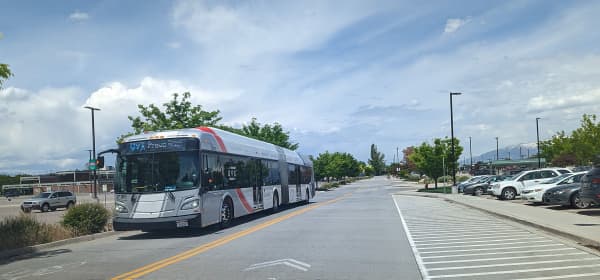
You will want a car. The UVX bus line connects downtown Provo with BYU, UVU and Orem and is useful along that corridor — though note that it has not been free to the general public since August 2024, and free rides now require a qualifying BYU or UVU student ID. What no transit line reaches is the canyon, the trailheads or the lake, and those are half the reason to be here. Getting around Utah Valley covers the rest.
If you only have a weekend
Two days, done well: the Y or Rock Canyon on Saturday morning, BYU's museums and campus in the afternoon, Center Street for dinner. Sunday for the canyon — Bridal Veil Falls, the drive up toward Sundance, and the Parkway on the way back down.
We have mapped that out hour by hour in 48 hours in Provo, and if you have longer, day trips from Provo covers what is reachable within a couple of hours — which, from here, is a surprising amount of the state.
Looking beyond the city limits, the wider Utah Valley guide covers Thanksgiving Point in Lehi, Timpanogos Cave, the Nebo Loop and the rest of the county. And if you are working out where to base yourself, where to stay in Provo breaks the options down by neighborhood.
Related Guides
- Utah Valley Hike Finder — filter every trail by difficulty, length, season, dogs and fees
- Easy Hikes Near Provo — the short and flat ones
- 48 Hours in Provo
- Best Things to Do in Utah Valley
- Public Art in Provo: Who Owns the Walls, and Which Pieces Will Still Be There
- Visiting Provo: Start Here
- TEDxProvo
Frequently Asked Questions
What is Provo, Utah known for?
What is the number one thing to do in Provo?
Is Provo worth visiting?
What free things are there to do in Provo?
What is there to do in Provo when it rains or snows?
How many days do you need in Provo?
Sources
The facts in this guide were checked against these sources. Hours, fees and rules change, so confirm anything time-sensitive with the source before you go. How we make Provo.com.
- Utah County library directory, Utah State Library Division. Checked October 12, 2026.
- Provo River Delta Restoration Project: FAQ's, Provo River Delta Restoration Project. Checked October 12, 2026.
- Rooftop Concert Series sets date, announces bands for downtown Provo return, Daily Herald. Checked October 12, 2026.
- So long Seven Peaks, hello Splash Summit Water Park, Daily Herald. Checked October 12, 2026.