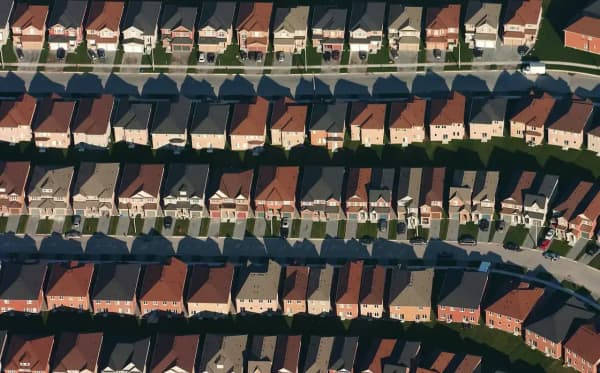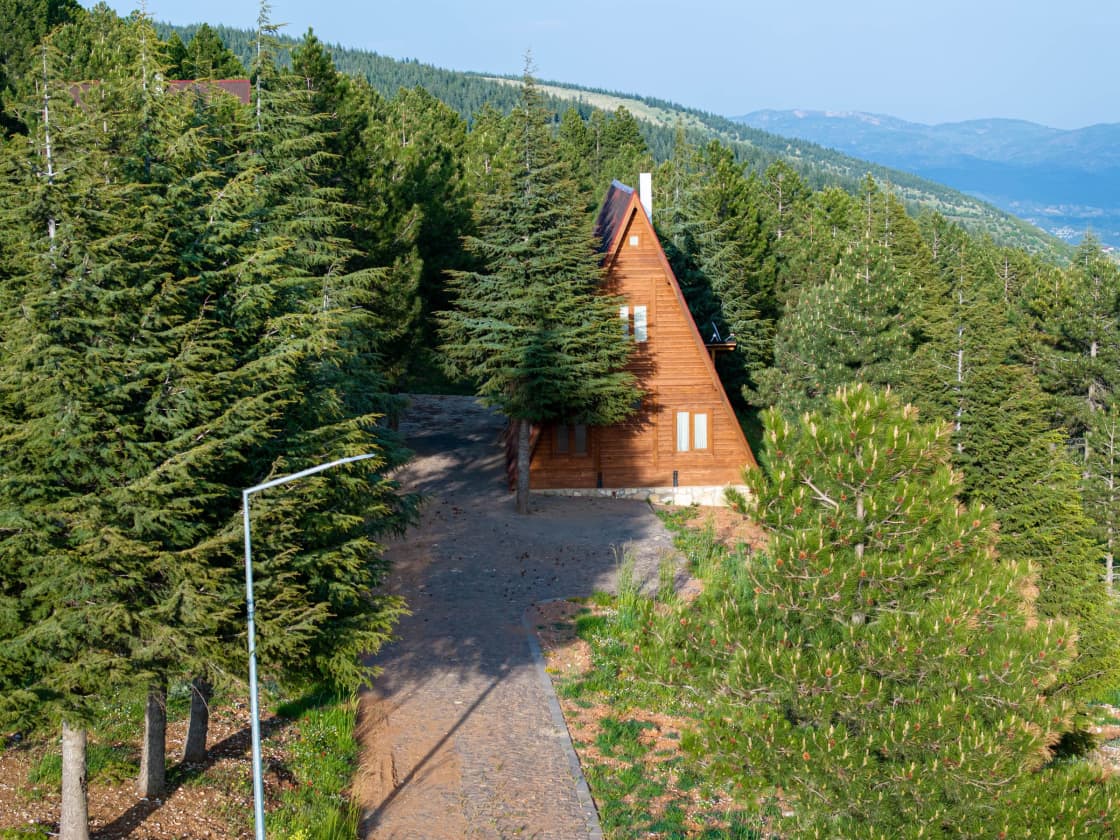

The fantasy is straightforward: a cabin forty minutes from home, pines out the window, snow in winter and cool air in August.
The arithmetic is less straightforward, and one Utah-specific rule does more damage to it than anything else. Most buyers discover that rule after closing.
This guide covers what it costs and what breaks, across the four areas Utah Valley buyers most often look at — the Provo Canyon and Sundance corridor, Hobble Creek above Springville, Woodland Hills in the south county, and Timber Lakes over the pass near Heber.
Tax rules, insurance availability, road-association arrangements and local ordinances all change, and every property is different. Nothing here is legal, tax or financial advice. Verify everything against the specific parcel with the county and your own professionals.
The rule that reshapes the whole calculation
Utah gives primary residences a large property-tax break that second homes do not get, and the gap is bigger than most buyers expect.
Under Utah Code section 59-2-103, a primary residence receives a 45 percent residential exemption — meaning property tax is assessed on 55 percent of fair market value. The exemption traces to the Utah Constitution and has existed in some form since 1982.
The Utah County Assessor's office states the consequence plainly: vacation rentals, summer homes, recreational cabins and second homes do not qualify. Nor do commercial property, vacant land, timeshares or other transitory housing. Those are taxed on 100 percent of market value.
So two identical properties on the same street, at the same tax rate, produce very different bills — the secondary-use owner is taxed on nearly twice the base.
A further constraint: only one residential exemption may be claimed per household in Utah. You cannot hold the exemption on your Provo house and your cabin. The one exception is that a property occupied by a tenant as their primary residence for 183 or more consecutive days can qualify — which is precisely why a nightly-rental cabin cannot.
The exemption covers the dwelling plus up to one acre of land, which matters on larger mountain parcels where the excess acreage is assessed separately anyway.
Whatever number you have in your head for the cabin's annual carrying cost, check whether you calculated the tax at the primary-residence rate. Many people do without realizing it.
The domicile trap for out-of-state buyers
There is a second, less obvious consequence buried in the same rules, and it catches people from outside Utah.
The Utah County Assessor notes that if you receive the primary residential exemption on a Utah property, there is a rebuttable presumption that you are domiciled in Utah for income tax purposes.
For a Utah Valley family buying a mountain cabin as a second home, this is academic — you are already a Utah taxpayer. For someone living elsewhere who buys in Utah and is tempted to claim the exemption, it is a live income-tax question and one to put in front of an accountant before, not after.
There is also a filing obligation attached to the classification. Where the assessor sends a Residential Property Declaration — commonly triggered by a mailing address differing from the property address, or by a change of ownership — the statute requires a response within a stated window, and failing to respond can cost the exemption on a property that qualifies. The process tightens in 2027: under Utah Code 59-2-103.5 as amended by 2026's S.B. 238, beginning January 1, 2027 an owner must file Form TC-473A with the County Board of Equalization to receive or keep the exemption after any change of ownership (including trust transfers), when the property was ineligible the prior year, or when the county has reason to think it no longer qualifies. That matters when you sell the old house, move into the cabin full time, or retitle either one into a trust.
The practical instruction: open assessor mail.
The four areas, compared
Provo Canyon and Sundance. The closest option and the most constrained. Much of the surrounding land is national forest, and private residential property in the immediate Sundance area is limited in supply and priced accordingly. The canyon corridor as a whole has pockets of private property, and the appeal is obvious — it is twenty to thirty-five minutes from Provo. The realistic assessment is that this is the hardest area to buy into rather than the easiest.
Hobble Creek, above Springville. A canyon running east from Springville with a long history of cabin use and a golf course near the mouth. It is close to the valley floor, the drive up is short, and it feels considerably more remote than the distance suggests. Access, water and road maintenance vary substantially between the lower and upper canyon.
Woodland Hills. Not a canyon subdivision but an incorporated city in southern Utah County, built on a wooded mountainside above Salem and Elk Ridge. That means municipal services and city government rather than county administration and a private road association — a meaningful structural difference. It also sits in genuine wildland-urban interface terrain, which is central to the insurance discussion below.
Timber Lakes. Over the pass in Wasatch County, above Heber. It is a large mountain subdivision — thousands of lots — at elevation, and it is the archetypal Utah cabin-community purchase. The trade is real mountain character and more inventory, at the cost of a longer drive from Utah Valley, a different county's rules, and access arrangements that need checking lot by lot rather than subdivision-wide.
Access is the question that decides everything
Ask about winter access first, and ask about the specific lot rather than the area.
Utah mountain subdivisions commonly rely on private road associations for plowing rather than county or city crews. That produces several failure modes buyers do not anticipate:
Service tiers. Main routes may be plowed reliably while outlying spurs are plowed late, infrequently, or not at all. Two lots a quarter-mile apart can have completely different winter reality.
Assessment risk. Road associations fund plowing and eventual resurfacing from dues. Thin reserves plus a heavy winter equals a special assessment.
Vehicle requirements. Some areas are realistically four-wheel-drive-only for months, and some require snowmobile or track access for the final approach in deep winter.
Emergency access. If a plow cannot reach the property, neither can an ambulance.
The right due-diligence step is to speak to the road association directly and ask what was delivered last winter for that specific address — not what the covenants promise.
Wildfire, and the insurance problem behind it
This is the single biggest change in the economics of Utah mountain property over the last several years, and it is not improving.
Insurers across the Western states have reduced their appetite for wildland-urban interface risk, tightened underwriting, and raised prices sharply. Some properties that were routinely insurable a decade ago are now difficult or expensive to place.
Two practical consequences:
Get a written quote for the specific address before you are under contract, or at minimum inside your inspection period. Do not rely on a general assumption that coverage exists, and do not rely on what the seller pays — their policy may be an old one that would not be written today.
Insurability can affect financing. A lender requires hazard insurance. If a policy cannot be placed at a workable price, the loan does not close, and that can happen late.
Beyond insurance, defensible-space obligations are real work: clearing vegetation, managing the space around structures, roof and vent material choices. In an incorporated area like Woodland Hills these may be regulated; in a subdivision they may be covenanted; in either case they are annual labor or annual cost.
Water, septic and the things underground
Utah mountain property does not come with municipal infrastructure by default.
Water. Incorporated areas generally have culinary municipal water. Canyon and mountain subdivisions may run shared systems, individual wells, or seasonal supply that is shut off in winter. Utah water rights are a separate legal interest from the land itself, so establish exactly what conveys and whether a share in a water company is part of the deal.
Septic. Most cabin properties are on septic rather than sewer. Get the system inspected and located, ask for pumping records, and understand that mountain soils and high water tables can make replacement expensive or complicated.
Seasonal shutdown. Many cabins are winterized rather than heated year-round. If your plan is winter use, verify the property is set up for it — plumbing, heating, insulation and access all have to work together.
Utilities, internet and the remote-work question
Power is generally available in established subdivisions and can be extremely expensive to extend to an unserved lot. Ask, rather than assume, what a service extension would cost before buying raw land.
Internet is the variable that has changed most. Satellite service has made remote mountain locations far more workable for people who need connectivity, and some subdivisions have fixed wireless or fiber. Others have very little. If the plan includes working from the cabin, test the actual service at the actual property rather than reading a coverage map.
Mobile coverage in Utah canyons is patchy and drops out entirely in some drainages — which is a safety consideration as much as a convenience one.
Which rules apply: city, county or association
Jurisdiction determines who regulates what, and buyers frequently get this wrong.
Woodland Hills is an incorporated city, so city ordinances, city building permits and city services apply.
Hobble Creek and the Provo Canyon corridor are largely unincorporated Utah County, so county land-use rules and the Forest Service where federal land is adjacent.
Timber Lakes sits in Wasatch County, which is a different set of ordinances, a different assessor and a different planning department from the one Utah Valley residents are used to.
On top of jurisdiction sits the subdivision's own governing documents, which are frequently the binding constraint. Covenants can restrict structure size, exterior materials, outbuildings, tree removal, vehicle storage and rental terms far more tightly than any government does.
The rental question, answered plainly
Many cabin purchases are justified with projected rental income. Approach that carefully.
Two separate permissions are required, and the second is the one that usually fails: the jurisdiction's short-term rental rules, and the subdivision's covenants. Cabin subdivisions frequently impose minimum lease terms that prohibit nightly rental outright, and an HOA restriction is enforceable regardless of what the county permits.
Remember also the tax interaction described above: a nightly-rented cabin cannot hold the primary residential exemption, so the doubled taxable base stands.
We cover Utah Valley's short-term rental framework separately, including what the state preempts and what cities control. Read it before you build a spreadsheet.
What it costs to own one
Beyond mortgage and the doubled property tax, budget for:
Insurance at wildland-interface pricing, which may be a multiple of valley rates.
Road association dues plus the realistic possibility of assessments.
Utilities year-round, because a heated cabin costs money in months you are not there.
Septic pumping and system maintenance.
Defensible-space work, annually.
Snow removal beyond the association's service line — the driveway and the roof.
Travel, which is small per trip and not small over a year.
Deferred maintenance on a structure exposed to real weather, which ages faster than a valley house.
A useful discipline: total the annual carrying cost and divide by the number of nights you expect to use it. Compare that per-night figure with what a rented cabin costs. For many households the honest answer is that renting four weekends a year is dramatically cheaper — and for some, the ownership premium is still worth paying for the ability to leave things there.
Financing a second home is not the same loan
Mortgage terms differ by occupancy classification, and the differences are material.
Lenders generally price a second home better than an investment property but worse than a primary residence, and they distinguish the three by how the property will be used and occupied. A second home is typically expected to be owner-occupied for some part of the year and not held out for continuous rental.
The practical consequences:
Down-payment expectations are usually higher than for a primary purchase, and higher again if the classification is investment.
Occupancy misrepresentation is taken seriously. Financing a property as a second home while running it as a full-time nightly rental is a misrepresentation on the loan application, not a technicality. It is also increasingly easy to detect from public listings.
Raw land is a different product entirely. Lot loans generally carry higher rates, shorter terms and larger down payments than a loan on an improved property, and construction financing is a separate process again.
Some remote properties are hard to finance at all, particularly where access is seasonal, the water source is unconventional, or comparable sales are scarce for the appraiser.
Talk to a lender experienced with Utah mountain property specifically, before you make an offer, because a general residential lender may not surface these issues until late.
Land classification, and the greenbelt surprise
One more Utah tax wrinkle worth knowing if the property comes with acreage.
Utah allows qualifying agricultural land to be assessed on its productive value rather than market value under the state's greenbelt provisions. Larger mountain parcels sometimes carry that classification from a previous use.
The catch is what happens when the qualifying use stops. Removing land from greenbelt classification generally triggers a rollback tax, recovering the difference between what was paid and what would have been paid, for a set number of prior years.
If you are buying acreage and intend to change how it is used — or simply to stop using it agriculturally — establish before closing whether the parcel is in greenbelt, who bears any rollback liability, and what the exposure is. This is a question for the county assessor and your title company, and it is not one to discover after the fact.
Seasonality, and how much you will use it
The last honest question is behavioral rather than financial.
Utah Valley's mountain seasons are shorter than the fantasy. Upper-elevation properties can be snowbound from late autumn into May, mud season follows, and the comfortable window at altitude is often June through September with a good stretch of autumn attached.
That leaves a usable season of perhaps five or six months for casual use, and a winter season that requires either real snow access or acceptance that the cabin sits empty.
Households that use a cabin heavily tend to have a specific reason: proximity to skiing, an extended family that gathers there, a hobby that lives at the property, or genuine remote-work capability. Households that buy for the general idea of getting away often find the drive competes with everything else a weekend contains.
Be honest about which you are before signing. The tax, the insurance and the road dues all arrive whether or not you go.
The due-diligence checklist
Tax. Confirm the assessed classification and model the bill at 100 percent of value.
Access. Speak to the road association about last winter, for this lot.
Insurance. Get a written quote for the address before removing contingencies.
Water. Establish the source, the rights, whether a water-company share conveys, and whether supply is seasonal.
Septic. Inspect, locate, and get records.
Covenants. Read them for rental terms, building restrictions and dues.
Jurisdiction. Confirm which city or county regulates, and check the permit history for unpermitted additions — common on older cabins.
Utilities. Verify power, and test internet and mobile signal on site.
Wildfire. Look at the defensible space that exists and what it would take to bring it to standard.
The short version
The Utah rule that matters most is the residential exemption: your primary home is taxed on 55 percent of value, and a recreational cabin is taxed on 100. Run the numbers that way from the start.
After tax, the three things that determine whether a cabin is a pleasure or a problem are winter access to that specific lot, whether it can be insured at a sane price, and what the covenants let you do with it.
Sundance and the Provo Canyon corridor are closest and hardest to buy into. Hobble Creek is close and varied. Woodland Hills gives you a city rather than an association, in genuine fire country. Timber Lakes gives you the most inventory and the longest drive.
And before any of it, do the per-night arithmetic. It is the least romantic step and the one that saves the most money.
Related Guides
- Short-Term Rental Rules in Utah Valley, City by City: What the State Decides and What Your City Decides
- Property Tax in Utah County: How It's Assessed, How to Appeal & When It's Due
- Sundance Mountain Resort: Your Complete Guide (2026)
- Provo Canyon: The Complete Guide to US-189, the Stops, and the Seasons
- HOAs in Utah Valley: What You're Actually Signing Up For
Frequently Asked Questions
How much more property tax does a second home pay in Utah?
What counts as a primary residence in Utah?
Can I claim the exemption on a cabin I rent out?
Is Timber Lakes accessible year-round?
Can you get insurance on a cabin in a wildfire area?
Do cabins near Provo have wells or city water?
Can I rent my cabin out nightly?
Is Sundance a realistic place to buy?
Sources
The facts in this guide were checked against these sources. Hours, fees and rules change, so confirm anything time-sensitive with the source before you go. How we make Provo.com.
- Residential Exemption - Utah County Assessor, Utah County Assessor. Checked October 12, 2026.
- Primary Residential Exemption, Utah State Tax Commission. Checked October 12, 2026.
- Residential Exemption, Washington County, Utah. Checked October 12, 2026.
- Utah Code 59-2-103 Rate of assessment -- Residential exemption, Utah Legislature. Checked October 12, 2026.