
Utah has not required a permit to carry a concealed firearm since 2021. Anyone 21 or older who may lawfully possess a firearm can carry one, concealed or openly, in most public places in the state without any license at all.
Which raises the obvious question, and it is the right question to start with: why do so many people here still hold a Concealed Firearm Permit?
The answer is that permitless carry and the permit are not the same product. Permitless carry is a rule about Utah. The permit is a credential that travels, that changes what certain premises rules mean, and that interacts with the purchase process. In a valley with two large universities, a lot of interstate travel and a lot of first-time gun owners, the distinction is worth understanding before deciding you do not need the card.
A note on what this page is. This is a plain-language explanation of how Utah's system is structured and where the authoritative sources are. It is not legal advice, firearms law changes at nearly every legislative session, and the consequences of getting it wrong are criminal rather than administrative. Every rule described here should be confirmed against the current statute or the issuing agency before you rely on it.
The baseline: what permitless carry already covers
Utah's permitless carry framework, in place since 2021, means that an individual 21 or older who can legally possess a firearm may carry it concealed or openly in Utah without a permit, in places not otherwise prohibited by state or federal law.
Two limits are built into that sentence and both get overlooked.
The first is age. Permitless carry runs from 21. It does not extend down to 18, and the rules for 18 to 20-year-olds are meaningfully different — which is exactly why Utah created a separate provisional permit for that band.
The second is the "not otherwise prohibited" clause, which is doing a great deal of work. Federal buildings, secured areas of airports and courthouses are restricted regardless of your permit status. Permitless carry did not open those doors.
The five things the permit still does
Here is why the card persists in a state that stopped requiring it.
It travels. This is the main one. Reciprocity is the reason the Utah permit is held by large numbers of people who have never lived in Utah. Other states decide whether to honor it, those decisions change, and no list is permanently accurate — but the Utah permit's reach across state lines has historically been broad, and permitless carry inside Utah does absolutely nothing for you the moment you cross a border.
It changes some premises rules inside Utah. The standard permit and the provisional permit are not treated identically with respect to certain school property, and the campus rules changed again in 2026. Where you may lawfully carry is not a single answer for all permit types.
It interacts with the purchase process. A permit can affect how a background check is handled at the point of sale.
It lowers the age floor to 18, via the provisional permit. For an 18-year-old in Utah, the permit is not an optional extra on top of permitless carry. It is the only route.
It is documentation. In an encounter where the question comes up, a permit is a fast, unambiguous answer to a question that otherwise takes longer to resolve.
The provisional permit, and why it matters in a student town
Utah's Provisional Concealed Firearm Permit is available to applicants between 18 and 20, and it exists precisely because permitless carry starts at 21.
Its terms differ from the standard permit in ways that catch people out.
It expires on the holder's twenty-first birthday, not five years from issue. It cannot be renewed — the holder applies to switch to a standard permit instead. And BCI states that switch applications will not be accepted more than 90 days before or more than one year after the applicant's twenty-first birthday. Both edges are real. Apply too early and it is rejected; let it drift more than a year past your birthday and you are outside the switch process entirely.
There is also a scope difference. The provisional permit does not carry the same authority as the standard permit with respect to K-12 school property.
In a valley where a large share of the population is between 18 and 22, this is not an obscure category. It is the category most local first-time applicants fall into, and the one where the calendar rules matter most.
HB 84 and the 2026 campus change
This is the part that changed most recently, and the part where a Provo reader is most likely to be working from outdated information.
HB 84, passed in Utah's 2026 general session and effective May 6, 2026, addressed carrying dangerous weapons at institutions of higher education. According to the enrolled bill text, it does two things worth naming.
It allows an individual 21 or older to carry a concealed weapon at an institution of higher education without a concealed carry permit — bringing campus into line with the statewide permitless standard for that age group.
It renames the offense to "openly carrying a dangerous weapon at an institution of higher education," and restricts open carry on campus. Higher education summaries of the bill describe the restriction as reaching permit holders too, with exceptions including lawfully responding to an active threat, accidental exposure, being at one's own residence, being in one's vehicle, approval by the responsible school administrator, and open carry in connection with a lawful activity. For 18 to 20-year-olds, the picture summarized by the Utah System of Higher Education is that individuals in that band without a provisional concealed carry permit may not carry a firearm at an institution of higher education at all, openly or concealed.
Why that lands differently at BYU than at UVU
Utah Valley has a public university and a private one, and the campus rules land differently at each.
UVU is public. It is inside the Utah System of Higher Education, and the statute applies to it directly.
BYU is private. A private university's own policy governs its property, so check BYU's published rules rather than assuming the public-campus picture applies.
A private institution controls its own property and can set its own policy, enforced through its own disciplinary mechanisms and, on private property, through trespass. So the honest description for a BYU student or visitor is that there are two separate questions: what the state statute says, and what the university's own current policy says. They are not the same question and the answer to one does not give you the answer to the other.
We are not going to paraphrase BYU's policy here, because a university's own published policy is the only version worth relying on and it can be revised without a legislative session. Read it directly.
What the application involves
The process is administrative and the steps are published by the Bureau of Criminal Identification, the division of the Utah Department of Public Safety that issues permits.
The course. Applicants must complete a firearms familiarity course from a BCI-certified instructor. It is classroom instruction covering law and safe handling — not a shooting qualification. BCI maintains a list of certified instructors. The instructor issues a signed completion certificate.
Fingerprints. Applications require completed FD-258 applicant fingerprint cards, obtainable from BCI or a local police department, filled out completely in black ink.
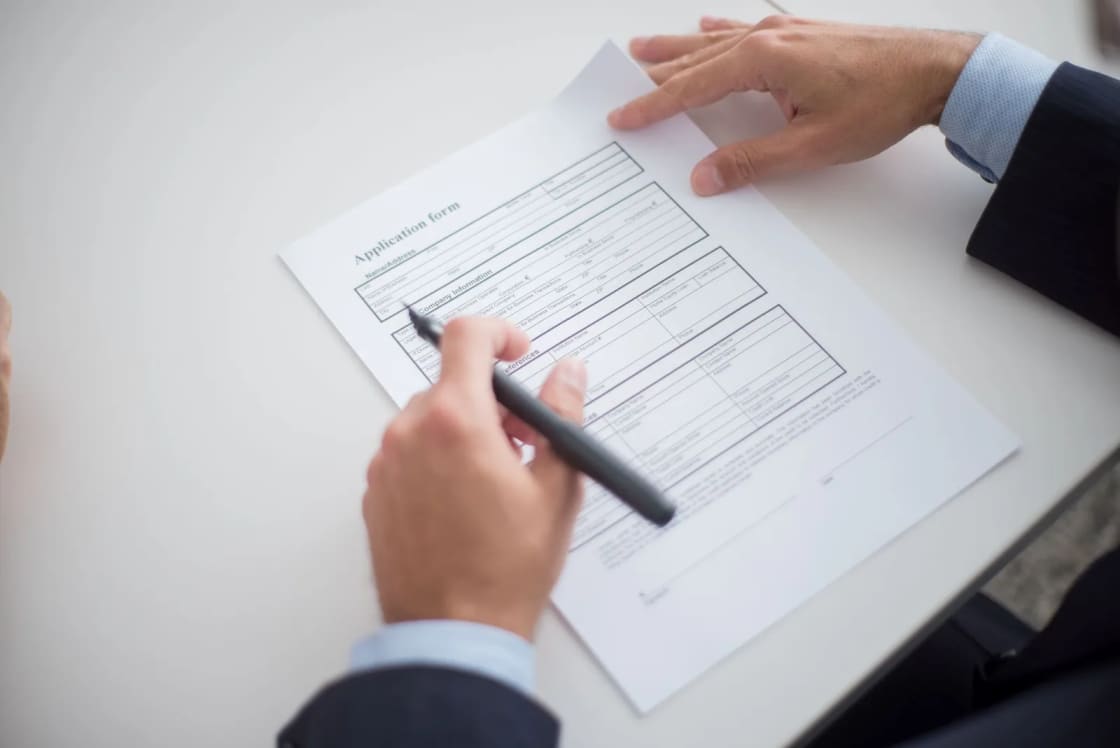
The packet. A photograph with the name on the back, a permanent physical residence address, the fingerprint cards, the course certificate and the application form. Non-residents whose home state recognizes the Utah permit must include a copy of their home-state permit with the expiration date visible.
Where it goes. BCI accepts applications in person or by mail at its Taylorsville office, 4315 S 2700 W, Suite 1300. Its published contact number is 801-965-4445.
How long. BCI advises the review may take up to 60 days and asks applicants not to call for status in the interim.
We have deliberately not printed the fee. It is set by the agency, it is published on the BCI site, and a stale dollar figure on a page like this is worse than no figure.
What can disqualify an application
The permit is issued against a statutory standard rather than at an official's discretion, but "shall issue" is not "will issue to anyone."
Applications are reviewed against a good-character requirement and a background investigation, and a disqualifying history is the usual reason a file fails. The categories are the ones you would expect — certain criminal convictions, certain mental-health adjudications, and any federal prohibition on possessing a firearm, which controls regardless of what state law says.
One Utah-specific item is worth flagging because it is less obvious: applicants born outside the U.S. are asked to include documentation of status — a passport, naturalization certificate, born-abroad certificate or permanent resident card.
BCI also warns on the form itself that falsifying information can result in denial, revocation and criminal prosecution. The application is a sworn document, and the temptation to round an answer on a question about history is the single worst decision available in this process.
Renewal, and the five-year cycle
The standard permit runs five years. Renewal is its own application with its own form, and BCI publishes a renewal packet separately from the new-applicant packet.
The practical failure here is quiet. A permit that lapses does not generate a problem inside Utah, because permitless carry covers a 21-year-old anyway — so nothing happens, nothing is flagged, and the holder does not notice. The consequence surfaces on the first trip out of state, when the credential that reciprocity depended on turns out to have expired eighteen months ago.
If the permit's value to you is primarily interstate, put the expiration date somewhere you will see it.
Reciprocity runs in one direction at a time
A misconception worth dismantling, because it produces confident errors.
Utah's own position is generous: Utah honors permits issued by other states. That is a rule about what happens to a visitor here.
It tells you nothing about what happens to a Utah permit holder somewhere else. Whether Arizona, Colorado, Nevada or Idaho honors your Utah permit is each of those states' decision, published by each of those states, and subject to change. Reciprocity is a network of separate one-way determinations, not a mutual agreement, and the fact that Utah recognizes a state does not mean that state recognizes Utah.
There is a second layer. Recognizing a permit is not the same as adopting Utah's rules. A honored permit lets you carry under the destination state's law, including its restrictions on locations, vehicle carry and duty to inform. Crossing into a reciprocity state with only Utah's rulebook in your head is the standard way people get into trouble.
BCI publishes the current reciprocity list. Check it before a trip, not after planning one.
Storage, vehicles and the everyday questions
Most of the practical questions people have are not about carrying in public. They are about the ordinary situations that come up around a home with a firearm in it.
Vehicle carry, transport to and from a range, storage in student housing, and what happens when a roommate objects are all governed by a mix of state law, property rules and lease terms rather than by the permit alone. A landlord or a university housing contract can impose conditions on their own property that state law does not.
For students specifically, campus housing rules are set by the institution and are a separate layer from the campus carry statute discussed above. Ask housing directly rather than reasoning from the statute, and ask before move-in rather than after.
Signs, private property and the limits of a posted notice
A recurring point of confusion, and one with real consequences.
In Utah, a "no firearms" sign posted by a private business does not by itself create a criminal offense — unlike in several states where signage carries statutory force. What the sign does is establish the owner's position. If you are asked to leave and you refuse, criminal trespass becomes available.
The practical translation is that a sign is not a law but is also not nothing, and treating it as an invitation to argue on the premises is a poor plan.
Separately, Utah has state preemption of local firearms regulation, which is why a Provo ordinance and an Orem ordinance do not create a patchwork of different carry rules as you drive up State Street. The prohibitions that matter are statutory and location-based — courthouses, secured airport areas, federal facilities — and they apply regardless of what is or is not posted.
Discharge inside city limits is a separate question
Carrying and shooting are governed differently, and people occasionally collapse the two.
Discharging a firearm inside a city is restricted, and the practical answer for target shooting in Utah Valley is a permitted range or appropriate public land well outside the developed valley floor. Holding a permit does not change this. Nothing in the concealed carry framework authorizes you to fire a weapon somewhere you otherwise could not.
Where to go for the current answer
Three sources, in order of authority.
The Bureau of Criminal Identification at bci.utah.gov is the issuing agency. It publishes the application forms, the instructor directory, the reciprocity list and the current fee. If there is a conflict between BCI and anything else, BCI wins on process questions.
The Utah Legislature's site at le.utah.gov carries the enrolled text of bills, including HB 84. Enrolled text is the actual language; a news summary or an advocacy-group explainer is a reading of it.
The institution or property owner for premises questions — a university's own policy office for campus, a county for a courthouse.
Firearms law in Utah has changed in most recent legislative sessions, and 2026 changed campus rules specifically. If you learned the rules more than a year ago, some of what you know is out of date.
The federal school-zone law that permitless carry does not touch
There is a reason experienced carriers in Utah still hold the permit, and it has nothing to do with state law. It is a federal statute that most state-level discussion of permitless carry never mentions, and in a valley built around schools it is the single most consequential thing on this page.
The Gun-Free School Zones Act, 18 U.S.C. § 922(q)(2)(A), makes it unlawful
for any individual knowingly to possess a firearm that has moved in or otherwise
affects interstate or foreign commerce at a place the individual knows, or has
reasonable cause to believe, is a school zone. The commerce element is
effectively universal for a manufactured firearm.
The definition is the part that matters here. 18 U.S.C. § 921(a)(26) defines a
school zone as in or on the grounds of a public, parochial or private school —
or within a distance of 1,000 feet from the grounds of one. § 921(a)(27)
limits "school" to a school providing elementary or secondary education as
determined under state law, so universities are outside it, but K-12 schools of
every kind are inside.
A thousand feet is about a fifth of a mile, measured from the grounds rather than the building. Plot that radius around every elementary, middle and high school in Provo, Orem or Pleasant Grove and the circles overlap across most of the residential grid. For a great deal of ordinary driving and walking in this valley, you are inside a federal school zone whether or not you ever see a school.
Now the exception that makes the permit worth holding.
§ 922(q)(2)(B)(ii) disapplies the prohibition where the individual possessing
the firearm is licensed to do so by the State in which the school zone is
located, and the law of that state requires that, before issuing such a license,
law enforcement authorities verify that the individual is qualified under law to
receive it.
Read that carefully, because two features of it are routinely missed.
Permitless carry is a state permission and does nothing here. The federal
exception is written around a license issued after a verification step. Carrying
without a permit, however lawful under Utah law, does not engage
§ 922(q)(2)(B)(ii). This is the clearest single answer to "why bother getting
the permit," and it is a federal answer, not a convenience argument.
The license must be issued by the state where the school zone is. A Utah permit satisfies the exception for Utah school zones. It does not satisfy it for a school zone in another state, even one that recognizes Utah's permit through reciprocity — reciprocity is an agreement between states about state law, and it cannot amend a federal statute. A carrier driving to Nevada or Idaho on a Utah permit is inside that state's reciprocity arrangement and outside the federal school-zone exception at the same time.
Other exceptions in § 922(q)(2)(B) cover possession on private property not part
of school grounds; a firearm that is unloaded and in a locked container, or a
locked firearms rack on a motor vehicle; possession for use in a
school-approved program; possession under a contract with a school; a law
enforcement officer acting officially; and an unloaded firearm carried while
traversing school premises to reach public or private land open to hunting, where
school authorities have authorized the entry. The locked-container route is the
practical fallback for anyone traveling without a qualifying license.
§ 922(q)(3) separately makes it unlawful to discharge or attempt to discharge a
firearm in a school zone knowingly or with reckless disregard for the safety of
another, with a narrower set of exceptions.
One citation note that will save you time. Utah recodified its firearm statutes
effective 7 May 2025, by Chapters 173 and 208 of the 2025 General Session. The
concealed firearm permit provisions moved out of Title 53 Chapter 5 Part 7 into
Title 53 Chapter 5a Part 3 — the permit section is now Utah Code § 53-5a-303 and the provisional permit § 53-5a-304 — while the general carry
rule sits at § 53-5a-102.2 and the weapons offenses moved from Title 76 Chapter 10 Part 5 into Title 76 Chapter 11. A great deal of material online, including
some otherwise reliable summaries, still cites the old numbering. If a page you
are reading gives you 53-5-704 or 76-10-523, it has not been updated since the
recodification, which is a reasonable signal about the rest of its content.
Related Guides
- Shooting Ranges in Utah Valley
- Hunting Near Provo
- Is Provo Safe? Crime, Neighborhoods & What to Know (2026)
- How to Actually Follow Provo City Council (and Be Heard at One)
- The BYU Honor Code, Explained for People Who Aren't Mormon
Frequently Asked Questions
Do you need a permit to carry a concealed gun in Utah?
How old do you have to be to get a Utah concealed firearm permit?
Is there a shooting test for the Utah permit?
What did HB 84 change about guns on Utah college campuses?
Do Utah's campus carry rules apply the same way at BYU and UVU?
Do 'no guns' signs have legal force in Utah?
Can a non-resident get a Utah concealed firearm permit?
How long does it take to get a Utah concealed firearm permit?
Sources
The facts in this guide were checked against these sources. Hours, fees and rules change, so confirm anything time-sensitive with the source before you go. How we make Provo.com.
- Application for Concealed Firearm Permit or Provisional Concealed Firearm Permit (10.2026), Utah Department of Public Safety, Bureau of Criminal Identification. Checked October 12, 2026.
- Provisional Firearm Permit Frequently Asked Questions, Utah Bureau of Criminal Identification. Checked October 12, 2026.
- Application to switch from a Provisional Permit to a Regular Permit, Utah Bureau of Criminal Identification. Checked October 12, 2026.
- H.B. 84 Dangerous Weapon Amendments (2026), Enrolled Copy, Utah Legislature. Checked October 12, 2026.