
The most common way a first trip to the Provo range fails has nothing to do with shooting. Somebody drives up Rifle Range Road on a Tuesday in November, finds a locked gate, and concludes the range has closed down.
It has not. It is simply not open on Tuesdays, and in November it would have shut at dusk anyway.
Utah Valley has a decent set of places to shoot for a metro area this size — a municipal outdoor range in the Provo foothills, commercial indoor ranges along the Orem–Lindon retail corridor, and clay shooting at the Provo park and out toward Spanish Fork. What it does not have is a single obvious default, and the cheapest option is also the one with the most conditions attached. Here is how the pieces fit.
The Provo Shooting Sports Park is the anchor
Provo City operates a public range at 1450 East Rifle Range Road, in the foothills above northeast Provo. You will see it referred to two ways in official material — the Provo Shooting Sports Park and the Provo City Rifle and Pistol Range — and both mean the same facility. Older listings place it on Squaw Peak Road; the road was renamed Kyhv Peak Road, so directions written a few years apart can look like they describe different places. They do not.
The city describes it as a firearms education and training facility where residents, community groups and law enforcement can train in a controlled environment. In practice it functions as the county's accessible outdoor range: a handgun bay and a rifle line, staffed during public hours, at a price that undercuts every commercial alternative by a wide margin.
There are three rifle and pistol ranges: a 25-yard pistol range, a 50-yard rifle range and a 100-yard rifle range. The park also offers trap, skeet, sporting clays and archery. That configuration tells you what the facility is for: sighting in, practice, and instruction. It is not a long-range facility, and shooters wanting distance beyond 100 yards go elsewhere in the state.
The hours are the thing that catches people
This is the part worth reading twice, because it is where the wasted drives come from.
The range does not keep a weekly schedule. It keeps two seasonal schedules, and one of them changes again partway through.
Roughly speaking, there is a winter schedule and a summer schedule. Both are built around a small number of weekday afternoon sessions plus a Saturday morning block. Weekday sessions start in the afternoon and run until dusk rather than to a clock time. Saturday runs a morning-to-afternoon block with a per-shooter time limit, because Saturday is the day everyone comes.
Two consequences follow, and neither is obvious from a posted schedule.
First, dusk is a moving target. A weekday session in June is a long evening. The identical session in late October is barely an hour of usable light. The schedule has not changed; the daylight has. Plan the shoulder months by sunset, not by the opening time.
Second, the summer schedule adds an extra weekday late in the season, in the September–October window. This is the pattern that catches people who checked the hours once in July and assumed they held. It is the same trap the Provo Farmers Market sets with its opening time, and the same answer applies: a seasonal operation can run more than one set of hours inside a single season, so read the current schedule block rather than a summary line on a listing site.
Because the specific times get adjusted, this page is not going to print a grid that will be wrong within a year. Provo City posts the current schedule on its Shooting Sports Park page, and the range's Facebook page tends to carry closures — weather, maintenance, agency bookings — faster than anything else.
What it costs, roughly
The fee is small. Provo charges a per-visit rate; check the city's page for current resident and non-resident pricing and any multi-visit passes. The whole structure sits in the few-dollars-per-visit range, which is to say it costs less than parking somewhere downtown.
Consumables are sold at the range at nominal prices — paper targets, foam earplugs — and eye protection is available at a higher but still modest cost if you arrive without it.
Exact figures are deliberately omitted here. Range fees get adjusted, and there are prices from several years ago still circulating on aggregator pages and blog posts as though they were current. The structural facts are the durable ones: a small per-visit fee and small consumables sold on site.
What the range does not do
Three things, and each one has sent somebody home.
No firearm rentals. You bring your own. There is no counter where a curious first-timer can pick something up and try it.
No ammunition sales. Bring what you plan to shoot.
Clays and archery are here too. The same park has trap, skeet, sporting clays and archery; check provo.gov for shotgun hours and fees.
That first one matters most. If the plan is to introduce somebody to shooting who does not own a firearm and has never handled one, the municipal outdoor range is the wrong venue. Not because it is unwelcoming, but because the facility cannot equip you.
What to bring, in order of how often it is forgotten
Your firearm, unloaded, in a case, with the action open. This is how it should arrive at the line, and it is also simply how firearms should travel in a vehicle.
Ammunition. Yours. Check that what you brought matches what you brought it for, which sounds patronizing until it happens to you.
Eye protection. Required. This is the most-forgotten item, especially for groups, because people remember their own and forget the friend they invited.
Hearing protection. Also required. Foam plugs work and cost almost nothing on site. Muffs are better, and doubling up — plugs under muffs — is what you want on a busy Saturday with rifles on the line.
Targets. Bring paper or buy it there. Steel, if the range permits it at all, is governed by their rules rather than yours; ask rather than assume.
Something for the brass. You may collect your own spent casings, so reloaders should bring a bucket.
The Thistle range is not for you
Search for shooting ranges in Utah County and the Utah County Sheriff's Office firearms operation will surface. It is worth being clear about, because it looks public and is not.
The Sheriff's Office maintains the Thistle Firing Range for law enforcement training. It supports firearms training for deputies and other agencies. It is an agency facility with an agency booking calendar. The Sheriff's firearms staff work out of the Utah County Health and Justice Building on South University Avenue in Provo, and their public-facing role is licensing and administration rather than range access.
If you turn up at Thistle expecting a public lane, you will not get one.
Indoor ranges, and why winter belongs to them
Between November and March, the calculus flips.
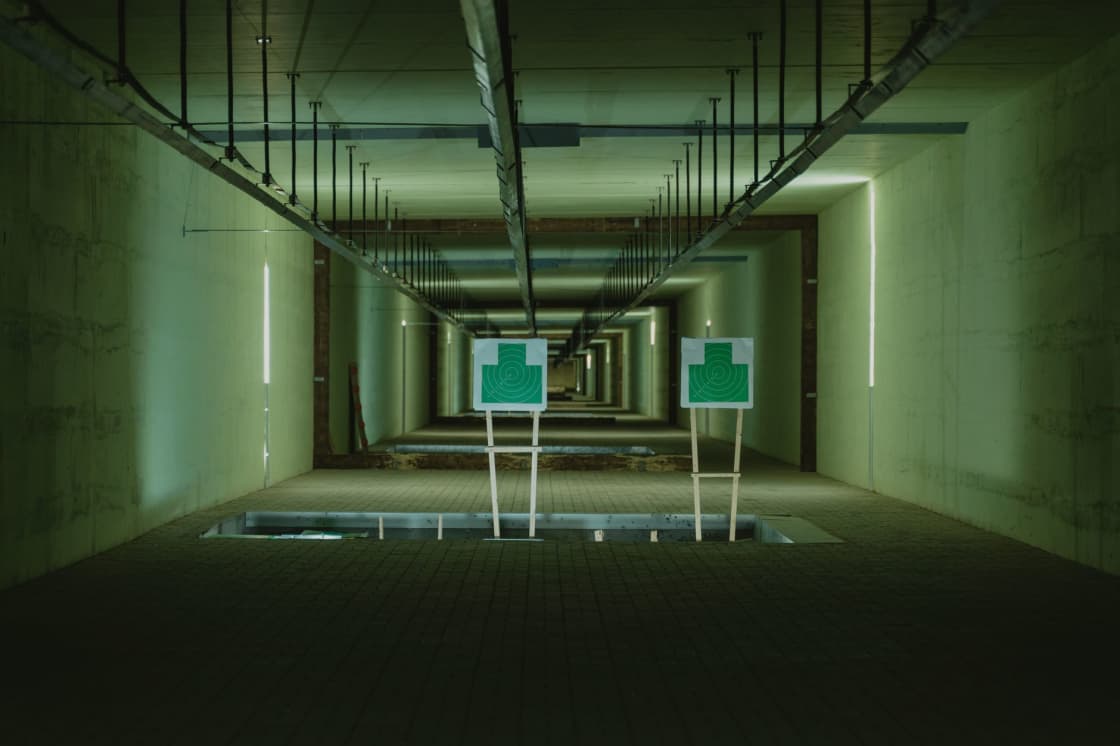
The Provo city range is outdoors, unheated, and closes at dusk on its weekday sessions — which in December means the practical window is a couple of hours of cold afternoon. Commercial indoor ranges keep retail hours, run heated lanes, and stay open into the evening.
The Orem and Lindon stretch of State Street and the surrounding retail corridor is where these cluster. There are several indoor lanes and gun shops with ranges across Orem, Lindon, Pleasant Grove and Springville. Because this segment turns over — shops open, close, and change hands more often than municipal facilities do — this guide names only what it can verify directly, and the honest advice is to call before driving.
What the commercial ranges give you that the city range does not:
- Rentals, which is the entire answer for a first-timer
- Instruction, from a genuine basics class up to defensive coursework
- Evening and Saturday hours on a normal retail schedule
- Ammunition on site, so a plan does not fail because a shop was closed
- Heat
What they cost is more, per hour, by a lot. That is the trade.
Worth knowing about rentals: many ranges will not rent a single firearm to a lone shooter, for reasons connected to suicide prevention rather than to commerce. A two-person minimum is common. If you are going alone and intend to rent, call and ask first rather than discovering the policy at the counter.
Clay sports and the Spanish Fork end of the county
Trap and skeet run on different ground from rifle and pistol. The Provo Shooting Sports Park has trap, skeet and sporting clays, and there is also established trap shooting out toward Spanish Fork with a view down the valley that regulars mention more than they mention the shooting.
Clay shooting is also the friendliest of the disciplines for a total beginner who is not ready to think about defensive handgun work — the equipment is often available, the instruction is patient, and hitting something is more immediately satisfying than punching paper.
Shooting on public land, which is more restricted than you think
Utah has a strong tradition of informal target shooting on public land, and Utah County has less of it available than the tradition suggests.
The land immediately around Provo is a complicated patchwork: city watershed, Forest Service parcels under closure orders, county restrictions, and private ground that does not look private. Several of the informal spots people recommend are on the wrong side of one of those lines. Proximity rules also bite harder than expected near a growing valley — the developed edge keeps moving toward the places that used to be far enough out.
Then there is fire. In a dry Utah summer, target shooting is among the first activities restricted, and restrictions can arrive mid-season and apply to specific ranger districts rather than uniformly. A spot that was legal in May is not necessarily legal in August.
The rule that keeps people out of trouble: identify who manages the specific parcel, check that agency's current orders, and check current fire restrictions separately. "Somebody told me people shoot up there" is not a legal basis, and the fine for getting it wrong substantially exceeds the few dollars the city range charges.
Safety culture at a public range
A municipal range with a range master on duty runs on a small number of absolutes, and they are not suggestions.
Muzzle discipline, finger off the trigger, and treating every firearm as loaded are the three that everything else derives from. Beyond those, the specifics that trip up newcomers at a supervised outdoor range are the cease-fire procedure — when a cease-fire is called, firearms come down, actions open, and nobody handles anything until the line is called live again — and staying behind the firing line at all times when the range is hot.
Ask the range master anything. It is a normal part of the job and a far better use of thirty seconds than guessing. Nobody at a public range thinks less of a person asking how something works; the people who worry the staff are the ones who never ask.
Bringing a beginner, in the right order
If you are introducing somebody to shooting, the sequence that works:
Start indoors, with rentals and an instructor. A controlled bay, a .22 to begin with, and somebody whose job is teaching. An hour here does more than a season of well-meaning coaching from a friend.
Then go to the city range. Once the fundamentals are there and they have a firearm to shoot, the outdoor range is cheaper, calmer, and less compressed than a commercial lane.
Go on a weekday, not Saturday. Saturday is busy, has a time limit, and puts a nervous first-timer next to somebody working a rifle. A Wednesday afternoon in summer is nearly private by comparison.
Bring less than you think. One firearm, one caliber, plenty of ammunition, and no agenda beyond the basics.
The practical summary
For cheap outdoor practice with your own gun: the Provo Shooting Sports Park on Rifle Range Road. Check the current seasonal schedule first, go on a weekday if you can, and bring targets and eye protection.
For learning, renting, or shooting in winter: a commercial indoor range in the Orem–Lindon corridor. Call ahead about rental policy if you are going alone.
For clays: the Provo Shooting Sports Park, or the Spanish Fork end of the valley.
For shooting on public land: verify the parcel and the current fire restrictions, or use the range and keep the money you would have spent on the citation.
For the rest of the valley's outdoor options, see our guides to things to do in Provo and hiking Kyhv Peak, which climbs the same foothills the range sits below.
A note on noise, neighbors, and why the range is where it is
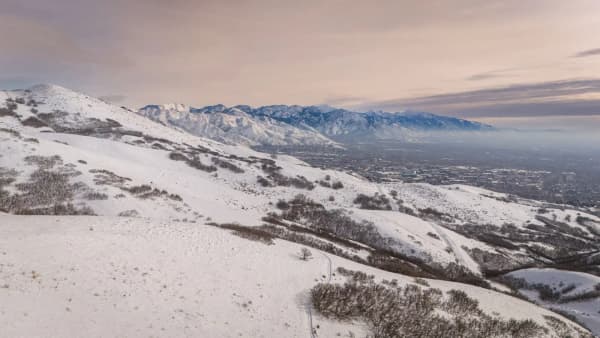
People new to northeast Provo occasionally hear the range on a still afternoon and wonder what they are listening to. The answer is a facility that predates most of the housing around it, sited up a canyon road specifically to put distance and terrain between the firing line and everyone else.
This is worth understanding for two reasons. The first is simply reassurance: sound carrying down a canyon on a temperature inversion is not the same as sound coming from nearby. The second is that the siting explains the hours. A range hemmed in by a growing city operates on a schedule negotiated with its neighbors, and the limited weekday sessions are part of that arrangement rather than an arbitrary inconvenience. The trade is real — restricted hours in exchange for a public range inside city limits at a few dollars a visit, which is a bargain most metro areas of this size cannot offer at all.
It also explains why the range is unlikely to expand its schedule much. When people ask why Provo does not simply open the range seven days a week, the constraint is not demand or staffing.
Archery, air guns, and the adjacent options
Not everything that scratches this itch involves a firearm, and Utah Valley has more of the alternatives than it does gun ranges.
Archery has a following here, with ranges and pro shops scattered through the county and a strong 3D target scene in the surrounding hills during the warmer months. It is the cheapest of the target sports to sustain once equipped, it makes no noise, and it is available to shooters of essentially any age with supervision.
Air rifle and airsoft occupy a similar niche and are the realistic option for anyone wanting to practice fundamentals — sight picture, breathing, trigger control — in a garage or basement. A surprising proportion of serious rifle shooters spend more rounds on an air rifle than on anything else, because the fundamentals transfer and the cost per shot rounds to nothing.
Simulators exist at some commercial ranges and are a useful bridge for a nervous beginner: same platform, same trigger discipline, no report and no recoil.
None of these substitutes for live fire if live fire is the goal. All of them are cheaper, quieter, and more available on a Sunday.
Before you drive up
A short pre-flight list that prevents the two failure modes described at the top of this page:
- Check today's schedule on the city's page, not a listing site, and account for which season you are in.
- Check sunset if it is a weekday session in autumn or winter, because dusk closes the line.
- Check the range's social feed for weather and maintenance closures, which do not make it onto the official page quickly.
- Confirm you have eye and ear protection for every person coming, not just yourself.
- Case the firearm unloaded with the action open before you leave the house.
Five minutes of that removes almost every way this trip goes wrong.
Related Guides
- ATV & UTV Rentals Near Provo: Nobody Rents From Provo, and Other Things Worth Knowing First
- Horseback Riding in Utah Valley: Where to Ride, What It's Actually Like, and Who Takes Beginners
- Skate Parks in Utah Valley: Fort Utah, Orem, and Where Else to Actually Skate
- RV Parks & Hookups Around Provo: How Camping With a Rig Actually Works Here
- Weekend Trips You Can Fly to Nonstop from Provo
- Soldier Hollow: The Olympic Venue You Can Actually Use
- Tubing & Rafting the Provo River: The Float, the Shuttle, and the Trestle Everyone Warns You About
- Stargazing & Dark Sky Spots Near Provo (2026)
- Jolley's Ranch: Camping in Hobble Creek Canyon, Twenty Minutes from Provo
- Steamboats, Carp and the June Sucker: Utah Lake's Strange History
- Hunting Near Provo: How Utah's System Works Before You Worry About Where
- Utah's Concealed Firearm Permit
- Five Mile Pass: Utah County's OHV Playground
- Archery Ranges and Bow Shops in Utah Valley
Frequently Asked Questions
Is there a public shooting range in Provo?
What are the hours at the Provo Shooting Sports Park?
Can you rent a gun at a range in Utah County?
What do I need to bring to the Provo shooting range?
Is the Utah County Sheriff's Thistle range open to the public?
Where can you shoot for free in Utah County?
Do you need a permit to shoot at a range in Utah?
Is there indoor shooting in Utah Valley for winter?
Sources
The facts in this guide were checked against these sources. Hours, fees and rules change, so confirm anything time-sensitive with the source before you go. How we make Provo.com.
- Shooting Sports Park | Provo, UT, Provo City Parks and Recreation. Checked October 12, 2026.
- Staff Directory: Provo Shooting Sports Park, Provo City. Checked October 12, 2026.