
Down payment assistance is one of the few effective tools for getting a household into a home in a market where saving a deposit takes longer than most people can sustain.
It is also one of the most poorly explained products in residential lending. Buyers are quoted a number — assistance up to some amount — and almost never told the structure behind it, which is the part that determines what it costs.
This is about the structure.
The short version
Usually a second mortgage, not a grant. Recorded against the property. To see how much a bigger down payment changes the price you can afford, see how much house can you afford in Utah County.
Three structures: repayable, deferred, forgivable. They behave nothing alike.
The first mortgage rate is often higher — that is partly how the assistance is funded.
Forgivable means conditional. Leave early and it converts back to debt.
Recapture can apply on bond-financed loans, under three conditions that must all be met.
Ask for the note, not the brochure.
The structures, which is the whole subject
Almost everything that matters follows from which of three shapes the assistance takes.
Repayable second
A second mortgage with its own principal, its own rate and its own amortization. You make two payments from the first month — the first mortgage and the second.
Straightforward, and the least commonly misunderstood, because the second payment appears on your statement and cannot be forgotten. The trade is that your total monthly obligation is higher than the first mortgage alone suggests, and that has to fit the qualifying ratios.
Deferred second
No monthly payment. The balance sits recorded against the property and becomes due at a defined trigger — commonly the sale of the home, a refinance of the first mortgage, or the payoff of the first.
This feels like free money for as long as you hold the loan, and it is not. It is a lien that will be satisfied from your proceeds when you sell, which reduces what you walk away with. Two questions to ask about any deferred second: does it accrue interest, and does a refinance trigger it?
The refinance question is the one that catches people. A household that refinances to a better rate three years in can find that doing so triggers the second, requiring it to be paid off or resubordinated. Resubordination is usually possible and is never automatic.
Forgivable second
Forgiven in whole or in part after you have occupied the home as your principal residence for a stated period — often expressed as a share written off per year over several years.
The word to attend to is conditional. Until the forgiveness period is complete, this is a debt. Selling, refinancing or moving out early can convert some or all of it back into an amount owed, on terms set out in the note.
For a household confident it will stay put, a forgivable second is the best of the three. For a household whose work, schooling or family situation might move them within a few years, it carries a risk that a repayable second does not.
The interest rate trade
This is the cost most buyers never see.
Assistance programs frequently pair with a specific first mortgage product, and that first mortgage is often priced above the best rate an equivalent borrower could obtain on the open market. The spread helps fund the assistance.
That is not concealed and it is not improper. It is a trade: cash at closing, in exchange for a higher rate across the life of the loan.
Whether the trade is good depends almost entirely on how long you keep the loan.
A household that is cash-constrained — good income, good credit, no accumulated savings — and that expects to stay for a long time may still come out ahead, because without the assistance they are not buying at all. A household that could scrape the down payment together with another year of saving, and that expects to refinance or move within a few years, may be paying a great deal for a short-term convenience.
The way to see it is to ask your lender for two quotes: the assistance package as offered, and the best market-rate first mortgage they can do with no assistance. Compare the total cost over the period you expect to hold the loan, not over thirty years. Most buyers never ask for the second quote, and it is the only way to price what the assistance costs.
Recapture, explained properly
Recapture is the provision that generates the most anxiety and the least understanding.
It is a federal tax provision that can apply to certain mortgage-revenue-bond financed loans. Where it applies, a portion of the subsidy the borrower received may be recovered if, broadly, three things are all true:
- The borrower sells within a defined period after purchase;
- The borrower's income at the time of sale exceeds a threshold; and
- The borrower realizes a gain on the sale.
The critical structural point is that these conditions are cumulative. A borrower who sells inside the period but whose income is below the threshold generally owes nothing. A borrower who sells at a loss generally owes nothing. In practice most borrowers subject to recapture never pay it.
It is also capped, both as a proportion of the gain and as a proportion of the original subsidy.
Any lender offering a bond-financed program is required to provide recapture disclosures. Read those rather than a summary, keep them with your closing documents, and if you sell within the window, mention them to whoever prepares your taxes. Losing the disclosure is the most common problem, not owing the tax.
Eligibility, and the assumptions worth testing
Programs vary, but the recurring criteria are these.
First-time buyer status. Very commonly defined as not having held an ownership interest in a principal residence during the previous three years. This means a former homeowner can re-qualify, and a great many people who assume they are ineligible are not. Some programs waive the requirement entirely for qualified veterans or for purchases in targeted areas.
Income limits. Usually expressed against area median income, and frequently varying by household size. Utah County's limits are its own and differ from other counties.
Purchase price limits. A maximum acquisition cost, which in a rising market is the criterion most likely to exclude an otherwise qualified buyer.
Occupancy. Principal residence. Not an investment property, not a second home.
Credit and debt-to-income. Program minimums sit on top of the first mortgage investor's requirements, and the stricter of the two governs.
Homebuyer education. Frequently required, usually a course with a certificate, and worth completing early because it can become the item holding up a closing.
Where the money comes from
Assistance in Utah reaches buyers through several channels, and knowing which one you are dealing with tells you a lot about the terms.
State housing finance programs. The largest and most structured source, generally pairing a first mortgage with a second, with published income and price limits.
Municipal and county programs. Some cities and counties operate their own assistance using federal block grant or housing funds, frequently with geographic restrictions to particular neighborhoods and frequently forgivable.
Federal loan program features. Some government-backed first mortgages allow very low down payments outright, which is a different thing from assistance but solves a similar problem.
Employer assistance. Some large Utah Valley employers, particularly in health care and higher education, offer housing benefits. These are frequently the most favorable terms available and are almost never advertised outside the organization. If you work for a large institution, ask human resources before you assume nothing exists.
Non-profit and lender-funded programs. Some are genuine grants with no repayment. Terms vary widely and should be read closely.
Gift funds. Not a program, but the most common source of all — and it comes with its own documentation requirements. A gift generally needs a letter stating it is a gift with no repayment expectation, and lenders will trace the funds. Gift rules differ by loan type, and "I will pay them back quietly" is mortgage fraud rather than an arrangement.
How this fits with everything else at closing
Assistance is applied to the down payment, to closing costs, or to a combination — each program specifies which, and the distinction matters when you are working out how much cash you still need to bring.
It does not change several things:
It does not increase what the lender will lend against the property. A low appraisal creates the same gap it always would. Our guide to home inspections and appraisals covers what happens when the appraisal comes in short and what your options are.
It does not remove reserve requirements where a program has them.
It does not change the fixed third-party costs. Recording fees, prepaid taxes, prepaid insurance and the tax proration are what they are. Our guide to title insurance and closing costs sets out which lines are fixed, which are shoppable, and which are negotiated in the contract rather than at the table.
It does not remove mortgage insurance. A low down payment generally means mortgage insurance on the first mortgage, and that is a monthly cost independent of the assistance.
One additional interaction worth knowing: because assistance is a recorded lien, it appears on the title work, and it has to be dealt with on any later refinance or sale. That is the mechanical reason the refinance question above matters.
The Utah Valley specifics
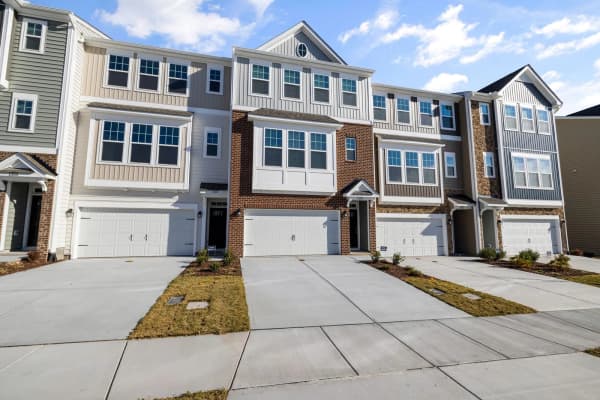
Price limits versus the market. Utah County's price growth over the past decade has repeatedly pushed the entry-level stock against program acquisition-cost ceilings. The practical consequence is that the housing which qualifies is often townhomes, condominiums and smaller detached homes rather than the median single-family house. That is not a reason to skip the programs; it is a reason to search within what qualifies from the beginning rather than falling in love with something outside it.
Condominium and townhome complications. Attached housing frequently qualifies on price and then fails on project approval — the association's budget, its reserve funding, its owner-occupancy ratio and its litigation status all matter to the first mortgage investor. This is a well-known trap in Utah County and it is worth confirming project eligibility before making an offer.
New construction. Builders in Utah Valley frequently offer their own incentives, and those incentives sometimes interact awkwardly with assistance programs — a builder credit may be capped, or may reduce the assistance available. Our comparison of new construction and resale covers the incentive side of that decision.
Timing. Some funding sources are allocated and exhaustible. Where that is the case, availability is not constant through the year.
A short protocol
- Find a lender approved for the specific program, before locking anything. Not every lender is.
- Ask which structure the second is: repayable, deferred, or forgivable. Get the answer in writing.
- Ask for the note and the deed of trust for the second mortgage, in advance of closing.
- Ask whether a refinance triggers it, and whether resubordination is available.
- Get the second quote — the same purchase with a market-rate first and no assistance — and compare over your realistic holding period.
- Confirm the first-time buyer definition rather than assuming you fail it.
- Check the price ceiling against the market you are shopping.
- Do the education course early.
- Keep the recapture disclosure with your closing file, permanently.
None of this is complicated. It is nine questions, and the answers exist in documents that someone will hand you if you ask before the week of closing rather than during it.
Running the comparison properly
The way to decide whether assistance is worth taking is to build a small table and fill it honestly.
Column one: assistance package. The first mortgage rate offered with the program, the monthly payment on the first, the monthly payment on the second if it is repayable, the cash needed at closing, and the balance owed on the second at the point you expect to sell or refinance.
Column two: market-rate package. The best first mortgage rate the same lender can offer with no assistance, the monthly payment, and the cash needed at closing.
Then answer one question: how long do you expect to hold this loan? Not thirty years. The realistic figure, given your work, your family and your plans.
Over a short horizon, the higher rate costs relatively little in total and the cash at closing is worth a great deal — assistance usually wins. Over a long horizon, the rate difference compounds and the calculation tightens considerably. And for a household that could assemble the down payment within a year, the honest comparison also includes a third column: waiting.
Two adjustments most people forget. Mortgage insurance on a low-down-payment first mortgage is a real monthly cost that persists until the loan reaches a threshold, and it belongs in column one. And a deferred second reduces your net proceeds when you sell, which means the money was never free, only postponed.
The traps that recur
Assuming the brochure describes the note. Marketing language and loan documents are different genres. A program described as "up to a certain amount in assistance" tells you nothing about whether it accrues interest.
Not asking about refinancing. A household that buys at a high rate expecting to refinance later needs to know whether the second triggers on refinance and whether resubordination is available. Discovering the answer during a refinance application is too late to plan around.
Layering incentives that cannot be layered. A builder credit, a lender credit, a seller concession and a down payment assistance program each have caps, and the combination is frequently constrained by the first mortgage investor's rules. Confirm the whole stack with the lender before writing an offer that depends on all of it.
Missing the education requirement. It is usually the smallest item on the checklist and it has held up more closings than any other single condition, because people leave it until the fortnight before.
Losing the paperwork. The recapture disclosure, the second mortgage note, and the deed of trust for the second should live in the same file as your closing documents, permanently. You will need them when you sell, and reconstructing them years later from a program office is considerably harder than filing them now.
After closing, and the years nobody plans for
Assistance creates obligations that outlive the excitement of moving in, and the households that handle it well are the ones that set up three things at the start.
A file that survives. The second mortgage note, the deed of trust for the second, the recapture disclosure if there is one, the program name and the servicer's contact details. Programs get transferred, servicers change, and offices reorganize. In eight years, when you sell, the person on the phone will ask for details you will not remember, and the file is what answers them.
A calendar entry for anything time-bound. If the second is forgivable over a period, note when each portion vests and when it completes. If there is a recapture window, note when it closes. These dates change decisions — a household deciding whether to move in year four benefits enormously from knowing precisely what year four costs.
An annual check. Once a year, alongside the insurance review, confirm the second's balance and terms. On a deferred second accruing interest, the balance is growing quietly, and the figure you remember from closing is not the figure that will come out of your proceeds.
Selling or refinancing later
This is where the structure you chose finally shows itself.
On a sale, the second is a recorded lien and it will be satisfied at closing out of proceeds — in full for a repayable or deferred second, or in whatever portion remains unforgiven for a forgivable one. Your title company will identify it, but knowing the number in advance is what lets you price the sale realistically. A seller who has forgotten a deferred second is a seller whose net proceeds are a surprise.
On a refinance, you need the second to either be paid off or resubordinated — formally agreeing to remain in second position behind the new first mortgage. Resubordination is usually available and is never automatic: it requires an application to the assistance provider, takes time, and can carry a fee. Start it early, because a refinance timeline that has not accounted for it will slip.
If you move but keep the property as a rental, check the occupancy requirement. Most assistance is conditioned on the home remaining your principal residence, and converting it to a rental can trigger repayment. This is a common trap in a market where people relocate and are reluctant to sell.
If values fall and you owe more than the home is worth across both liens, the options narrow considerably. That is an argument for not stretching to the maximum the programs allow simply because they allow it.
Related Guides
- Buying a Home in Provo — the process this sits inside
- Title Insurance and Closing Costs in Utah — the cash you still need at the table
- Rent vs. Buy in Provo — running the numbers before any of this applies
- New Construction vs. Resale in Utah Valley — where builder incentives complicate the picture
- Home Inspections and Appraisals in Utah Valley — the appraisal gap assistance does not close
- Cost of Living in Provo — what the payment sits against
- Shopping a mortgage lender in Utah
- What your home is worth
Frequently Asked Questions
Is down payment assistance free money?
What is the difference between a repayable, deferred and forgivable second?
Does down payment assistance affect my interest rate?
What is recapture and when does it apply?
Do I have to be a first-time buyer to get assistance in Utah?
Can I use down payment assistance with any loan type?
How does assistance interact with the appraisal and closing costs?
What is the most common mistake buyers make with assistance?
Sources
The facts in this guide were checked against these sources. Hours, fees and rules change, so confirm anything time-sensitive with the source before you go. How we make Provo.com.
- 26 U.S.C. 143 Mortgage revenue bonds: qualified mortgage bond and qualified veterans' mortgage bond, U.S. Government Publishing Office (govinfo). Checked October 12, 2026.