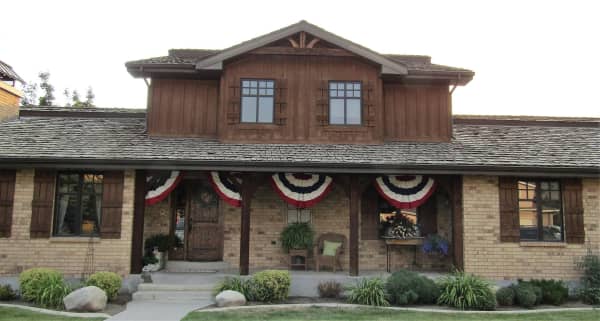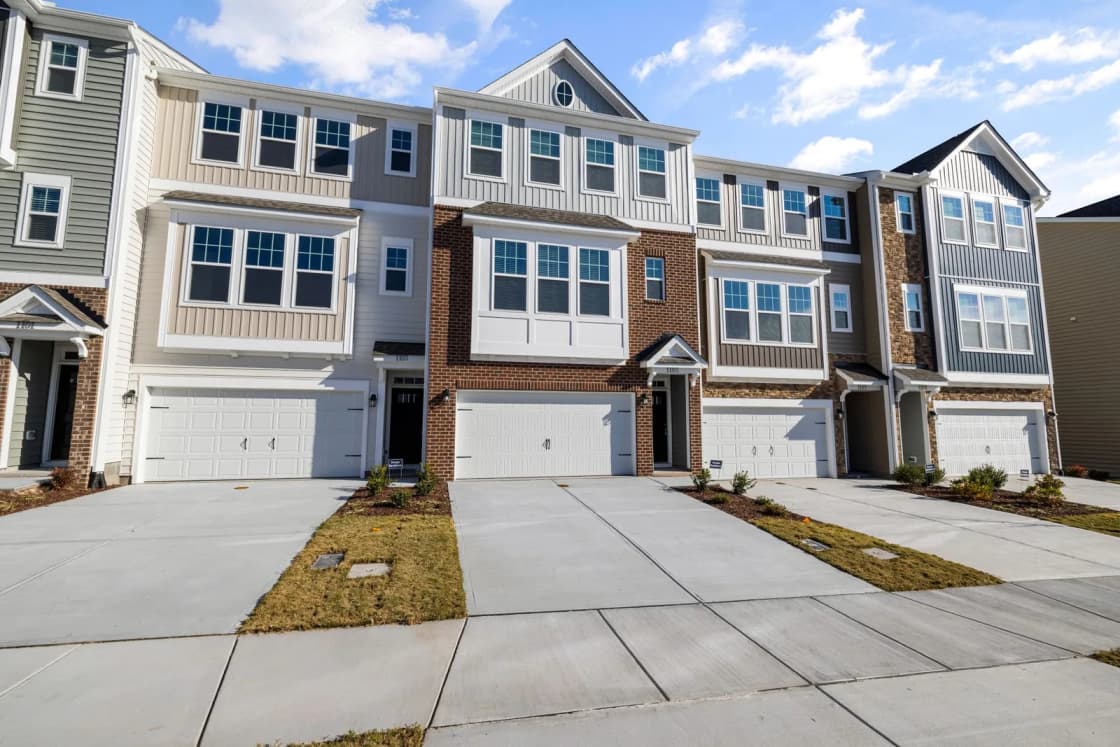

Two units, three blocks apart in Orem. Same square footage, same year, same shared walls, near enough the same price. One of them a buyer with an FHA loan can purchase. The other one they cannot buy at all — not because of anything about their finances, and not because of anything wrong with the unit.
The difference is a legal structure that is invisible from the street and frequently blurred in the listing.
This is the most consequential thing to understand about attached housing in Utah County, and it is the thing most local guidance skips.
What you own
Strip away the marketing and the distinction is about the deed.
A townhome, in the typical arrangement, is a house that happens to share walls. You own the structure and the land under it — the dirt, the foundation, the walls, the roof, usually a small yard. Your ownership runs from the sky to the center of the earth on a platted lot, exactly as it would for a detached house. An association maintains shared areas and enforces rules, but the building is yours.
A condominium is different in kind, not degree. You own a defined volume of space — broadly, the interior surfaces inward — plus an undivided fractional interest in everything else. The roof, the exterior walls, the foundation, the hallways, the land: owned in common by all the owners together, managed by the association.
The critical point: this is a legal designation, not an architectural one. A condominium can be a stack of flats, a row of two-story units with private garages, or a cluster of detached buildings. You cannot tell by looking. Developers build what the market wants and record whichever structure suits the project.
So "townhome" in a listing may describe the style of the building while the property is legally a condominium. This is common, it is not usually deceptive, and it changes what you can borrow.
The financing gap, which is the real story
Here is why the distinction matters more than any amount of granite countertop.
FHA approves condominium projects, not just borrowers. For most condo purchases, the development itself must be on FHA's approved list. Approval turns on factors an individual buyer has no influence over:
- The owner-occupancy ratio — how much of the project is rented rather than owner-occupied
- HOA dues delinquency — how many owners are behind
- Reserve funding — whether the association is putting enough away
- Insurance adequacy
- Concentration of ownership — whether one entity owns too many units
- Pending litigation involving the association
If the project is not approved, an FHA borrower cannot buy there. Not "faces a higher rate." Cannot. VA loans work similarly, with their own project approval list.
A townhome on its own lot generally sidesteps all of this and is underwritten like any other single-family home.
There is a partial escape hatch worth naming: FHA has a single-unit approval process that can allow an individual condo in an unapproved project to qualify under certain conditions. Whether it applies is a question for a lender who does this regularly, and it is worth asking early rather than discovering the problem after an offer is accepted.
Conventional financing has its own version through warrantability — whether Fannie Mae and Freddie Mac will buy the loan. A "non-warrantable" condo is financeable, but usually through portfolio lenders at higher cost.
Why this matters at resale, not just purchase
Buyers focus on getting in. The financing structure matters at least as much getting out.
If you buy a condo in a project that is not FHA-approved, your future buyer pool excludes every FHA buyer. In an entry-level price band — which is exactly where Utah County condos concentrate — FHA buyers are a substantial share of demand. Removing them means fewer offers and a longer sale.
Worse, approval status is not permanent. Projects fall off the list when occupancy ratios shift or reserves deteriorate. A project that was approved when you bought may not be when you sell, through no action of yours.
The practical instruction: ask about approval status before you buy, and ask the association whether it maintains that status deliberately. An association that knows the answer and monitors it is telling you something good about its management.
The documents that matter
Utah associations are governed under state law — condominiums under the Condominium Ownership Act and other associations under the Community Association Act — and both contemplate that a buyer receives association records in a resale. Get them, and read them in this order:
The reserve study, first. This is the engineering and financial assessment of shared components — roof, siding, paving, plumbing — with estimated remaining life and replacement cost, set against what the association has saved. It answers the only question that really matters: is a large bill coming, and is there money for it? A well-funded reserve is worth more than any amenity.
Board meeting minutes, twelve months minimum. The most revealing document and the most commonly skipped. Minutes are where a roof discussion appears eighteen months before the special assessment does. They also show you how the board operates — whether it is functional, whether owners are fighting, whether there is litigation.
The CC&Rs. Covenants, conditions and restrictions. What you may do with the property: rentals, pets, parking, exterior changes, signage, satellite dishes, home businesses. These bind you and they run with the land.
The budget and the dues history. Look at the trend. Dues that have not risen in five years are not a bargain; they usually mean the reserve is being starved.
The insurance certificate. In a condominium, the association's master policy covers the structure and yours covers the interior — and the boundary between them is defined in the declaration, not by common sense. Take the declaration to your insurance agent and ask what your policy needs to cover. Gaps here surface after a burst pipe.
Our HOA guide for Utah Valley covers how these associations operate day to day, which is a different question from how to evaluate one before buying.
Rental restrictions, which catch Utah Valley buyers specifically
There is a very common local plan: buy a first property, live in it a few years, then keep it as a rental when you upgrade.
Read the CC&Rs before you assume you can do that.
Rental caps — limiting the percentage of units that may be leased at any time — are widespread in Utah County associations, partly because the FHA occupancy ratios above give associations a direct financial reason to keep owner-occupancy high. If the cap is met when you want to rent, you join a waiting list of unknown length.
Minimum lease terms are also common and generally exist to prohibit short-term rentals.
None of this is unreasonable. All of it is invisible unless you read for it. And in the BYU-adjacent market it interacts with a second layer of rules entirely — our guide to BYU-area rental investment covers the approved-housing requirements that govern student rentals near campus, which are a separate system from the HOA.
What Utah County builds
Attached housing is where much of the county's growth has gone, for straightforward reasons: land costs, and demand for something between an apartment and a detached house.
The concentrations are geographic. Vineyard has built attached housing at a pace few American cities have matched, on former industrial land. Lehi, Saratoga Springs and Eagle Mountain have large master-planned developments where townhomes are the entry product. Orem and Provo have infill and redevelopment, including projects that replaced older commercial sites.
Product varies with era. Older stock near the universities is frequently condominium-titled and was often built as student housing. Newer suburban product is more often townhome-titled on small lots.
Our guides to living in Vineyard, Lehi and Saratoga Springs cover the places themselves, and the development tracker follows what is approved and pending.
On prices, and why you will not find them here
Utah is a non-disclosure state. Sale prices are not public record, which means the "median price" figures circulating for Utah County are derived from listing data rather than recorded sales, and they vary between sources.
We do not publish price figures for that reason. What we can say is structural: attached housing generally carries a lower entry price than detached in the same area, and the gap is a substantial part of why it exists. Get current numbers from an agent with MLS access, and treat any single published median with suspicion.
Our market data page explains the disclosure situation in more detail.
The comparison that decides it
Set the monthly dues aside — they are the most visible number and the least informative.
Compare total cost of ownership over ten years. A townhome with low dues where you replace your own roof is not cheaper than a condo with high dues where the association replaces it. It is the same expense on a different schedule, with the risk sitting in a different place. The condo owner's risk is that the association mismanages the money. The townhome owner's risk is that they did not save.
Compare what you control. Townhome owners generally have more freedom over their own exterior and more responsibility for it. Condo owners have less of both.
Compare the buyer pool at resale. This is the one people forget, and it is where the financing question comes back.
Compare the associations, not the buildings. Two identical developments with different boards are different investments. The reserve study and the minutes will tell you which is which in about forty minutes of reading.
The third category nobody explains: PUDs and twin homes
Two more terms appear constantly in Utah County listings and confuse the picture further.
A PUD — planned unit development — is a zoning and development concept, not a form of ownership. In a PUD the lots are typically smaller than standard zoning would allow, with the saved land preserved as common open space that the association maintains. Most Utah County townhome developments are PUDs. The important consequence for a buyer is that PUD does not answer the condominium question — a PUD can contain lots that are individually owned, or units that are condominium-titled, and you still have to check.
A twin home is a duplex split down the middle, with each half on its own lot and each owned separately. It is functionally a townhome with exactly one neighbor. Twin homes are common in Utah County and they finance like detached houses, which makes them one of the better-value entry points in the market — you get the financing simplicity of a house at something closer to attached-housing pricing.
The pattern here is worth internalizing: the marketing word describes the shape of the building, and the recorded plat describes what you own. Only one of those two is binding.
Party walls, and the disputes that happen
Shared walls generate a specific and predictable set of problems, and the governing documents are where they are resolved — or where they turn out not to be.
Sound is the complaint that dominates. Construction standards for sound transmission between attached units have improved substantially, but older stock in Utah County was built to whatever was normal at the time, and there is no retrofit that fully solves it. If you can, visit in the evening rather than at eleven on a Tuesday morning, and ask the seller directly what they hear.
Maintenance responsibility for the wall itself should be spelled out in a party wall agreement or in the CC&Rs. In a townhome arrangement where two owners share a structural wall, the question of who pays when it needs work is answered by that document and by nothing else.
Water travels. In attached housing a leak upstairs or next door becomes your problem quickly, and the allocation between the association's master policy, the neighbor's policy and yours is defined in the declaration. This is the single most common source of genuine financial surprise in condominium ownership, and it is why the insurance conversation above is not a formality.
Parking is the most frequent day-to-day friction. Guest parking allocation, whether garages may be used for storage rather than vehicles, and overnight street rules are all typically governed by the CC&Rs and all generate more association correspondence than anything else. In student-adjacent areas the pressure is considerably higher, and our guide to downtown Provo parking covers the wider municipal picture.
Snow removal is worth a specific question. It is one of the more valuable services an association provides in this climate, and the scope varies — some cover driveways and walks, some only common drives, leaving each owner their own path. Our snow removal guide covers what the obligation looks like when it falls on you.
Why this is usually a first-time buyer's decision
Attached housing in Utah County is disproportionately where people buy their first property, and that shapes the risk.
A first-time buyer is the most likely to be using FHA financing, which is precisely the financing the condominium approval question can block. They are the least likely to know that association documents exist, let alone to read a reserve study. And they are the most likely to be buying in a competitive situation where waiving contingencies feels like the price of winning.
That combination is how people end up owning a share of a roof nobody saved for.
The protective habits are not complicated and they cost nothing but time. Establish the legal form before you fall in love with a unit. Ask the financing question at pre-approval rather than at offer. And treat the document review period as the real inspection — a home inspector examines your unit, and in attached housing a meaningful share of what you are buying sits outside it.
Our first-time renters checklist covers the earlier step, and rent versus buy in Provo covers the decision that precedes this one.
A sequence that avoids the expensive mistakes
- Establish the legal form first. Ask the listing agent directly: is this a condominium or a platted lot? Verify against county records rather than the listing.
- If it is a condo, ask about FHA and VA approval status immediately — before showings, if financing depends on it.
- Talk to a lender who handles condos in Utah County regularly. Project-level issues are their daily work and they will spot problems fast.
- Request the full document package and read the reserve study and the minutes before waiving anything.
- Take the declaration to your insurance agent and establish exactly where the master policy stops.
- Read the rental provisions even if you have no plan to rent.
- Then look at the kitchen.
Our buying a home in Provo and new construction versus resale guides cover the rest of the transaction. This page is about the part that happens before the parts everybody thinks about.
Frequently Asked Questions
What is the actual difference between a townhome and a condo?
Why can't I use an FHA loan on some condos?
Do townhomes have the same financing problem?
How do I find out which one a property is?
What HOA documents should I read before buying?
What is a special assessment and how bad can it get?
Are HOA dues higher for condos than townhomes?
Can I rent it out?
Sources
The facts in this guide were checked against these sources. Hours, fees and rules change, so confirm anything time-sensitive with the source before you go. How we make Provo.com.
- 24 CFR 203.43b Eligibility of mortgages on single-family condominium units, eCFR / HUD. Checked October 12, 2026.