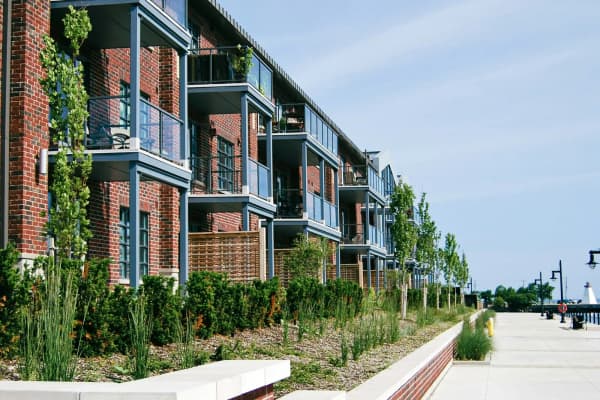

The move from approved student housing into an ordinary apartment feels like a lateral step. Same valley, similar rent, probably a shorter drive to work. In legal terms it is not lateral at all. You have swapped one system for a completely different one, and almost nobody explains the swap.
In approved student housing there is an institution in the room. Standards attach to the building and to conduct, there is an office that hears complaints, and a landlord who behaves badly has a relationship with the university to protect. That relationship does a great deal of quiet work on your behalf, and you probably never noticed it because you never had to use it.
Move into a regular apartment and that layer is gone. What replaces it is the Utah Fit Premises Act — Title 57, Chapter 22 of the Utah Code. It is a useful statute with specific duties, specific day counts and specific remedies. It is also entirely self-service. Nothing in it happens unless you make it happen, in writing, in a particular form.
This guide covers what the statute gives you and how to use it. For the general landscape of deposits, evictions and fair housing, the Utah renters' rights guide is the broader treatment; this one is about the specific transition out of student housing and the provisions that matter most in a first ordinary tenancy.
Before you pay anything: the disclosure most renters never ask for
Start here, because this provision applies before you are a tenant at all, and it is the one landlords are least often asked about.
Section 57-22-4(3)(a) provides that before an owner accepts an application fee or any other payment from a prospective renter, the owner shall disclose in writing:
- a good faith estimate of the rent amount
- the amount of each fixed, non-rent expense that is part of the rental agreement
- the type of each use-based, non-rent expense that is part of the rental agreement
- the day on which the residential rental unit is scheduled to be available
- the criteria the owner will consider in determining your eligibility as a renter, including criteria related to criminal history, credit, income, employment or rental history
- the requirements and process for recovering money you pay in relation to the unit
Subsection (3)(b) allows the owner to satisfy the rent-and-fixed-expense part through a rental application, a deposit agreement, or a written summary. So it need not be a formal standalone document — but it must exist, and it must be in writing, and it must come before the money.
Two of those items repay particular attention.
The fixed non-rent expenses. This is the line item that turns an advertised $1,250 apartment into a $1,430 apartment. Trash valet, pest control, common-area fees, package lockers, mandatory renters insurance administered by the landlord, amenity fees. Under the statute these are not a surprise you discover on the first invoice; they are a written disclosure you are entitled to before you hand over an application fee. Ask for it in that form. A landlord who will not put the number in writing has answered a different and more useful question.
The eligibility criteria. Being told in advance what standard you are being judged against — income multiple, credit threshold, how criminal history is weighed — lets you avoid paying application fees at places that were never going to approve you. Application fees are generally not refundable and a first-time renter can easily burn several hundred dollars discovering this the expensive way.
What the landlord owes you once you are in
Section 57-22-3(1) sets the baseline: each owner and the owner's agent renting a residential rental unit shall maintain that unit in a condition fit for human habitation and in accordance with local ordinances and the rules of the board of health with jurisdiction. Each unit shall have electrical systems, heating, plumbing, and hot and cold water.
Section 57-22-4(1) is the operative list. To protect the physical health and safety of the ordinary renter, an owner may not rent premises unless they are safe, sanitary and fit for human occupancy, and shall:
- maintain common areas in a sanitary and safe condition
- maintain electrical systems, plumbing, heating, and hot and cold water
- maintain any air conditioning system in an operable condition
- maintain other appliances and facilities as specifically contracted in the rental agreement
- for buildings containing more than two rental units, provide and maintain appropriate receptacles for garbage and other waste and arrange for removal, except to the extent the renter and owner agree otherwise
The air conditioning line matters in a valley that runs hot from June through September. Note its precise scope: the duty is to maintain any air conditioning system in operable condition. It is a duty to keep what exists working, not a duty to install one.
The appliance line matters more than it looks. Other appliances are maintained as specifically contracted in the rental agreement — so the dishwasher, the in-unit laundry and the microwave are only protected to the extent the lease says so. If the listing photos showed a washer and the lease does not mention it, you have a gap.
Two limits sit alongside these duties. Section 57-22-3(3) provides that the chapter does not apply to breakage, malfunctions or other conditions that do not materially affect the physical health or safety of the ordinary renter. And Section 57-22-3(4) provides that any duty in the act may be allocated to a different party by explicit written agreement signed by the parties. The statute is a floor with a door in it, and the door is the lease.
Entry, and the clause that quietly overrides the default
Section 57-22-4(2) provides that except as otherwise provided in the rental agreement, an owner shall provide at least 24 hours prior notice before entering.
Read the first five words again. The 24-hour rule is a default, not a guarantee. If your lease says the landlord may enter with less notice, or with notice given by a method you will not see, the lease governs. This is one of the most commonly misunderstood points in Utah residential tenancy, precisely because the 24-hour figure gets quoted without its qualifier.
The practical instruction is simple and it takes two minutes: find the entry clause in the lease before you sign and read it against the statutory default. If it varies the default in a way you dislike, that is a negotiable point in a soft rental month, and at minimum it is something you know rather than something you assume.
When the unit is not ready on move-in day
This is a common Utah Valley problem and it has a specific statutory answer that almost nobody uses.
The valley's rental calendar is unusually concentrated. Large numbers of leases turn over on the same handful of dates in August and around semester boundaries, which means turn crews are working against a wall and units are sometimes not ready when the new tenant arrives with a truck.
Section 57-22-4.1 gives you a choice in that moment. If an owner fails to deliver possession of the unit on the date provided in the rental agreement, then:
- you may terminate the rental agreement by written notice to the owner, or
- if you choose not to terminate, rent abates until the owner delivers possession as provided in the agreement
And if you terminate under that provision, the owner shall, as promptly as reasonable, return to you all prepaid rent and any security deposit.
The second option is the useful one in most real situations, because you generally do want the apartment — you just do not want to pay for the four days you could not occupy it. Rent abatement for that gap is not a concession you are asking for. It is what the statute provides.
Both options require you to establish the delivery date from the rental agreement and to act in writing. A text message thread about the unit not being ready is worth considerably less than a dated written notice.
The three-day and ten-day clocks
Section 57-22-6 is the enforcement machinery, and its defined terms are where the precision lives.
A deficient condition is a condition that violates a standard of habitability or a requirement of the rental agreement, and is not caused by you, your family, or your guest or invitee, and is not caused by a use that would violate the lease or a law applicable to your use of the unit.
A standard of habitability is a standard relating to the condition of the unit that the owner must ensure it meets under Subsection 57-22-3(1) or Subsections 57-22-4(1)(a) or (b)(i), (ii) or (iii) — broadly, fitness for habitation, common areas, the core systems, and air conditioning.
The corrective period then splits:
- three calendar days for a standard of habitability
- ten calendar days for a requirement imposed by the rental agreement
So the category the problem falls into determines the clock. No hot water is a habitability standard: three days. A dishwasher the lease promised to maintain is a rental-agreement requirement: ten days.
Your remedies are a rent abatement remedy or a repair and deduct remedy. Neither happens automatically. Section 57-22-6(2) requires a written notice of deficient condition that:
- describes each deficient condition
- states that the owner has the corrective period, stated in terms of the applicable number of days
- states which remedy you have chosen if the owner does not take substantial action toward correcting each condition within the period
- gives the owner permission to enter to make the corrective action
- is served on the owner in the manner the section provides
Every one of those is an element. The requirement to name your chosen remedy in advance catches people who would rather keep their options open — but the statute asks you to declare it, and a notice that omits it is not the notice the section describes.
What you owe
The duties run both ways, and Section 57-22-5(1) lists yours: comply with board of health rules that materially affect physical health and safety; maintain the premises in a clean and safe condition and not unreasonably burden any common area; dispose of garbage and waste in a clean and safe manner; keep plumbing fixtures as sanitary as they permit; use electrical, plumbing, sanitary, heating and other facilities reasonably; occupy the unit in the manner for which it was designed, and not increase the number of occupants above the number specified in the rental agreement without the owner's written permission; be current on all payments; and comply with each rule, regulation or requirement of the rental agreement.
The occupancy provision is the one that catches recent graduates. Adding a roommate to spread rent is a lease matter requiring written permission, not an informal arrangement, and doing it quietly puts you in breach of a duty the statute names explicitly.
The safety provisions worth knowing before you need them
Section 57-22-5.1 sits quietly in the middle of the chapter and does something the rest of it does not. Its heading is Crime victim's right to new locks — Domestic violence victim's right to terminate rental agreement — Limits on an owner relating to assistance from a public safety agency.
The section defines crime victim by reference to specific offenses: domestic violence as defined in Section 77-36-1, stalking under Section 76-5-106.5, offenses under Title 76, Chapter 5, Part 4 (sexual offenses), burglary or aggravated burglary under Sections 76-6-202 or 76-6-203, and dating violence as defined in Section 78B-7-102. It defines court order to include a civil protective order, a civil stalking injunction, a criminal protective order or a criminal stalking injunction as those terms are defined in Section 78B-7-102 — while excluding an ex parte civil protective order, and an ex parte civil stalking injunction for which a hearing is requested.
Two rights follow from that framework: a crime victim's right to have locks changed, and a domestic violence victim's right to terminate the rental agreement, with the section addressing which future obligations survive that termination and which do not.
The third element in the heading is the one nobody expects and the one worth carrying with you regardless of circumstance: the section places limits on an owner relating to a renter's assistance from a public safety agency. The mischief being addressed there is a real one — lease terms or landlord practices that penalize tenants for calling police or emergency services, which have the effect of making people hesitate before calling for help.
None of this is pleasant to read while signing a first lease. It is in this guide because the moment a person needs Section 57-22-5.1 is precisely the moment they have no capacity to research it, and knowing the provision exists is most of the value. If it becomes relevant, the section is specific and the local resources are real.
What "approved" did for you, and what now replaces it
It is worth being concrete about the layer you are leaving, because people either overestimate it or dismiss it entirely.
Institutionally approved student housing in this valley operates on a contract between the landlord and the university. The building meets standards the institution sets, conduct standards apply to residents, and — crucially — a landlord who mistreats tenants risks a business relationship that is worth far more than any single lease. That last part is the real mechanism. Most of the protection was never enforcement; it was leverage.
Three things change when the leverage goes.
There is no intermediary. In approved housing, a serious problem could be escalated to an office whose job included caring. In an ordinary tenancy, escalation means a written notice under Section 57-22-6 and, if that fails, small claims court. The process is available and slower.
Your paperwork discipline now matters. The statute is full of writing requirements — written disclosure before an application fee, written notice to terminate for failure to deliver possession, written notice of deficient condition specifying the remedy, written permission to add an occupant. An informal conversation does not trigger any of them. Students accustomed to resolving things by walking into an office are the group most likely to be surprised by this.
The lease is now the most important document in your life. Section 57-22-3(4) lets duties be reallocated by explicit written agreement, and Section 57-22-4(2) subordinates the entry-notice default to the rental agreement. Approved housing leases were largely standardized by institutional requirement. Ordinary leases are not, and the variation between two apartments on the same street can be considerable.
The compensation for all of this is real: you are now a party to a statutory relationship with enforceable duties rather than a participant in an institutional arrangement you had no say in. It is more power and more responsibility, arriving simultaneously.
A short move-in procedure
Get the pre-payment disclosure in writing before the application fee. Section 57-22-4(3) entitles you to it.
Read the entry clause and the appliance list against the statute. Both are places the lease can vary the default.
Document the unit on day one. Photograph every room, every appliance, every mark, with timestamps. This costs fifteen minutes and is the single highest-return thing you will do all year.
Establish the delivery date from the lease, so that if possession is late you know which date Section 57-22-4.1 measures from.
Put utilities in your own name on day one. Beyond the obvious, utility bills in your name at a Utah address are one of the enumerated residency evidence items under Section 53H-11-202(3)(b), which matters if graduate school is ever in your plans.
Learn the two clocks now, not during a crisis. Three days for habitability, ten for lease requirements.
Where this fits
This is one piece of a larger transition. The full handoff from student to resident — voter registration, driver license, the residency clocks — is in graduating and staying in Utah Valley. What the rent costs across the valley is in the average rent guide and the cost of living guide. If you are weighing renting against buying, rent or buy in Provo has the arithmetic, and the longer sequence is in the five-year money map. The broader statutory picture, including deposits and eviction, is in the Utah renters' rights guide, and the practical search process is in the first-time renter's checklist. What the local market pays for the income side of that rent is in jobs in Provo and Utah Valley. Moving with kids? See renting with a family in Utah Valley.
This is a guide to a statute, not legal advice, and a specific dispute with a specific landlord deserves specific advice. Utah Legal Services and the Utah State Bar's referral service are the usual starting points when a situation stops being a question and becomes a problem.
Frequently Asked Questions
What must a landlord tell me before I pay an application fee?
What is the landlord required to maintain?
How much notice does a landlord have to give before entering?
The apartment is not ready on my move-in date. What can I do?
How long does a landlord get to fix something?
What are my remedies if they do not fix it?
Can my lease override the Fit Premises Act?
What do I owe as a renter?
Sources
The facts in this guide were checked against these sources. Hours, fees and rules change, so confirm anything time-sensitive with the source before you go. How we make Provo.com.
- Utah Code 57-22-4 Owner's duties, Utah Legislature. Checked October 12, 2026.
- Utah Code 57-22-6 Renter's remedies, Utah Legislature. Checked October 12, 2026.
- Utah Code 57-17-3 Deposit return, Utah Legislature. Checked October 12, 2026.