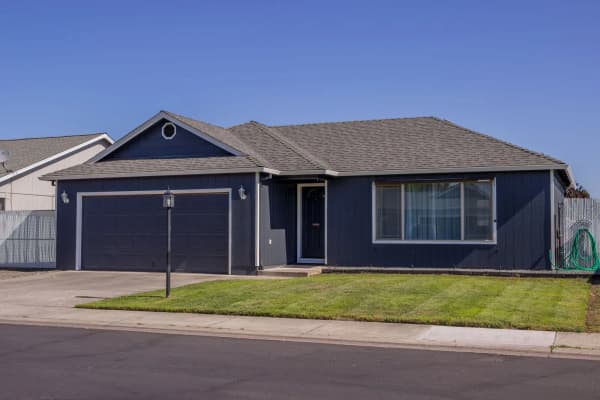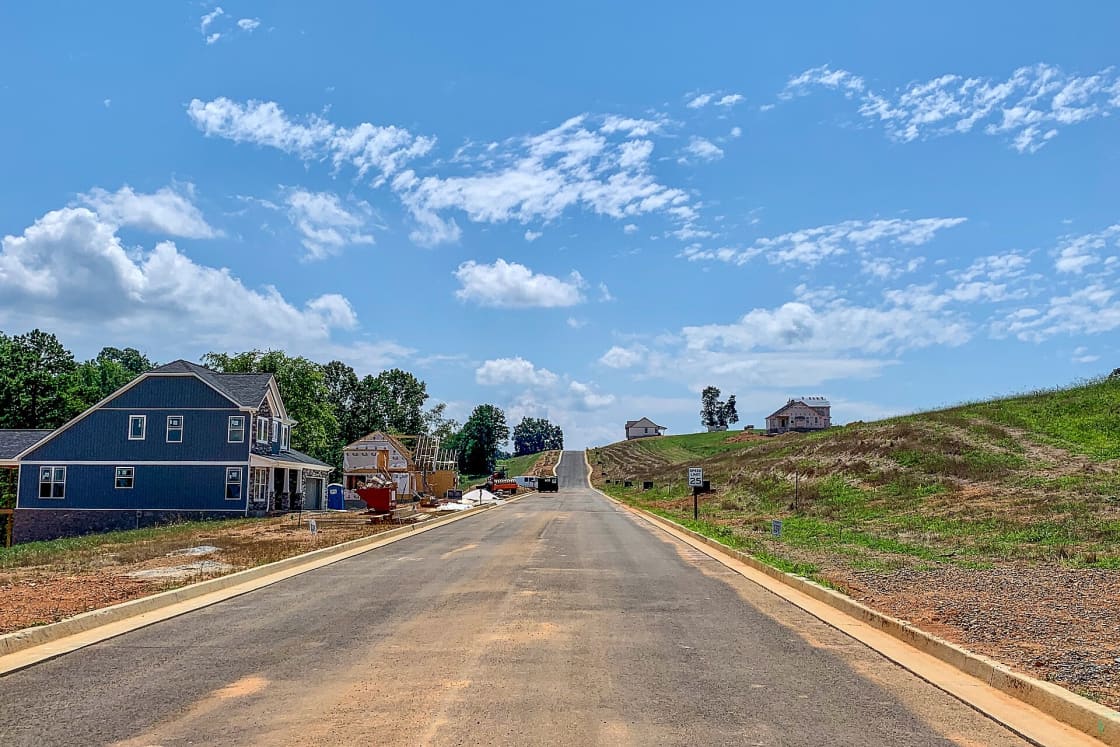

Somewhere inside the price of every new house in Utah Valley is a number that nobody quotes you, that was set by a consultant's spreadsheet, and that funds a water tank you will probably never see.
Impact fees are the least visible large cost in new construction. They are charged once, they are charged to the builder rather than to you, and by the time a buyer is looking at a house they have been absorbed into a price. That invisibility is unfortunate, because the Utah Impact Fees Act is unusually specific about what a city may charge for, what it may spend the money on, how long it may sit on it, and what a fee payer may do about a fee that looks wrong.
The short version
Title 11, Chapter 36a — the Utah Impact Fees Act.
One time, at the permit. Not annual, not at closing.
Only for system improvements identified in the impact fee facilities plan.
Only for the facility type collected. Park money cannot buy a fire truck.
Six years to spend or encumber, extendable only in writing with an absolute date.
Two weeks for the city to hand over its analysis and plan on written request.
30 days, 180 days, or one year to challenge, depending on the ground.
What an impact fee is trying to do
The theory is straightforward. A new house adds a household to a city. That household will drive on streets, drink treated water, flush into a sewer, call the fire department, and use parks. The existing infrastructure was sized and paid for by existing residents. Somebody has to fund the increment.
The impact fee is the mechanism for making new development pay for the capacity it consumes, rather than spreading that cost across everyone through property taxes or utility rates.
The obvious risk is that a fee becomes a general revenue tool — a way to fund whatever the city wants while calling it growth-related. Nearly every restriction in Chapter 36a exists to prevent that. The chapter is best read as a set of handcuffs on the fee, drafted by a legislature that assumed cities would otherwise overreach.
The vocabulary matters. A system improvement is infrastructure that serves the community at large: a water tank, a trunk sewer line, an arterial road, a fire station. A project improvement is infrastructure serving a particular development: the pipe in your street, the curb in front of your house. Impact fees fund system improvements. Project improvements are the developer's own cost and are built into the subdivision. Confusing the two is the most common error in public arguments about these fees.
What has to exist before a city can charge you
A city cannot simply resolve to collect a fee. Chapter 36a requires a chain of documents, each of which must exist before the next is valid.
An impact fee facilities plan. This identifies existing capacity, projects demand from anticipated growth, and lists the system improvements needed to serve it. It is the factual foundation for everything else.
An impact fee analysis. This translates the facilities plan into a number: it apportions the cost of the planned improvements among the development activity that will benefit, and shows the arithmetic.
An impact fee enactment. This is the ordinance that imposes the fee. Section 11-36a-402 sets out what it must contain, including a provision establishing one or more service areas within which fees are calculated and imposed for various land use categories, and either a schedule of impact fees for each type of development activity specifying the amount for each type of system improvement, or the formula the subdivision will use to calculate each fee.
The same section requires the enactment to authorize the subdivision to adjust the standard fee at the time it is charged, in order to respond to unusual circumstances in specific cases, or to a request for a prompt and individualized review for a particular development activity.
That last provision is worth knowing about because it is almost never used. If your project imposes less demand than the standard category assumes — a small unit, a use with unusual characteristics, a site already served by existing capacity — the enactment must give the city a route to charge less. Someone has to ask.
Notice. The chapter also imposes notice requirements before adoption, including notice to affected entities. A fee adopted without them is vulnerable.
What the money may be spent on
Section 11-36a-602 is the heart of the chapter, and it is short enough to quote almost in full:
A local political subdivision may expend impact fees only for a system improvement identified in the impact fee facilities plan; and for the specific public facility type for which the fee was collected.
Two independent limits. The improvement must be in the plan, and it must be the same facility type as the fee.
This is why cities keep separate impact fee accounts by facility type — water, sewer, storm drain, transportation, parks, public safety. Money is not fungible between them. A park impact fee cannot pay for a road, and a transportation fee cannot pay for a fire station, however badly either might be needed.
Then the clock:
a local political subdivision shall expend or encumber an impact fee collected with respect to a lot for a permissible use and within six years after the impact fee with respect to that lot is collected.
Six years. The subdivision may hold longer only if it identifies in writing both an extraordinary and compelling reason for holding it and an absolute date by which the money will be spent. Both elements are mandatory. A general statement about future needs is not an extraordinary and compelling reason, and a plan without a date does not satisfy the second element.
The six-year clock is useful to fee payers, because it is objectively testable. You can ask when a fee was collected and whether it has been spent or encumbered, and the answer is a fact rather than an opinion.
Refunds
Section 11-36a-603 requires a refund of the impact fee plus interest earned when three conditions are all met:
- the developer does not proceed with the development activity and has filed a written request for a refund;
- the fee has not been spent or encumbered; and
- no impact has resulted.
All three. A project that was abandoned but whose fee was already spent does not qualify under this subsection. A project that proceeded does not qualify at all.
There are further refund provisions in the same section keyed to fees that a subdivision failed to expend within the statutory window, with defined claimants — the original owner, the person who paid the fee, and others as specified. This is the practical consequence of the six-year clock: it is not merely an accounting rule, it creates an entitlement.
The written request is not optional. Verbal contact with a counter clerk does not start anything.
Challenging a fee
Most people who think an impact fee is wrong do nothing, because the route is not obvious. The chapter provides one.
Step one: the information request. Section 11-36a-701(2) allows a person or entity required to pay an impact fee, who believes it does not meet the requirements of law, to file a written request for information with the local political subdivision that established it. Within two weeks, the subdivision must provide the impact fee analysis, the impact fee facilities plan, and any other relevant information relating to the fee.
This is a strong disclosure right and it costs nothing to exercise. The analysis is where the arithmetic lives. If a fee is wrong, it is usually wrong because the analysis assumed something about your development activity that is not true — the wrong land use category, the wrong unit count, a demand factor that does not fit.
Step two: standing. Section 11-36a-701(1) gives standing to file a declaratory judgment action challenging the validity of an impact fee to a person or entity residing in or owning property within a service area, and to an organization, association or corporation representing the interests of such persons. Note that this is broader than the fee payer — it reaches residents of the service area, which is how neighborhood organizations get into these cases.
Step three: the deadlines, which are short and uneven. Section 11-36a-702 sets different limitation periods for different grounds:
- 30 days after paying the fee, for one category of challenge
- 180 days after paying the fee, for another
- One year after paying the fee, for a challenge to the amount
- One year after expiration of the six-year spending period, if the money was spent or encumbered
- Two years after expiration of that period, if it was not
Identify your ground before the clock runs, because the shortest window is 30 days and it starts on payment. If you are a buyer rather than a builder, the fee was almost certainly paid at permit, which may have been long before you appeared.
Why the numbers differ so much between cities
Two houses of identical size, five miles apart, can carry materially different impact fees. This surprises people and it is entirely lawful.
Each subdivision writes its own facilities plan against its own circumstances. A city with a recently built water treatment plant and spare capacity has different needs than a city that must build one. A city that is nearly built out has different transportation demands than one absorbing subdivisions on former farmland. A city with generous existing parkland has a different park fee than one starting from nothing.
The west side of Utah Valley and the northern county have absorbed enormous growth in a short period, and the infrastructure to serve it has largely had to be new. The older core cities have more inherited capacity and more replacement liability. Those are different problems and they produce different fee schedules.
The practical consequence for anyone comparing new construction across cities is that the fee difference is real money and it is invisible in the listing. Ask the builder what the impact fees were on the lot. It is a fair question and the answer exists.
Where the fee sits in the price you pay
The fee is collected at the building permit, from whoever pulls it. On a production subdivision that is the builder, months before a buyer exists. On a custom build it may be you.
Whether the fee is "passed on" is an economics question rather than a legal one, and the honest answer is that incidence depends on market conditions. In a strong market with constrained supply, most of it lands on the buyer. In a weak market, more of it is absorbed by the builder's margin or pushed back into what the builder will pay for land. This is the same incidence analysis that applies to any transaction tax, and it does not have a single answer.
What is not in dispute is that the fee is a real cost that exists before a single stud is placed. Our comparison of new construction and resale in Utah Valley covers the other cost differences that separate the two paths.
For a custom build, the fee is a line in your own budget and one of several government charges you will encounter alongside plan review and permit fees. Our building permits guide covers the permit side of that picture, and the guide to hiring home pros covers vetting the people who will be pulling those permits on your behalf.
The policy argument, stated fairly
Impact fees are contested, and both sides have a real point.
The case against. The fee raises the cost of new housing directly, at a moment when Utah Valley's central problem is that housing costs too much. Fees fall hardest on entry-level product because they are frequently charged per unit rather than scaled to size or value, which makes them regressive relative to the price of the home. And a fee justified by a twenty-year facilities plan is being paid today by a household that may move in five years.
The case for. The infrastructure has to be built by someone. If growth does not pay for it, existing residents do — through property taxes, through utility rate increases, or through degraded service. That is a transfer from people who did not cause the cost to people who did. And the fee is capped by a statutory analysis that must show the arithmetic, which is more discipline than a general tax increase receives.
Chapter 36a does not resolve this. It constrains the size and the use of the fee and then leaves the policy question to city councils, which is where it belongs.
A short protocol
- Ask the builder what impact fees were paid on the lot, by facility type if they will break it out.
- If you are pulling the permit yourself, get the current schedule from the city in writing before you budget.
- If a fee looks wrong, file the written request for information and read the analysis. Two weeks, by statute.
- Check your land use category. Miscategorization is the most common correctable error.
- Ask about individualized review if your project imposes less demand than the category assumes.
- Note the date you paid. The shortest challenge window is 30 days from payment.
Notice, affected entities and how a fee gets adopted
Chapter 36a does not only constrain what a fee may be spent on. It constrains how one comes into existence.
The chapter defines an affected entity broadly — including each county, municipality, special district under Title 17B, special service district under Title 17D, school district and interlocal cooperation entity whose interests may be touched. Those entities are entitled to notice before a facilities plan or a fee enactment is adopted, and the notice requirements exist so that a city cannot quietly adopt a plan that shifts costs onto a neighboring district or a school district without their knowledge.
For a member of the public the practical consequence is that these documents are adopted at noticed public meetings with a comment opportunity, and the underlying analysis is available before adoption rather than only after. A fee is far easier to influence at the analysis stage than to challenge after it has been paid, and the analysis stage is the one almost nobody attends.
There is also a timing rule worth knowing: a newly adopted or modified impact fee enactment does not take effect immediately on passage, which gives projects already in the pipeline a window. If you are close to pulling a permit when a city is revising its schedule, the effective date is a number worth asking about.
Related Guides
- New Construction vs. Resale in Utah Valley — the full cost comparison
- Building Permits in Provo — what triggers a permit and what it costs
- Detached ADUs and H.B. 477 — where utility capacity becomes a lawful reason to say no
- Property Tax in Utah County — the recurring charge, as opposed to this one-time one
- Hiring Home Pros in Utah Valley — vetting anyone who works on your house
Frequently Asked Questions
What is an impact fee and when do I pay it?
What can a Utah city spend impact fee money on?
How long can a city hold impact fee money before spending it?
Can I get an impact fee refunded?
How do I challenge an impact fee in Utah?
How long do I have to challenge an impact fee?
Do impact fees make housing more expensive?
Are impact fees the same in every Utah Valley city?
Sources
The facts in this guide were checked against these sources. Hours, fees and rules change, so confirm anything time-sensitive with the source before you go. How we make Provo.com.
- Utah Code 11-36a-602, Utah State Legislature. Checked October 12, 2026.
- Utah Code 11-36a-603, Utah State Legislature. Checked October 12, 2026.
- Utah Code 11-36a-701, Utah State Legislature. Checked October 12, 2026.
- Utah Code 11-36a-702, Utah State Legislature. Checked October 12, 2026.
- Utah Code 11-36a-402, Utah State Legislature. Checked October 12, 2026.