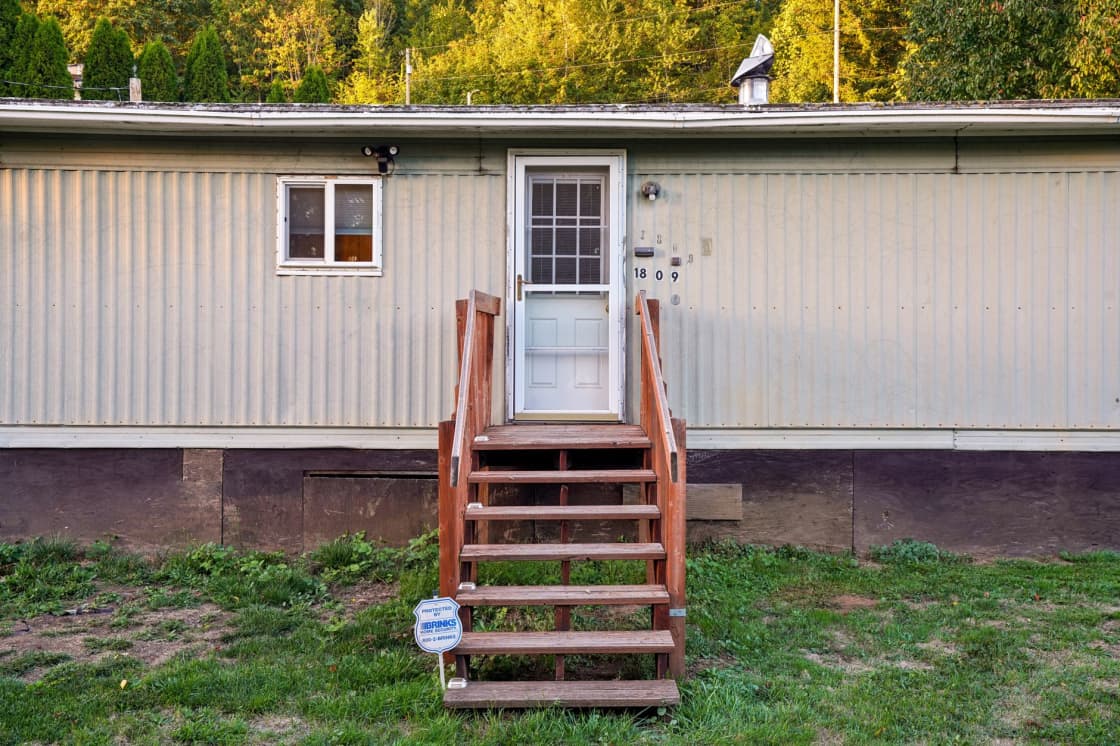

Mobile home parks occupy an odd legal space, and the oddness is the entire reason Utah wrote a separate statute for them. In almost every other housing arrangement, the person who owns the dwelling controls the ground it sits on. Here, you own the home and rent the dirt — and the home, despite the name, is not realistically mobile once it is set.
The Utah Legislature said so directly. Section 57-16-2, the purpose section of the Mobile Home Park Residency Act, states that the high cost of moving mobile homes, the installation requirements of parks, and the cost of landscaping and lot preparation together necessitate that owners of mobile homes in parks be provided with protection from actual or constructive eviction. The same section says park owners need speedy and adequate remedies against those who abuse a tenancy. The chapter is an attempt to hold both.
That balance is the thing to understand before reading any individual provision.
Cause is required, and that is the headline
Start with what makes this different from an apartment.
Section 57-16-4(1) states that a mobile home park or its agents may not terminate a lease or rental agreement upon any grounds other than those the chapter provides. Section 57-16-5 is titled, in the code itself, Cause required for terminating lease — Causes — Cure periods — Notice.
In an ordinary Utah month-to-month tenancy, a landlord generally does not need a reason to end the arrangement. In a mobile home park, they do, and the reasons are enumerated rather than open-ended. This is the protection the purpose section was describing, and it exists because the alternative — telling someone to move a structure that costs many thousands of dollars to relocate, if it can be relocated at all — is eviction with extra steps.
The seven grounds, and what each really means
Section 57-16-5(1) sets out the causes. In plain terms:
(a) Rule violations, with two sub-tracks. Failure to comply with a park rule relating to repair, maintenance or construction of awnings, skirting, decks or sheds is treated separately from failure to comply with any other park rule, which carries a seven-day period.
(b) Repeated rule violations, where written notice of the original violation was previously given. Repetition is its own ground; curing each instance individually does not immunize a pattern.
(c) Specified conduct by a resident, a person residing with them, or an invitee — including use or distribution of illegal drugs, distribution of alcohol to minors, or commission of a crime against property or a person in the park. Note the scope: this reaches conduct by guests, not only by the leaseholder.
(d) Nonpayment of rent, fees or service charges for five days after the due date.
(e) Change in land use or condemnation of the park or any part of it.
(f) Failure to enter into a written lease with the park.
(g) Materially false information on the residency application.
Read as a set, these are mostly conduct-based and curable — with the conspicuous exception of (e).
The seven-day and fifteen-day routes are not the same thing
This is the provision most often misread by residents who receive a notice and count days.
The default for a general rule violation gives seven days to cure. But Subsection 57-16-5(2) provides that if the park elects not to proceed with the seven-day cure period, a 15-day written notice of noncompliance must be used — and that notice carries specific mandatory contents. It must:
- State that if the resident does not perform their duties under the lease, the park may cure the default itself
- State the expected reasonable cost of curing the default
- Require the resident to pay all costs incurred by the park in curing it
- State that this payment is considered additional rent
- State the consequence of failing to make that payment in a timely way
So the longer notice is not generosity. It is the route by which a park does the work and bills you, with the bill converted into rent — which matters because unpaid rent is itself a ground for termination under (d).
If you receive a 15-day notice, the cost figure in it is not decorative. It is the number you may end up owing, and "expected reasonable cost" is language worth holding the park to.
The 60-day rule on rent increases
Subsection 57-16-4(4)(a): increases in rent or fees for periodic tenancies are unenforceable until 60 days after notice of the increase is mailed to the resident.
Three things in that sentence matter.
"Unenforceable" is stronger than "improper." An increase inside the window does not become collectible merely because the park insists.
"Mailed" sets the trigger. The clock runs from mailing, not from your reading it, which means keeping the envelope is useful.
"Rent or fees" is broad, but it is not everything. Subsection (4)(b) treats service charges differently: where service charges are not included in rent, a park may increase them during the leasehold period after giving notice, and may pass through increases or decreases in electricity rates. So a bill that rises because power got more expensive is a different creature from a lot-rent increase, and the 60-day rule is not a universal shield.
What must be in the lease
Subsection 57-16-4(2) requires the lease to be in writing and signed, and requires the park to maintain a copy and make it available to the resident.
Subsection (3) then sets minimum contents:
- The name and address of the park owner and any person authorized to act for the owner, on whom notice and service of process may be served
- The type of leasehold — term or periodic
- Full disclosure of all rent, service charges and other fees presently charged
- Full disclosure of utility infrastructure ownership — whether the park owner or someone else owns it
- Full disclosure of all costs charged by the park for public utility services
- The dates payment is due
- All park rules which, if broken, may constitute grounds for termination — including the causes under Section 57-16-5 and the resident's rights
That utility-infrastructure disclosure is easy to skim past and expensive to ignore. In parks where the owner holds the water and power infrastructure, residents are buying utilities through an intermediary, and Section 57-16-10 places limitations on providers' charges for utility service to mobile home parks. If your utility line item has never been itemized, that is a question with a statutory basis behind it.
The land-use ground, which is the one to think about before buying
Ground (e) — a change in land use or condemnation — is categorically different from the others because no amount of good behavior prevents it.
This is not an abstract risk in Utah Valley. This is a corridor where land near transit and near the freeway has appreciated sharply, where cities are actively planning redevelopment, and where older parks frequently sit on parcels whose highest-value use is no longer a park. Provo Towne Centre's redevelopment discussion is the sort of land-use conversation that reshapes what surrounding parcels are worth, and it reaches a park directly: the plan includes the Shady Acres Mobile Home Park, whose residents own their homes but not the land. The draft development agreement before the Provo City Council in October 2026 offers 18 months' notice and a $10,000 relocation payment per occupied household; our story on the Oct. 20 council vote has the details.
For a buyer, that translates into concrete diligence:
- Ask what the parcel is zoned for, not just what it is used for
- Ask whether the park is in any city redevelopment or general plan area
- Ask who owns the park and how long they have owned it
- Read Section 57-16-4's provisions on notice regarding planned changes, and ask what notice you would receive
A manufactured home is a depreciating asset sitting on land you do not control. That is not a reason to avoid one — for many households it is the most affordable path to owning a dwelling in this valley — but it is a reason to price the land risk rather than assume it away.
Selling the home in place
Section 57-16-4 addresses sale of homes, and this is where resale value is made or destroyed.
A home that can be sold in place, to a buyer the park will accept as a resident, is worth far more than one that must be moved. Moving costs, set-up costs, and the simple question of whether another park has a vacancy all bear down on the second scenario.
Before you list — ideally before you buy — get written answers to: what the park requires of a prospective purchaser, what grounds it may use to refuse, what timeline applies, and what fees attach to a transfer. Read those answers against the statute rather than against the park's summary of the statute.
Dispute resolution, procedure, and rights you cannot sign away
Two structural provisions are worth knowing.
Section 57-16-4.1 provides for a meeting to attempt resolution of disputes. Using it before a dispute hardens is nearly always cheaper than not.
Section 57-16-6 sets out prerequisite procedure before an action for lease termination — meaning a park cannot simply file. Section 57-16-7.5 addresses payment of rent after notice and summary judgment, and Section 57-16-8 addresses payment of rent and fees during the pendency of an eviction proceeding. The practical takeaway from that pair: continuing to pay during a dispute matters, and stopping payment to make a point tends to convert a defensible position into ground (d).
Finally, Section 57-16-12 prohibits waiver of rights and duties, and Section 57-16-11 states that the rights and remedies in the chapter are not exclusive. A lease clause purporting to sign away a statutory protection is not the last word.
The residents' association, and the rights that come with it
Section 57-16-16 is the most useful provision in the chapter for people who are not currently in a dispute, and it is the one almost nobody in a Utah Valley park has read.
Residents may form a resident association — defined as an organization of park residents organized to address their common interests and concerns related to the park — and may participate in a regional, state or national resident association or advocacy group. There may be more than one association in a single park, though a park operator is only required to acknowledge the primary one, meaning whichever has more members than any other. An association whose purpose is to purchase some or all of the park may limit membership to owners of manufactured homes within it.
The mechanics are light. At a meeting where a majority of members are present, members may elect officers and adopt bylaws. Except in an emergency, the association must give seven days' notice of a meeting to all residents of the park, and any resident may attend whether or not they are a member. An officer or member is not personally responsible or liable for an act or omission of the association or of another officer or member, though each remains liable for their own conduct. The association may not impose fees, dues or assessments on its members unless a majority of the members agree.
What the park operator may not do is the substance of the section. A park operator — defined to include the owner, operator or manager, and any employee, agent or independent contractor of theirs — may not be a member of the association, may not attend a meeting without a written invitation from an officer, may not unlawfully interfere with the association's operation, may not interfere with a resident's right to contact a state or local health department, a municipality or another group to complain about health and safety conditions in the park, and may not harass or threaten the association. The association, for its part, may not harass or threaten the operator.
The common room, and the free-expression rule
Two subsections have concrete dollar and access consequences.
Under Subsection (10), an association may schedule the park's common facilities, if any, free of charge. The operator may reasonably limit how often, but only so long as the limit still allows use at least once per week. The operator may not charge a security deposit exceeding what is normally and uniformly charged for that facility, and may not require the association to obtain liability insurance — with one exception: if park rules permit the consumption of alcoholic beverages in a common facility and alcohol is to be served at the association's meeting or private function there, insurance may be required. The association is responsible for damage its members or their guests cause.
Under Subsection (8), an operator must permit association meetings in the park relating to manufactured home living or to social or educational purposes, including forums for or speeches by public officials or candidates for public office. And under Subsection (9), apart from reasonable time, place and manner limitations, an operator may not prohibit or adopt a rule prohibiting a resident or a resident entity from exercising the right of free expression for noncommercial purposes inside the park — expressly including peacefully organizing, assembling, canvassing, petitioning, leafleting or distributing noncommercial written material.
That is an unusually specific set of protections, and it exists because the ground under a resident's own home belongs to somebody else. In an ordinary neighborhood nobody needs a statute to let a candidate knock on a door.
Retaliation is named, and the list is specific
Subsection 57-16-16(11) prohibits a park operator from altering or refusing to renew an existing rental agreement, changing a park rule, enforcing a rule in an unreasonable or nonuniform way, bringing or threatening to bring an eviction action or other civil action, or taking any other action, in retaliation based primarily on a resident having done one of four things: expressed an intention to complain or having complained to a governmental agency about a matter relating to the park; made a complaint in good faith to the operator; filed or expressed an intention to file a lawsuit or administrative action against the operator; or testified in a judicial or administrative proceeding or before a public body.
The section does not stop an operator from evicting for causes the chapter allows, or from exercising other rights it holds under other law, and it does not limit defenses otherwise available to a resident in an eviction action. What it does is make the timing and stated reason of an adverse action into evidence. A new rule that appears the month after a health department call is a different fact than the same rule appearing in a quiet year.
Abandonment has a definition, and it is 45 days
Section 57-16-13 does not leave "abandoned" to judgment. It presumes abandonment of both the space and the home in either of two situations.
The first: the resident or occupant has not notified the park that they will be absent, rent goes unpaid for 45 days after the due date, and the park owner has no reasonable evidence other than the presence of the resident's personal property that the resident is continuing to occupy the space and the home.
The second: the resident or occupant has not notified the park that they will be absent, rent is unpaid when due, the resident's personal property has been removed from the home, and there is no reasonable evidence of continued occupancy.
Note the role personal property plays in each. In the first, the presence of belongings is expressly not enough on its own to defeat the presumption. In the second, their absence helps establish it. The operative variable in both is notice: a resident who tells the park they will be gone has removed the first element from the analysis. A one-line email before a long absence is the cheapest protection in the chapter, and it matters most for the exact population that takes long absences — seasonal workers, snowbirds, and anyone leaving for a mission or extended family care.
The lienholder is on the hook, and it changes everyone's math
Section 57-16-9 makes the lienholder of record of a mobile home — or, if there is none, the home's owner — primarily liable to the park owner or operator for rent and service charges if the home is not removed within 10 days after receipt of written notice that it has been abandoned as defined in Section 57-16-13, or that a writ of restitution has been issued. Liability runs only from the day the notice is received, not backward, and no rent is owed at all if the home is removed inside those 10 days.
The notice must go by certified mail, return receipt requested, and must tell the lienholder that the park may require removal if the lienholder has not commenced paying rent and service charges within 30 days after receipt. A lienholder that does pay gets an unconditional right to resell the home within the park, subject to the purchaser being approved for residency — approval that cannot be unreasonably withheld. If at the time of sale the home is in rundown condition or disrepair, does not meet the park's minimum size specifications, or does not comply with reasonable park rules, the park may require removal, but the lienholder gets 60 days to make repairs and comply after notice of what is required.
If the lienholder neither commences paying nor removes the home within the 30 days, the park may immediately remove and store it on the lienholder's behalf, and may recover moving and storage costs. The prevailing party in any action to enforce rights under this section is entitled to court costs and reasonable attorney fees.
One asymmetry deserves flagging for residents. Subsection (7) provides that if a lienholder pays rent and service charges as provided, the home is not considered abandoned under Section 57-16-13 — but the personal property in the home is.
What a resident can sue for
Section 57-16-19, enacted in 2017, is two sentences long and does work the rest of the chapter would otherwise leave hanging. A mobile home park resident may bring a cause of action against a mobile home park for damages or injunctive relief arising from a violation of the chapter, and a court may award reasonable attorney fees and costs to the prevailing party.
Fees running to the prevailing party are what make the rest of the chapter enforceable at the scale it operates at. Most violations here are worth a few hundred to a few thousand dollars, which is far less than the cost of litigating them, and a fee provision is what closes that gap. It closes it in both directions, since a resident who loses can be on the receiving end of the same award.
The short version
You own the home; you rent the ground; the statute exists because those two facts together would otherwise leave you with no leverage. Cause is required to terminate. Rent increases are unenforceable for 60 days after mailing. Rule violations run on a seven-day cure or a 15-day notice that lets the park do the work and bill you as additional rent. Nonpayment gets five days. And the one ground you cannot cure — a change in land use — is the one to investigate before you buy rather than after.
Related Guides
- Utah Renters' Rights: What the Fit Premises Act Actually Requires
- Townhomes and Condos in Utah County: What You Are Actually Buying
- Property Management Companies in Utah Valley
- Utility Rates in Utah Valley: What Drives Your Bill
Frequently Asked Questions
Can a mobile home park evict me for no reason?
How much notice do I get before the lot rent goes up?
What are the actual grounds for eviction?
What is the seven-day versus fifteen-day notice difference?
Does the park have to give me a written lease?
What happens if the park is sold or redeveloped?
Can I sell my mobile home and leave it in the park?
Do these protections apply if I rent the home itself, not just the lot?
Sources
The facts in this guide were checked against these sources. Hours, fees and rules change, so confirm anything time-sensitive with the source before you go. How we make Provo.com.
- Utah Code 57-16-4 Termination of lease ... Rent increases, Utah Legislature. Checked October 12, 2026.
- Utah Code 57-16-5 Cause required for terminating lease, Utah Legislature. Checked October 12, 2026.
- Utah Code 57-16-9, 57-16-13, 57-16-16, 57-16-19, Utah Legislature. Checked October 12, 2026.