
Two households, four miles apart, one in Provo and one in a neighboring city, run the same appliances through the same August. Their power bills differ by a meaningful amount.
The reason is not efficiency. It is that they are buying electricity from two different kinds of institution, whose rates are set by two entirely different processes — one at a city council meeting you could attend on a Tuesday evening, the other in a formal proceeding before a state commission.
Almost nobody knows which one they are in.
The short version
Two models. Municipal utilities set rates at the city council. Regulated utilities set them at the Public Service Commission.
Municipal = fast and locally accountable. No independent regulator.
Regulated = slow, evidentiary, publicly contested. The Office of Consumer Services argues for residential customers.
Tiered rates mean the bill rises faster than consumption.
Water is two systems in much of the valley: culinary and secondary.
Franchise fees are municipal revenue, not a cost of service.
The two models
Municipal utilities
Several Utah cities own and operate their own electric utility. The city acquires power — through its own generation, through long-term contracts, through joint agencies, or on the market — and sells it to residents and businesses within its boundaries.
Rates are set by the city council, as an ordinary act of local government, at a public meeting, usually as part of the annual budget and fee schedule.
The consequences are worth spelling out:
Speed. A municipal rate change can be adopted in a matter of weeks. A formal rate case takes many months.
Accountability. The people who vote are the people you elect. If you dislike the outcome, that is an ordinary political fact rather than a regulatory one.
No independent scrutiny. There is no state commission examining the utility's cost evidence, no statutory consumer advocate cross-examining witnesses. Oversight is what the council and the public provide.
Revenue transfers. Municipal utilities commonly transfer some surplus to the city's general fund, in lieu of the taxes an investor-owned utility would pay. That is lawful and normal, and it means part of what you pay for electricity funds general city services. Whether that is good policy is a live and legitimate local debate.
Investor-owned regulated utilities
An investor-owned utility is a private company granted a service territory and obliged to serve everyone in it, in exchange for accepting rate regulation.
Rates are set by the Utah Public Service Commission through a rate case.
The process, in outline: the utility files an application supported by evidence about its costs, its capital investments and the return it argues it should be permitted to earn. Other parties participate — the Division of Public Utilities, which examines the filing on the public's behalf, and the Office of Consumer Services, which represents residential and small business customers specifically. Testimony is filed, discovery happens, hearings are held, settlements are frequently negotiated, and the commission issues an order.
It is slow, evidentiary and adversarial, and it is public. Members of the public may comment, and comment periods are published.
The thing this structure protects against is a monopoly setting its own price. The thing it cannot do is make the underlying costs go away.
Which are you?
Look at the bill. The provider's name is on it. If it is your city, you are municipal. Then find out which city you are in, which — as our guide to annexation and city boundaries explains — is not always what your mailing address says.
What drives an increase
Setting aside the process, the substance of most increases comes from a short list.
Power supply cost. For any utility, buying or generating electricity is the largest single input. Fuel prices, contract renewals, wholesale market conditions and the generation mix all move it.
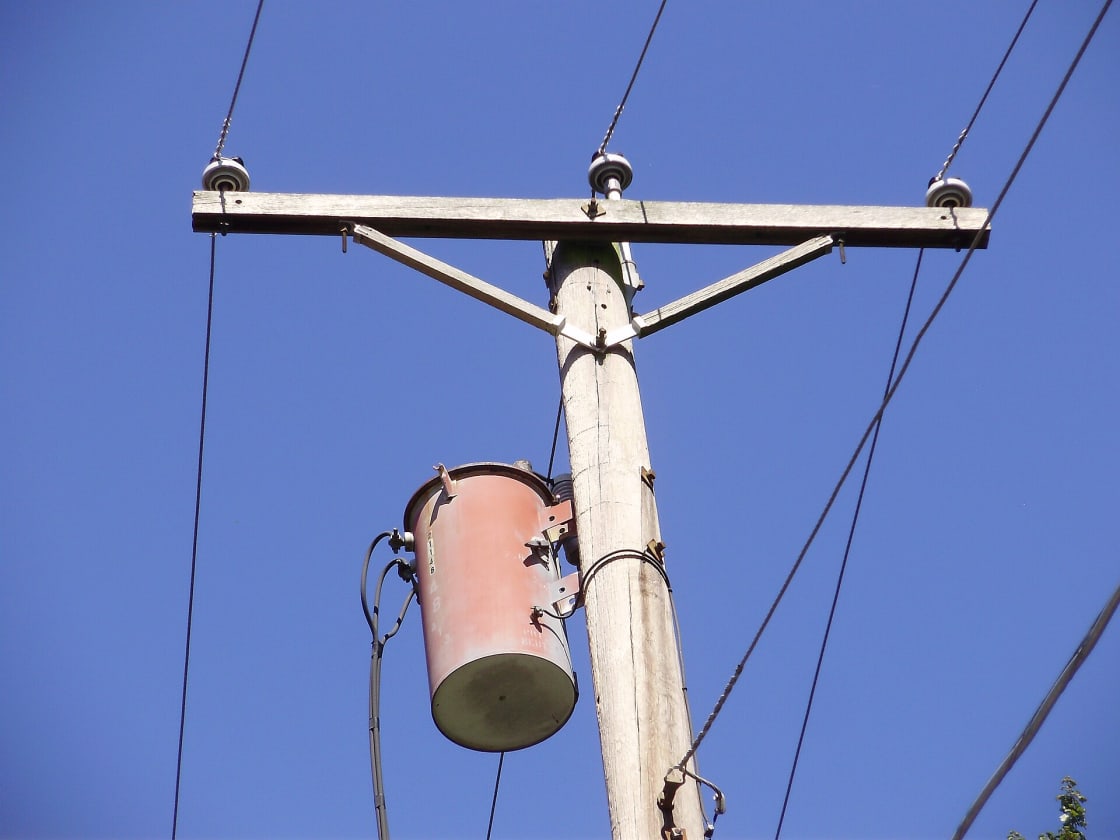
Transmission and distribution investment. Poles, wires, substations, transformers. This is capital, it is long-lived, and it is recovered from customers over time. Rapid growth means new distribution infrastructure, and Utah Valley has had a great deal of rapid growth.
Replacement of aging plant. Much of the distribution system across the valley was built for a smaller, lower-load community.
Peak demand. Systems must be sized for the worst hour of the year, not the average one. Air conditioning load on a hot August afternoon is what determines a great deal of the capacity that everyone pays for all year. This is the single best argument for tiered and seasonal pricing, and it is why conservation at peak matters more than conservation in general.
Regulatory and environmental compliance.
Wildfire mitigation. A newer and growing cost across the interior West. Utilities are investing in line hardening, vegetation management around conductors, weather monitoring and, in some jurisdictions, public safety power shutoff programs. The exposure that drives this is the same wildland urban interface exposure covered in our defensible space guide — from the utility's side rather than the homeowner's.
Reading your bill
Most utility bills are laid out badly, and the total is rarely rate multiplied by consumption. The components:
Customer or service charge. A fixed monthly amount independent of usage, covering metering, billing and the cost of maintaining a connection. It is why a bill for an empty house is not zero.
Energy or volumetric charge. The per-unit rate — kilowatt-hours for electricity, thousands of gallons or cubic feet for water.
Tier structure. Where tiered rates apply, consumption above defined thresholds is charged at higher rates within the billing period. This is why a twenty percent increase in usage can produce a thirty percent increase in the bill.
Seasonal differentials. Some providers charge different rates in summer than in winter, independently of tiering.
Franchise fee. The charge a city imposes on a utility for use of public rights of way, passed through. Municipal revenue, not a cost of service.
Taxes and surcharges.
Other services on the same bill. Municipal bills frequently bundle water, sewer, storm drain, garbage and recycling into a single statement. Our guide to recycling and garbage in Provo covers that side, and setting up utilities in Provo covers getting connected in the first place.
The practical diagnostic: when a bill jumps, compare consumption, not dollars. Pull twelve months and read the usage figures. If usage is flat and the bill rose, that is a rate change and the remedy is political or regulatory. If usage rose, the remedy is in your house. People routinely campaign against a rate increase that did not happen, and ignore a failing water heater that did.
Water, and the two-system problem
Water in Utah Valley is more complicated than power, because a great many households are on two systems at once.
Culinary water is treated drinking water, delivered under pressure to the house, billed by the city or by a water district. Our guide to Provo's water system covers where it comes from.
Secondary water is untreated pressurized irrigation water, delivered through a separate distribution network, historically supplied by irrigation companies and now largely by districts and cities. Our secondary water guide explains the structure.
Two consequences.
Your summer bill is an irrigation bill. Indoor use is roughly constant year-round. Landscape watering is concentrated into a few months and typically dwarfs it. A household whose July bill is triple its February bill has not changed how it showers.
Secondary water has historically often been unmetered, billed as a flat seasonal charge tied to lot size or shares rather than to volume. Metering has been progressively introduced across Utah, and where a system transitions from flat-rate to metered billing, households that had no reason to think about consumption suddenly do. That transition is one of the more consequential rate changes a Utah Valley household can experience, and it is not a rate increase in the ordinary sense — it is a change in what is being charged for.
The response is landscape rather than plumbing. Our guide to waterwise landscaping covers what reduces outdoor use, and sprinkler winterization and repair covers the leaks and broken heads that quietly waste a great deal of it.
What you can do
Find out who your provider is, and whether they are municipal or regulated. Everything else follows from that.
If municipal: rate changes go through the city council. Agendas are published in advance, meetings are public, and comment periods exist. This is the setting where one resident's attendance most plausibly matters, because the audience is small and the decision-makers are local. Our directory of public meetings across Utah Valley lists the bodies and where they meet.
If regulated: rate cases are public proceedings before the Public Service Commission. Public comment is accepted, and the Office of Consumer Services exists specifically to represent residential customers in those proceedings. An individual comment is one of many, but the docket is open.
Ask about rate options. Many providers offer time-of-use rates, budget or levelized billing that smooths seasonal peaks, and assistance programs for qualifying low-income households. These are frequently under-taken because they are not advertised.
Attack peak, not average. Where tiered or seasonal rates apply, the marginal unit in August is the expensive one. Shifting or reducing consumption at peak is worth more per unit avoided than the same reduction in March.
Fix the boring things. A running toilet, an irrigation head spraying the pavement, a failing water heater, a refrigerator seal. These produce more measurable savings for less money than almost any rate advocacy.
The honest summary
Utility rates in Utah Valley have gone up, and they are likely to keep going up, for reasons that are mostly structural rather than discretionary: a system built for a smaller community serving a much larger one, capital that is being replaced, peak demand that keeps growing, and newer categories of cost like wildfire mitigation that did not exist as line items a generation ago.
None of that means an individual increase is justified, and both processes exist precisely so that the question can be asked in public. Which process applies to you determines where to ask it — and finding out which one you are in takes about thirty seconds with a bill in your hand.
Where the money goes in a typical bill
It helps to know roughly what proportion of a bill is buying what, because it tells you which behaviors matter.
For electricity, the dominant residential loads in Utah Valley are heating and cooling, water heating, and — increasingly — vehicle charging. Lighting, once a meaningful share, has largely fallen away as fixtures were replaced. The practical consequence is that the thermostat and the water heater are where the money is, and that fiddling with anything else is mostly symbolic.
Air conditioning is what makes the summer peak, and the summer peak is what sizes the system everyone pays for. That is the case for shifting load where a time-of-use rate is available — running the dishwasher and the laundry outside the peak window costs the utility less and, under such a rate, costs you less.
For water, the split is stark. Indoor use is roughly constant. Outdoor irrigation is seasonal and typically dwarfs it during the months it runs. A household serious about its water bill is making a landscape decision, not a plumbing one.
For natural gas, space heating dominates, with water heating second. The building envelope — insulation, air sealing, windows — is what determines the bill, which is why the cheapest improvement is usually air sealing rather than anything visible.
What to do when a bill is wrong
Bills are occasionally wrong, and the process for challenging one is more accessible than people assume.
Check the read first. Compare the meter reading on the bill against the meter itself. An estimated read — usually marked as such — is a common source of a strange bill, and it self-corrects on the next actual read, with the balance evening out.
Look for a leak. Turn everything off and watch the meter. If it is still moving, water is going somewhere. A running toilet is the classic culprit and can waste an extraordinary volume without any audible sign. Irrigation leaks are worse because they are underground and invisible until the bill arrives.
Compare consumption, not dollars, across the same month in prior years. Weather-normalize mentally: a hot July is not a rate increase.
Call before you dispute. Most providers will re-read a meter, review an account, and explain a charge. Many will also work out a payment arrangement on a large catch-up bill, and most have assistance programs for qualifying households that go under-taken because they are not advertised.
Escalate correctly. For a municipal provider, the escalation route runs through the city — the utility department, then the city manager or council. For a regulated utility, unresolved complaints can be taken to the Division of Public Utilities, which handles consumer complaints as part of its function. Knowing which of the two you are dealing with, again, determines where to go.
The efficiency spending that pays back
Households asked to reduce a utility bill usually start with the most visible thing rather than the most effective one.
Ranked roughly by return per dollar in this climate:
Air sealing. Cheap, unglamorous, and the highest return available in most Utah Valley houses. Gaps around rim joists, penetrations, attic hatches and duct boots leak conditioned air continuously. Sealing them costs little and reduces both heating and cooling load.
Attic insulation. Many older homes here are well below current recommended depths. This is the second-best return and it is a one-time cost.
Duct sealing. Ducts running through an unconditioned attic or crawlspace can lose a substantial share of what passes through them.
Thermostat behavior. Setback while asleep and away is free. A programmable or smart thermostat automates it.
Water heater. Setting a sensible temperature, insulating the tank on older units, and insulating the first few feet of pipe.
Irrigation controller and schedule. For water, this is where the money is. A controller with a rain sensor or weather feed, matched precision heads, and a schedule adjusted seasonally rather than set once in May. Our guide to sprinkler repair and winterization covers the maintenance side.
Landscape conversion. The largest durable water saving and the most expensive to start. Our waterwise landscaping guide covers what works here.
Windows. Almost always the first thing people ask about and almost never the best return, because the cost is high and the load reduction is modest relative to air sealing and insulation. Worth doing when windows need replacing anyway, rarely worth doing purely for energy.
Power reliability, and what a rate does not buy
Rates buy energy and the system that delivers it. They do not buy immunity from outage, and the causes here are seasonal: heavy wet snow bringing branches onto conductors, high winds, summer heat stressing equipment, and occasionally a vehicle into a pole.
Report an outage rather than assuming it is known. Automated systems infer outages from meter data, but a report accelerates it, and a single-premises outage may be invisible to the utility entirely.
Know whether the problem is yours. If the neighbors have power and you do not, check your own panel before calling. The service drop and anything on your side of the meter is usually the property owner's responsibility, and a call that ends in a technician resetting your breaker may be billable.
Keep the outage basics. Torches rather than candles, a charged power bank, and a plan for anyone in the household on powered medical equipment. Our power outage guide covers the local reporting routes.
Generators and batteries are increasingly common. Anything wired into the house requires a transfer switch and a permit — backfeeding a generator into a panel without one endangers line workers and is not a shortcut anyone should take. Our building permits guide covers what needs one.
Related Guides
- El DMV de Provo, en español
- Setting Up Utilities in Provo — getting connected, step by step
- Provo Water Explained — where the culinary water comes from
- Secondary Water in Utah Valley — the irrigation system driving your summer bill
- Waterwise Landscaping in Utah Valley — the only durable answer to outdoor use
- Recycling and Garbage in Provo — the other services on the same statement
- Utah Valley Public Meetings — where municipal rates are decided
- Annexation and City Boundaries in Utah County — which city you are in
Frequently Asked Questions
Why do my neighbors in the next city pay different power rates?
How does a regulated utility raise its rates in Utah?
How does a municipal utility raise its rates?
What is a tiered rate and why does my summer bill jump?
Why is my water bill higher in summer than my winter bill by so much?
What is a franchise fee on my utility bill?
Can I do anything about a proposed rate increase?
Are utility rates in Utah high compared with other states?