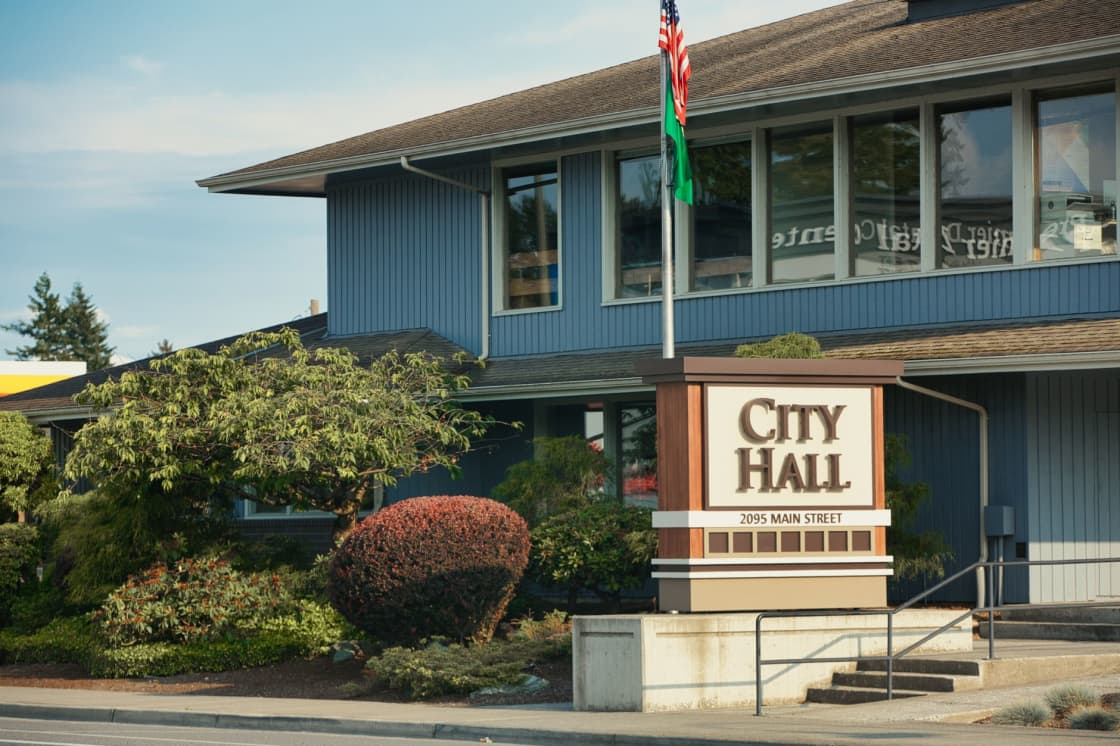

Here is a thing almost nobody in Utah Valley knows about the place they live: the city next door may have a fundamentally different government from yours. Not different personalities or different priorities — a different machine, with a different number of seats, a different relationship between the mayor and the council, and a different answer to the question of who your council member is accountable to.
This is not an accident or an inconsistency. Title 10, Chapter 3b of the Utah Code — Forms of Municipal Government — sets out the menu itself, and Chapter 3, Municipal Government carries the rules for how the governing body under each form is elected and how long its members serve. Cities chose. They chose at different times, at different sizes, for different reasons, and the choices stuck.
Understanding which one your city made is the difference between showing up to the right meeting and showing up to the wrong one.
The menu, in outline
Utah municipalities operate under one of several statutory forms. The differences that matter to a resident cluster around three questions:
How many people sit on the governing body? Five and seven are the common answers, and the number is not cosmetic. On a five-member body, three votes is everything.
Are seats elected at large or by district? Section 10-3-205.5 addresses at-large election of officers, and Section 10-3-205 addresses election of officers in municipalities operating under particular forms. This is the question with the largest practical effect on whether your neighborhood has a voice.
Is the mayor part of the council or separate from it? In some forms the mayor sits as a member of the governing body and votes. In others the mayor is a distinct executive who presides but does not ordinarily vote. Everything about how you count support for a proposal depends on this.
The four forms, named
The menu is not a metaphor. Section 10-3b-601 lists it, and Section 10-3b-103(4) requires every municipality incorporated on or after May 5, 2008 to operate under one of exactly four:
- The council-mayor form, with a five-member council
- The council-mayor form, with a seven-member council
- The six-member council form
- The five-member council form
Towns are the default case. Section 10-3b-103(5) places every town under the five-member council form unless it changed to another form before May 5, 2008, or changes later under Part 6.
That 2008 date is the hinge for everything older. Section 10-3b-103 takes municipalities operating on May 4, 2008 under the council-mayor form, the then-known six-member council form, or the then-known five-member council form, and carries each into the corresponding modern form — while expressly making each one not subject to the parts governing the other two. This is why a city's form is so durable: the statute did not ask anyone to choose again in 2008. It mapped what already existed and closed the other doors.
There is a fifth form still in existence that cannot be newly adopted. Subsection (6) preserves the council-manager form provided for in Laws of Utah 1977, Chapter 48, for municipalities operating under it on May 4, 2008. They continue under it, subject to Part 6 if they want out. Two related limits attach: a council may not appoint a manager during an interim vacancy period — the stretch beginning on the day of a municipal general election held to elect a council member and ending when the member-elect begins the term, though an interim manager is permitted — and since May 10, 2011 a council may not enter into a manager employment contract containing an automatic renewal provision.
Note also that under Section 10-3b-103(2)(a), whether a six-member council city has adopted an ordinance appointing a manager makes no difference to its statutory form. A city can have a professional administrator running daily operations and still be, in law, a six-member council city. If you have ever been unsure whether your city is "council-manager," that is usually why.
At large versus by district, which is the one to internalize
If you take one structural idea away, make it this one.
Under at-large election, every voter in the city votes on every seat. A council member is accountable to the entire electorate, and can be removed by the entire electorate. The theoretical virtue is that members think about the whole city rather than defending a patch.
Under district election, the city is divided and each voter chooses the member for their own area. The theoretical virtue is representation: a neighborhood that is outnumbered citywide still has someone whose job depends on it specifically.
The practical difference shows up hardest in exactly the situations residents care about most. When a road widening, a rezone or a new development lands on one part of town, an at-large council has no member whose seat depends on that part of town. A district council does.
Neither is corrupt and neither is superior in the abstract. But if you have ever wondered why your side of the city seems to lose these arguments, the structure is the first place to look, before the personalities.
Terms, elections, and the odd-year problem
Section 10-3-201 addresses the municipal general election and terms of office. Section 10-3-202 addresses the terms of elected municipal officers.
Utah holds municipal general elections in odd-numbered years. That single scheduling fact explains a great deal about local politics.
Because there is no presidential or congressional race sharing the ballot, turnout collapses. Races that decide water rates, zoning, police budgets and whether a park gets built are settled by a fraction of the electorate that decides which party controls Washington.
The consequence is arithmetic rather than ideology: your individual vote is worth more in a municipal election than in any other election you will ever cast. A city council seat in a mid-sized Utah Valley city can turn on a few hundred votes. Some turn on a few dozen.
The veto, which exists in only one of the forms
Here is the structural fact with the largest practical consequence, and it applies only under the council-mayor form.
Section 10-3b-204 requires the council to present to the mayor every ordinance, tax levy and appropriation it passes. The mayor may veto an ordinance or a tax levy, or all or any part of an appropriation — a line-item veto over spending. A veto must be returned to the council within 15 days after presentation, with a statement explaining the mayor's objections. At its next meeting following the veto, the council must reconsider.
The override threshold is the number to memorize: at least two-thirds of all council members, not two-thirds of those present and voting. On a five-member council that is four votes. On a seven-member council it is five. A council that passed something three to two is nowhere near overriding a veto of it.
A measure takes effect on recording if the mayor signs it, if the mayor fails to sign within 15 days after presentation, or if the council reconsiders after a veto and passes it by that two-thirds vote. The middle case is worth noticing: a mayor who does nothing does not block anything.
Under the six-member and five-member council forms this whole apparatus is absent, because the mayor sits as part of the governing body rather than opposite it. Sections 10-3b-104 and 10-3b-105 divide the powers and duties of the mayor and the council in those forms. That difference is the real answer to why an identical proposal can move at completely different speeds in two adjacent Utah Valley cities.
Following the money, which is public and unread
Utah requires municipal candidates to disclose.
- Section 10-3-208 — campaign finance disclosure in municipal elections
- Section 10-3-209 — personal use expenditure, authorized and prohibited
- Section 10-3-209.1 — municipal office candidate year-end summary report
- Section 10-3-209.3 — municipal office candidate final summary report
These filings are public. They are also, in most Utah Valley cities, read by almost nobody outside a campaign.
That is a genuine opportunity for an engaged resident. In a city where development pressure is the central political question — which describes most of this valley right now — knowing which candidates are funded by whom is a matter of a few minutes with a public document. The disclosures do not tell you someone is compromised. They tell you what interests are paying attention, which is a different and more useful thing.
Vacancies, and the officials nobody elected
A meaningful share of Utah municipal officeholders first take their seat without winning an election.
When a council member resigns, moves out of the city, or dies mid-term, the vacancy is generally filled by appointment by the remaining members of the governing body, under statutory requirements governing timing and notice. The appointee then serves, gains the visibility and record of an incumbent, and typically runs as one.
This is not scandalous — vacancies have to be filled somehow, and an appointment is faster and cheaper than a special election. But it does mean that if you are surprised to find someone on your council you never voted for, the explanation is usually procedural rather than sinister. It also means that appointment meetings are unusually high-leverage meetings to attend, because a handful of people are choosing a colleague who may hold the seat for years.
Changing form, which happens more than you would think
Cities can change their form of government through a statutory process, generally involving a proposal and a vote of the people.
These questions surface most often when a city outgrows its structure. A five-member at-large council is a reasonable fit for a town of four thousand where everyone knows everyone. At twenty-five thousand, spread across geographically distinct neighborhoods with divergent interests, the same structure starts producing a council where most members live in the same few subdivisions.
Utah Valley has cities at every point on that curve simultaneously. Some are still small towns administratively while growing at a rate that will make them mid-sized cities within a decade. Form-of-government questions follow that growth, usually a few years late.
What changing form takes
Part 6 of Chapter 3b spells the process out, and it is more demanding than most residents assume.
Voters must approve. Section 10-3b-602 forbids a change unless the voters of the municipality approve it at an election held for that purpose. A council cannot restructure itself.
Two ways to start. Under Section 10-3b-603, the process is initiated either by the council adopting a resolution proposing a change, or by the filing of a petition under the local initiative procedures in Title 20A, Chapter 7, Part 5. Within 45 days after the resolution is adopted or the petition is declared sufficient, the council must hold at least two public hearings.
Then an election, with a withdrawal period. The election goes on the next municipal general or regular general election more than 75 days after the resolution or the sufficiency declaration. But it does not happen at all if the council rescinds its resolution within 60 days of adopting it, or if enough signatures are withdrawn within 60 days of a sufficiency declaration that the petition is no longer sufficient.
The proposal has to be specific. Each resolution or petition must state the method of election and the initial terms of council members, and must specify the boundaries of districts substantially equal in population if some or all members are to be elected by district. A proposal to move to a council-mayor form may also require the mayor to appoint, with the council's advice and consent, a chief administrative officer.
The ballot question is prescribed. Section 10-3b-605 sets it out: whether the named municipality shall change its form of government to the council-mayor form with a five-member council, the council-mayor form with a seven-member council, the six-member council form, or the five-member council form, with a space or method to vote yes or no.
Four-year bars apply in both directions. Under Section 10-3b-604, no resolution may be adopted and no petition filed proposing the same form voters rejected within four years of that election, and none at all within four years of the effective date of a change in form or of an incorporation.
Then a second election, and a specific handover. Officers under the new form are elected at the municipal general election following the approval vote. An elected official whose position is eliminated continues to be paid at the same rate until the term would have expired, unless the new form gives them a regularly compensated municipal office. A sitting council member whose term has not expired may choose to continue serving under the new form for the remainder of it. Terms run four years, except that approximately half of the initial council members — chosen by lot — serve two years, which is how the seats get staggered.
The change takes effect at noon on the first Monday of January following that election of officers. Start to finish, this is a multi-year undertaking with two separate trips to the ballot box.
How to find out what your city is
The research is quick.
Start with your city's own website — the council page will list the members and usually state whether seats are at large or by district, and how many there are.
Read the city code, not just the website. Municipal codes are published online and the governing-body provisions are near the front. The website summarizes; the code governs.
Count the seats and find the mayor. Then determine whether the mayor votes. If the site does not say plainly, watch fifteen minutes of a recorded meeting and see whether the mayor's name is called in a roll-call vote. That is faster and more reliable than reading three pages of description.
Check the election calendar. Odd year, and which seats are up.
If a claim about structure matters to a decision you are making, verify it against the city's own current code rather than a neighboring city's page or an old news article. Utah Valley cities share services, share boundaries and share names in confusing ways — a page describing one city's arrangement is not evidence about another's.
That last caution is not hypothetical. Cities in this valley contract police, fire and dispatch from each other in overlapping combinations, and even official-looking sources sometimes describe a neighbor's arrangement incorrectly. Trust the city you live in.
Why any of this is worth an hour
Because the level of government that decides whether your street gets rebuilt, whether the field behind your house becomes townhomes, what your water costs, and how your police are funded is the level almost nobody watches — and it is chosen in the lowest-turnout election on the calendar, under a structure most residents cannot describe.
An hour spent learning your city's form of government converts you from someone who reacts to decisions into someone who can see them coming. That is most of what civic effectiveness is.
What these bodies decide
Structure only matters because of what runs through it. Utah municipal governing bodies hold a set of powers that touch residents more frequently than any other level of government.
Land use. Zoning, general plan amendments, conditional use permits, subdivision approvals and density decisions. In a valley absorbing this much growth, this is the dominant political question in nearly every city, and it is decided almost entirely at the municipal level.
The budget. Including the property tax rate, and including the choice to hold a rate steady while assessed values rise — which increases collections without any vote that feels like a tax increase to the people casting it.
Utilities and their rates. Many Utah Valley cities own their own water systems, and several own power. Where the city is the utility, the council is the rate regulator, and the rate hearing is a council meeting.
Public safety funding, and in several local cities the decision to contract police or fire from a neighbor rather than run a department.
Streets, parks and capital projects — which road gets rebuilt, in what order, and what gets deferred another year.
That list is why the low-turnout point earlier is more than a curiosity. The offices chosen in the quietest elections on the calendar control the decisions residents complain about most loudly.
Where a resident has real leverage
Three practical observations follow from the structure.
Public comment is early, not late. By the time a proposal reaches a final vote, positions are usually settled. The leverage sits in planning commission meetings and work sessions, which are less attended and more open to influence.
Written comment enters the record. A speech at the podium may or may not be minuted in detail; a written submission becomes part of the file, and — as the companion guide to public records explains — a file is something you can later request.
The agenda packet is published in advance and almost nobody reads it. Reading it before a meeting puts you ahead of most people in the room, including, on occasion, some of the people at the front of it.
The short version
Utah law offers a menu of municipal forms rather than imposing one, so neighboring cities legitimately differ on council size, on whether seats are at large or by district, and on whether the mayor votes. Elections fall in odd years, which is why turnout is low and why your vote is worth more there than anywhere else. Candidate finance disclosures are public and largely unread. Vacancies are filled by appointment, which is how many incumbents begin. And the only authority on your city's structure is your city's own current code.
Related Guides
- How to Actually Follow Provo City Council (and Be Heard at One)
- Requesting Public Records in Utah County: What GRAMA Actually Entitles You To
- Code Enforcement in Utah Valley: Who to Call and What Happens Next
- The Utah County Clerk's Office: What It Does and How to Use It
Frequently Asked Questions
Why do neighboring Utah cities have such different governments?
What does 'at large' mean and why does it matter?
Does the mayor vote on the council?
When are municipal elections held in Utah?
Why is turnout so low for city elections when they affect me most?
Are municipal candidates required to disclose their finances?
What happens if a council member resigns mid-term?
Can a city change its form of government?
Sources
The facts in this guide were checked against these sources. Hours, fees and rules change, so confirm anything time-sensitive with the source before you go. How we make Provo.com.
- Utah Code 10-3b-103 Forms of municipal government, Utah Legislature. Checked October 12, 2026.