
There is a number attached to Utah divorce that almost everyone has heard, and it is wrong.
Ask around Provo and you will be told the waiting period is ninety days. Search for it and you will find pages that say so. Call a friend who divorced in 2015 and they will confirm it, because in 2015 they were right.
The waiting period is thirty days. It has been thirty days since 2018.
This page is about the Fourth District Court and how family law moves through it in Utah County — but it starts with that number, because the ninety-day belief is not a harmless piece of folklore. It causes people to delay filing, to misjudge how long they have to get organized, and occasionally to accept a worse arrangement because they think they are trapped in a longer process than they are.
The rule, and the citation
Utah Code 81-4-402 requires at least thirty days between the day a divorce petition is filed and the day a judge may sign the decree. The Utah courts state it on their own self-help pages in exactly those terms: Utah law requires thirty days between filing and finalizing the divorce.
The courts also publish the form for asking that the period be waived — a Motion to Waive 30-day Divorce Waiting Period — and that form cites 81-4-402(3) and 81-4-402(8) in its own header. The version currently in circulation carries a revision date of 1 September 2024.
A waiver requires extraordinary circumstances and is not granted for wanting to be finished. But the form's existence, its title and its statutory citations settle the underlying question about as firmly as a question can be settled.
Where the old number lives, and why that matters
Now the part worth being direct about.
Utah Legal Services is the state's principal civil legal aid organization. It is a valuable resource, it serves Utah County, and later on this page it is one of the places recommended for people who cannot afford a lawyer.
Its divorce page currently states that Utah law imposes a ninety-day waiting period after filing before a divorce may be granted. The page's footer reads that it was last updated on 10 February 2026.
That is not an ancient archive. That is a maintained page on an authoritative site carrying a figure that changed eight years ago.
At least one Utah family law firm's FAQ carries the same ninety-day framing. The pattern will be familiar to anyone who has tried to check a legal figure online: the statute changes, the summaries do not, and the summaries outnumber the statute by a wide margin.
The lesson is not that these organizations are unreliable. It is narrower and more useful. A legal figure quoted without a date is a figure that may be several revisions old. When a secondary source disagrees with the statute or with the court's own current form, the statute and the form win.
The three 90s that are real
The ninety-day belief survives partly because Utah does have rules built on ninety days and on periods that add up to roughly ninety. Untangling them explains most of the confusion.
Residency: three months in the county. To file for divorce in Utah, you or your spouse must have lived in the county where you are filing for at least three months before filing. This is a threshold to file, not a wait after filing, and it is county-specific rather than merely state-specific.
Custody jurisdiction: about six months in the state. If you need a custody order for a child under eighteen, the child generally needs to have lived in Utah with a parent for around six months beforehand. This comes from the interstate framework governing which state gets to decide custody, and it is separate from the divorce residency rule.
Practical duration with children: often ninety days or more. A divorce involving minor children rarely finishes in thirty days, because the two mandatory education classes and any required mediation take time to complete. So the folk wisdom describes a real phenomenon; it just attaches it to the wrong mechanism. Thirty days is a floor set by statute. Ninety-plus days is a common outcome produced by everything else in the process.
Once those three are separated, the timeline stops being mysterious.
Which court, and which courts have nothing to do with this
Utah County's court landscape is crowded, and family law lives in exactly one part of it.
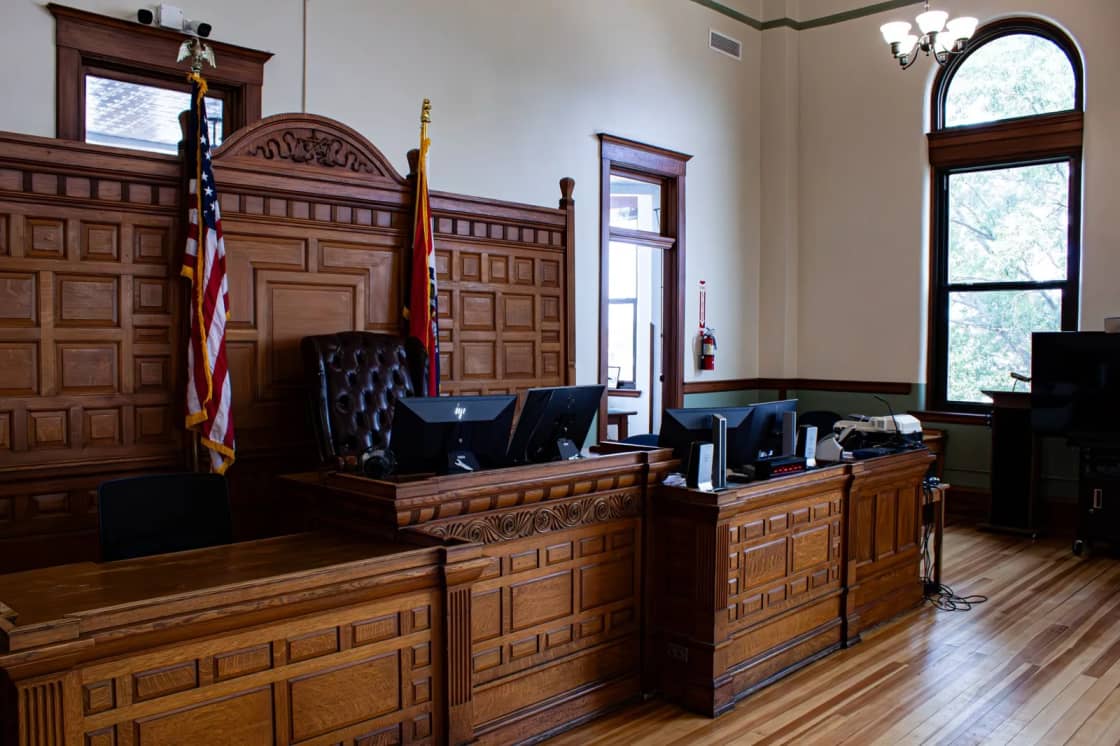
The Fourth District Court is the district court serving Utah County, and it handles divorce, custody, parentage, separate maintenance, annulment and the modifications that follow. It operates from more than one location within the county.
Justice courts do not do family law. Provo City Justice Court, the Utah County Justice Court and the various city justice courts handle infractions, Class B and Class C misdemeanors, traffic matters and small claims. If a piece of family law paperwork names a justice court, something has been misfiled. Our Utah County courts guide sets out the full split.
Juvenile court is a third track. It handles abuse, neglect, dependency and delinquency matters. A custody dispute between two parents in a divorce is not a juvenile court case, though a family can find itself in both systems simultaneously in a small number of situations.
Commissioners, and the person you will probably see first
Family law in Utah's district courts involves a role that surprises people who expect to see a judge: the domestic relations commissioner.
Commissioners hear many of the interim matters in family cases and make recommendations. A judge retains authority over the case, and a commissioner's recommendation can be objected to. But in day-to-day practice, a substantial amount of what happens between filing and final decree happens in front of a commissioner rather than the judge whose name is on the case.
You will see the role reflected on the court forms themselves, which typically have a line for the judge and a separate line for the commissioner. If you are filling in a form and wondering why there are two, that is why.
The classes, and the deadline people miss
If there are minor children, both parents must complete two separate courses from a court-approved provider before a final order can be entered.
The Divorce Orientation course covers alternatives to divorce, the consequences of proceeding, and available resources. The Divorce Education course addresses the effects on children and practical co-parenting. Both parents take both. They are not taken together as a couple.
The timing is the part that trips people. The petitioner is expected to complete orientation within sixty days of filing. The respondent is expected to complete it within thirty days of being served. The courts direct people to a state university's program for the online versions, and in-person options exist too.
Two practical notes. Completion certificates go to the court, and a final order will not issue until both parents' certificates are in or the requirement has been waived. And the classes carry fees, which are among the costs a fee waiver can cover.
Unmarried parents in a custody or parent-time case may also be required to take these courses. It is not exclusively a divorce requirement.
Mediation is mandatory in the ordinary case
If the respondent files an answer and issues remain contested, Utah's mandatory domestic mediation program requires at least one good-faith mediation session before the case can proceed to trial.
Mediation is not a hearing. There is no ruling. A neutral mediator moves between the parties trying to find terms both can accept, and a large share of cases resolve there rather than in a courtroom.
Either party can ask to be excused for good cause. Where there has been domestic violence in the relationship, that is the clearest recognized basis, and the courts publish a motion for the purpose. Nobody should read "mandatory" as meaning a survivor must sit in a room and negotiate with an abuser.
Scheduling is the practical constraint. Aligning two parties, any attorneys, and a qualified mediator commonly takes weeks rather than days, and that scheduling reality is a meaningful part of why cases with children run past ninety days. Book it early; the calendar, not the law, is what will hold you up.
Service, and the clock that starts when the other person is handed paper
Filing starts one clock. Service starts another.
After filing, the petition must be served on the other party so that they have formal notice of what is being asked. Service can be carried out by a sheriff's office, a constable, or a person over eighteen who is not a party.
Once served, a respondent has twenty-one days to respond if served inside Utah, and thirty days if served outside the state. Missing that window has consequences, and a respondent who intends to contest anything should treat the date of service as the most important date on the calendar.
There is also an outer limit on the petitioner's side: a petition must be served within a set period after filing or the case risks dismissal. Filing and then leaving the paperwork in a drawer is not a strategy.
Temporary orders exist for the gap in the middle
Between filing and a final decree, life continues. Rent is due, children need a schedule, and somebody is paying for things.
A party can ask the court for temporary orders governing custody, parent-time, child support, use of the marital home and similar matters while the case is pending. These are useful and they are the mechanism that stops the interim period from being a free-for-all.
One procedural point worth knowing in advance: the court will generally not enter temporary orders until the divorce orientation class has been taken and a hearing has been held. That is another reason the class is a first-week task rather than a last-month one.
What the forms assume you already know
Utah's Online Court Assistance Program will generate a full set of divorce paperwork for a self-represented person, and it works. It was designed with uncontested cases in mind.
What it cannot do is tell you what you have not thought of. A retirement account divided in a decree usually needs a separate qualified domestic relations order to move, and a decree that awards half a pension without one can leave that share unreachable years later. A house awarded to one party generally needs a quit claim deed signed and a legal description in the decree if the order is going to function at the county recorder's office. Debts follow rules that are not obvious.
None of that is a reason to avoid filing without a lawyer. It is a reason to get an hour of advice before signing, which in Utah County is available free to people who qualify.
What the first two weeks look like
Stripped of the legal vocabulary, the opening sequence of a Utah County divorce is fairly mechanical.
You confirm you meet the three-month county residency requirement. You decide on a ground — irreconcilable differences is the ordinary one, and Utah Code 81-4-405 lists the alternatives, most of which are rarely used. You prepare the petition, either through the courts' online assistance program or with help. You file it with the Fourth District Court and pay the filing fee, or file a fee waiver request alongside it.
Then, in parallel rather than in sequence: you arrange service on the other party, and you book the divorce orientation class if there are children. Those two are the tasks most often left until later, and they are the two that most often delay everything downstream.
The thirty-day clock starts at filing. It runs while you do all of the above. For an uncontested case with no children, thirty days can be close to the real timeline. For anything else, the clock will expire long before the case is ready, which is exactly why the waiting period is rarely the binding constraint.
Getting a decree changed later
A decree is not permanent in every respect. It can be modified, but only on a showing that there has been a substantial and material change in circumstances since it was entered — a large income change, a relocation out of state, and similar shifts.
The court first decides whether that threshold is met, and only then considers what the order should become. Where children are involved, the standard governing the second question is the best interest of the child.
Appeals are a different route with a hard deadline: an appeal from a final decree must be filed within thirty days of entry. That is short, it is not flexible, and it is a decision to make quickly rather than think about over a season.
Where to get help in Utah County
Free advice is available here, and more of it than most people expect. The next page in this series covers it in detail: free and low-cost legal help in Utah County, including the hotline that puts you straight through to an attorney, the weekly clinics, and the income thresholds that apply.
Two things to hold on to from this page. The waiting period is thirty days, from 81-4-402. And when a website and a statute disagree, check the date on the website.
This page explains public court procedure and is not legal advice. Court staff cannot give legal advice either — that limitation is real and it is why the free clinics exist.
The Case Is Decided on Paper. The Hearing Is Where the Paper Gets Tested.
The single most common misunderstanding about a domestic case is temporal. People picture the hearing as the event — the day the case is decided, the day they finally get to explain — and treat everything before it as preparation for that explanation. In practice the ratio is inverted. The documents in the file do most of the deciding, and the hearing is a short, structured occasion for testing them.
Consider what a contested hearing on temporary orders consists of. The commissioner has read the filings. Both sides have already stated their positions in writing and attached whatever they wanted the court to see. What remains is a compressed conversation in which each side gets a few minutes to explain why their version of the paperwork should be believed. Nobody is going to sit through a chronology of the marriage. If a fact matters, it needs to be in a document with a date on it before anyone walks into the room.
This has three consequences that are worth acting on immediately.
Write for a reader who has ten minutes and forty other cases. The instinct in a document you have written about your own life is to include everything, on the theory that the whole picture is the fair picture. The effect is the opposite: the important facts get diluted by the ones that are merely painful. A declaration that makes three specific, dated, checkable assertions is worth more than one that makes thirty impressionistic ones.
Keep contemporaneous records, starting now. A note made the same week is evidence. The same account written six months later from memory is testimony about your memory, and it will be treated that way. Calendars, receipts, messages, and a plain dated log cost nothing to maintain and cannot be manufactured afterwards.
Assume everything you send will be read by the judge. Messages written to the other parent get attached to filings. This is not a warning about being careful so much as a description of what the record is: in a case about how two people communicate about a child, the communication is the evidence.
What This Court Cannot Do for You
A district court in a domestic case has broad authority over a narrow set of questions, and a lot of frustration comes from bringing it the wrong problem.
It can decide custody, parent-time, support, property and debt, and it can enforce its own orders. It cannot make the other parent a different person, and it will not referee the ordinary friction of two households. It does not prosecute crimes; that sits with a prosecutor, on a separate track, in a separate case that runs on its own timetable regardless of what happens in yours. It does not administer the day-to-day collection of support once ordered, which is a distinct administrative function. And it has no authority over immigration status, employment disputes, or what a school or a clinic chooses to do — even where a family court order is the reason the question arose.
The practical version: before you file a motion, ask what order you are asking a judge to sign and what would happen if the other side simply obeyed it. If you cannot state the order in a sentence, the problem is real but the forum is probably wrong, and the time is better spent finding the body that does have authority over it. Our guide to legal help in Utah County is the right next stop for working out which that is.
Related Guides
- Free and Low-Cost Legal Help in Utah County — hotline, clinics, and who qualifies
- The Utah County Courts, Explained — which court has your case
- Jury Duty in Utah County — the summons, the pay, and employer rules
- Provo ZIP Codes, Explained: Why There Are Six and Only Three Are Places
- Recycling & Garbage in Provo: The Actual Rules (2026)
- What Provo Can Actually Cite You For: Weeds, Junk Vehicles and the Nuisance Code
- Voting in Utah County: The Postmark Rule Is Gone, and That Is the Change That Bites
- The Fault Under Utah Valley: What the Forecast Actually Says, and What It Leaves Out
- Provo's Noise Ordinance: What 55 Decibels Actually Sounds Like
- The Osmonds and Utah Valley: How a Family From Ogden Built a Hollywood in Orem
- Foster Care and Adoption in Utah County
- Legal name changes in utah county
- Wills and probate in utah
Frequently Asked Questions
How long is Utah's divorce waiting period?
Then why do people keep saying 90 days?
Which court handles divorce and custody in Utah County?
Do we have to take classes?
Is mediation required?
Can I file without a lawyer?
How much does it cost to file?
Are divorce records public in Utah?
Sources
The facts in this guide were checked against these sources. Hours, fees and rules change, so confirm anything time-sensitive with the source before you go. How we make Provo.com.
- Utah Code 81-4-402 Petition for divorce, Utah Legislature. Checked October 12, 2026.
- Timpanogos Legal Center. Checked October 12, 2026.