Walk to the corner of Center Street and 100 West in downtown Provo and you are standing at the intersection of two Provo economies. Under your feet is where the interurban railroad depot used to be — the place people arrived when the valley ran on agriculture and rail. Above you is a ten-story office tower belonging to a company that started in an apartment with five thousand dollars and sold face cream by asking people to tell their friends.
Nu Skin is one of the most consequential businesses ever founded in this city and one of the least examined. Here is the actual story.
1984, and a very specific problem
The founding group — usually given as Blake Roney, Sandie Tillotson, Steven J. Lund and Nedra Roney — started the company in Provo in 1984.
The product premise was captured in a phrase they used from the beginning: "all of the good, none of the bad." The pitch was personal care products built around beneficial ingredients and without the fillers the founders regarded as standard industry practice.
The first shipments arrived at Nedra Roney's apartment, because there was nowhere else for them to go.
That is the whole starting position: a formulation philosophy, five thousand dollars, a contract manufacturer in another state, and an apartment.
The decision that determined everything else
The problem with launching a personal care brand on five thousand dollars is not manufacturing. It is that nobody knows the product exists, and the conventional solution — advertising, retail placement, shelf space — costs orders of magnitude more than the company had.
So Nu Skin chose the other solution: network marketing. Independent, self-employed distributors would sell products directly to people they knew and recruit others to do the same, earning on their own sales and on the sales of those they brought in.
It is worth being clear about why this is an elegant answer to the specific problem. It converts marketing from a fixed cost paid in advance into a variable cost paid out of revenue that has already happened. A company with no capital can grow at whatever rate its distributor network grows, and pays nothing for reach it does not get.
It is equally worth being clear about what it commits you to. A business whose growth comes from recruiting sellers has an interest in the recruiting pitch being attractive, and the recruiting pitch is fundamentally a claim about how much money a new distributor might make. Every significant regulatory problem the industry has had, including Nu Skin's, traces back to that sentence.
Provo as headquarters, and why it was not an accident
The company could have relocated. It did not, and the reasons are the same ones that show up across Utah Valley's business history.
BYU supplied the founding network — Steven J. Lund was a BYU law graduate practicing law before helping start the company — and it supplied something more specific to this model. A university whose graduates disproportionately have lived abroad, learned a second language, and spent two years doing daily persuasive conversation with strangers is an unusually good talent pool for a company that intends to expand into international markets by building networks of individual sellers.
That is not a throwaway observation. Nu Skin's expansion pattern ran heavily through Asia — Taiwan in 1992, Japan in 1993, South Korea in 1996 — and Japan in particular became enormously successful. Building that requires people who can operate in-country. Provo had them.
The same dynamic shows up in Silicon Slopes and in the valley's home-services and sales-heavy industries generally. Language capability plus comfort with door-to-door persuasion is a genuine regional resource, and direct selling was the first industry to fully exploit it.
The tower, and what was underneath it
For its first several years the company worked out of a series of Provo offices before it had a permanent home.
The permanent home was the Nu Skin Tower on Center Street. It was built for what the company had become: computing to run an international distributor network, plus a visitors' center and theater, because a direct-selling company's headquarters is also a destination for the distributors themselves.
The site has a second life worth knowing. Provo's interurban railroad depot stood on the south side of Center Street, on the ground the Nu Skin building now occupies. The Orem Line brought passengers into the middle of Provo on that block for decades. Our history of the Orem Line interurban railroad covers what that system was and why almost nothing of it survives.
The plaza attached to the building has become a genuine piece of public downtown Provo. Nu Skin Plaza downtown is where the Rooftop Concert Series holds its shows — a free summer music series in the courtyard of a multilevel marketing headquarters, which is about as Provo as an arrangement can get.
The regulatory history, stated plainly
This is the part most local coverage skips, and skipping it is not a favor to anyone.
Nu Skin's growth in the late 1980s and early 1990s drew scrutiny from state regulators and then from the Federal Trade Commission. In 1991 and 1992 regulators in eight states investigated the company; the company reported that all of those investigations were concluded satisfactorily.
In January 1994 the FTC announced a proposed consent order under which Nu Skin and several individual respondents would pay a total of about $1.2 million, about $1 million of it from Nu Skin, without admitting wrongdoing. The allegations were that the company had made false and unsubstantiated claims about three of its products, and that it had made misleading earnings claims to prospective distributors. In 1997 Nu Skin paid a $1.5 million civil penalty to settle FTC charges that supplement claims violated the 1994 order.
The regulatory framework the industry operates under today — mandatory income disclosure statements, constraints on earnings representations, substantiation requirements for product claims — was built in significant part out of cases like these. That framework is why a prospective distributor now receives a document showing the actual distribution of distributor earnings, and why that document generally makes for sobering reading.
How the compensation model works
Most people have a vague sense of what multilevel marketing is and no clear picture of the mechanics, which makes both the enthusiasm and the criticism harder to evaluate. The structure is not complicated.
A distributor buys product at a discount from the retail price and earns the spread on whatever they sell. That part is simply retail.
The second layer is where the model gets its name. A distributor who recruits others earns a commission on the purchasing volume generated by those recruits, and by the people they recruit, down several levels. The recruits form a "downline," and a distributor's income becomes a function of how large and how active that downline is rather than of how much they personally sell.
Advancement through the company's rank structure typically requires hitting volume thresholds — some personal, some from the downline — and maintaining them period over period. This is the detail that does the most work in practice, because maintenance is where the pressure lives. A rank achieved in one month is not permanent, and a distributor whose downline goes quiet loses the income and the rank together.
Two consequences follow directly from the arithmetic, and they are not opinions.
First, earnings concentrate heavily at the top of the structure. A network in which each participant's income depends on the volume beneath them will, by construction, pay most of its commission to the small number of people with the largest networks. This is why income disclosure statements exist and why they consistently show that a large majority of participants earn very little.
Second, the model has a natural saturation point in any given social network. Recruiting is easiest early, when the people around you have not been approached, and gets progressively harder as a market fills in. That is precisely why international expansion is not a growth option for a direct-selling company but a structural necessity.
The Asia bet, and what it concentrated
Which brings us to the most important strategic fact about Nu Skin, and the one least understood locally: this is a Provo company whose business has for decades been substantially an Asian one.
The expansion sequence — Taiwan in 1992, Japan in 1993, South Korea in 1996 — was not opportunistic. Japan in particular became a very large market, and mainland China later became large enough that the company reports it as its own segment. The company's reporting structure today separates Mainland China, Japan, South Korea, Hong Kong and Taiwan, and Southeast Asia and the Pacific as distinct segments alongside the Americas and EMEA.
The upside of that concentration was extraordinary growth in markets where direct selling was culturally well received and where the company arrived early.
The downside is the ordinary downside of concentration. A company whose revenue leans heavily on a handful of Asian markets is exposed to those markets' currency movements, their regulatory regimes and their political weather in a way a diversified consumer-goods company is not. Direct selling operates under markedly different rules from country to country — China in particular has regulated the model tightly and at times restrictively — and a regulatory shift in one large market can move results in a way that has nothing to do with anything happening in Provo.
For a valley that likes to describe its companies as global, Nu Skin is the clearest case of what global costs.
The founders, and where they went
The founding group stayed unusually intact for unusually long, which is itself part of the story.
Blake Roney led Nu Skin International as president and chief executive and chaired the public company from its 1996 offering. Steven J. Lund, the BYU law graduate who left legal practice to help start it, served as an executive vice president of Nu Skin International and became president and chief executive of the public company at its 1996 offering; he has since served as executive chairman. Sandie Tillotson remained a long-term figure in the company's leadership and its most prominent female founder. Nedra Roney, whose apartment held the first inventory, was part of the founding group from the outset.
Day-to-day leadership has long since passed to executives who were not there in 1984 — the company is currently led by chief executive Ryan Napierski — but the continuity of the founding generation across the company's first three decades is unusual for a business that grew this fast.
It also explains something about the company's relationship with Provo. Founders who stay put keep headquarters put. Nu Skin had every commercial reason to move to a larger metro at multiple points and never did, and the simplest explanation is that the people making the decision lived here and intended to keep living here.
What the company became
Pharmanex became the company's nutritional supplement brand. The company later introduced the BioPhotonic Scanner, a device that measured carotenoid levels in skin and gave distributors something no competitor had: a number, generated in front of the customer, that appeared to demonstrate the product working. Later still, the ageLOC platform became a central brand.
The company listed publicly on the New York Stock Exchange in November 1996 under the ticker NUS, and today operates across roughly fifty markets.
Current financial and headcount figures are deliberately absent from this page. Sources disagree materially — reported employee counts differ by a factor of three between references, and recent operating results have been volatile enough that any number quoted here would be wrong within a quarter. The company's own filings are the place to get figures you intend to act on.
What a direct-selling headquarters does
There is a persistent local assumption that a company like this is mostly a marketing operation with a warehouse attached. The building downtown suggests otherwise, and so does the work.
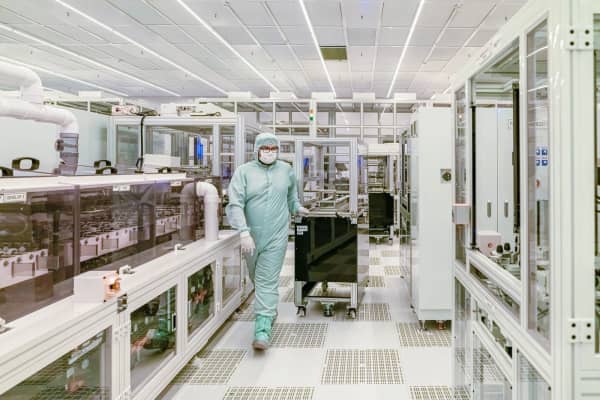
A direct-selling company at this scale is running several distinct businesses simultaneously. There is product development and formulation science, including laboratory work and the clinical substantiation that regulatory settlements made non-negotiable. There is manufacturing and supply chain, which the company reports as its own segment and which has to deliver consumer goods into dozens of regulatory jurisdictions with different ingredient rules and labeling requirements.
There is compliance, which in this industry is a large permanent function rather than a legal department afterthought — someone has to monitor what hundreds of thousands of independent distributors are claiming about products and earnings on social media in a dozen languages, because the company is answerable for those claims even though the people making them are not employees.
And there is technology, which is why the headquarters was built around computing. Tracking multi-level commission structures across millions of transactions and many markets in near-real time is a serious data problem, and it was a much more serious one before cloud infrastructure existed.
That combination is why the headcount is substantial and why the jobs are not what people assume. The distributors are not employees. The people in the tower mostly are.
How to think about it, if you live here
Nu Skin occupies an awkward position in Provo's self-image. It is simultaneously one of the city's most successful exports, a major employer, the sponsor of a beloved free concert series, and a business built on a model that a substantial share of the country regards with suspicion.
All of those are true at once, and the honest position holds them together rather than picking one.
The suspicion is not baseless — the regulatory record is real, and the structural tension between recruiting and selling is not something a company can fully resolve by good intentions. The success is also not an illusion: this is a listed company with decades of international operations, real products, real research spending and a real headquarters full of real jobs in downtown Provo.
What is interesting, and what almost no national coverage engages with, is the causal chain. A company with no capital chose the only distribution model available to it. That model rewarded exactly the skills a local university was already producing at scale. The result compounded for forty years and produced an industry cluster that made this valley the global center of direct selling — an outcome nobody planned and that traces back to a five-thousand-dollar constraint in 1984.
Where to look next
If you want the wider frame, our guide to companies founded in Utah Valley puts Nu Skin alongside WordPerfect, Novell, Omniture, Qualtrics and doTERRA, and the Qualtrics story covers the software side of the same phenomenon from a Provo basement rather than a Provo apartment.
And if you happen to be downtown on a summer evening, the Nu Skin plaza on Center Street is worth standing in for a minute. Two economies, one block, ninety years apart.
Frequently Asked Questions
When and where was Nu Skin founded?
Why did Nu Skin use multilevel marketing instead of stores?
What was the 1994 FTC settlement about?
Is the Nu Skin building the tallest in Provo?
What is on the site where the Nu Skin building stands?
Does Nu Skin still employ people in Provo?
Is Nu Skin a pyramid scheme?
What else did the direct-sales industry build in Utah Valley?
Sources
The facts in this guide were checked against these sources. Hours, fees and rules change, so confirm anything time-sensitive with the source before you go. How we make Provo.com.
- Federal Register Vol. 59 No. 16, Nu Skin International proposed consent agreement, Federal Trade Commission / GPO. Checked October 12, 2026.
- Nu Skin To Pay $1.5 Million Penalty To Resolve FTC Charges over Fat-Loss Claims for Supplements, Federal Trade Commission. Checked October 12, 2026.
- Orem Interurban Electric Railroad, Provo City Library. Checked October 12, 2026.
- Nu Skin Asia Pacific, Inc. Form 10-K for fiscal 1996, U.S. Securities and Exchange Commission (EDGAR). Checked October 12, 2026.
- Nu Skin Enterprises 2026 proxy statement (DEF 14A), U.S. Securities and Exchange Commission (EDGAR). Checked October 12, 2026.
- Nu Skin Enterprises Form 10-K for fiscal 2025, U.S. Securities and Exchange Commission (EDGAR). Checked October 12, 2026.