
More on Orem: every guide we have published there, in one place.
There is a city in Utah Valley named after a railroad executive from the other side of the country who, as far as anyone can tell, never lived here.
That is the short version of the Orem Line. The longer version is better, because for about three decades an electric railroad ran down the middle of nearly every town between Salt Lake City and Payson, and the reason so few people know about it is that when it died it died completely. The rails came up. The wire came down. The right of way was absorbed into streets and back lots. What is left is a name on a city of roughly a hundred thousand people, a handful of plaques, and a shape in the landscape you can see once someone points it out.
The name on the map is the tell
Start with the thing hiding in plain sight.
Orem is Utah's fifth-largest city. Before it was Orem it was Provo Bench, a farming shelf above the river with orchards on it, and at various points the name Sharon was attached to the area as well, borrowed from the Vermont town where Joseph Smith was born and from the biblical plain of the same name.
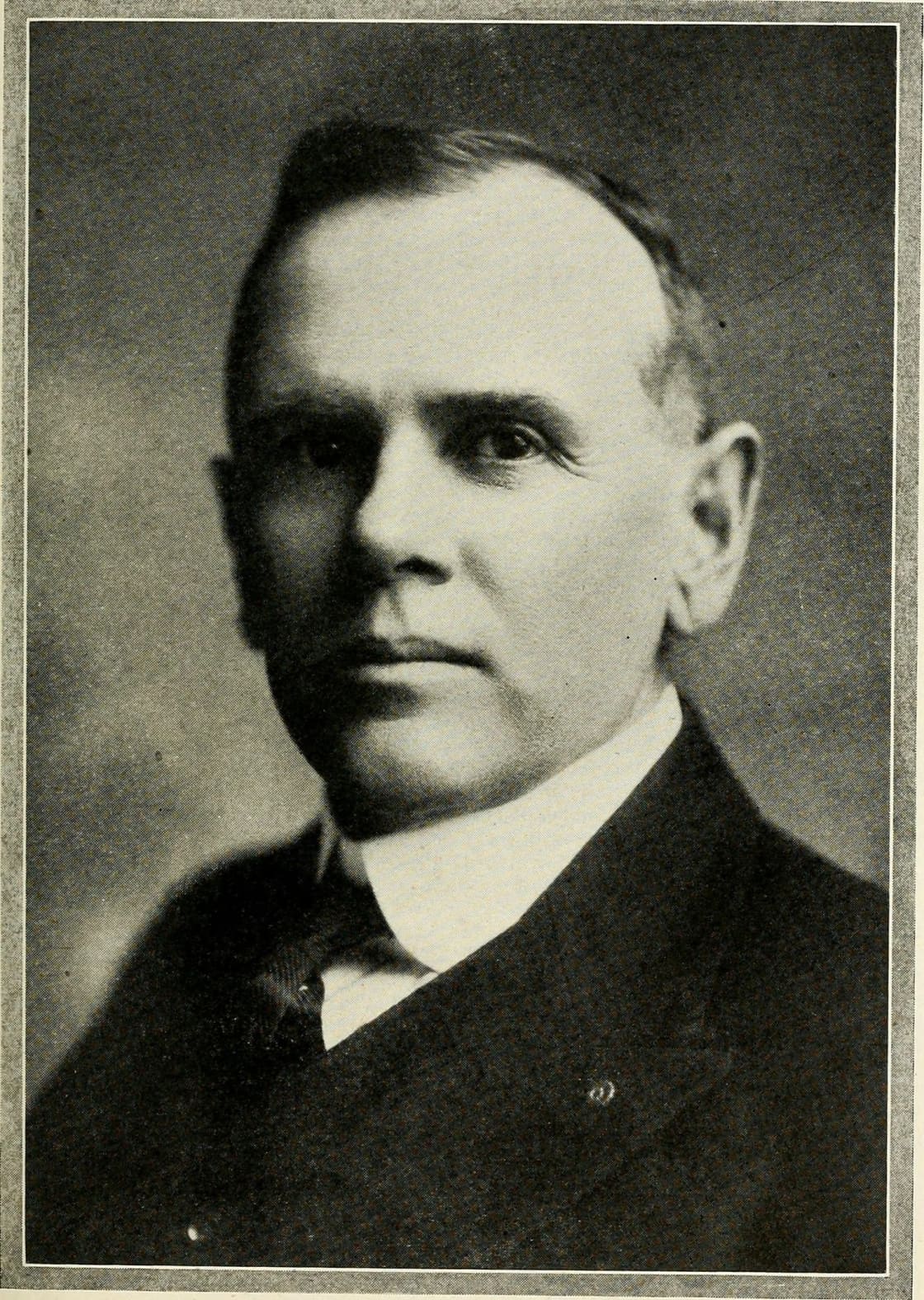
In 1914 the community took the name Orem, after Walter C. Orem, the president of the Salt Lake and Utah Railroad. The city then incorporated under a town charter on May 5, 1919.
What makes this worth telling is that essentially every account of it, including the ones written by local historical societies rather than by outsiders, describes the naming as an act of persuasion rather than of tribute. The bench was full of fruit growers who needed to get produce to market. A railroad was being routed. Naming your town after the man holding the pen is a very direct way of making your case, and it worked: the line came through, and the depot came with it.
That is a more interesting origin story than most American place names get, and it belongs to a piece of infrastructure almost nobody alive has ridden.
What an interurban was
The word has fallen out of use, so it needs unpacking.
An interurban was an electric railway that occupied the space between a city streetcar and a steam railroad. It drew power from an overhead wire, ran cars that looked like heavy streetcars, and connected towns rather than neighborhoods. Crucially, it usually ran on street trackage inside town limits and on private right of way between towns.
That hybrid quality is the whole point. A steam railroad wanted long, straight, gently graded track and therefore tended to run past a town rather than through it, dropping passengers at a depot on the edge of things. An interurban would happily turn onto Main Street, stop four times in a mile, and let a rider off in front of the shop they were going to.
Utah had two of consequence. The Bamberger, running north from Salt Lake City toward Ogden, came first — it opened in the 1890s and was electrified in 1910. The Orem came second, heading south into Utah Valley, and the two shared a downtown Salt Lake terminal. The larger vision at the time, stated openly in the newspapers, was a connected electric network running most of the length of the Wasatch Front.
Building it, fast
The construction timeline is the part that surprises people used to modern infrastructure schedules.
Newspapers began carrying reports of a proposed electric railroad from Salt Lake into Utah Valley in August 1912. Construction started that October, with grading under way in American Fork and Provo. Before the name settled on the Salt Lake and Utah Railroad, the papers tried out several alternatives, including Salt Lake and Utah Valley Railroad and Salt Lake and Payson Railway. The nickname that stuck was simply the Orem.
Then the line came together in stages:
- March 23, 1913 — service reached American Fork.
- 1914 — service reached Provo. Accounts differ slightly on the month, with some placing regular service early in the year and others noting that electric operation to Provo began in July.
- July 1915 — extended to Springville.
- November 1915 — extended to Spanish Fork.
- 1916 — reached Payson, completing the main line. Sources give March and May dates for this final step.
The financing came through a company the Orems incorporated in Portland, Maine, called the Interurban Construction Company. Walter C. Orem was president of the railroad itself.
Worth flagging honestly: the sources disagree about where Walter Orem came from. Some describe him as a Portland, Maine figure, others as a Boston promoter, and at least one popular reference calls him a Californian. What they agree on is the Maine incorporation of the construction company and his role as president and general manager. Where the man was born is a detail this page cannot settle, and a guide that states it confidently is guessing.
The early service was heavier than you would expect
The first trains were not electric. Gasoline motor cars — dark red, seating around thirty-six, divided into a freight compartment and separate smoking and non-smoking passenger compartments — ran the route while the overhead wire went up. The system was eventually electrified at 1,500 volts through overhead catenary, powered by substations along the route.
Then the numbers get striking. Contemporary accounts describe four gas-and-electric trains a day to American Fork in 1913, and roughly eight hundred passengers a day riding between Salt Lake City and Provo the following year. Once the full line opened, service eventually reached twenty-six trains a day.
Twenty-six trains a day down the spine of Utah Valley, on electric power.
The peak did not last. As early as 1925 the line had cut its schedule by a third, and the Depression pushed it into receivership.
The nickname tells you what the ride was like
Passengers called it Leaping Lena.
The name came from the way the cars swayed and swung on the track, and there is something clarifying about it. This was not a smooth, sealed, modern ride. It was a fast, noisy, slightly alarming electric car running down the middle of the road, close enough to the shops that you could see what was in the windows.
The convenience was real, though. Because the Orem ran through town centers rather than around them — Lehi, American Fork, Pleasant Grove, Orem, Provo, Springville, Spanish Fork, Payson — a rider in one Utah Valley town could get to another without a car, at a time when most families did not have one. People used it to commute to work in Salt Lake City, to shop, and to go to concerts and theater. For a farming valley, that was a genuine expansion of the possible.
The freight half, which is the part that explains the naming
Passenger service is the romantic half of the story. Freight is the half that explains why a town would rename itself to get a station.
Utah Valley in the 1910s was an orchard economy. The Provo Bench in particular was covered in fruit trees, and the entire problem of a fruit grower is that the crop is ripe on a schedule the grower does not control and worthless a week later. Getting peaches and cherries to a market in Salt Lake City meant either a long wagon haul or a rail connection, and a wagon haul over unpaved roads was slow enough to cost real money in spoiled fruit.
An interurban with freight compartments and a station in your town changed that arithmetic completely. Growers could load in the morning and reach a Salt Lake market the same day. The early cars were built for exactly this, splitting the interior between freight and passengers rather than choosing one.
That is the practical stake behind the naming decision, and it is why the story is usually told as a transaction rather than a compliment. The bench was not flattering a stranger for the sake of it. It was buying a shipping route with the only currency a farming community had, which was the name on its own post office. Our u-pick orchard guide covers what survives of that orchard belt at the south end of the county today.
The line that was supposed to keep going
The Orem as built was not the Orem as planned.
The intention was to continue roughly twenty-five miles further south to Nephi, in Juab County. Surveying for the extension was completed in 1917. It was never built. Had it gone in, and had the northern connections that were also under discussion materialized, the state would have had a continuous electric railway network running something like two hundred miles from Cache Valley down through the Wasatch Front.
It is a useful thing to know because it reframes what the Orem was. It was not conceived as a Utah Valley local line. It was conceived as one segment of a statewide electric interurban system, built at the exact moment that system stopped being the future.
Provo's depot stood where Nu Skin stands
The single most useful geographic fact on this page is this one: the Provo station was on the south side of Center Street, on the ground now occupied by the Nu Skin building.
Stand at that corner and you are standing where an electric railroad met downtown Provo. The interurban did not deposit people at the edge of the city; it delivered them into the middle of it, which is exactly why the old commercial core of Provo is where it is. Our Provo history guide covers the longer arc of how the city grew, and our University Avenue guide explains the address grid that all of this hangs on.
There is a commemorative plaque in Provo as well.
Why it died
The Orem Line failed for the same reasons interurbans failed nationwide, and the sequence is depressingly consistent.
Cars arrived. After the First World War, automobiles and trucks became common. A family with a car does not need to consult a timetable, and a farmer with a truck does not need to get produce to a depot.
Roads improved. Every dollar of public money spent on paving competed directly with a privately financed railroad that had to earn its own maintenance.
The infrastructure aged. By around 1940 the track, cars and electrical plant were wearing out, and replacing them required capital the company could not justify against falling ridership.
The war postponed the ending rather than preventing it. Wartime fuel and tire rationing gave transit a temporary reprieve everywhere in America. When the war ended and cars returned, the reprieve ended with it.
Service ceased in March 1946, and crews began pulling up the rails. Utah's other big interurban, the Bamberger, lasted a few years longer, ending passenger train service in 1952.
What survives
Not much, and that is the honest answer.
The most durable inheritance is the name of a city. After that:
Alignments. The straight-shot corridors through several Utah Valley downtowns are the interurban's geometry, even where nothing marks it. Property lines and odd angles at the edges of blocks are frequently the fingerprint of an abandoned right of way.
Markers. Provo's plaque near Riverview Park, and a Salt Lake and Utah Railroad historical marker on the old route through West Jordan, are the accessible physical traces.
Preserved equipment and archives. Rail-history collections hold rolling stock, timetables and photographs. Ira Swett's Interurbans of Utah is the standard secondary work, and the Payson Historical Society and Provo City Library have both published local accounts drawing on it.
Depot buildings. Some interurban station structures around the valley survived into later use. Establishing which specific buildings in which towns were Orem Line depots requires local records rather than a general history, so this guide names only the Provo location, which is documented.
If you want a train experience with the same period feel, the closest available is the Heber Valley Railroad over the mountain, which is steam rather than electric but runs on a line of comparable vintage.
The FrontRunner comparison, done carefully
Local writers reach for this constantly, and the parallel is genuine but easy to overstate.
What is the same: the corridor, roughly. Passenger rail again links Utah County to Salt Lake County, and again the argument for it is that the valley's population cannot all drive to the same places at the same time.
What is different, and it matters: the Orem was a streetcar that went between cities. It ran down Main Street. It stopped constantly. It was slow and it was convenient, and you could walk from a stop to wherever you were going.
FrontRunner is a commuter railroad. It runs on its own corridor with widely spaced stations, which makes it far faster between cities and leaves the last mile to something else. In Provo that something else is largely the UVX bus line, which — running frequently down University Parkway and University Avenue, stopping often, connecting the two campuses and downtown — is arguably a closer functional descendant of the Orem than the train is.
There is one more difference worth naming. The Orem Line was privately financed and had to pay for itself out of fares and freight. When it stopped doing that, it ended. Modern transit is publicly funded precisely because the interurban era proved that a useful passenger railroad and a profitable one are not the same thing.
Reading the valley with this in your head
Once you know the Orem existed, some things about Utah Valley stop looking accidental.
The reason so many of these towns have a dense commercial block on a straight main street, set well back from the freeway, is that the freeway is not what those blocks were built to face. They were built to face a railroad that came down the middle of the street. Pleasant Grove, American Fork, Springville and Spanish Fork all have this pattern, and all of them are on the old route.
The reason Provo's downtown sits where it does, rather than out by the interstate, is partly that the interurban put a station on Center Street.
And the reason the largest city in the valley that is not Provo carries the surname of a railroad man is that in 1914 a bench full of fruit farmers made a very shrewd guess about how to get a depot.
The short version
The Salt Lake and Utah Railroad — the Orem, Leaping Lena — was an electric interurban that ran from Salt Lake City to Payson between the 1910s and 1946, threading the main street of nearly every town in Utah Valley. At its peak it ran some two dozen trains a day. It was financed through a Maine construction company by Walter C. Orem, and the community then called Provo Bench renamed itself after him in 1914 in the hope of getting a station, which it got. The line was killed by the private car, and its rails were lifted after service ended. What is left is a name on a city of a hundred thousand people, a plaque near Riverview Park, and a set of dead-straight downtown streets that make more sense once you know what used to run down the middle of them.
Related Guides
- A Short History of Provo
- Living in Orem, Utah
- FrontRunner from Provo
- The UVX Is the Best Thing About Getting Around Provo
- The Heber Creeper: The Heber Valley Railroad
- Geneva Steel: The Mill That Built Utah Valley
- University Avenue, Provo
- Nu Skin: The Provo Apartment That Built the Building Downtown Is Named After
- A Short History of Orem: From the Provo Bench to Family City USA
Frequently Asked Questions
What was the Orem Line?
Is Orem, Utah named after the railroad?
When did the Orem Line stop running?
Where did the Orem Line stop in Provo?
How long was the Orem Line and how long did the trip take?
Was the Orem Line the same thing as the Bamberger?
Can you still see any of the Orem Line today?
Is FrontRunner the modern version of the Orem Line?
Sources
The facts in this guide were checked against these sources. Hours, fees and rules change, so confirm anything time-sensitive with the source before you go. How we make Provo.com.
- Orem Interurban Electric Railroad, Provo City Library. Checked October 12, 2026.
- Utah's Interurbans: Predecessors to Light Rail, Utah Division of State History (History to Go). Checked October 12, 2026.
- Railroads in Utah, Utah Division of State History (History to Go). Checked October 12, 2026.