
Utah is one of a small number of states with a permissive law about selling food made in a home kitchen. It is also routinely described in terms considerably broader than the statute supports.
The law is the Home Consumption and Homemade Food Act, at Title 4, Chapter 5a of the Utah Code. What it does is real and unusual. What it does not do catches people out, and the failures tend to arrive at the moment a small operation starts succeeding.
A note on currency before anything else: the Legislature amended this chapter again in its 2026 General Session, and the version of Section 4-5a-104 summarized here took effect May 6, 2026. Anyone relying on this commercially should read the current chapter directly at le.utah.gov rather than trusting any summary, including this one.
What the exemption says
Section 4-5a-104 is the operative provision, and it is worth reading in the shape the statute uses rather than in paraphrase.
A producer is exempt from state, county, or city licensing, permitting, certification, inspection, packaging, and labeling requirements — except as described in the section — related to the preparation, serving, use, consumption or storage of food and food products, if:
- the producer complies with the requirements of the chapter; and
- the homemade food or homemade food product is:
- produced and sold within the state;
- sold directly to an informed final consumer;
- for personal or home consumption; and
- not excluded under Subsection 4-5a-105(1).
Two structural things matter here.
First, that is an and, not an or. Every condition has to hold at the same time. This is not a menu.
Second, the exemption is scoped to a specific list of requirements related to food, and the same section carves obligations back in:
- the producer must comply with business license requirements under Section 10-1-203;
- the food must carry a label with the producer's name and address, a statement that it is not for resale and was processed and prepared without state or local inspection, and a statement on whether it contains, or was prepared where the kitchen also handles, common allergens such as milk, soy, wheat, eggs, peanuts or tree nuts, fish or shellfish (sales by producers who are all minors are excepted from the label rule);
- the producer must tell the buyer that the food is not certified, licensed, regulated or inspected by the state, county or city; and
- exempt homemade food may not be sold to, or used by, a restaurant or commercial establishment, except raw, unprocessed fruits and vegetables.
It is not a general statement that a home producer has no legal obligations of any kind.
The condition that catches people
Of the four conditions, the one that ends exemptions is sold directly to an informed final consumer.
"Directly" is doing enormous work in that phrase. The chain runs from the producer to the person who is going to eat the food. Insert anybody in between — a shop, a cafe, a distributor, a reseller of any kind — and the sale is no longer direct to a final consumer.
This is why the exemption is most often lost through success rather than through carelessness. Consider the ordinary arc of a small food operation here. Someone bakes at home and sells at a market on Saturdays. That is squarely inside the exemption: they made it, they handed it to the person eating it, in Utah, for home consumption.
Then a local cafe asks to carry the product. Or a shop offers shelf space. Or a subscription box wants to include it.
Nothing about the kitchen has changed. Nothing about the recipe has changed. But the transaction now has an intermediary, and the direct-to-final-consumer condition no longer describes what is happening. The correct moment to re-read the chapter is the moment somebody offers to stock you, not months later.
The other condition with a hard edge is produced and sold within the state. Interstate shipping is not an extension of this exemption. A Utah customer who ordered online is one question; a package crossing a state line is a different regulatory problem entirely.
And "informed" is not decorative. The statute contemplates a consumer who knows what they are buying. Section 4-5a-102 carries the chapter's definitions, and anyone operating under the exemption should read them rather than working from an intuition about what the words ordinarily mean.
What sits outside the exemption altogether
Section 4-5a-105(1) removes certain categories from the chapter's reach regardless of how the sale is structured.
Raw dairy and raw dairy products are excluded.
Meat products are excluded, with two carve-outs:
- Poultry and poultry products, where the producer slaughters no more than 1,000 birds per year in accordance with the United States Department of Agriculture 1,000 bird exemption, and follows the USDA Food Safety and Inspection Service document titled "Guidance for Determining Whether A Poultry Slaughter or Processing Operation is Exempt from Inspection Requirements of the Poultry Products Inspection Act."
- Domesticated rabbit meat, pending approval from the USDA that the state's role in meat inspection is preserved.
The poultry carve-out is narrower than it first reads. It is not simply a headcount; it incorporates a federal exemption and a specific piece of federal guidance by reference. A producer relying on it is relying on federal criteria as much as on the Utah chapter, and should read the referenced guidance rather than the number alone.
The authority the chapter deliberately preserves
A common misreading treats the exemption as putting a home producer outside official attention entirely. Section 4-5a-105(2) says otherwise, in four specific ways.
Nothing in the chapter:
- means the department relinquishes its authority to administer the state's program at a standard at least equal to the standards imposed under the Federal Meat and Poultry Products Inspection Act;
- is construed to impede the Department of Health in an investigation of foodborne illness;
- prohibits a state agency from providing assistance, consulting, or inspecting when requested by a producer; or
- affects the authority of the Department of Health or the Department of Agriculture and Food to certify, license, regulate or inspect food that is not exempt under the chapter.
The second of those is the one to sit with. If people get sick, the exemption does not stand between a health investigation and the producer. That is the correct design, and it is also a reminder that the exemption removes prior permission requirements rather than removing consequences.
The third is useful and underused: a producer may request inspection or consultation. For someone planning to grow beyond the exemption eventually, an early conversation with the relevant agency is available and voluntary.
Markets, and the separate question they raise
Section 4-5a-103 addresses the regulation of a direct-to-sale farmers market, which is where a large share of exempt selling happens.
Two things follow for a producer.
A market is a venue with its own rules, and those rules are not the statute. Markets set vendor requirements, fees, insurance expectations and product standards as a condition of participation, and they are entitled to require more than the law does. Being exempt under Chapter 5a does not entitle anyone to a booth.
And the market is still a direct sale. Selling at a market is the archetypal exempt transaction, because the producer hands the food to the person who will eat it.
What the exemption does not touch
This is where a lot of home operations get into avoidable trouble, because the exemption is read as broader than its own text.
Section 4-5a-104 exempts a producer from a listed set of food requirements, and it expressly keeps the business license requirement in place.
Business registration and licensing sit with the city and the county and are a separate regime — one this site covers separately for Provo. Sales tax obligations sit with the State Tax Commission and turn on whether taxable sales are being made, not on whether the food is inspected. Zoning and home-occupation rules govern what commercial activity a residential property may host, and those are local.
None of that is contradicted by the food exemption. Confirm each with the body that administers it.
Practical judgment the statute does not supply
The chapter sets the outer boundary of what is permitted. It does not describe what is wise, and the gap between those two is where a producer's reputation is built or lost.
An exemption from inspection is not an argument that inspection-grade practice is unnecessary. It transfers the responsibility rather than removing it, and the producers who do well under this chapter tend to behave as though someone were watching.
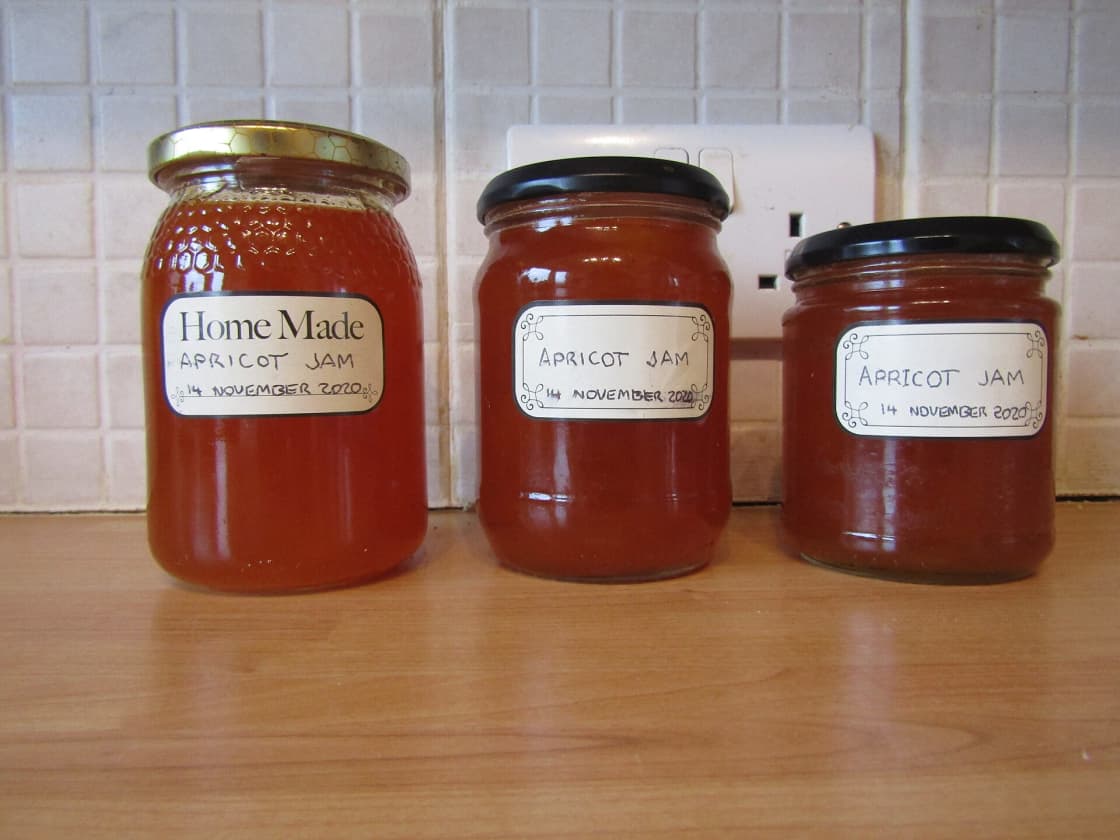
Label beyond the minimum. The statute requires your name and address, the not-for-resale and no-inspection disclosure, and an allergen statement. A plain ingredient list and the date made cost little more and answer most of what a buyer needs, because a customer with a nut or dairy allergy cannot ask a jar what is in it.
Keep a production record. What you made, when, in what quantity, and what went where. If a foodborne-illness investigation ever touches your product, the chapter expressly preserves the health department's ability to investigate, and a producer who can show exactly which batch went where is in a completely different position from one working off memory.
Think about the failure modes of your specific product. Shelf-stable baked goods, high-acid preserves and confection are forgiving. Anything requiring refrigeration, anything low-acid and canned, and anything containing dairy or eggs carries genuine risk that the exemption does not reduce by one percent.
Tell customers how to store it. A shelf-stable product and a refrigerate-on-arrival product look identical on a market table, and the buyer will default to whichever assumption is convenient unless told otherwise.
Carry insurance if the operation is more than incidental. A general liability policy is not required by this chapter. It is also the difference between a bad incident being a bad incident and it being a personal financial catastrophe. Markets frequently require proof of coverage as a condition of a booth, which many producers discover only when applying.
None of this is regulatory compliance. It is the ordinary care that the statute assumes a direct relationship with an informed consumer will produce.
The economics the exemption does not fix
Removing a licensing barrier makes it legal to start. It does not make the arithmetic work, and the arithmetic is where most home food operations quietly fail.
Ingredient cost is the smallest problem. Producers new to selling almost always price at ingredients plus a margin, discover the margin evaporates, and conclude the market will not bear more. Usually the market would; the pricing simply never included the labor.
Count the whole cycle, not the cooking. A batch of preserves is not the twenty minutes at the stove. It is sourcing, prep, cooking, cooling, jarring, labeling, cleaning, and then the market day itself — which is frequently an eight-hour commitment including setup and teardown, plus travel, plus the booth fee. A producer who sells four hours of output across an eight-hour market day is working a substantial unpaid shift.
Packaging is a real line item. Jars, boxes, bags, ribbon and labels add up quickly at small volumes, because you are buying them at small-volume prices.
Spoilage is a cost of the channel. Producing for a market means producing before you know what sells. Unsold perishable stock is a loss, and a new producer typically over-produces for the first several outings while learning demand.
The practical consequence is that the categories which work best under this exemption are the ones with forgiving shelf life and good margin per unit of labor — preserves, baked goods that hold, dry mixes, confection. Highly perishable, labor-dense products can be excellent and are a much harder business.
When you outgrow the exemption
The exemption has a ceiling that is structural rather than numerical, and it is worth understanding the shape of what lies beyond it before you get there.
The three exits are the ones named earlier: selling through an intermediary, selling across a state line, or moving into an excluded category. Any of them takes you out.
What is on the other side is not a cliff so much as a different regime — one involving a permitted or licensed kitchen, inspection, and the full labeling and packaging requirements that apply to regulated food. Producers commonly bridge that gap by renting time in a commercial or shared-use kitchen rather than building one, which converts an enormous capital cost into an hourly one.
Two things make that transition much easier if you do them early.
Keep records from the start, even though nothing requires it. Batch logs, recipes with weights, ingredient sources and sales volumes are the raw material of any later application, and reconstructing them retroactively is miserable.
Use the consultation the chapter preserves. Section 4-5a-105(2) expressly provides that nothing in the chapter prohibits a state agency from providing assistance, consulting or inspecting when requested by a producer. That is an open door, and a producer who has already spoken to the relevant agency before they need permission is in a far better position than one arriving cold with a growth deadline.
The producers who handle this well tend to be the ones who decided early which they wanted: a sustainable direct operation that stays comfortably inside the exemption, or a business that will eventually leave it. Both are legitimate. Drifting between them without noticing is the version that causes trouble.
The honest summary
Utah's homemade-food exemption is permissive by national standards, and for the person selling bread, jam, cookies or preserves directly to neighbors and market customers within the state, it removes a real and otherwise substantial barrier to starting.
Its edges are sharp in exactly three places: the intermediary, the state line, and the excluded categories. An operation that stays direct, stays in-state, and stays away from raw dairy and meat is on solid statutory ground. An operation that drifts across any of those three has left the exemption, usually without noticing, usually at the moment things start going well.
Read the chapter itself before you commit money to a plan. It is short, it is public, and it is the only version of this that is authoritative.
Reading the chapter yourself
Everything above is a summary, and a summary is not authority. The chapter is short enough to read in one sitting and it is the only version that governs.
Two habits are worth adopting. First, read the definitions in Section 4-5a-102 before the operative sections, because the exemption turns on defined terms and the ordinary meanings of "producer", "homemade food" and "informed final consumer" are not necessarily the statutory ones.
Second, check the effective date printed at the top of whatever text you are reading. Utah amends its food statutes periodically, including this chapter in 2026, and a version retrieved a year ago may not be the operative one now. Any commercial decision should rest on a current read from le.utah.gov rather than on a secondary summary, including this page.
Related Guides
- Getting a Business License in Provo — the four registrations and the home-occupation tiers
- Local Makers in Utah Valley — the wider maker economy and how it sells
- Orem Farmers Market — the market surface itself
- Gig Work in Provo — the other route into self-employment here
Frequently Asked Questions
Can I legally sell food I made in my own kitchen in Utah?
What are the four conditions the exemption depends on?
What does 'sold directly to an informed final consumer' mean in practice?
Can I sell homemade food online or ship it?
What food is excluded from the exemption entirely?
Does the exemption mean nobody can inspect me at all?
Do I still need a business license or to handle sales tax?
What is the most common way producers lose the exemption?
Sources
The facts in this guide were checked against these sources. Hours, fees and rules change, so confirm anything time-sensitive with the source before you go. How we make Provo.com.
- Utah Code 4-5a-104 Home producer direct sales -- Exempt from regulation, Utah Legislature. Checked October 12, 2026.
- Utah Code 4-5a-105 Limitations, Utah Legislature. Checked October 12, 2026.
- Utah Code 4-5a-103 Regulation of a direct-to-sale farmers market, Utah Legislature. Checked October 12, 2026.