
Provo has two finals weeks. They do not line up, and almost every avoidable finals disaster in this city traces back to one of two things: not knowing that, or not knowing what time the Testing Center stops handing out tests.
The second one deserves the top of the page because it is a clock, not a skill. You can be prepared, rested and standing in the right building and still not sit the exam, because the door governs a different time than the closing hour does.
The hour that catches people out
The BYU Testing Center publishes two different times, and students routinely memorize the wrong one.
There is a closing time, which is when the building shuts. And there is a last test handed out time, which is when the staff stop issuing exams. The second is earlier. It has to be — an exam issued at closing time would have nowhere to go.
This is not a hidden rule. It is published. But it lives in a table with several columns, and the eye goes to the largest number in the row. A student who reads "10 p.m." and shows up at 9:15 with a two-hour exam has read a real number off a real page and still lost the attempt.
Finals makes it worse, because during finals the schedule changes. The Testing Center runs a dedicated finals timetable published separately from its ordinary testing hours. The hours you learned in September are not the hours that apply in December. The site keeps them on different pages for exactly that reason, and the fact that they are separate pages is itself the warning.
The habit that solves this permanently: check the finals hours page in the week before finals, write the last-test-handed-out time on something you will see, and treat the closing time as trivia.
What the Testing Center is
If you did not grow up in Utah, this building will not make sense at first, because most American universities have nothing like it.
At most schools, an exam happens in your classroom during your class period. At BYU, a large share of exams instead happen in a central building, on your own schedule, inside a window the professor sets. You walk in, show your ID, receive your exam, sit down among hundreds of people taking hundreds of different tests, and hand it back on the way out.
The building is the Heber J. Grant Building, and its history explains its shape. It opened in 1925 as BYU's library — the first building completed under president Franklin S. Harris. When the Harold B. Lee Library took over that job, the Grant Building spent years housing life-science collections. In 1982 it became the Testing Center.
That is why the main testing room feels like a reading room rather than a classroom: it was a reading room. Rows of desks fill a space that was designed for silence and daylight, and university figures have put the building's simultaneous seating in the high hundreds.
Why the centralized model changes how you should study
The Testing Center is a genuine advantage that students routinely convert into a liability.
The advantage is control. An exam with a multi-day window means you choose the hour. You can take your hardest final at nine in the morning on the first available day, when you are rested, rather than at two in the afternoon on a Thursday because that is when the class meets.
The liability is that a deadline you control is a deadline you can push. Every window has a last day, and the last day of a window is reliably the busiest day of that window. Everyone's procrastination lands on the same afternoon.
So the rule is not complicated: go early in the window, and early in the day. It costs nothing. It is the single highest-return decision of the entire week, and it is available to everyone.
The line, and the one tool people forget
Because the Testing Center is centralized, queues are a real phenomenon rather than a figure of speech. During peak finals hours the line has historically extended well outside the doors.
The Testing Center's own site carries a line-condition indicator visible to signed-in students. It is the closest thing available to a live queue readout, and it is under-used, largely because students only think about it once they are already in the line.
Check it before you leave your apartment, not while you are standing in it. Combine that with going early in the window and the queue mostly stops being a factor in your week.
The flexibility has a hard edge: you cannot take a final early
This is the part that surprises students who have spent a semester enjoying the Testing Center's windows, and it is worth internalizing before you buy a plane ticket.
Midterm windows are flexible. Final exams are not. BYU's own guidance for students testing through its Salt Lake Center states the position without hedging: finals may not be taken early, because university policy requires final exams to be taken on the scheduled final exam days and times.
The distinction is easy to miss because both kinds of exam happen in the same building, in the same way, with the same ID check. Nothing about the experience signals that one is negotiable and the other is not.
The practical consequence is about travel. A flight booked for the middle of finals week is not a problem you can solve by testing out early, and December is the worst possible week to be negotiating a change fee. Buy the ticket after the final-exam schedule is published, not before — and if you already bought it, find out now rather than in December.
What you can carry in, and the calculator surprise
The Testing Center is a controlled environment, which means a short list of things governs whether your exam goes smoothly.
Bring your ID. That is not a formality; it is the entry condition. Pencils have traditionally been available at the center, and students have long treated the free pencils as one of the building's few charms, but arriving dependent on someone else's supply is a poor plan for a graded event.
The one that catches people is calculators. BYU testing guidance has stated that personal graphing calculators have their memory cleared before they can be used on an exam. If your calculator holds programs, formula sheets or notes you built during the semester, assume they will not survive the door. Anything you need to remember has to be in your head or on a permitted sheet — and what counts as permitted is your professor's call, not the center's, so ask in class rather than at the counter.
December finals happen in December
Winter finals in Provo arrive with weather, and the failure is always the same: a schedule that budgeted campus time but not travel time.
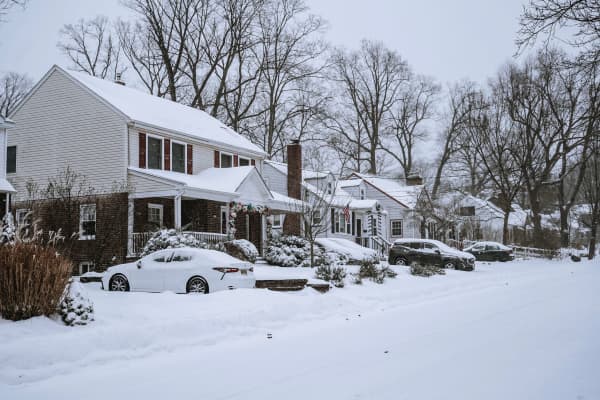
Snow, ice and canyon wind turn a routine drive or walk into something that needs an extra twenty minutes, and the morning of your hardest exam is the wrong moment to discover a windshield you have to scrape. Utah's inversion season can also settle into the valley during exam weeks, and the resulting air quality is a genuine factor for anyone with asthma.
The fix is unglamorous and works: build travel margin into the plan for exam days specifically, keep a scraper in the car from late November, and if you walk or bus to campus, own real boots before you need them.
UVU runs on a different system and a different clock
Utah Valley University does not run a centralized testing building on the BYU model, and for most UVU students the finals experience is the more familiar one — exams in the room where the class met, at a time printed on the final-exam schedule.
That difference matters more than it sounds, because it removes the choice. A UVU student's finals are largely fixed points, which makes the schedule easier to read and harder to optimize. If two exams sit back to back, that is the schedule.
The calendars do not line up either. The two institutions begin their fall terms roughly two weeks apart, with UVU starting in mid-to-late August and BYU after Labor Day. That offset survives the whole semester and lands squarely on finals.
In a shared apartment this is the source of a specific, predictable and entirely avoidable conflict: one roommate is taking exams while another has finished, packed, invited people over and started sleeping on a normal schedule. Put both finals windows on one shared calendar in the first week of the semester, before anyone has a reason to argue about it.
Reading days are not study days by accident
Both calendars build in gaps before or between exam periods, and Provo students tend to treat them as free time.
They are not free time; they are the only uncommitted hours in the sequence. A reading day used properly is worth more than two ordinary evenings, because nothing else is competing for it — no classes, no work shifts scheduled around classes, and no group project meetings.
The practical use is not extra reading. It is the pass you will not otherwise have time for: the single sweep back through the material you flagged as shaky, done once, without interruption.
Where to study when every seat is taken
Finals is the one week when Provo's study capacity runs out, and the failure mode is looking for a seat rather than having planned one.
Three things work. Reserve, if reservation exists — group study rooms that can be booked disappear a week out and are still available to anyone who books a week out. Pick unfashionable buildings, because demand concentrates in a handful of famous rooms while ordinary academic buildings sit half-empty. And have a second and third location decided in advance, so that a full room is a two-minute redirection rather than a forty-minute wander.
Our guide to the best study spots in Provo and Orem covers the specific rooms, the café trade-offs and the hours in more detail than fits here.
The Sunday problem, stated plainly
Provo shuts on Sunday to a degree that surprises nearly every student from outside Utah, and finals weeks contain Sundays.
Campus buildings close. Most cafés close. A large share of restaurants close. Whatever your Sunday study plan is, it needs to be a plan that works at home, with food you already have, because the city will not be supplying either the room or the meal.
The version of this that ruins a week is the student who intends to do their heaviest revision on Sunday afternoon in a library and discovers the policy at the door. Decide on Saturday what Sunday looks like.
Eating during a week when you will not cook
You will not cook during finals. Almost nobody does. The question is only whether you decided that in advance or discovered it at eleven at night.
Shop once, at the start of the week, for food that requires no cooking. That is the entire strategy, and it outperforms every intention to keep eating properly.
Provo's late-night options are thinner than a student from a larger city expects, they cluster near campus and along the main commercial corridors, and drive-through hours frequently outlast dining-room hours. Our guide to eating on a student budget is worth twenty minutes before finals rather than during.
Caffeine, altitude and the thing nobody warns you about
Provo sits above 4,500 feet in a dry valley, and dehydration here does not feel like thirst. It feels like a headache, a flat afternoon and an inability to concentrate — which every student reliably misdiagnoses as needing more caffeine.
More caffeine on top of altitude and dry air compounds the problem instead of solving it. Water first, then decide whether you want the drink.
Utah's soda-shop culture is fun and load-bearing during finals, and it is also a large volume of sugar arriving in a week when your sleep is already compromised. Enjoy it deliberately rather than by default.
Sleep is a study technique, not a reward
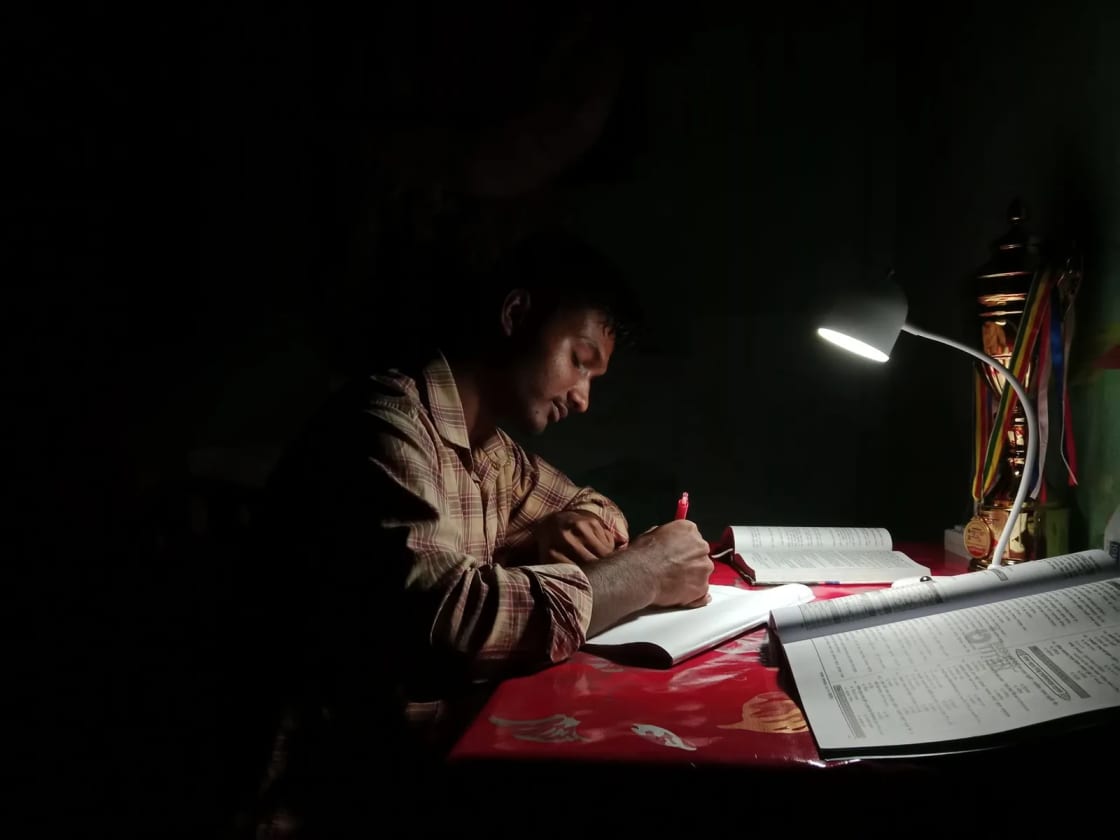
The all-nighter is the most durable bad idea in student culture, and the research has been unkind to it for decades. Memory consolidation happens during sleep. A night spent studying instead of sleeping trades a few hours of low-quality input against the process that files the input you already have.
The version that works in a real finals week is not eight perfect hours. It is protecting a consistent block, even a short one, and putting the hardest exam early in the day after the best night you managed.
Parking, and the week it gets worse
Parking near both campuses is a constant negotiation that briefly becomes a genuine problem during finals, because the usual rhythm of people arriving and leaving between class periods breaks down. Students arrive for a two-hour exam and stay for six hours of study.
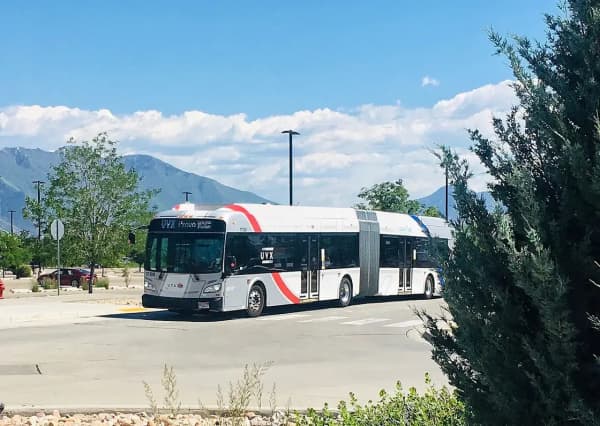
Enforcement does not pause for finals. A ticket collected during exam week is the most avoidable expense in the semester, and the fix is boring: leave earlier, or do not drive. Both campuses are well served on foot and by bus from the surrounding student housing.
The move-out collision
Provo's student housing contracts follow the academic calendar rather than a standard twelve-month lease, and the contract end date is set by the property, not by your exam schedule.
For most students the dates fit. For a minority they do not, and that minority finds out during the worst possible week — usually students switching complexes between contract periods, or flying home on a ticket bought before the exam schedule was published.
Check this in week one. Read the contract's stated end date, compare it against the published final-exam schedule for your specific classes, and if the two collide, ask the property about a short extension while it is a calm question rather than an emergency. Our guide to renters' rights in Utah covers what a contract can and cannot do to you.
When it stops being stress
There is a real line between a hard week and something that needs help, and finals in a high-achievement environment can blur it.
Both universities run counseling services for enrolled students. Both see their heaviest demand during and immediately before finals, which is precisely the argument for making the appointment early — if you are struggling in week ten, book in week ten, not in week fifteen when everyone else has had the same idea.
If the situation is a crisis rather than pressure, the 988 Suicide and Crisis Lifeline operates around the clock by call or text.
The compressed version
If you read nothing else: check the finals hours page rather than the regular hours page, and note the last test handed out time, not the closing time. Take your hardest exam early in its window and early in the day. Check the line condition before leaving home. Put both university calendars in front of your roommates in week one. Buy food that needs no cooking. Decide what Sunday looks like on Saturday. And book the counseling appointment before you are certain you need it.
None of that is about studying harder. It is about removing the four or five ways this city can take a prepared student and hand them a bad outcome anyway.
Related Guides
- Best Study Spots in Provo & Orem
- First Semester Survival Guide
- Student Budget Eating Guide
- Cheap Textbooks at BYU & UVU
- Utah Renters' Rights
- Best Coffee Shops in Provo & Orem
- Winter Break in Provo: What Happens After Finals
- Winter Semester in Provo: Two Start Dates, One City
Frequently Asked Questions
What time does the BYU Testing Center stop handing out tests?
Do BYU and UVU have finals at the same time?
Where can I study in Provo late at night during finals?
What is the BYU Testing Center and why is it unusual?
Does the Testing Center get busier at certain times?
What happens if my housing contract ends before my last final?
Is there anywhere open late to eat in Provo during finals?
Where do I go if finals week is affecting my mental health?
Sources
The facts in this guide were checked against these sources. Hours, fees and rules change, so confirm anything time-sensitive with the source before you go. How we make Provo.com.
- BYU Testing Center, Brigham Young University. Checked October 12, 2026.
- Dates and Deadlines (2026-27 catalog), Brigham Young University. Checked October 12, 2026.
- Fall Semester Schedule, Utah Valley University. Checked October 12, 2026.