
Brigham Young University sits in the middle of Provo the way a state capitol sits in the middle of a capital city — you can't really understand the place without walking through it. And yet most Utah Valley residents who didn't attend BYU have never been past the parking lots, on the vague assumption that a private religious university isn't somewhere you just wander onto.
You can. The campus is open, four of its museums cost nothing, the ice cream is good, and the whole thing makes an easy half-day with kids or visiting relatives. What follows is the version nobody hands you at the gate: what's worth your time, what it costs, where to leave the car, and the handful of local rules that will save you an awkward moment.
Start with the fact that it's open
BYU is private, and it is unambiguously a religious institution — but the campus is not gated, and visitors are ordinary. Prospective students tour it constantly. Families come for the museums. Locals run the outdoor track and walk the grounds in the evening. Nobody will ask why you're there.
Two things are worth knowing before you arrive, both of them small courtesies rather than barriers.
The first is that campus operates under the university's standards, and that extends to guests. In practice this means no alcohol and no tobacco anywhere on university property, and modest dress — shorts and sleeveless tops are common enough on a hot day that you won't stand out, but this is not a campus where beachwear reads as normal. Don't count on finding coffee at campus food service; if that's your morning, handle it before you park.
The second is Sunday. Latter-day Saint observance shapes the week here, and BYU closes almost completely on Sundays — museums, bookstore, Creamery, dining, all of it. The grounds stay walkable and the campus is beautiful when empty, but if your plan involves going indoors, Sunday is the wrong day. Saturday is the sweet spot: everything's open, and the weekday parking pressure is gone.
The four free museums
This is the part locals under-use. BYU runs four separate museums, all free, all within a few minutes of each other, and collectively they'd cost a family sixty or seventy dollars anywhere else.
The BYU Museum of Art is the anchor and the one to prioritize if you only pick one. It's a serious institution rather than a campus gallery — a rotating program of major touring exhibitions alongside a permanent collection, in a building designed to show them properly. Admission is free and general entry needs no ticket, though a handful of ticketed special exhibitions and events come through. Visitor parking is close by; check BYU's campus parking map for the current visitor lot. All galleries are accessible, and wheelchairs are available at the museum.
The Monte L. Bean Life Science Museum is the one children remember. It sits just southeast of the Marriott Center and it is essentially a natural history museum: mounted animals from every continent and an atmosphere that tolerates a certain amount of noise. If live-animal programs are why you are going, call ahead to confirm they are running. Admission is free. There's regular children's programming during the week, including a story time and Saturday programs that may carry a small registration fee and need to be booked ahead.
The Museum of Peoples and Cultures, over on 100 East, is the small, quiet, interesting one — archaeology and ethnography drawn largely from BYU's own field research, presented in a single-exhibit format that changes periodically. Free, weekday hours, and rarely crowded. It's a twenty-minute stop, not an afternoon, and it's the museum most likely to surprise an adult visitor who came for the kids.
The Museum of Paleontology — you'll also see it called the Earth Science Museum — is near the stadium; check its page for the exact address and hours. Dinosaur skeletons, a fossil preparation lab you can watch through a window, and a touch table with real fossils. It's small enough to combine with something else and specific enough that dinosaur-obsessed six-year-olds treat it as the main event.
One planning note that matters more than any of the individual descriptions: museum hours at BYU shift between fall semester, winter semester, spring and summer terms, and holiday breaks. A schedule you found on a blog is probably out of date. Check each museum's own page the morning you go. All four are closed Sundays, and hours on Saturdays are typically shorter than weekdays.
The Creamery, explained
(For the institution itself — its history, the flavors, which of the five locations to use and the building that changed at the end of 2025 — see our full BYU Creamery guide. This section covers it as a stop on a campus visit.)
BYU's Creamery is a campus institution that confuses first-time visitors because it isn't one thing. The university operates its own dairy processing and sells the results, and the retail side functions as a small grocery store with an ice cream counter attached — not a dessert shop with a line out the door.
The Creamery on Ninth East, north of campus, is the one most visitors mean. Walk in, order at the counter, and pay considerably less than you would at a commercial scoop shop for a portion that is not modest. There's a second, smaller Creamery location near the Bean Museum, which is convenient if you're already on that side of campus. Flavors rotate, the seasonal ones sell out, and the whole operation closes Sundays with everything else.
It is good ice cream. It is also, in a town where a large share of the population doesn't drink, one of the primary social outings — which is why a Friday night line can be long and why the parking lot is a well-known first-date location.
The Y, and whether you should hike it
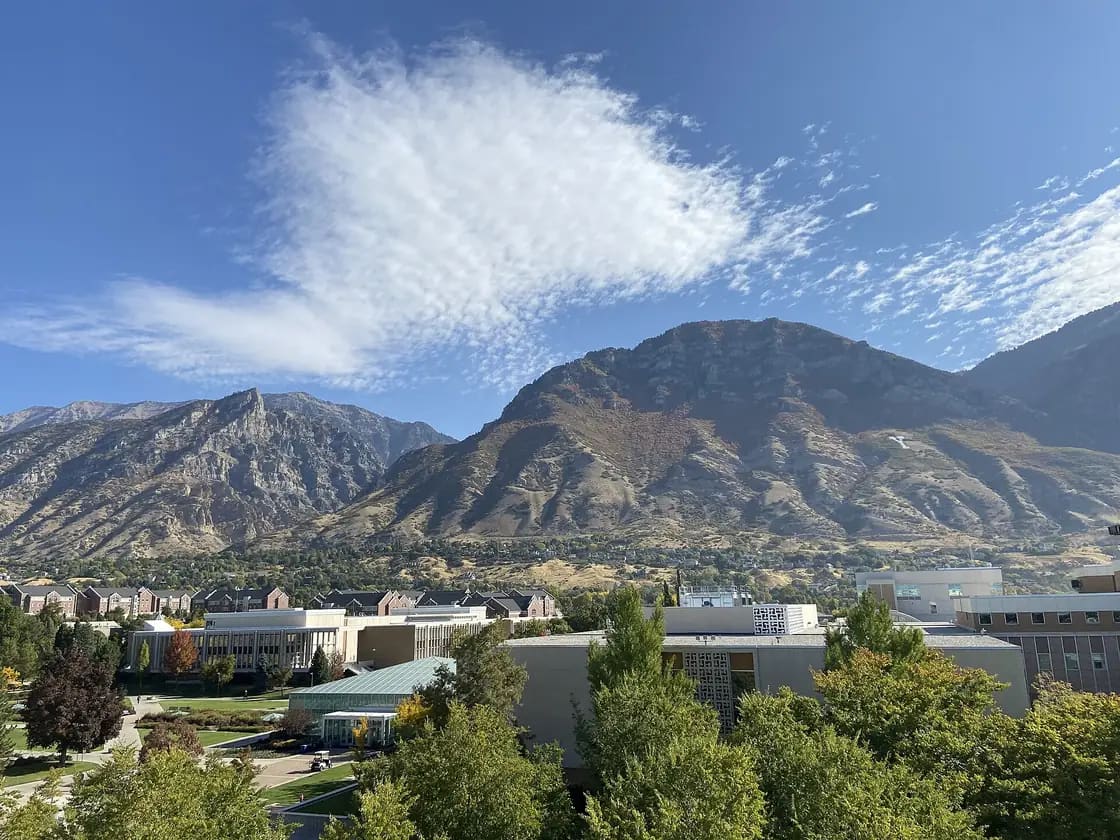
The white block letter on the mountain above campus is the most photographed object in Utah Valley and the most under-estimated hike in it.
The Y Mountain trail starts above the campus on the east bench and climbs a set of switchbacks to the letter itself. It's short — the distance is unimpressive on paper — and it is steep enough that people regularly turn around partway. The reward is a view straight down the length of Utah Valley with the lake behind it, and it's one of the few places where the shape of the whole valley becomes legible at once.
Practical notes: the trailhead lot is small and fills early on Saturdays and on any pleasant summer evening. Summer afternoons on that west-facing slope are punishing, so go early or go at dusk. Bring more water than the distance suggests. And if you're visiting with people whose fitness you're unsure about, this is a bad surprise and a great plan — tell them what it is first.
Our full Y Mountain trail guide has the details, and Rock Canyon just north of it is the flatter, shadier alternative if the switchbacks are a bridge too far.
The rest of campus worth a detour
The BYU Store, in the Wilkinson Student Center at the middle of campus, is the largest source of BYU-branded anything in the world and a perfectly reasonable place to buy a gift. The building around it is the student union, which means food, seating, and restrooms — useful as a base of operations.
LaVell Edwards Stadium and the Marriott Center are worth walking past even with nothing on the schedule, if only for scale. On a football Saturday the entire north end of Provo reorganizes itself around the stadium; our guide to where to eat before a BYU game covers that particular kind of day.
The Harold B. Lee Library is enormous and largely underground; check its current visitor access policy before you go. If you have any interest in family history research, its resources are among the best anywhere.
The grounds themselves are the underrated attraction. The campus is heavily planted, well maintained, and full of quiet corners — the Botany Pond near the north end is a genuine hidden spot, and the walk along the east side with the mountains directly overhead is as good as any city park in the valley.
Parking, honestly
This is where visits go wrong.
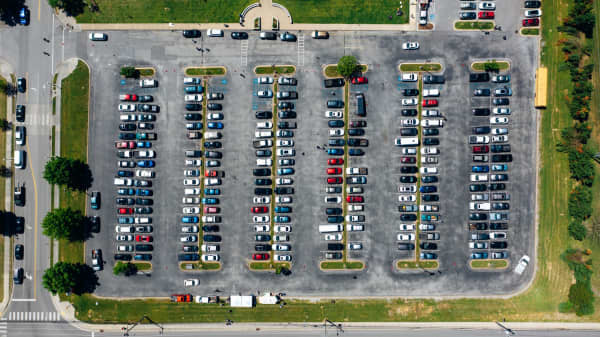
BYU's parking is zoned and enforced, and the enforcement is not casual. (Football Saturdays run on an entirely different set of rules — those are in our game-day parking guide.) Lots that look empty on a Tuesday morning are frequently permit-only, and the fact that no one appears to be watching means nothing. Visitors get ticketed here regularly.
What works:
- Use a designated visitor lot. They exist around the perimeter. The MOA's own lot on North Campus Drive is the most convenient and the most reliably visitor-friendly.
- Check BYU's current parking map before you leave. Zone designations get adjusted, and construction closes lots for months at a time.
- Go on a Saturday or in the evening if you can. Enforcement eases and the whole thing becomes a non-issue.
- Park once and walk. The campus is compact enough that moving the car between the MOA and the Bean Museum costs you more time than walking does.
Accessible parking is available at each museum, and the campus is broadly walkable with wheelchairs and strollers, though it sits on a slope — the east side is meaningfully uphill from the west.
Things the public can attend
Beyond the buildings, a surprising amount of BYU's programming is open to outsiders — and priced for students, which means it's priced well.
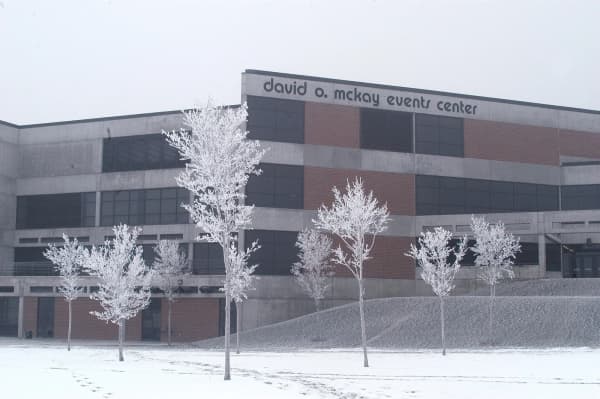
Performing arts. BYU's music, theater, and dance programs stage a full season, and the ballroom dance program in particular is internationally competitive in a way that has to be seen to be believed. Tickets are sold to the general public through the university's arts box office, and prices sit well below what comparable programming costs in Salt Lake. The main venue is now the Concert Hall in BYU’s Music Building, east of the Law School — a vineyard-style room of about a thousand seats that opened in Winter Semester 2023. ⚠ It replaced the de Jong Concert Hall in the Harris Fine Arts Center, and that building was demolished from early 2023, so older listings and older directions point at a building that is gone. Theater and media arts productions moved to BYU West Campus, the former Provo High School.
Athletics. Football at LaVell Edwards Stadium and basketball at the Marriott Center are the big draws and the hardest tickets, but the so-called non-revenue sports — volleyball, gymnastics, soccer, track — are frequently free or close to it, played in good facilities, and vastly easier to walk into. If you have a child who has never seen live college sport, this is the cheap entry point; our BYU women's volleyball guide covers tickets and the Smith Fieldhouse, and our BYU women's soccer guide covers South Field.
Devotionals and forums. Tuesday devotional and forum addresses in the Marriott Center are open to anyone, streamed as well as attended in person. The forum series brings in speakers from well outside the Church, and it's the most consistently interesting free lecture programming in the county.
Education Week, held each August, is the largest public event BYU runs — a week of hundreds of classes drawing many thousands of visitors and reshaping traffic across the north end of Provo. It is emphatically not a quiet week to visit campus for the museums.
Summer camps and youth programs run through June and July and are a significant reason the campus doesn't empty out between semesters.
Schedules for all of this live on the university's own event calendar, and it's worth a look before you plan a visit — half of the good reasons to come to campus are things happening rather than things sitting there.
Eating on campus
Visitors are welcome at BYU dining without a student card, and the options are better than the phrase "campus food" implies.
The Cougareat, the food court inside the Wilkinson Student Center, is the default: a range of counters, ordinary mall-food-court pricing, and enough seating to absorb a family. The Cannon Center, the residential dining hall on the north end, sells all-you-care-to-eat entry to the public, which is the best value on campus if you have teenagers with you.
Two things to expect. Don't count on coffee at campus dining; plan for it before you arrive. And everything closes Sunday, along with the rest of campus.
If you'd rather eat off campus, you're within a few minutes of some of the better food in the city in any direction. Our guides to the best food near BYU and family restaurants in Provo cover the immediate neighborhood, which is denser with cheap, good options than anywhere else in Utah County for the obvious reason.
A half-day that works
If you're building a visit from scratch, this sequence holds up:
Morning, with kids. Bean Museum first while everyone's fresh, then the Creamery near the Bean for ice cream, then the Museum of Paleontology if the dinosaur enthusiasm is still running. Home by lunch.
Afternoon, adults. Museum of Art, parking in the lot out front, then a slow walk across campus to the Wilkinson Center and back along the east side. Add the Museum of Peoples and Cultures if you have another half hour.
Evening, if the weather's good. The Y trail starting around two hours before sunset, then the Creamery on Ninth East afterward. This is, not coincidentally, the standard Provo date.
With a prospective student. Book an official campus tour through the university rather than improvising — the student-led version answers questions this article can't, and it goes into buildings you otherwise wouldn't enter.
What this fits into
A campus visit is rarely the whole trip. If you're in town seeing a student, our parent's guide to visiting Provo covers lodging and restaurants; where to stay in Provo handles the hotel question citywide, and hotels near BYU covers the walkable campus pocket specifically. If you're building a longer visit, 48 hours in Provo puts campus into a full itinerary, and the BYU guide is our hub for everything else about the university — housing, food, game days and the calendar the school imposes on the rest of the city.
And if the weather turns, the four museums here are the backbone of our indoor activities list for exactly that reason. Free, warm, and open six days a week.
Related Guides
New this fall: the BYU Arts Building that replaced the Harris Fine Arts Center.
Frequently Asked Questions
Can anyone visit BYU campus?
Are the BYU museums free?
Where do visitors park at BYU?
Is BYU campus open on Sunday?
Is there anything to do on campus if it is raining?
Do I need to book anything ahead to visit BYU campus?
Can you visit BYU campus with young children?
How long does the Y hike take?
Sources
The facts in this guide were checked against these sources. Hours, fees and rules change, so confirm anything time-sensitive with the source before you go. How we make Provo.com.
- Monte L. Bean Life Science Museum (home page), Brigham Young University. Checked October 12, 2026.
- AllTrails: Top of the Y, AllTrails. Checked October 12, 2026.
- An ode to the original BYU Creamery on Ninth, The Daily Universe (BYU). Checked October 12, 2026.