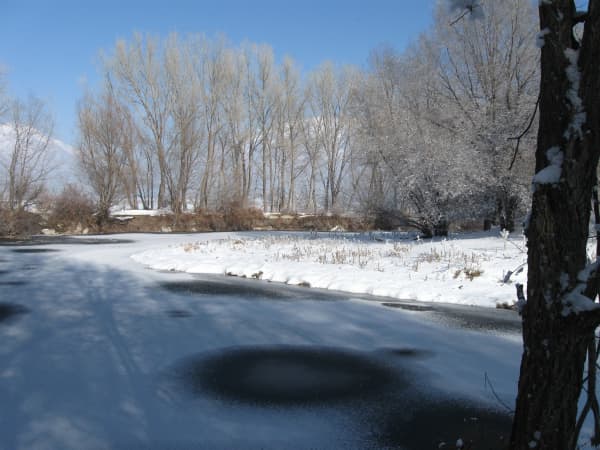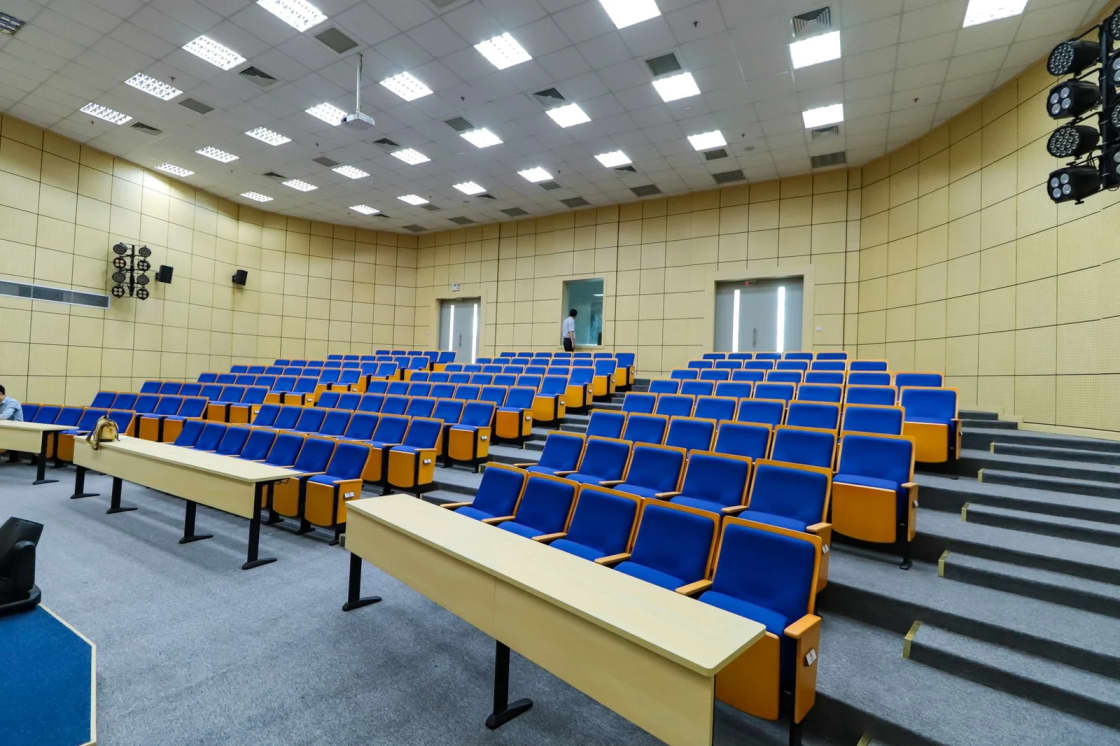

There are two Provos. Most people only ever describe one of them.
The Provo that gets written about is the one with thirty-odd thousand BYU students in it, where parking is a competitive sport, the grocery stores are chaos on a Saturday, and the whole city runs on the rhythm of a semester. Then late April arrives, winter semester ends, and a very large fraction of that population leaves at once.
What remains is a smaller, slower, warmer city that almost nothing is written about — and several thousand students stay in it every year, either by choice or because their program requires it. This is a guide to that version.
The calendar, and why the structure confuses people
BYU's annual calendar has three blocks: fall, winter, and spring-summer. That third one is a single entity containing two separate six-week terms.
Spring term starts shortly after winter semester ends in late April. Summer term follows in late June and runs into August. The pattern holds year to year, with the dates shifting slightly.
The word that matters is six weeks. A term delivers the same credit hours as a full semester course in half the time, which means class meets more often, reading loads compress, and the gap between one exam and the next is short. Students who treat a spring term like a relaxed summer are usually corrected by the second week.
There is a second structure inside it: some courses run term-length (six weeks, inside spring or inside summer) and others run semester-length across both. Mixing the two is normal and is where most scheduling mistakes originate.
Full-time means six credits, not twelve
This is the single most useful fact in this article, and it catches nearly everyone once.
For tuition purposes, BYU's full-time threshold in a spring or summer term is roughly half a semester's load, for undergraduates and graduate students alike. Not twelve. The term is half as long, so the threshold is roughly half as large; confirm the exact credit count with the registrar.
Now the caution, which matters more than the fact. That is the tuition definition. Scholarship terms, federal financial aid, health insurance eligibility, international student visa requirements and the question of whether your parents can still claim you as a dependent may each use a different threshold, and they do not automatically move together.
Check each one separately. A student who enrolls in six credits believing it protects everything and discovers in July that one of those systems disagreed has a genuine problem and very little time to fix it.
The billing quirk that surprises people in April
Tuition for a semester-length spring-summer class is billed as though half the credits are taken in spring and half in summer — but the entire amount is due at the beginning of spring term.
That is a reasonable accounting choice and a nasty cash-flow surprise. Students budgeting for two payments in April and June get one payment in April. If you are combining term-length and semester-length courses, the arithmetic gets less intuitive still, and BYU publishes a spring-summer tuition calculator precisely because people cannot do it in their heads.
Sort this out before registration, not after the bill arrives.
Why staying is a good idea, sometimes
Set aside the vague appeal of summer in the mountains. There are four concrete arguments.
Classes are easier to get into. Fewer students are enrolled, so sections fill more slowly and the frustration of a closed required course is less common.
Class sizes shrink and faculty are reachable. A course that runs at a hundred and forty in the fall might run at forty. Office hours stop being a queue. For a hard prerequisite or a class you have to do well in, this is a real academic advantage rather than an atmosphere point.
You can graduate sooner. Two terms of six credits is twelve credits, which is a meaningful dent in a degree, and clearing a prerequisite in spring can unlock a fall sequence a year early.
Provo in summer is the best version of Provo. The canyons are open, the reservoirs are warm, the festival calendar peaks, and the summer activities that make this valley worth living in are all available on a weekday evening without a crowd.
And why staying is sometimes the wrong call
The strongest argument against is straightforward: a good internship usually beats six credits.
If there is an internship in your field, in a city where your industry lives, and it materially improves your position at graduation, take it. Credits can be made up. A summer at the right firm frequently cannot. Our internships guide covers finding one locally, but "locally" is not always the right answer.
The second argument is money. Summer is when many students earn the bulk of their annual income, and some of that work — summer sales most conspicuously — is geographically elsewhere and pays disproportionately. Enrolling has an opportunity cost, and it should be counted rather than assumed away.
The bad version is neither of these. It is staying by default because the decision was never made — the internship deadlines passed in February, the good spring-summer housing went in March, and by April the choice has made itself.
Housing, and the contract structure
Provo's student housing market runs on a fall-winter contract with spring-summer offered separately, and that separation is the whole story.
Demand collapses in May. Landlords with beds to fill compete for a much smaller pool of students, and spring-summer rates come in materially below the school-year rate. This is the cheapest time to live in Provo and it is not close.
Subleasing is normal here in a way it is not in most college towns — the market expects it, the paperwork exists for it, and finding someone to take your contract while you are gone is a routine transaction rather than a favor.
Read two clauses carefully before signing anything. First, is there a gap between the fall-winter contract ending and the spring-summer one starting, during which you must physically vacate? Some complexes clean and turn units in that window. Second, is your fall spot held? Signing spring-summer somewhere does not automatically mean you keep the bed in September, and finding that out in August is bad. Our student housing guide covers the contract mechanics in more depth.
The UVU problem, for households with one of each
UVU does not run BYU's calendar. It offers a summer semester on its own schedule, structured differently from BYU's two six-week terms, and the two institutions start and finish at different points — a divergence that also shows up in the fall, when the two schools begin roughly two weeks apart.
For a family coordinating a lease, a shared car, a trip or a wedding around two students, this is a live problem. Check both academic calendars against each other explicitly. Do not assume the sibling at the other school is on the same clock, because in Utah Valley they reliably are not. Our BYU versus UVU comparison covers the broader differences.
What the city feels like
Less closes than students expect, but the rhythm changes.
Businesses that live on the student trade generally cut hours rather than shut — later opens, earlier closes, thinner weekend staffing. A few close for part of the summer. The practical rule is simple and worth internalizing: confirm hours before you drive anywhere in May, because posted schedules are less reliable in the turnover weeks than at any other point in the year.
Campus itself feels different in a way that is hard to convey until you have seen it. The walkways are quiet, the libraries have seats, and the parking problem briefly stops existing.
Meanwhile the rest of the valley reaches its annual peak. The Provo River Parkway is at its best, the farmers market is running, tubing on the Provo River is in season, the Rooftop Concert Series is downtown, and the canyons above town are open. Students who stay routinely report that they saw more of Utah in one spring term than in two school years.
Where everybody goes
Understanding the emptiness helps, because it is not one exodus. It is four, overlapping.
Home. The largest group simply leaves. BYU draws heavily from outside Utah, and a student whose family is in California, Texas, Idaho or Arizona has an obvious and free place to spend four months.
Missions. Provo has a departure and return rhythm no other college town has. Students leave mid-degree and return mid-degree, and spring-summer is a common hinge point for both directions — which is part of why the spring-summer housing market has so much give in it.
Internships. The students who are going to be competitive at graduation are disproportionately somewhere else between May and August, and they applied in January and February.
Summer sales. Utah's door-to-door industry recruits enormously from this valley and relocates its workforce out of state for the season. It is a large employer of Provo students and a large part of why the city empties.
The relevant point for someone deciding: you are not choosing between staying and a vague alternative. You are choosing against four specific things, and the honest question is which of them is available to you.
Study abroad, field schools and the term you cannot replicate
Spring and summer are when a great deal of experiential coursework happens, because a six-week term is the natural container for it.
Field programs, archaeological and geological field schools, language study, internships-for-credit and international study programs cluster here for a simple structural reason: you cannot take students out of the country for sixteen weeks in the middle of an academic year, but you can for six.
If any part of your degree includes a field or study-abroad requirement, spring-summer is very likely when it is offered — sometimes when it is only offered. Two practical consequences follow. Applications for those programs typically close months before the term, often in the preceding autumn. And they interact awkwardly with the housing question, because a student on a program is paying for accommodation abroad and needs to have dealt with the Provo contract before leaving.
Check your major's requirements for this specifically. Discovering in your final year that a required field component runs only in spring is an expensive surprise.
The weather, which is not what students expect
Provo sits at roughly 4,500 feet in a high desert valley, and the summer here behaves differently from summer at sea level.
It is dry, and the dryness misleads you. Ninety-five degrees in low humidity does not feel like ninety-five degrees somewhere humid, which is exactly why people underestimate it and end up dehydrated on a trail at two in the afternoon.
The sun is stronger than the temperature suggests. Altitude means less atmosphere between you and it. Sunburn happens faster here than most new arrivals expect, including on overcast days.
Evenings cool off substantially, and the canyons cool off more. A summer day in Provo is hot and a summer evening in Provo Canyon can want a jacket. This is why so much of the valley's social life happens after seven — outdoor concerts, late hikes, reservoir evenings.
The practical adjustments are small and worth making early: do outdoor things before ten or after six, carry more water than seems necessary, and treat any afternoon canyon plan in July as a decision rather than a default. Air conditioning is also not universal in older Provo student housing, which is a question worth asking before signing a spring-summer contract rather than discovering in a top-floor unit in August.
Working through the terms
The local job market in spring-summer has a specific shape.
Demand for student labor drops in some sectors, because the customers left with the students. It rises in others — anything tied to summer recreation, events, landscaping, construction, camps or tourism is hiring exactly when campus empties.
The advantage of being here in May is that you are competing against a much smaller pool of students for the jobs that do exist locally, and employers who have been short-staffed all year are noticeably more flexible about hours. Our summer jobs guide covers where the seasonal demand concentrates.
If you are enrolled while working, remember the compression. Six weeks is not long enough to fall behind and recover, and a shift pattern that would be fine across a sixteen-week semester can quietly sink a six-week course.
The social problem nobody mentions
There is a version of spring-summer that goes badly, and it is not academic.
A large part of how Provo social life works is structural rather than spontaneous. Student wards, roommates, classes and campus density do the introducing for you during the school year. In May, several of those structures thin out at once: your roommates may have left, your ward may have merged or reorganized for the summer, your classes are smaller, and half the people you know are in another state.
Students who stay and do not plan for this describe the same experience — a term that was academically productive and personally quite lonely.
The fix is not complicated but it does have to be deliberate. Commit to something recurring that is not a class: an intramural team, a weekly hike, a job with coworkers you like, a service commitment, a standing dinner. The point is the recurrence rather than the activity, because in a thinned-out city the thing that happens every Tuesday is what a social life gets built on.
It also helps to know that the people who stayed are unusually easy to meet, for the obvious reason that they are also looking. Our making friends in Provo guide covers the general problem; in spring-summer the answer is simply a more concentrated version of it.
A realistic plan, by month
February is when the decision gets made. Internship applications, spring-summer housing and the good local jobs are all live now.
March is for registration and contracts. Verify that the specific courses you need are offered in the term — departments run a reduced catalog and not everything appears.
Late April is the turnover. Winter ends, tuition is due, one population leaves and another arrives, and the city is briefly strange.
May and June are spring term. Compressed, quiet, and the best weather of the year.
Late June is the pivot into summer term, and it is easy to lose the first week to the assumption that the new term will start gently.
August ends it, and the city refills fast — UVU first, BYU a couple of weeks later, with move-in running through the last week of August.
The short version
Spring-summer is one block containing two six-week terms, and six weeks is fast. Full-time for tuition purposes is roughly half a semester's load, and that number does not automatically govern aid, insurance or visa status. Semester-length tuition is all due in April. Housing is cheapest now, subleasing is normal, and the fall bed is a separate question. UVU is on a different calendar. Classes are easier to get and faculty are reachable. And the argument for leaving is usually a specific internship rather than a general preference — which means the decision belongs in February, not April.
Related Guides
- Finding student housing in Provo
- BYU versus UVU
- Internships and careers in Provo
- Summer jobs in Utah Valley
- Summer activities in Provo
- Summer sales jobs in Utah
- Spring Break from Provo: The Student Version
- Winter Break in Provo: The Other Quiet Stretch
Frequently Asked Questions
What is spring and summer term at BYU?
How many credits count as full-time in spring or summer?
Is spring and summer term cheaper?
Should I stay in Provo for spring and summer?
What is spring-summer housing like in Provo?
Does UVU run the same calendar?
What closes in Provo during spring and summer?
Is it easier to get classes in spring and summer?
Sources
The facts in this guide were checked against these sources. Hours, fees and rules change, so confirm anything time-sensitive with the source before you go. How we make Provo.com.
- Brigham Young University: BYU Registrar, Brigham Young University. Checked October 12, 2026.