
The question comes up every August in every apartment complex within a mile of either campus, usually between roommates who are trying to figure out whether the fourth car in a three-stall lot is going to be a problem.
Here is the honest answer: a lot of students in Provo don't need a car, a lot of students at UVU do, and the deciding factors are more specific than "it would be nice to have one."
Start with the calendar
The two schools start two weeks apart. For fall 2026, UVU's classes began Wednesday, August 19, and BYU's began Wednesday, September 2. If you're making a car decision before a fall semester, that gap is your planning window — and it's also when parking permits, lease parking assignments, and apartment lot politics all get sorted, generally on a first-come basis.
Decide before you arrive if you can. The worst version of this is showing up with a car and no plan for where it lives.
The two campuses are different problems
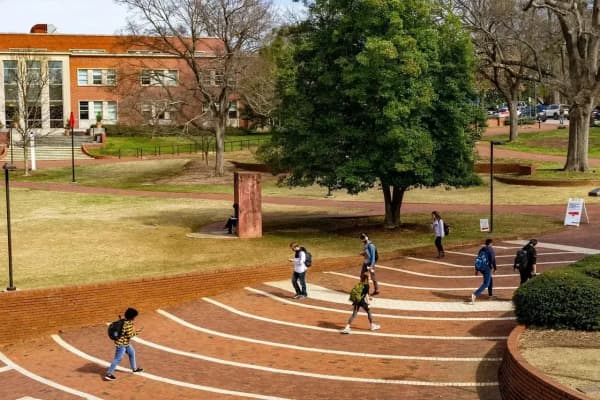
BYU sits inside a dense ring of student housing that was purpose-built to be walked. If you live in contracted housing near campus, your commute is a walk measured in minutes, and the car sits still five days a week. Campus parking is permit-controlled with limited student allocation, and the lots nearest the buildings behave like every other university's — full early, and not worth circling.
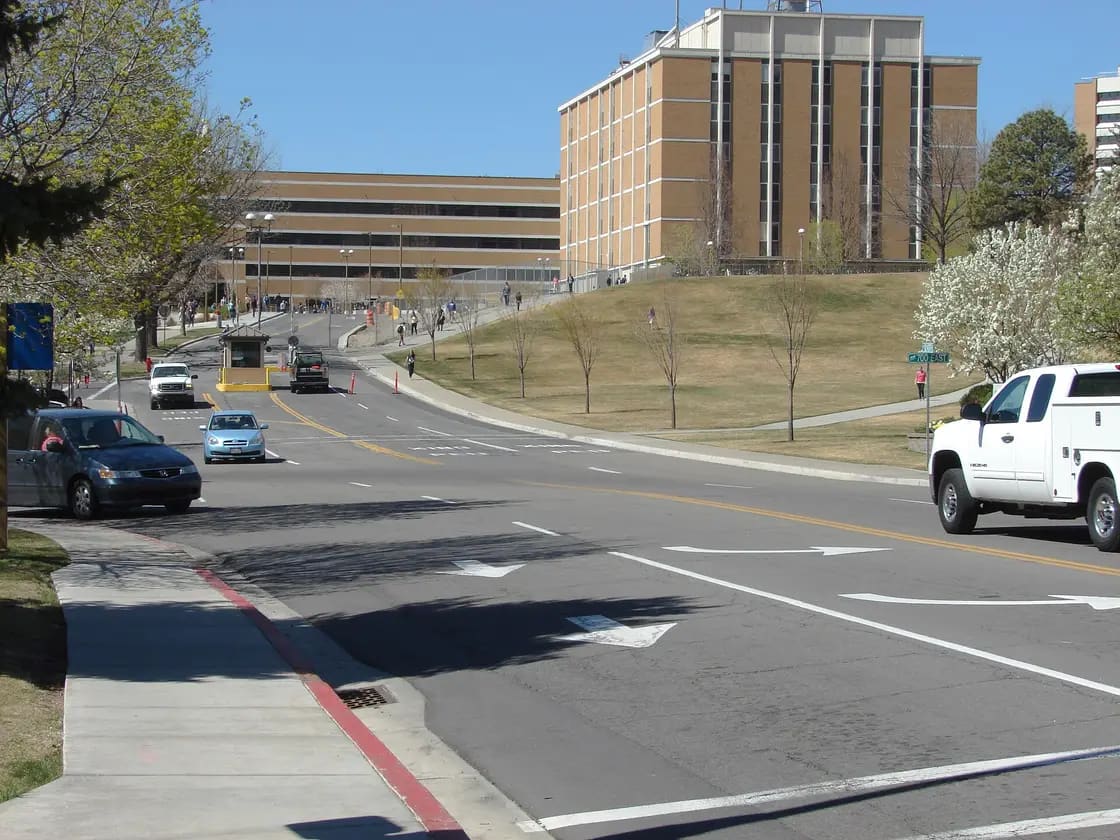
UVU is a commuter campus and always has been. A record 48,670 students enrolled in fall 2025, most of them arriving from somewhere else in the valley every morning. Driving to UVU isn't a luxury decision; for many students it's the only structure that works around a job and a family. UVU knows this and publishes real guidance about it — including which lots congest first and which outer lots to aim for instead.
If you're at UVU, the commute question is its own subject, and we've covered it in depth in the UVU commuter survival guide: permit types, lot strategy, the after-5 rule, and the FrontRunner play from the north end of the valley.
The rest of this guide is about the decision itself.
What a car costs a student
Students budget for gas. Gas is the smallest line.
The real recurring costs, none of which we're going to quote a number for because they move constantly and vary by driver:
- Insurance, which for a young driver is the largest ongoing cost by a wide margin.
- Registration, annually.
- Emissions testing. Utah County is stricter than Salt Lake County on this, and it surprises people. Gas vehicles seven model years and older are tested every year; newer ones are on a two-year cycle. If you're driving the classic hand-me-down student car, that's an annual appointment and an annual chance of a repair bill you didn't plan for.
- Tires, which in a valley with a canyon on one side and real winter on the other are not a place to economize.
- Repairs, which arrive without asking.
- Parking, whether that's a campus permit, an apartment stall, or a paid space.
Our guide to car ownership in Utah Valley walks through the registration, emissions, and insurance mechanics in full, and finding a mechanic in Utah Valley covers not getting taken advantage of when something breaks — which, as a student with an old car, it will.
Add it up before deciding. For a lot of students the total lands somewhere between "a significant fraction of a part-time job" and "the reason I'm always broke."
Where the car parks
This is the part students underestimate, and it's usually the thing that decides the question.
Apartment parking is not guaranteed. Contracted student housing frequently has fewer stalls than beds. Some complexes assign spaces, some sell them separately, some run a permit system with enforcement and towing. Read your contract's parking section before signing, and ask the leasing office directly how many stalls exist per unit — the answer is occasionally uncomfortable.
Street parking near campus is restricted in places. Provo operates residential parking restrictions in some of the neighborhoods around campus, largely in response to student overflow, and enforcement is not theoretical. Rules differ street to street and change over time. Read the signs, check the city's current rules, and don't treat a quiet residential block as free long-term storage. A tow costs more than most permits.
Campus permits are their own system at each school with their own pricing and their own allocation rules, set by each school's parking office and revised regularly. Get the current terms from the school rather than from a friend who bought a permit two years ago.
Winter changes the math
A car in Provo from October through March is a different object than a car in September.
Canyon roads, morning ice on north-facing streets, snow removal in apartment lots that happens on the complex's schedule rather than yours, and the reality that a car parked outside needs to be scraped before an 8 a.m. class. None of this is a reason not to have a car. It is a reason to have appropriate tires and a realistic sense of the mornings.
Our guide to winter tires and canyon driving covers what matters here, and it's the one piece of car spending we'd tell a student not to skip.
The case for having one
- You have a job off the bus grid. This is the strongest reason and it's not close. If your work is in Springville, Lehi, or anywhere transit serves poorly at the hours you work, a car isn't a convenience.
- You're at UVU with a schedule that transit can't match. Evening classes, split shifts, kids to pick up.
- You leave the valley regularly. Family in another state, a partner in another city, trips home over breaks. (Leaving the car behind for a summer instead? Vehicle storage is its own local market.)
- The outdoors is why you came. Trailheads, canyons, ski access, the reservoirs. Transit doesn't go there and the season is short.
- You have dependents or a health situation that makes a fixed bus schedule unworkable.
The case against, for at least the first year
- Your daily radius is walkable. If class, groceries, work, and your ward are all within a mile, the car is a depreciating asset that mostly sits.
- The money is better spent elsewhere. Insurance for a young driver plus a permit plus maintenance is a meaningful monthly number on a student budget.
- Parking is the constraint you can't fix. If your complex has one stall for three roommates, adding a fourth car doesn't create a stall.
- Somebody in your apartment already has one. In practice, most student apartments run on a shared-car economy — gas money and a favor, rather than four registrations and four insurance policies.
That last point is the honest compromise most students land on, and it works better than people expect if the arrangement is explicit about gas, mileage, and not being a taxi service.
The alternatives, realistically
UVX. The bus rapid transit line running between Provo and Orem, connecting both campuses, the FrontRunner stations, and a good deal of the housing in between. Important and frequently misstated: UVX has not been free to the general public since August 2024. It's free with a qualifying student ID — UVU students, faculty, and staff ride free on a current UVU ID, which also works as a broader UTA pass, and BYU has historically extended transit access to its students as well. The terms differ by school and get revised, so confirm what your own ID covers. If you're not a student at either school, you pay the fare.
FrontRunner. The commuter rail line up the valley toward Salt Lake. Genuinely good if you're coming from Lehi or American Fork, or heading north for a job or the airport. Our FrontRunner and commuting guide has the details.
A bike. Provo is flatter than newcomers expect in the areas most students live, distances near campus are short, and a bike collapses a fifteen-minute walk into five. Winter is the obvious limitation. So is theft — lock it properly.
Rideshare and delivery. Fine for the occasional airport run or grocery haul — and a car-free grocery run goes further when you're shopping to a plan, which our student meal prep guide lays out. Expensive as a daily habit, and the math turns against you quickly.
Borrowing. See above. Most student car access in this valley is borrowed rather than owned.
If you're buying a cheap used car here
A specific local warning that costs students money every year: check the emissions situation before you buy, not after.
Utah County requires a passing emissions test for registration on most gas vehicles, and the older the car, the more often. A cheap private-party car that can't pass is not a bargain — it's a repair bill attached to a car you already own. Before money changes hands on any older vehicle:
- Ask the seller when it last passed and to see the paperwork.
- Have it inspected by a mechanic who isn't the seller's friend.
- Assume that "it just needs a little work" means more than the seller thinks it does.
The other student-specific trap is buying at the wrong time. Late August in a college town is the worst possible moment to buy a used car locally — demand spikes precisely when every incoming student is looking. If your timeline allows, buying in the spring or from outside the immediate campus market usually costs less.
And budget for the first month, not the sticker: title transfer, registration, insurance starting immediately, and whatever the inspection turns up.
If you do go ahead, our guide to buying a used car in Utah Valley covers title brands, the seller's disclosure duty, and the forms the transfer needs.
Making the shared-car arrangement work
Since most students end up borrowing rather than owning, it's worth being explicit about the thing everyone handles implicitly and then resents.
What functional arrangements have in common:
- Gas is settled in a defined way — a flat contribution, a per-trip amount, or filling the tank after use. Vague generosity turns into quiet accounting.
- The owner is not a taxi. Rides are asked for in advance, not assumed, and "I'm heading that way anyway" is different from a special trip.
- Insurance is understood. Whether a non-owner is covered driving someone else's car depends on the policy. Worth an actual question to the insurer rather than an assumption.
- Damage has a plan agreed on before it happens, because it's a much harder conversation afterward.
This sounds over-formal for roommates. It prevents the most common non-romantic apartment conflict in student housing.
Breaks, airports, and getting home
The one predictable time every student needs transportation is the one most often unplanned: leaving the valley for a break.
Provo has its own airport with a growing nonstop network, which for a lot of students is the closest and easiest option — our guide to flying from Provo Airport covers the airlines and destinations. Salt Lake City International remains the larger hub, and FrontRunner reaches it without a car.
For driving home, the shared ride is the valley's default. Ride-share boards fill up before Thanksgiving and the December break; post early rather than late.
Scooters, e-bikes, and the middle ground
Between "no vehicle" and "car" there's a tier that suits Provo's geography unusually well.
An e-bike or scooter turns the two-mile trips that are annoying on foot into five-minute errands, costs a fraction of a car in every category, needs no permit and no emissions test, and parks anywhere. For a student whose radius is campus, an apartment, a grocery store, and a job within a few miles, it covers most of what they'd have used a car for.
The limits are honest ones: winter, rain, carrying anything substantial, and theft, which is a genuine problem in dense student housing — a good lock is not optional. Storage matters too; check whether your complex allows bikes inside units or provides secure racks, because "locked to the railing outside" is how bikes disappear.
Shared scooters have come and gone in the valley as operators change; they're a supplement rather than a plan.
When the answer changes
The car question isn't decided once. The common pattern in Provo runs like this:
First year: usually no car. Housing is close, the radius is small, money is tightest, and parking is hardest to secure as the newest tenant.
After the first year: it depends on where you're working. Students who pick up jobs off the transit grid, or internships in Lehi and the north valley where the tech corridor sits, frequently cross over here.
Married or with kids: almost always yes, and often two. Groceries for a household, childcare drop-offs, and a spouse's separate schedule don't compress onto a bus route.
Older or returning students: typically yes, because the schedule is already built around work and family rather than around campus.
If you're in the first bucket, going without for a year is low-cost in this town — and you'll know by April whether the second year is different.
A decision framework
Answer these honestly:
- Where is your job, and can you get there by bus at the hours you work? If no, you probably need a car.
- Does your housing come with a parking stall you can use? If no, solve that before buying anything.
- Can you cover insurance every month without it wrecking your budget? If no, wait a year.
- How often do you leave the valley? Twice a semester is a rental or a ride. Twice a month is a car.
- Is there already a car in your apartment? If yes, try the shared arrangement for a semester first.
If you answer those and still want a car, get one — with tires that work in January and a plan for where it parks. If the answers point the other way, the first year without one is a lot more livable in Provo than in most college towns, and you can revisit it in April.
Related reading
- The UVU commuter survival guide — permits, lots, and transit for the commuter campus
- Car ownership in Utah Valley — registration, emissions, and insurance mechanics
- Winter tires and canyon driving — the one thing not to cheap out on
- Moving to Provo for college — move-in and first-week logistics
- Student jobs in Provo — including which ones are transit-reachable
- The Provo Dating Show: How a Student YouTube Series Became a Genre
- Intramurals & Club Sports at BYU and UVU: How to Actually Get On a Team
- Student Banking in Utah Valley: Credit Unions, Campus Cards, and the Mission Problem
- The BYU Guide to Provo: housing, food, game days and campus
- The UVU Guide: commuting, housing in Orem and student life
- Student Budget Calculator — put the car payment, insurance and parking in and see what it costs you per semester
Parking rules, permit prices, transit fares, and testing requirements all change. Everything here is a framework; confirm the current specifics with your school, your city, and your landlord before committing money.
Frequently Asked Questions
Do BYU students need a car?
Is parking hard at BYU and UVU?
Is UVX free?
Can I park on the street near campus in Provo?
Is it better to bring a car from home or buy one here?
Can you get by without a car in winter in Provo?
What is the cheapest realistic way to have car access without owning one?
What does it cost to keep a car as a student in Provo?
Sources
The facts in this guide were checked against these sources. Hours, fees and rules change, so confirm anything time-sensitive with the source before you go. How we make Provo.com.
- Fall Semester Schedule, Utah Valley University. Checked October 12, 2026.
- Dates and Deadlines (2026-27 catalog), Brigham Young University. Checked October 12, 2026.
- Fall 2025 enrollment, Utah Valley University. Checked October 12, 2026.
- Transit Pass FAQs, Utah Valley University. Checked October 12, 2026.