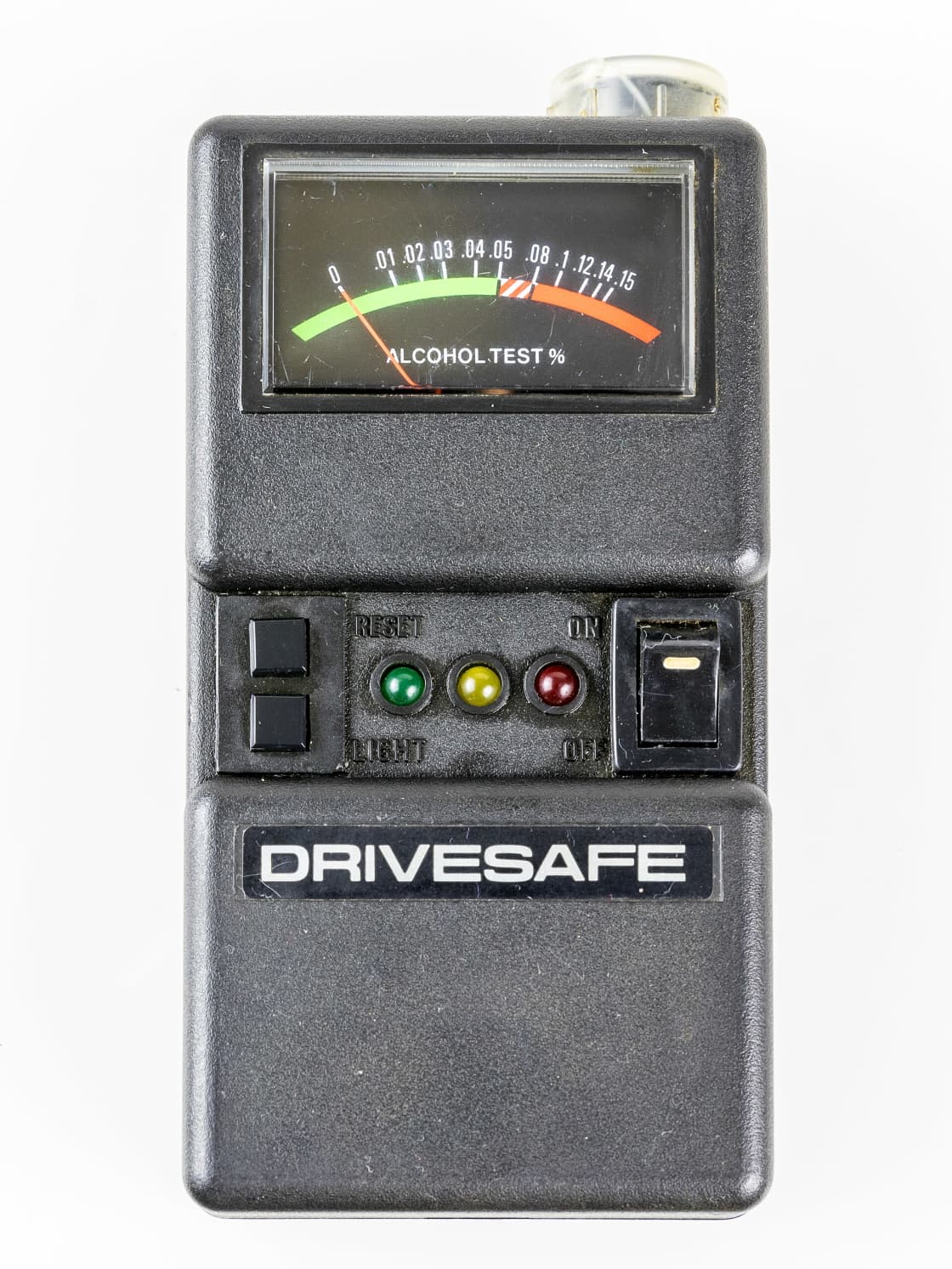

Utah is the only state in the country where .05 is the number, and it has been since the end of 2018.
That fact gets repeated constantly and understood rarely. The threshold is the headline; the machinery behind it — strict liability, a mandatory minimum a judge cannot waive, a per-child multiplier, and a plea route that is closed by statute — is what determines what happens to a person charged in Provo or Orem.
This is that machinery, read from the code.
The short version
.05 grams, blood or breath. Lowest in the nation.
Strict liability. Impairment does not have to be proved on the concentration route.
Class B misdemeanor first offense — rising to class A, then third degree felony.
Not less than two days jail, or 48 hours compensatory service. Mandatory, first offense.
$700 minimum fine, before costs and surcharges.
120-day license suspension at 21 or older, first conviction.
No plea in abeyance. Closed by statute.
What the offense is
Utah Code 41-6a-502(1) creates the offense three separate ways. A person commits DUI if they operate or are in actual physical control of a vehicle in Utah and they:
- (a) have sufficient alcohol in the body that a subsequent chemical test shows a blood or breath alcohol concentration of .05 grams or greater at the time of the test; or
- (b) are under the influence of alcohol, any drug, or a combination, to a degree rendering them incapable of safely operating a vehicle; or
- (c) have a blood or breath alcohol concentration of .05 grams or greater at the time of operation or actual physical control
Three routes, and they are independent. Route (b) has no number attached to it at all — a driver impaired by a prescription medication at .00 alcohol can be convicted under it. Route (a) and route (c) differ in timing, which matters when a test is administered an hour after a stop and the concentration is still rising.
Concentration is measured as grams of alcohol per 100 millilitres of blood, or per 210 liters of breath.
"Actual physical control" is not driving
The phrase appears in the first line of the offense and it catches people who never moved the car.
Utah Code 41-6a-501(1)(a) says actual physical control is determined by the totality of the circumstances, but expressly does not include a circumstance in which all five of the following are true:
- the person is asleep inside the vehicle
- the person is not in the driver's seat
- the engine is not running
- the vehicle is lawfully parked, and
- on the facts presented, it is evident the person did not drive the vehicle to that location while under the influence
Every element must hold. Sleeping it off in the driver's seat fails the second. Running the engine for heat on a January night in Provo Canyon fails the third. Parking somewhere you were not entitled to park fails the fourth.
The common advice to "just sleep in the car" is therefore worse than useless in Utah unless the whole checklist is satisfied — and satisfying it means being asleep in a back seat, engine off, legally parked, in a car you did not drive there impaired.
Strict liability, and why it changes the defense
Utah Code 41-6a-502(6): an offense described in this section is a strict liability offense.
For the concentration routes, that means the prosecution does not have to prove you knew you were over, intended to be over, or felt impaired. The number is the offense. Feeling fine is not a defense, driving carefully is not a defense, and the fact that .05 would be lawful in all forty-nine other states is not a defense.
Section 41-6a-504 forecloses a related argument: being legally entitled to use the alcohol or drug is not a defense. A valid prescription does not answer a charge under route (b).
Where the real contest happens is upstream of the number — the basis for the stop, the administration of the test, the calibration and maintenance of the instrument, the observation period, the chain of custody. That is technical territory, and it is a large part of why DUI defense is a specialism rather than general practice.
The grading ladder
Class B misdemeanor is the baseline for a violation of 41-6a-502(1).
Class A misdemeanor under subsection (2)(b) if the actor:
- has a passenger younger than 16 in the vehicle at the time; or
- is 21 or older and has a passenger younger than 18; or
- at the time of the offense also violated 41-6a-712 or 41-6a-714, or violated 41-6a-709 on a one-way highway other than a roundabout with more than one lane of traffic; or
- has one prior conviction within 10 years of the current conviction or of the offense underlying it
Third degree felony under subsection (2)(c) if:
- the actor has two or more prior convictions, each within 10 years of the current conviction or the offense underlying it; or
- the current conviction comes at any time after a felony conviction — including a conviction later reduced under 76-3-402
Two things to notice. The felony trigger on priors has no lookback limit in its second branch: a felony DUI conviction from decades ago makes the next one a felony regardless of how long ago it was. And "prior conviction" is a defined term at 41-6a-501(2) that reaches beyond Utah DUI convictions to include impaired driving under 502.5, comparable local ordinances, alcohol-related reckless driving, and — under subsection (2)(c) — an admission in juvenile court, which is treated as the equivalent of a conviction.
The per-passenger multiplier
Utah Code 41-6a-502(8) is short and its consequences are not:
An actor is guilty of a separate offense under Subsection (1) for each passenger in the vehicle that is younger than 16 years old at the time of the offense.
A parent stopped on the way home from a family gathering with three children under 16 in the car faces three counts, each elevated to a class A misdemeanor by the passenger enhancement.
In a valley with the household sizes Utah Valley has, this provision converts a single bad decision into exposure most people would not recognize as possible. It is worth knowing about in advance, because it is not the sort of thing anyone learns at a useful moment.
Extreme DUI
Utah Code 41-6a-501(1)(f) defines extreme DUI as an offense under the driving under the influence provision where there is admissible evidence that the individual:
- had a blood or breath alcohol level of .16 or higher; or
- had a level of .05 or higher in addition to any measurable controlled substance
The second branch is the one that surprises. A driver just over the threshold who also has a measurable controlled substance in their system — including one lawfully prescribed — is in extreme DUI territory, not ordinary DUI territory, and the sentencing floor moves accordingly.
Sentencing: what the court must do
Utah Code 41-6a-505 separates first convictions into two tracks.
Extreme DUI, first conviction — subsection (1). The court shall:
- impose not less than five days jail, or not less than two days jail plus at least 30 consecutive days of home confinement through electronic monitoring that includes a substance abuse testing instrument
- order a screening
- order an assessment if the screening indicates one
- order an educational series unless substance abuse treatment is ordered instead
- impose a fine of not less than $700
- order probation under 41-6a-507
- order payment of the administrative impound fee and towing and storage fees, or reimbursement if another party paid them
- order installation of an ignition interlock, unless the court determines and states on the record that it is not necessary for community safety and is not in the interest of justice
- designate the individual as an interdicted person for a period not exceeding probation, and require surrender of the Utah driver license or identification card
Ordinary first conviction — subsection (3). The court shall:
- impose not less than two days jail, or require compensatory-service work of not less than 48 hours
- order a screening; an assessment if indicated; an educational series unless treatment is ordered
- impose a fine of not less than $700
- order the administrative impound fee and towing and storage fees
Probation, treatment, a 24-7 sobriety program under 41-6a-515.5, and interdicted-person designation are discretionary on this track rather than mandatory.
A prior within 10 years — subsection (5) — moves the floor to not less than 20 days jail, or 10 days plus at least 60 consecutive days of monitored home confinement, or 10 days plus ordered substance abuse treatment where the court finds treatment more likely to reduce recidivism and in the interests of public safety.
One relief valve exists on both first-conviction tracks: where the individual is participating in a 24-7 sobriety program, the court may suspend the jail sentence — and shall impose it if the program is not completed.
The $700 is a floor on the fine alone. Court costs, statutory surcharges, screening and assessment fees, the educational series, treatment, impound, towing, storage, interlock installation and monthly monitoring, and license reinstatement all sit on top. The realistic total is a multiple of the headline number, and the section 41-6a-505 text was amended by Chapter 337 of the 2026 General Session — recent enough that older summaries are unreliable.
The license, which runs on a separate track
This is the point people most often miss: the court and the Driver License Division are two different authorities acting under two different statutes. The criminal case does not control the license.
Utah Code 41-6a-509(1) directs the Division, for a driver 21 or older at arrest, to:
- suspend for 120 days on a first conviction under 41-6a-502 or 76-5-102.1; or
- revoke for two years where there is a prior conviction as defined at 41-6a-501(2) and the current violation falls within 10 years of the prior
For a driver 19 or older but under 21 at arrest, a first conviction brings suspension until age 21 or for one year, whichever is longer.
Subsection (1)(b) and (c) create an alternative. A driver who elects to become an interlock restricted driver under 53-3-223(10)(a) or 41-6a-521(7) may avoid the suspension — but only by completing the full restriction period, 120 days in the first route and three years in the second. Fail to complete it and the Division suspends for 120 days from the date the interlock was removed, with no credit for the days of compliance.
That no-credit rule deserves emphasis. Abandoning an interlock election partway through is the worst of both outcomes: months of interlock cost, and then the full suspension anyway.
Because the license track is administrative and moves on its own deadlines — often faster than the criminal case — the window to challenge it can close while a driver is still focused on the court date.
Arrest without a warrant
Utah Code 41-6a-508 permits a peace officer to arrest without a warrant for a 41-6a-502 violation on probable cause that the violation occurred, even though not in the officer's presence, and probable cause that the person committed it.
This is why an officer arriving after a collision — having seen no driving at all — can still make a DUI arrest. The car crash claim guide covers what happens on the insurance side when the two intersect, which they frequently do.
What follows the case
A DUI conviction does not stay inside the courtroom.
Insurance. Rates respond sharply and for years. The Utah car insurance guide covers what drives pricing here and the verification and lapse machinery that a suspension triggers.
Reinstatement. Getting the license back is its own process with its own fees, handled through the Driver License Division rather than the court — the DMV guide covers which office does what, and any Utah office will serve you regardless of county.
Expungement. A misdemeanor conviction under 41-6a-501(2) carries a ten-year waiting period, the longest in the expungement statute, and a felony conviction described in that subsection is excluded from expungement entirely. Expungement in Utah covers how the clock is counted — from release from probation, not from sentencing, which moves the date for almost everyone.
Which court. DUI cases in Utah County typically start in a justice court. The Utah County courts guide maps which building holds which case and how appeals from justice court work differently, which matters more here than in most case types.
If cost is the barrier to representation, free and low-cost legal help in Utah County sets out the hotline, the clinics and the eligibility rules — though be aware that DUI is one of the areas many free clinics specifically exclude.
Implied consent, and what refusing a test costs
Driving in Utah carries an implied consent to chemical testing when an officer has the grounds the statute requires. Refusal is not a neutral option that leaves you where you started.
A refusal carries its own administrative consequence through the Driver License Division, separate from and in addition to whatever happens in the criminal case. The license sanction for refusing is materially longer than the 120-day suspension that follows an ordinary first conviction, and it applies regardless of whether the criminal charge succeeds. A driver acquitted of DUI can still lose their license for the refusal.
Refusal can also be raised as evidence in the criminal case, which undercuts the intuition that declining to produce evidence is the cautious move.
Because the administrative track runs on its own deadlines — and those deadlines can be short and can start before the first court date — this is the part of a DUI arrest most likely to be lost through inaction rather than decision. Anyone in that position should get advice quickly rather than waiting for the criminal case to develop.
Interlock, and being an "interdicted person"
Two consequences in the sentencing statute are unfamiliar enough to be worth naming.
Ignition interlock. For a first extreme DUI conviction, 41-6a-505(1)(a)(ix) requires the court to order installation unless it determines and states on the record that an interlock is not necessary for community safety and not in the interest of justice. The default is installation; avoiding it requires an affirmative finding on the record. Installation and monthly monitoring are paid by the driver, and the monthly cost over a multi-year restriction adds up to considerably more than the fine.
Interdicted person. Subsection (1)(a)(x) requires the court, on a first extreme DUI conviction, to designate the individual as an interdicted person for a period not exceeding the probationary term unless the court finds good cause for a different length — and to require surrender of the Utah driver license or identification card. The designation restricts the purchase and possession of alcohol and is enforced through the identity document itself. On the ordinary first-conviction track under subsection (3), this designation is discretionary rather than mandatory.
Neither of these appears in most summaries of "what a DUI costs," and both outlast the court case.
Two closing cautions
No plea in abeyance. Utah Code 41-6a-502(7): a guilty or no contest plea to a DUI offense may not be held in abeyance. The deferral mechanism that quietly resolves a great many Utah misdemeanors is unavailable here. The negotiated alternative is a reduction to impaired driving under 41-6a-502.5, which requires the prosecutor's agreement and is a reduction of one degree — an outcome, not an entitlement.
Confirm the numbers before relying on them. Chapter 6a of Title 41 is amended most sessions; 41-6a-505 moved in 2026. Everything above was read directly from the compiled chapter at le.utah.gov rather than from a secondary source, because secondary sources on Utah DUI routinely cite superseded subsection numbers and pre-2018 thresholds. This page explains the structure; it is not legal advice, and a charged case deserves a lawyer who does this work specifically.
Frequently Asked Questions
What is the legal blood alcohol limit in Utah?
Is a first DUI a felony in Utah?
What are the penalties for a first DUI in Utah?
How long is your license suspended for a DUI in Utah?
What is extreme DUI in Utah?
Can a DUI charge be reduced to impaired driving in Utah?
Can you get a plea in abeyance for a DUI in Utah?
Does Utah count each child in the car as a separate DUI offense?
Sources
The facts in this guide were checked against these sources. Hours, fees and rules change, so confirm anything time-sensitive with the source before you go. How we make Provo.com.
- Utah Code 41-6a-502: Driving under the influence, Utah State Legislature. Checked October 12, 2026.
- Utah Code 41-6a-505: Sentencing requirements for DUI, Utah State Legislature. Checked October 12, 2026.