
If you look up Utah's minimum car insurance requirements, there is a good chance you will find the wrong numbers.
The state raised its minimum liability limits on January 1, 2025, and a fair amount of published guidance — including pages that describe themselves as current-year references — still shows the figures that were replaced.
Here is what Utah requires now, what the no-fault system actually does when you file a claim, and which of the things you can control genuinely move a premium in Utah Valley.
The current minimums
Utah requires liability coverage of 30/65/25:
- $30,000 for bodily injury or death of one person in an accident
- $65,000 for bodily injury or death of all people injured in one accident
- $25,000 for property damage in one accident
Plus at least $3,000 in Personal Injury Protection.
The old standard, which you will still see quoted widely, was 25/65/15. If a source shows that, it is describing law that expired at the end of 2024.
Where the change came from
House Bill 113 passed in the 2023 General Session and was signed in March of that year, with an effective date set nearly two years out to let the market absorb it. The per-person bodily injury floor went from $25,000 to $30,000, and property damage from $15,000 to $25,000. The $65,000 per-accident figure was left alone.
The reasoning was the obvious one: vehicle prices and repair costs had climbed for years while the minimums had not, so drivers who complied with the law were still routinely underinsured against an ordinary collision.
The bill was carried by a Utah County legislator, Rep. Marsha Judkins, who has spoken about the crash her own daughter was in as part of why she pursued it across more than one session.
Policies below the new floor were raised automatically at first renewal on or after January 1, 2025. If your premium moved that year and you never called anyone, that is very likely why.
What no-fault means when you actually crash
This is the part that surprises people who moved here from a tort state.
Utah is a no-fault state, which means your own PIP coverage pays your initial medical expenses after a crash regardless of who caused it. You do not wait for an adjuster to assign blame before getting treatment paid. PIP also reaches income loss and certain household services, and the statute does not allow a deductible on it.
The catch is the size. Utah's PIP floor is $3,000 per person — modest next to other no-fault states, and consumed quickly by an emergency room visit and imaging.
Utah is more precisely a modified no-fault state: you can step outside the system and pursue the at-fault driver, but only once a statutory threshold is met — a medical-expense level, or an injury involving permanent disability, permanent impairment, dismemberment or death. Below that line, PIP is the mechanism.
Property damage is different and works the way people expect: that runs through the at-fault driver's liability coverage.
The coverage most people skip and shouldn't
Uninsured and underinsured motorist coverage is not mandatory in Utah, but insurers must offer it and you have to reject it in writing. A signed waiver requirement is what a legislature does when it expects the default to be wrong.
Utah's UM/UIM minimums track the liability figures — $30,000 per person, $65,000 per accident.
The scale of the risk is measurable rather than rhetorical. In a mid-2025 update to a legislative committee, the state reported the uninsured driver rate at 4.99% in May 2025, down slightly from 5.07% a year earlier, using Insure-Rite data. Roughly one driver in twenty carries nothing at all.
And underinsured is the larger exposure. Every driver carrying exactly the state minimum is one serious crash away from being unable to cover what they caused — which is precisely the population UIM exists for.
What actually sets your rate
Carriers weight these differently, which is why shopping works, but the inputs are broadly consistent.
Driving record. The heaviest single factor. Most insurers look back three to five years. An at-fault accident moves a rate considerably more than a minor violation.
Where the car is garaged. Priced by ZIP code from local claim frequency and severity. This is why a move within Utah County can change your premium with nothing else changing.
Annual mileage and commute. A Provo-to-Salt-Lake commute is a different risk profile from a two-mile drive to campus, and it is priced that way.
The vehicle. Repair cost, theft rate and safety performance for that specific model — not its sticker price. Two cars at the same price can insure very differently.
Coverage choices. Limits, deductibles, and whether you carry comprehensive and collision.
Age and driving experience. The steepest curve in the whole system, and the reason a teenage driver reshapes a family's premium.
Continuous coverage history. A lapse is expensive, and it stays expensive longer than people expect.
The credit question, and how to ask it properly
Many insurers use a credit-based insurance score as a rating factor. It is not your lending credit score, though it draws on similar data, and its use is regulated at the state level.
Two practical consequences. First, improving your credit profile can lower an insurance premium even if your driving has not changed — an effect most people never connect. Second, this is another reason the cheapest carrier for your neighbor may not be the cheapest for you, since carriers weight the factor differently or not at all.
If you want to know how it applies to your policy, ask your carrier directly what rating factors they use and how a change in yours would flow through. It is a fair question and they can answer it.
The local factors that are actually local
Some of what shapes a Utah Valley premium is genuinely regional rather than generic advice with a place name attached.
Winter. Snow, ice and canyon roads raise the frequency of comprehensive and collision claims. This is the strongest local argument for carrying both rather than liability alone, and it connects directly to winter tires and canyon driving.
I-15 through the valley. Heavy commuter volume plus freight, through a corridor that has grown faster than its road capacity. Congestion produces exactly the low-speed, high-frequency collisions that drive claim counts.
Deer and wildlife. A comprehensive claim rather than a collision one in most policies, and a real risk on canyon routes and the benches at dawn and dusk.
Hail. Utah gets damaging hail events, and hail is the classic case for comprehensive coverage on a vehicle parked outside.
Student drivers. A city with tens of thousands of students has a large young-driver population, which shows up in local claim data whether or not you are one.
Discounts worth asking about by name
Most go unclaimed because nobody applies them for you.
- Multi-policy — bundling auto with renters or homeowners, usually the largest single discount available
- Multi-vehicle
- Good student — genuinely significant in a college town, and typically tied to a GPA threshold
- Student away at school without a car, for families whose child left the vehicle at home
- Defensive driving course completion
- Telematics — a monitored-driving program, which rewards low mileage and gentle driving and penalizes hard braking and late-night driving
- Paid in full, and paperless or autopay
- Vehicle safety equipment and anti-theft features
- Affiliation discounts through an employer, alumni association or credit union — worth asking your credit union about directly
When to shop, and how to compare honestly
Re-shop about once a year, and always after anything that changes the rating picture: a move, a marriage, a new driver, a different vehicle, a loan paid off, or a violation finally aging off.
The comparison discipline matters more than the shopping itself. Compare identical limits and identical deductibles. A quote that looks 30% cheaper because it is written at minimum limits with a $2,000 deductible is not cheaper; it is a different product.
Ask each quote what happens at renewal, since introductory pricing that steps up in year two is common.
And weigh claims service, not only price. The cheapest policy is the one you interact with once a month; the claims process is the one you interact with on the worst day.
What the minimum will not do
It is worth being plain about the floor, because "full coverage" is a marketing phrase rather than a defined product and "state minimum" sounds more protective than it is.
$25,000 in property damage does not reliably replace a late-model vehicle at current prices, let alone two.
$30,000 in bodily injury per person is consumed by a short hospital stay with imaging and follow-up.
Anything beyond those limits is a claim against you — your savings, your wages, your equity.
The counterintuitive part is that raising liability limits is among the cheapest coverage per dollar in the whole policy, because catastrophic claims are rare. Doubling liability limits typically costs far less than doubling the premium. If money is tight, higher liability limits with a higher deductible is usually a better-shaped policy than minimum limits with a low one.
Teen drivers, which reshape the whole premium
Nothing else you can legally do to a policy moves the number like adding a sixteen-year-old, and in a valley with this many families it is a routine event rather than an edge case.
The increase reflects real claim data rather than pessimism about your particular kid, and the levers that work are mostly structural. Which vehicle the teen is primarily rated on matters a great deal — assigning them to the older, cheaper, safest car rather than the newest one is the single biggest decision. Good student discounts are typically tied to a GPA threshold and are worth claiming explicitly. Telematics programs often help teen drivers more than anyone else, because the driving being monitored is genuinely low-mileage and the feedback is useful on its own terms.
And a student who leaves for school without a car should be re-rated rather than left on the policy as a local driver — that is the student away at school discount, and it goes unclaimed constantly.
Financing, leasing, and the gap nobody explains
If there is a loan or a lease on the vehicle, the lender will require comprehensive and collision, which is not a legal requirement but is a contractual one.
The part that gets skipped at the dealership is what happens when a financed car is totaled. Insurance pays actual cash value — what the vehicle was worth the moment before the crash — and on a newer vehicle in the early years of a loan, that figure is frequently less than the remaining balance. The difference is yours to pay on a car you no longer have.
GAP coverage exists to close that. It can be bought through the lender, sometimes through the dealership, and often more cheaply as an endorsement on the auto policy itself. Compare all three; the dealership version is rarely the least expensive.
Once the loan is paid off, revisit whether comprehensive and collision still make sense on an older vehicle — that is a live decision rather than a permanent setting.
Proof, verification and lapses
Utah runs an electronic insurance verification system, which changes how a lapse behaves. It is not a matter of being caught without a card at a traffic stop; a vehicle registered without corresponding coverage can be identified from the database, and notices follow.
Two practical consequences. Canceling a policy on a vehicle you still have registered is a problem even if the car is not being driven — if it is genuinely off the road, deal with the registration rather than only the insurance. And a lapse of even a short period is one of the more expensive marks on a future quote, because continuous coverage history is a rating factor in its own right.
Keep proof accessible in whatever form your carrier provides, and confirm the current rules on electronic proof if you rely on a phone rather than paper.
If you are new to Utah
Registration and insurance are linked here, and the sequence catches people out. You need Utah insurance in place before you can register, and the state runs an electronic verification system rather than relying on the card in your glovebox — a lapse surfaces without a traffic stop.
The full sequence for moving a vehicle here, including emissions and the VIN inspection, is in our car ownership guide, which is the right companion to this page. And if the vehicle needs work before it passes anything, finding a mechanic in Utah Valley covers that.
At the scene, and the first 48 hours
What you do in the first hour shapes the claim more than anything you do afterwards.
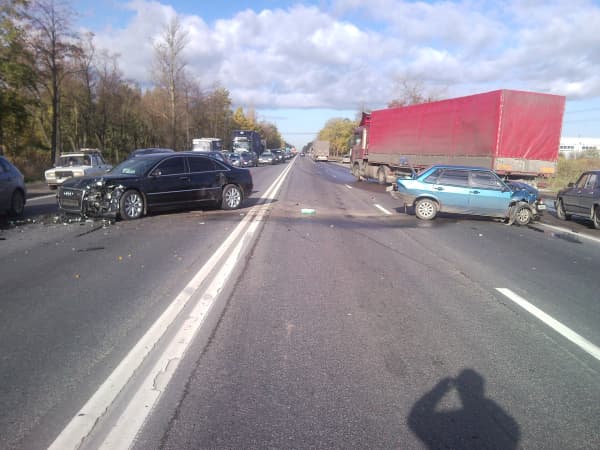
Move vehicles out of traffic if they are drivable and it is safe to do so, then exchange insurance and contact details. Photograph more than you think you need — not only the damage, but the wider scene, the position of the vehicles, road conditions, signage and sightlines. Winter collisions in particular benefit enormously from documented road conditions, because the surface will be gone by the time anyone asks.
Get a police report for anything beyond genuinely trivial contact. Report the claim to your own carrier promptly even where the other driver was clearly at fault, because your PIP is the coverage paying your initial medical costs regardless of blame and it cannot start until it is opened.
Be careful about early recorded statements and quick settlement offers, particularly where injuries may still be developing. There is no advantage to resolving a bodily injury claim before you know what the injury is.
The short version
Utah's minimums are 30/65/25 plus $3,000 PIP, and they have been since January 1, 2025. Anything showing 25/65/15 is out of date.
No-fault means your PIP pays first regardless of blame — and $3,000 does not go far.
Buy the UM/UIM coverage. One driver in twenty carries nothing, and the underinsured population is larger.
Your rate is driven by record, ZIP code, mileage, vehicle and coverage choices — several of which are yours to change.
Shop annually at identical limits, and treat higher liability limits as the cheapest real protection on the page.
Related guides
- Car ownership in Utah Valley
- Finding a mechanic in Utah Valley
- Winter tires and canyon driving
- Cracked windshields and auto glass in Provo
- Credit unions vs banks in Provo
- Cost of living in Provo
- Utah renters' rights
- Scooters & Bike Share in Provo: What's Actually on the Street (2026)
- Towed in Provo: The Sign at the Entrance Decides Whether They Were Allowed To
- Car Washes & Detailing in Utah Valley: Where to Go and What to Know
- Buying a Used Car in Utah Valley: Titles, KSL, and the As-Is Rule
- Driving Schools in Provo: Driver Ed, Road Tests & the Third-Party Shortcut
- West Provo: The Half of the City Everyone Else Drives Past
- After a car crash in utah: how the claim works
- DUI in Utah and the .05 limit
- Homeowners Insurance in Utah Valley
Frequently Asked Questions
What is the minimum car insurance required in Utah?
When did Utah's insurance minimums change to 30/65/25?
What does it mean that Utah is a no-fault state?
Do I need uninsured motorist coverage in Utah?
Why is my car insurance more expensive after moving to Utah County?
Does a Utah speeding ticket raise your insurance?
Is it worth carrying more than Utah's minimum coverage?
How often should I shop my car insurance in Utah?