
Downtown Provo has a parking problem that is almost entirely a perception problem.
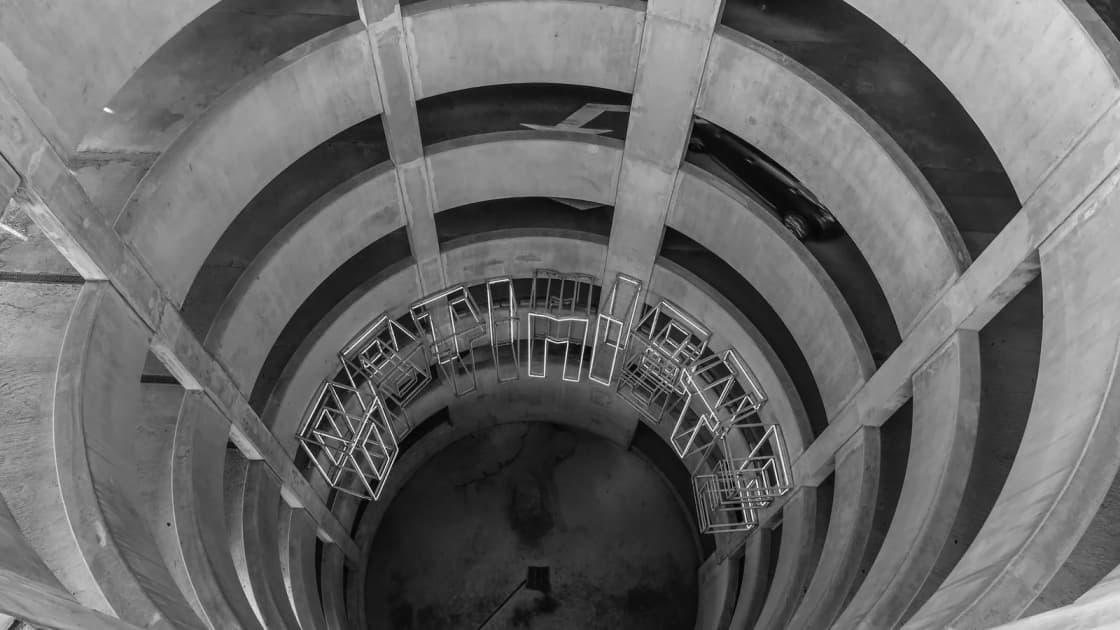
There are more than 10,000 parking spaces downtown — roughly 58 acres of them, by the city's own accounting. That is not a shortage. What downtown has instead is a two-hour on-street limit, a rule that quietly defeats the usual way people work around two-hour limits, and a lot of visitors who have never read either.
The result is a steady supply of tickets issued to people who genuinely believed they were fine.
The rule that actually governs downtown
Two continuous hours on the street. Provo City Code sets that limit for on-street parking in the downtown Center Street area, and unless a sign specifically says something different, that is the rule.
Two hours is enough for lunch. It is enough for an errand, a haircut, a coffee with someone. It is not enough for dinner and a show at the Covey Center, and it is not enough for an afternoon of work at a downtown café.
The city's own guidance is refreshingly direct about this: use the garages for stays longer than two hours. That is not a suggestion buried in a code section — it is what the parking page tells you at the top.
The one-block rule, which is the part nobody knows
Here is where people get caught.
The standard move at a two-hour limit anywhere in America is the shuffle: come back at ninety minutes, move the car up the block or around the corner, and start a fresh two hours. In most cities this works, because the limit attaches to the space.
In downtown Provo, it does not. Provo City Code defines "parking place" for downtown on-street parking as an area extending a minimum of one block in all directions from where the vehicle was initially parked.
Read that again, because it is doing a lot of work. Your two hours does not attach to the space you are in. It attaches to a zone roughly a block in every direction. Moving across the street, up the block, or around the corner is still the same parking place under the ordinance, and the clock does not reset.
To start a new two hours, you have to genuinely leave the area.
This is a deliberately drafted rule. It exists because the shuffle is what turns short-term visitor parking into all-day employee parking, and it is the single most useful thing to know before you park downtown.
Where to actually put the car
Garages, for anything long
If you are downtown for more than two hours, this is the answer, and everything else in this section is a detail. The city maintains both a printable downtown parking map and an interactive map where you can type an address and see what is near it — which is more useful than any list an article can print, because lot availability and access change.
Public lots
Provo City Code specifically identifies public parking lots in the block interiors downtown — including the interior of the block bounded by University Avenue, 100 West, 100 North and Center Street, and the interior of the block bounded by 100 West, 200 West, 100 South and Center Street.
These interior lots are the local knowledge. They are behind the storefronts rather than on the main drag, which means visitors who only look at Center Street itself never see them.
On-street, for short stops
Fine for under two hours. Genuinely convenient. Just do not plan an evening around it.
What not to do
Do not park in a private business lot for a different business. Downtown has plenty of privately controlled lots attached to specific tenants, and those are enforced by the property owner rather than the city — which usually means towing rather than a citation, and towing is a far worse afternoon than a ticket.
Do not use a loading zone unless you are actively loading. This is what loading zones are for and enforcement is not sympathetic.
Permit parking areas
Parts of Provo are designated permit parking areas, where street parking is largely limited to residents holding a permit. The city is explicit about why: demand badly outstrips supply in certain neighborhoods.
If you have spent any time near campus you can guess which neighborhoods. High-density student housing plus a car per resident plus a street grid built long before either produces exactly this.
Two practical notes:
- If you live in one, permits are purchased through the city.
- If you are visiting someone in one, ask them how visitor parking works in their zone before you arrive. This is a five-second question that prevents a genuinely annoying outcome.
Our neighborhood guides get into which parts of the city this affects most, and our guide to apartments near BYU covers parking as a factor in choosing where to live — because in some buildings it is the deciding factor.
Enforcement, tickets and appeals
Provo's parking enforcement team works, in the city's own phrasing, around the clock. Treat downtown as actively enforced rather than nominally enforced.
Fines for ordinary parking violations are modest rather than punitive — this is not a city that funds itself on parking citations. The number that deserves your attention is not the fine, it is the late fee.
The five-business-day rule
If you disagree with a citation, you can appeal online. And there is a detail in the city's appeal policy that is worth acting on:
If the appeal is submitted within five business days, no late fees are assessed during the appeal process.
That changes the calculus entirely. Appealing quickly is close to free. Sitting on a citation for a fortnight while you decide whether to bother is what costs money, because the underlying fine keeps aging while you think.
A hearing examiner reviews the appeal along with the officer's comments and any photo evidence attached to the violation, then issues a decision. Photo evidence is standard now, which is worth knowing in both directions — it constrains what you can plausibly claim, and it also means a genuinely wrong ticket is often easy to disprove.
If you have lost the citation
Provo311 will find it. Call 311 from inside city limits or the city's main customer service line, or go in person to the customer service office on West Center Street. Have your license plate number ready — that is what they search on.
The option most people skip
The most reliable way not to get a downtown parking ticket is not to bring the car downtown.
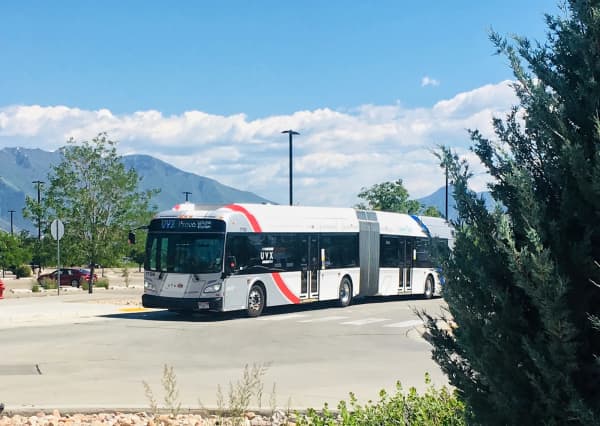
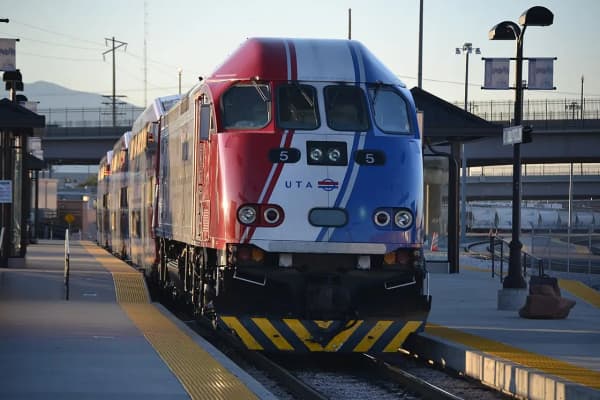
Downtown Provo sits directly on the UVX, the bus rapid transit line that runs the length of the Provo-Orem corridor every few minutes. It stops downtown, at the library, at both campuses, and at both FrontRunner stations. If you are coming from anywhere on that corridor, the bus is often faster than driving once you count the parking search — and if you are a BYU or UVU student, it is free with your ID.
Provo's own parking page makes this point itself, noting that certain BYU and UVU ID cards double as transit passes with unlimited UTA access. That is the city telling you the cheapest parking solution is to not park.
We cover that line in detail in the UVX guide, and the broader question of whether you can operate here without a car in living in Provo without a car.
Event days are different
Two categories of day change the downtown picture.
Festival and event days. Downtown hosts a lot — the Rooftop Concert Series in summer, farmers market mornings, the Freedom Festival in early July, holiday events in December. On those days the supply is the same and the demand is not. Arrive earlier, go straight to a garage, and skip the optimism.
BYU game days. Campus is not downtown, but the traffic and the parking pressure spill outward, and downtown becomes a spillover lot for people who did not want to pay for campus parking. We treat that as its own subject in our guide to BYU football parking, because the answer there is genuinely different.
Rules that catch specific people
Beyond the two-hour limit, a handful of provisions in Provo City Code trip up particular groups.
Recreational vehicles, trailers and boats. It is unlawful to leave an RV, trailer, boat or similar conveyance on a public street or alley for more than seventy-two consecutive hours, whether or not it is attached to a vehicle. This one catches people who buy a trailer and park it out front indefinitely, and it catches families hosting visitors with an RV. Seventy-two hours is three days, which sounds generous until you realize a weekend visit plus travel days can reach it.
Loading zones. Usable while you are actively loading or unloading goods or passengers. Not usable as a short-term space because you will only be five minutes.
Accessible spaces. Provo has designated accessible parking throughout the city, governed by federal and state rules, and using one requires a valid placard or plate. Enforcement here is unsympathetic and correctly so.
Overnight street parking. Residential streets are not a long-term storage solution, and permit areas exist precisely because some neighborhoods were being used that way. If you are relying on street parking for a second vehicle, check the rules for your specific block before you assume it works.
Why the rule is written the way it is
It is worth understanding the logic, because it makes the rule easier to remember and harder to resent.
A downtown has a finite quantity of the most convenient parking — the spaces directly in front of the businesses. Those spaces are most valuable when they turn over, because a space that serves six customers in a day supports six transactions and a space occupied by one car from nine to five supports one.
The people most likely to occupy a prime space all day are not shoppers. They are the people who work downtown, arrive at nine, and would very much like to park free in front of the building they work in.
The two-hour limit exists to stop that. The one-block rule exists to stop the workaround, which is otherwise trivial: set a phone alarm, move the car around the corner twice a day, park free all day forever.
By defining the parking place as a zone rather than a space, Provo made the shuffle unworkable without also making short visits harder. It is a well-drafted rule. It is also completely invisible unless you read the code, which is why so many people discover it via a citation.
The corollary is that downtown employees should be in the garages, and the city's guidance points them there.
Snow, construction and the things that move
Two seasonal complications are worth flagging.
Winter. Snow removal changes the street picture — plowed berms reduce usable width, and there are periods when moving a vehicle is required for clearing operations. Watch for posted notices during storm cycles rather than assuming a space that worked in October works in January. Our guide to winter driving in the canyons covers the wider seasonal picture for driving here.
Construction. Downtown Provo and its approaches have been under active roadwork, including UDOT work on the University Avenue overpass near Provo Central Station that has changed bus routing and stop locations at the south end of the corridor. Road projects move parking as well as traffic, and the arrangement in force is often newer than any map.
This is a general principle for local information and one we keep running into: the most current source is usually the operator or the agency doing the work, not the general-purpose page that describes how things normally are.
Arriving on two wheels
The downtown parking conversation almost always assumes a car, and for a meaningful share of trips it does not have to.
Downtown Provo is flat, compact and connected to the Provo River Parkway, which is the closest thing the city has to a traffic-free arterial for bikes. From a good portion of central Provo, a bike gets you downtown in less time than driving and parking does, and the parking problem disappears entirely.
Bike parking downtown is patchier than car parking — racks exist but are not uniformly distributed, and the good ones fill on event evenings. Provo Central Station has the best secure provision in the city, with both short-term racks and long-term lockers, which is useful if you are combining a bike with a train rather than a downtown errand.
If you are riding to a specific venue, it is worth a quick look at what is outside it before you commit, because the difference between a rack at the door and a rack two blocks away is the difference between this being easier than driving and merely equivalent.
The short version
- Two hours on the street. Not longer.
- The shuffle does not work. Your parking place is a block in every direction.
- Over two hours means a garage. The city says so; it is correct.
- There are interior block lots that visitors never find because they only look at Center Street.
- Permit zones exist. Ask before you visit someone in one.
- Appeal within five business days and no late fees accrue while it is considered.
- The best parking spot downtown is the one you never needed, because you took the bus.
Downtown Provo is one of the few genuinely walkable cores in Utah County, with 10,000 spaces attached to it. The only thing standing between you and using it comfortably is a two-hour rule and one unusual sentence in the city code about what "parking place" means.
The problem this page has not solved: working downtown all day
Everything above is written for someone arriving downtown for an hour or three. The people for whom downtown parking is genuinely hard are the ones who are there from eight until five, five days a week, and the visitor advice does not transfer to them at all — in fact, following it is what generates most of the tickets.
The structural reason is that short-term on-street parking is designed to turn over. Time limits exist to make a space serve several businesses in a day rather than one employee. An employee using metered or time-limited street parking is using a space for the one purpose it was specifically designed to prevent, which is why the enforcement described above finds them so reliably.
The shuffle does not work and it is worth saying why. Moving a car every two hours to reset a limit feels like compliance and generally is not. Time-limited zones are commonly written to restrict parking within an area over a period rather than in a single space, so returning to the same block does not restart anything. It also costs you two or three interruptions a day, which is a real price in attention even when it succeeds.
What actually works
Find out whether your employer has spaces before you assume it does not. Small downtown employers frequently hold a handful of leased stalls in a nearby lot and do not advertise them, because they are allocated informally to whoever asked. Asking is free and is the single highest-return move here.
Look for monthly leased parking rather than daily. The economics of a monthly stall are usually better than paid daily parking and dramatically better than accumulating citations, and the supply is not always where people expect — private lots attached to buildings with a lot of evening use are the ones with daytime capacity to sell.
Consider parking once, further out, and walking in. A ten-minute walk from a free, unrestricted area is a completely different proposition for an employee than for a visitor carrying purchases. Employees do it once each way, at predictable times, with no shopping bags. This is the option that most often works and is most often dismissed by people importing visitor logic.
Look at the days rather than the week. Downtown demand is uneven. If your work is partly flexible, the days you most need to be there in person may not be the days parking is worst, and shifting one day a week is sometimes the entire solution.
Treat permit areas correctly. Residential permit zones are not an overflow lot for employees, and they are enforced by people who know exactly which vehicles belong. Parking in one because it is adjacent and unrestricted-looking is the most common expensive mistake in this category.
Related Guides
- The Utah County Courts, Explained — why a parking ticket is not a court matter
- Towed in Provo: The Sign at the Entrance Decides Whether They Were Allowed To
- Cracked Windshields in Provo: The Utah Rule Everyone Quotes Wrong
- FrontRunner from Provo: What to Know Before You Ride
- Buses From Provo to Vegas, St. George & Beyond: The Intercity Guide
- Scooters & Bike Share in Provo: What's Actually on the Street (2026)
- The Provo DMV, Decoded: Two Agencies, Two Buildings
- Finding a Trustworthy Mechanic in Utah Valley
- The Provo Newcomer's Guide — the other things here worth learning once
- EV Charging in Utah Valley
- Center Street, Provo: A Self-Guided Historic Walking Tour
Frequently Asked Questions
How long can I park on the street in downtown Provo?
Can I just move my car to reset the two hours?
Is parking downtown free?
Where should I park for a long evening downtown?
What is a permit parking area?
How much is a parking ticket in Provo?
How do I appeal a parking ticket?
Can I leave a trailer or RV parked on the street?
Where should I park if I work downtown Provo all day?