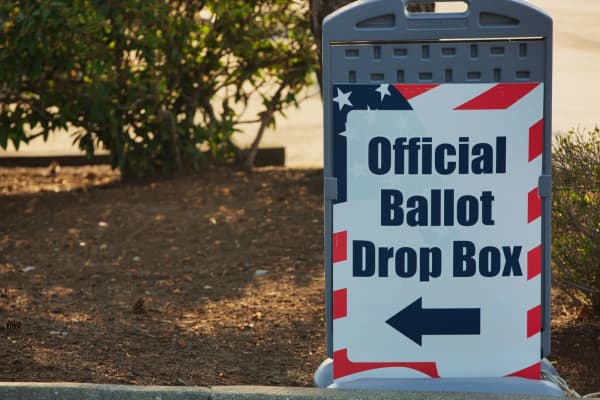

The envelope does not look important. That is the first problem with a jury summons in Utah County: it arrives looking like every other piece of government mail, and a meaningful number of people set it aside for a week.
The second problem is that it does not tell you to come to court on Tuesday. It tells you that you are in a pool, for a term, and that at some point you may be told to appear with very little notice. People read that as vague and treat it as low priority. It is neither.
What follows is what the summons obligates you to do, what the state pays for it, and the two specific things Utah law forbids your employer from doing about it. That last part is the section most people have never read, and it is the one worth knowing before you talk to your manager.
The questionnaire comes first, and it is not the summons
Utah's process runs in two stages, and confusing them is the most common source of unnecessary panic.
Stage one is a juror questionnaire. Names are drawn at random from source lists, and questionnaires go to the people whose names come up. Court staff read the returned questionnaires to confirm the basic qualifications — age, citizenship, residency and so on. Receiving a questionnaire does not mean you have been selected for anything. It means you are being screened for a pool.
Stage two is the summons itself, which comes later and only to some of the people who returned questionnaires. The summons is the document with legal force behind it.
Both need a response. The questionnaire is not optional correspondence you can decline, and a court that does not receive it will follow up. But receiving one is not a reason to rearrange your month.
The on-call system is the part that breaks people's schedules
Here is the mechanic that causes the most disruption, precisely because it is the least intuitive.
Utah courts generally do not assign you a fixed date. You are on call for a defined term. Sometime during that term the court notifies you that you are in the active pool, and tells you how to check in. Many courts run an evening call-in or online check system: you contact it after business hours and it tells you whether to appear the following morning.
You are subject to being summoned at any point during the term until you attend court.
The practical instruction that follows is blunt and worth repeating, because Utah's own juror guidance states it plainly: do not take time off from work or school until you have been instructed to come to the courthouse. Tell your employer or your instructors that you are on call. Arrange contingency childcare. But do not burn a vacation day in advance for a day you may never be asked to attend.
What the state pays, and the year that number was set
Utah pays jurors $18.50 for the first day of attendance and $49 per day for each subsequent day. That is set out in Utah Code 78B-1-119, and the Utah courts publish the same figures on their own juror pages.
Now the part that does not appear on those pages.
Those numbers were set by H.B. 36 in the 1998 general session. The bill's own title describes its purpose as increasing juror and witness fees from $17 to $18.50 for the first day, with $49 per day thereafter. The enrolled copy shows the amendment as a bracketed strike of $17 and an insertion of $18.50.
That was 1998. The figures on your summons today are the figures that bill wrote. Utah's juror compensation has been unchanged for roughly twenty-eight years, and the first-day rate is lower than the subsequent-day rate for a reason that made sense in a different pay environment: the first day is the one where many people are never seated and go home before lunch.
Whether that is adequate is a policy question and not one this page will answer. But if you are budgeting for a week of service, budget against the real numbers rather than an assumption that they track anything current.
Mileage, parking and the 50-mile line
There is a travel component, and it is narrow.
If you must drive more than 50 miles one way to the courthouse, the court pays $1 for each four-mile increment beyond the first 50, calculated one way. For most Utah County residents summoned to a Utah County court, that threshold is simply never crossed — Provo to the Fourth District Court is not a 50-mile trip from anywhere in the county.
Parking and public transportation costs may be reimbursed if you provide proof of payment. Keep the receipt. This is a category where the court can only reimburse what you can document, and a garage ticket thrown away at the end of a long day is not recoverable later.
The employer protections, stated precisely
This is the section to read before any conversation with a manager.
Utah Code 78B-1-116 does two separate things, and they are frequently collapsed into one.
First, it prohibits an employer from depriving an employee of employment, threatening or taking any adverse employment action, or otherwise coercing the employee regarding employment because that employee received a summons, responded to it, served as a juror or grand juror, or attended court for prospective service. Note the breadth: it covers the summons and the selection process, not only the days you sit on a panel.
Second — and this is the provision almost nobody knows — an employee may not be required or requested to use annual, vacation or sick leave for time spent responding to a summons, participating in jury selection, or serving.
Read "or requested." The statute does not merely forbid an employer from forcing you to burn PTO. It forbids the employer from asking.
An employer who violates the section is guilty of criminal contempt, and the statute attaches a penalty on conviction. The Utah courts summarize the position for jurors in one sentence: you cannot be fired, demoted or disciplined in any way for performing this public duty.
What the statute does not do
It does not require your employer to pay you.
This is the gap that catches households, and it is a real one. Utah law protects your job and your leave balance. It says nothing that obliges a private employer to continue your wages during service. A week of state juror pay is not a week of income for most people.
Many employers do pay normal wages during jury service as a matter of policy, and a common arrangement is that the employee signs the state's juror check over to the employer in exchange, so nobody is paid twice for the same hours. Utah's own juror materials describe exactly this practice.
The move is to find out which category your employer falls into before you need to know. Look at the handbook. If it is silent, ask human resources by email rather than in the hallway, so the answer exists in writing.
The statute also carries an explicit limitation: nothing in it requires an employer to provide annual, vacation or sick leave to employees who are not otherwise entitled to those benefits under company policy. It protects existing leave from being consumed. It does not create leave that never existed.
Where a Utah County summons sends you
Utah County has an unusually crowded court landscape, and a summons will name exactly one court.
The Fourth District Court is the court of general jurisdiction here, and it operates from more than one location within the county. Justice courts — the city courts and the county justice court — also empanel juries for the cases within their reach, which are the less serious ones.
Whichever court is named on the paper is the one to call, the one whose check-in system you use, and the one whose address you drive to. If you are unclear on how the county's courts divide work among themselves, our guide to the Utah County courts sets out which court handles what and where each one sits.
Federal summonses are a different animal
If the letterhead says United States District Court for the District of Utah, most of the above changes.
Federal jury service for this district generally means reporting to Salt Lake City rather than anywhere in Utah County. The federal attendance fee is $50 per day, structured differently from the state's split rate. Federal jurors traveling long distances may be reimbursed for lodging and meals at government rates, and there are separate provisions for parking reimbursement.
The two systems are unrelated. Being summoned by one has no bearing on the other, and a federal summons does not exempt you from a later state summons or the reverse.
The once-every-two-years rule, and what resets it
By law you can be required to participate in jury service only once every two years. After you have attended court, you cannot be summoned again for at least two years.
The word carrying the weight is "attended."
If you returned a questionnaire and heard nothing, the clock has not started. If you were placed on call and never instructed to appear, the clock has not started. Utah's guidance is explicit that the court cannot issue a letter confirming jury service to someone who was never called in — which occasionally disappoints people who spent three weeks rearranging their lives around an on-call period and would like something to show for it.
Being excused, and the difference between excused and ignored
Judges can excuse a prospective juror for public necessity, for extreme inconvenience, or because the person is incapable of jury service. Clerks can sometimes accommodate a schedule conflict, but that is described in the courts' own material as sometimes and not always.
Two things follow.
First, a request is a request. Extreme inconvenience is a real standard and not a synonym for inconvenient. A prepaid holiday, a caregiving obligation with no substitute, a medical circumstance — these are the kinds of facts that go in the request, in specific terms, as early as you can send them.
Second, and more importantly: being excused and ignoring the summons are not points on the same spectrum. They are different categories. A summons is a court order. The path when you cannot serve runs through the court, in writing, early.
The morning itself: security, phones and the thing to bring
Courthouses screen everyone who walks in, and the screening resembles an airport more than a municipal building. Expect a magnetometer, expect bags and backpacks to be x-rayed or searched, and expect that to take time at the start of a session when several dozen prospective jurors arrive at once. Arriving with a comfortable margin is not politeness, it is the difference between being on time and holding up a proceeding involving scores of people.
Bring the summons itself. Utah's rules on juror payment turn on presenting it: a juror is expected to produce the summons to be paid for the first day, and where a juror does not have it, a clerk may certify attendance instead. That is a workable fallback rather than a plan. The document that arrived in the mail is the document that gets you paid, so it belongs in the bag rather than on the kitchen counter.
If you need something for your employer, ask on the day you appear. Courts issue letters verifying the date of service and the fee paid, and the request is routine. What a court cannot do is issue that letter to someone who was on call and never came in.
Not being selected is not a verdict on you
A large share of people who report for jury service are never seated.
You appear as part of a panel, and the questioning stage has a name worth knowing: voir dire. Attorneys and the judge put questions to the group, sometimes to individuals, aimed at surfacing anything that would make a particular person a poor fit for this particular case. Prior knowledge of the parties, a strong prior view on the subject matter, a hardship that would distract you for a week — these are the things the questions are hunting for, and answering them is the job.
Attorneys question the panel and exercise challenges. Those challenged are excused, the rest are sworn in, and everyone else goes home. Utah's own guidance addresses the emotional part directly: not being chosen reflects nothing whatsoever on a person's integrity or worthiness, and people passed over for one panel are frequently chosen for another.
If you are the sort of person who will read something into it, read this instead — a challenge is a lawyer's tactical judgment about a specific case, made on very little information, in a few minutes.
What to do when the envelope arrives
Open it the day it arrives. The dates in it are already running.
Work out which document you are holding — questionnaire or summons — and which court is named. Return the questionnaire promptly. If it is a summons, note the term, find the check-in instructions, and put the check-in in your phone as a recurring evening reminder for the length of the term, because a missed check-in is the failure mode that produces an actual problem.
Tell your employer you are on call, in writing. If anyone suggests you use vacation time, you now know the statute number.
Do not book time off in advance. Do not throw away parking receipts. And do not plan your finances around juror pay, because it is a 1998 number and it has been waiting there for you the whole time.
A Federal Summons Is a Different Animal, With a Different Job Protection
Everything above concerns a summons from the Fourth District Court — Utah's state trial court for this county. A smaller number of Utah County residents get summoned instead by the United States District Court for the District of Utah, which sits in Salt Lake City. Read the letterhead before you plan anything, because almost nothing carries across: different building, different travel, different pay schedule, different term length, and a different statute standing between you and your employer.
The federal protection is 28 U.S.C. § 1875, and it is worth knowing in detail because it is stronger than most people assume.
Subsection (a) states the rule: no employer shall discharge, threaten to discharge, intimidate, or coerce any permanent employee by reason of that employee's jury service, or the attendance or scheduled attendance connected with it, in any court of the United States. Note the verbs. Being fired is the obvious violation; being threatened or pressured is also a violation, on its own, with no dismissal required. The phrase people miss is "permanent employee" — the section does not reach every working arrangement, and that is the first question to settle about your own situation.
Subsection (b) sets out what an employer faces. Liability for damages covering lost wages and other benefits; an injunction against further violations together with other appropriate relief, expressly including reinstatement; and a civil penalty of not more than $5,000 for each violation as to each employee. A court may also order the employer to perform community service.
Subsection (c) handles the aftermath, and it is the provision that quietly matters most. Anyone reinstated under the section is treated as having been on furlough or leave of absence for the period of jury service. They return without loss of seniority and are entitled to participate in insurance and other benefits under whatever rules for employees on leave the employer had in place when the jury service began. Being made whole means the pension clock and the seniority list, not just the paycheck.
Subsection (d) is the part that makes the rest usable by someone who cannot afford a lawyer. An individual claiming a violation may apply to the district court where the employer keeps a place of business, and on finding probable merit in the claim, the court shall appoint counsel — the word is shall. Appointed counsel is compensated and expenses repaid under the mechanism in 18 U.S.C. § 3006A. A prevailing employee who used retained counsel may be awarded a reasonable attorney's fee as part of the costs. A prevailing employer may recover a fee only if the court finds the action was frivolous, vexatious, or brought in bad faith — a deliberately high bar, so that the risk of losing does not deter someone with a genuine claim from bringing it.
Two practical consequences follow. First, keep the paperwork. The summons, the certificate of attendance, the dates you served, and any written or messaged reaction from your employer are the whole evidentiary record of a § 1875 claim, and they are trivially easy to keep at the time and impossible to reconstruct later. Second, do not assume the protections are identical to the ones described earlier on this page. State-court jury service in Utah and federal jury service are governed by separate statutes with separate remedies, and quoting the wrong one to an employer is the fastest way to lose an argument you should win.
Related Guides
- The Utah County Courts, Explained — which court has your case, and where each one sits
- Free and Low-Cost Legal Help in Utah County — the hotline, the clinics, and who qualifies
- Family Court in Utah County — divorce, custody and the timelines that apply
- Homeless Resources in Utah County: Where to Get Help, and How to Help
- Getting a Passport in Utah County: Two Payments, One Building, and the Check Nobody Brings
- What Provo Can Actually Cite You For: Weeds, Junk Vehicles and the Nuisance Code
- Expungement in utah
Frequently Asked Questions
How much does Utah pay jurors?
Can my employer fire me or make me use vacation days for jury duty?
Does my employer have to pay me while I serve?
How often can I be summoned in Utah?
What is the on-call period and why does it matter?
Can I be excused from jury duty in Utah County?
What is the difference between a state and a federal jury summons in Utah?
How long will I be at the courthouse?
Sources
The facts in this guide were checked against these sources. Hours, fees and rules change, so confirm anything time-sensitive with the source before you go. How we make Provo.com.
- Juror Information FAQ, Utah State Courts. Checked October 12, 2026.
- United States Courts: Juror Pay, United States Courts. Checked October 12, 2026.
- Utah Code 78B-1-119, Jurors and witnesses -- Fees and mileage, Utah Legislature. Checked October 12, 2026.
- Utah Code 78B-1-116, Employer prohibited from penalizing juror, Utah Legislature. Checked October 12, 2026.
- H.B. 36 Juror Reimbursement (1998), enrolled, Utah Legislature. Checked October 12, 2026.