Two fees. Two payees. Two payment methods. Get that wrong and the trip is wasted, which is why it goes at the top rather than in the middle.
The application fee goes to the U.S. Department of State and must be a check, cashier's check or money order. Utah County states it in capitals on its own page: credit and debit cards and cash cannot be used for this fee.
The execution fee goes to the Utah County Clerk and can be paid by cash, check, or Visa, Mastercard, Discover or American Express.
Almost nobody carries a checkbook anymore. That single fact is the most common reason a passport application in Provo does not happen on the day it was meant to.
Where the office is
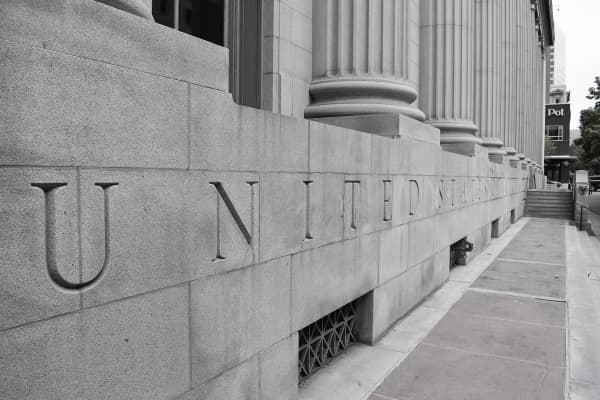
The Utah County Passport and Marriage License Office sits at 111 South University Avenue, Provo, Utah 84601. Phone (801) 851-8109, email passports@utahcounty.gov.
It is the same office that handles marriage licenses, which is a slightly odd pairing until you realize both are Clerk functions built around identity documents and in-person verification. If you are also getting married, our guide to the Utah County marriage license covers that side of the counter.
The Clerk publishes an appointments page for passports, and the office notes that it closes during monthly staff training. Check hours before traveling to it — this is a place where turning up on the wrong morning costs a real trip.
The Clerk's office is not the only acceptance facility in the area. Post offices act as passport acceptance facilities too, and BYU's own travel guidance has pointed applicants to the Provo post office as well as the county. The State Department maintains a facility locator for the complete picture.
What an acceptance facility does
Worth being clear about, because the name misleads.
An acceptance facility witnesses and executes your application. Staff check your identity, verify your citizenship evidence, watch you sign, seal the package and send it on. They do not adjudicate anything, they do not issue passports, and they cannot tell you whether yours will be approved.
The passport is issued by the State Department, weeks later, and mailed to you. Everything about timing is determined there, not in Provo.
This also explains the fee structure. The $35 execution fee pays the county for that witnessing service. The application fee pays the federal government for the passport itself.
The 2026 fees, in full
Adults 16 and over, first time or not eligible for renewal (Form DS-11):
- Passport book — $130 application + $35 acceptance = $165
- Passport card — $30 application + $35 acceptance = $65
- Book and card — $160 application + $35 acceptance = $195
Children under 16 (Form DS-11):
- Passport book — $100 + $35 = $135
- Passport card — $15 + $35 = $50
- Book and card — $115 + $35 = $150
Adults eligible to renew (by mail or online, no acceptance fee):
- Book $130 · Card $30 · Both $160
Add-ons:
- Expedited service — $60
- 1–3 day return delivery — $26.87
- File search, where citizenship evidence cannot be produced — $150
- Correcting a data error on a recently issued passport (DS-5504) — $0
- Passport photograph at the Clerk's office — $10 per person
Two things about refunds. The application fee and the execution fee are non-refundable by law, and are kept even if a passport is not issued. Separately, if you paid the $60 expedite fee and did not receive expedited processing, you may be able to claim that $60 back.
Book or card, and why most people want the book
The book is the standard document and the only one approved for international air travel. If there is any chance you will fly abroad, you need the book.
The card is valid only for land and sea entry from Canada, Mexico, the Caribbean and Bermuda, and otherwise functions as a government-issued photo ID. It is cheaper, fits a wallet, and is useful as a second ID — but it will not get you on a plane to anywhere.
For most Utah Valley applicants the answer is the book. The pairing makes sense mainly for frequent land border crossers or anyone who wants a durable federal ID that is not their driving license.
Timing, and the number that catches people
The State Department publishes routine processing at four to six weeks and expedited at two to three weeks. Both are processing times only, measured from when the application arrives at an agency.
Mail is separate and substantial. Allow up to two weeks for your package to reach them, and up to another two weeks to receive the passport after it is issued.
Door to door, that is roughly six to ten weeks routine and four to seven weeks expedited.
The State Department's own guidance says its busiest period runs from late winter through summer, and recommends applying between October and December when demand is lower. It also notes processing times can shift with demand.
The practical rule: start three months before international travel. If your trip is inside six weeks, do not rely on routine service.
The urgent routes
Two exist, and both are narrower than people hope.
Urgent travel — international travel within 14 calendar days — requires an appointment at one of the State Department's passport agencies, with proof of travel. These are not county offices, and there is no passport agency in Utah, so an urgent appointment means traveling out of state.
Life-or-death emergencies involving the death, serious illness or serious injury of an immediate family member have a separate route with documentation requirements such as a death certificate or a signed hospital letter.
Everything else — a holiday in three weeks, a conference, a wedding abroad — goes through expedited service and hope. Private expediting companies advertise heavily in search results for "Provo passport" and are not government offices. Some are legitimate couriers; all charge their own fees on top of the government fees, and none can override State Department processing.
What to bring, and the mistake made at the door
Do not sign the application before you are asked to. The signature must be witnessed. A pre-signed DS-11 is void and you will fill it out again.
Bring:
- The completed but unsigned form, printed in advance
- Proof of citizenship — a certified copy of your birth certificate if born in the US, or a Certificate of Citizenship or Naturalization, or a Consular Report of Birth Abroad. Hospital certificates, baptismal records, notifications of birth and California abstracts of birth are not accepted
- Photo identification — a valid in-state driving license, a US military or dependent ID, a federal or state government employee ID, or a current foreign passport will stand alone. Weaker documents such as an out-of-state license, a student ID, an employee ID, an expired license or a Social Security card require two or more in combination
- One passport photograph, taken within six months
- A check or money order for the State Department fee
- A Social Security number for every applicant
- A legal document connecting the names if your current name differs from the one on your birth certificate — a certified marriage license, typically
That last item matters locally. Provo produces a lot of newly married people who need a certified copy of a marriage license to bridge a name change. Ask the Clerk's office how to order certified copies when you get the license.
Children, and the rule that surprises new parents
Every applicant must personally appear, including infants. There is no exception for a newborn, and there is no mail-in path for a first child passport.
For a child under 16, both parents must be present, and both must present current identification and proof of relationship to the child, such as a certified copy of the birth certificate. Where one parent cannot attend, Form DS-3053 provides a statement of consent; where a parent cannot be located or contacted, Form DS-5525 covers the special family circumstances.
A 16 or 17 year old needs one parent present.
Validity differs too. An adult passport lasts ten years; a child's passport, ages 0 to 15, lasts five. Families discover this at the worst moment, usually while planning a trip four years after the last one.
Why Utah County's passport demand is shaped differently
Most counties process passports on a fairly even seasonal curve driven by holidays. Utah County has an additional load that other places do not.
Missionary service generates a steady stream of first-time adult passport applications from applicants in their late teens and early twenties, on a timeline set by someone else. A call arrives, a departure date comes with it, and the passport becomes urgent on a schedule the applicant did not choose. Provo is also home to the Missionary Training Center, which concentrates the population further.
Study abroad produces a second wave, clustered around both universities' program deadlines rather than around the travel itself, because programs typically require passport details months in advance.
International students already hold foreign passports and encounter a different set of problems — a current foreign passport is accepted as standalone photo identification for a US application, but the citizenship question is entirely separate. Our guide for international students in Provo covers the document landscape more broadly.
The practical takeaway for anyone in the first two groups: apply when the possibility appears, not when the date is confirmed. A passport applied for speculatively and never used costs $165. A departure delayed for a missing passport costs considerably more, in ways that are not measured in dollars.
Passport photos, and why they get rejected
The photo is the most common cause of a rejected application, and the requirements are less intuitive than they look.
One photograph, taken within the last six months, in color, on a white or light-colored background, two inches square, with the head between one inch and one and three-eighths inches measured including hair.
Beyond the measurements, the failures cluster predictably: glasses, which are no longer permitted in almost all circumstances; shadows on the face or behind the head; a neutral background that turns out to be slightly patterned; hair covering part of the face; a smile broad enough to change facial geometry; uniforms or anything resembling one; and phone photos taken at too close a range, which distorts the face in ways the software detects.
The Clerk's office sells photographs for $10 per person, and for most applicants that is the right choice. It removes a separate errand, and someone who takes passport photographs daily will not produce one that fails a measurement rule you had not heard of.
For infants, the photo is difficult — no other person may appear in the frame, and the eyes should be open. A white sheet on a car seat is the technique most professionals use.
Lost, stolen and damaged passports
Report a lost or stolen passport as soon as you know, because reporting invalidates it and forecloses its use by anyone else. Once reported, it cannot be reinstated even if you find it in a coat pocket the following week — that outcome is common and the passport is dead regardless.
Replacing a lost or stolen passport means applying in person as a first-time applicant, using Form DS-11 at an acceptance facility, with citizenship evidence, identification and a form reporting the loss. In other words, back to 111 South University Avenue, back to the two-payment structure, back to the full fee.
Damage is treated similarly. A passport that has been through a washing machine, water-damaged, torn or had pages come loose is not renewable by mail — it is replaced in person. Normal wear is fine; anything affecting the data page or the security features is not.
Losing a passport abroad is a different process handled through the nearest US embassy or consulate, and it is the argument for carrying a photocopy or a photograph of the data page separately from the passport itself.
Name changes and second books
Two situations that come up often enough in a marriage-heavy county to be worth naming.
A name change is handled differently depending on how recently the passport was issued and what document supports the change. If the passport was issued within the last year, the correction is generally free using Form DS-5504. Beyond that window it becomes a renewal or a new application depending on eligibility, and the supporting document — usually a certified marriage license or a court order — has to accompany it. The State Department's fee calculator resolves which path applies.
A second passport book exists for a narrow set of circumstances, principally travelers who need one passport while another is with an embassy for visa processing, or who travel to countries whose entry stamps create problems elsewhere. It has a shorter validity and requires a written explanation of need. Most people do not qualify and do not need it.
Renewal is a different, cheaper process
If you held a passport within the last 15 years and were at least 16 when it was issued, you can generally renew by mail or online without visiting an acceptance facility at all — and without the $35 execution fee.
Renewal by mail is paid by check or money order. Online renewal takes a credit or debit card. Online renewal still takes four to six weeks of processing.
Check eligibility on the State Department's renewal pages before assuming it, because a renewal submitted by someone who did not qualify comes back, and that round trip costs weeks you may not have.
After you apply
You can track the application at the State Department's status site, and updates go to the email address on the form. If they write asking for more information, answer quickly — an unanswered letter is one of the most common causes of a passport that takes far longer than the published range.
Two practical points once it arrives. Many countries require at least six months of validity remaining beyond your travel dates, so an unexpired passport is not automatically a usable one. And your citizenship evidence — that certified birth certificate — comes back separately from the passport, often in a different envelope on a different day. People assume it has been lost. It usually has not.
Fees, processing times and office hours change. The figures here reflect what the State Department and Utah County published at the time of writing; check both before you go.
Related Guides
- The Utah County Marriage License
- The Provo DMV, Decoded
- Getting Something Notarized in Provo
- International Students in Provo
- Flying from Provo Airport
- Jury Duty in Utah County: The Summons, the Pay, and What Your Boss Cannot Do
- Voting in Utah County: The Postmark Rule Is Gone, and That Is the Change That Bites
- Yoga in Provo: Nobody Licenses Your Teacher, and the Studio May Owe You a Bond
- Vital Records in Utah County
Frequently Asked Questions
Where do I apply for a passport in Utah County?
How much does a US passport cost in 2026?
Why can't I pay the passport fee with a card?
How long does a passport take in 2026?
Do children need to appear in person for a passport?
Can I renew my passport by mail or online?
What if I need a passport urgently?
Do I need a passport photo before I go?
Sources
The facts in this guide were checked against these sources. Hours, fees and rules change, so confirm anything time-sensitive with the source before you go. How we make Provo.com.
- U.S. Department of State, Bureau of Consular Affairs: Passport Fees, U.S. Department of State, Bureau of Consular Affairs. Checked October 12, 2026.
- Processing Times for U.S. Passports, U.S. Department of State, Bureau of Consular Affairs. Checked October 12, 2026.
- Passports — Utah County Clerk, Utah County Government. Checked October 12, 2026.
- Passport and Marriage License Office Hours, Utah County Clerk. Checked October 12, 2026.