
Utah's ballot deadline used to be forgiving in a specific way: if it was postmarked the day before Election Day, it counted.
That is no longer true. Under H.B. 300, passed in 2025, a mailed ballot must be in the election officer's possession by 8 p.m. on election night, regardless of postmark.
It is the least discussed provision of a heavily discussed law, and it is the one most likely to quietly disqualify a vote cast in good faith by someone following a habit that worked for years.
November 3, 2026 is a general election. Ballots go out to Utah County's active registered voters roughly three weeks beforehand. If yours is still on the kitchen counter at the end of October, put it in a drop box rather than a mailbox.
The dates that matter
- Tuesday, November 3, 2026 — general election. Vote centers open 7 a.m. to 8 p.m.
- Friday, October 23, 2026 — registration must be received by the county clerk by 5 p.m. This applies to online, mail and in-person registration
- Roughly mid-October — ballots mailed to active registered voters, about three weeks out
- 14 days before Election Day — early voting begins
- 8 p.m., November 3 — hard deadline for a ballot to be in the clerk's hands, by mail or drop box
The June 23, 2026 primary has passed. Utah runs federal, state and county contests in even-numbered years and municipal contests in odd-numbered years, which makes 2026 the bigger ballot.
What H.B. 300 did
The bill's history matters, because a lot of confident and contradictory descriptions of it are circulating.
It was introduced by Rep. Jefferson Burton and substantially rewritten in the Senate by Sen. Mike McKell — both Utah County legislators, which gives the county an unusual proximity to a statewide change. The original version would have required most voters to return ballots in person with ID to a staffed drop box. That version did not survive. It was scaled back through substitute versions before it passed.
What emerged does four things on a staggered timetable:
From 2026 — the return envelope carries a space for the last four digits of your Utah driver license, state ID or Social Security number.
Immediately — the postmark rule is replaced by an 8 p.m. Election Day receipt deadline.
By January 1, 2029 — automatic mail ballots end. Voters must opt in to receive one, renewing every eight years, with re-opt-in triggered by missing two consecutive general elections.
By January 1, 2029 — signature verification ends and the ID number becomes the verification method.
The legislature also allocated $2 million for voter education, an acknowledgment that a change like this fails if people do not hear about it.
The four-digit box: required, but not yet disqualifying
This is where reporting has been muddled, and the distinction is worth getting exactly right.
From 2026 you are asked to write the last four digits of a valid ID on your ballot envelope. Through the end of 2028, if that number is missing, your ballot can still be validated by comparing your signature — the long-standing method.
From January 1, 2029, that safety net is removed. The ID number becomes the verification, signature matching ends, and a ballot without a valid ID number will not count.
So both statements circulating are half-right. It is required, in the sense that you are asked for it and should provide it. It is not yet disqualifying, in the sense that omitting it does not currently void your vote.
Provide it anyway. Signature verification generates cure notices when a signature has drifted — and signatures do drift, particularly for older voters and for anyone who signed their registration card decades ago. A matching ID number is the cleaner path.
The county tested this early, and pulled back
A specifically local footnote, and an instructive one.
Utah County's envelopes changed more than once as the clerk's office, led by Aaron Davidson, worked out how to add the four-digit box. That illustrates a real thing: the machinery for verifying four-digit ID numbers against records at scale is not trivial, and counties were building it while the law phased in. If your envelope this year looks different from the last one you filled in, that is why.
Returning your ballot: three ways, ranked
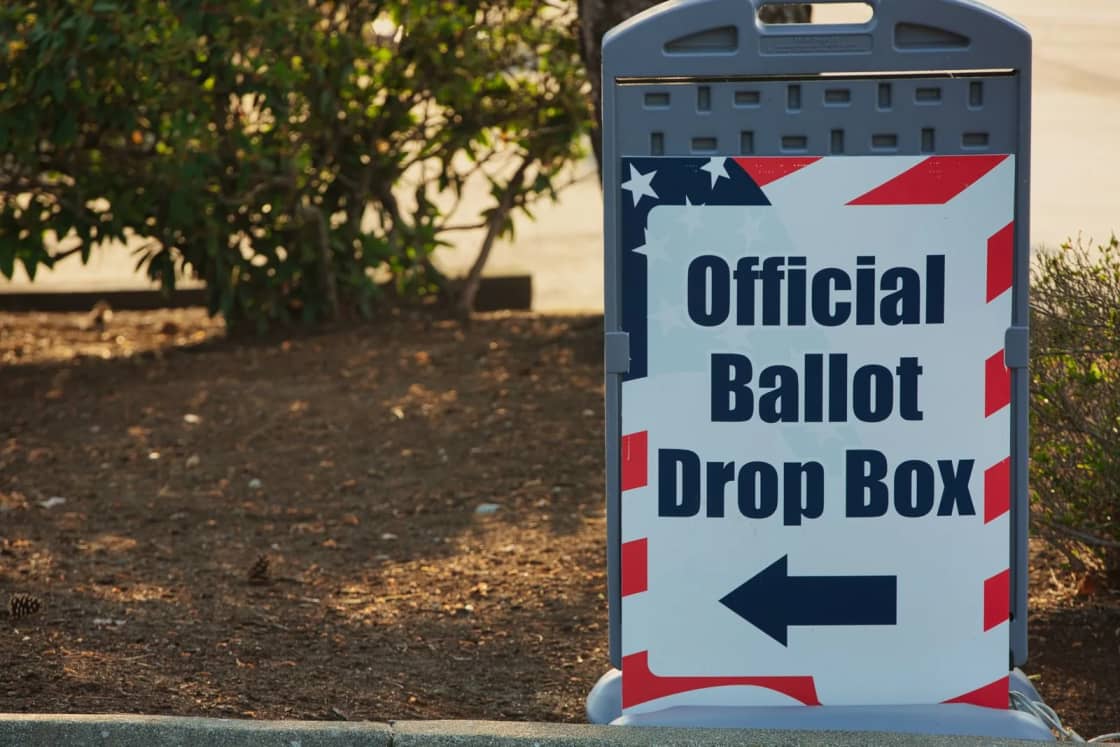
Drop box — the recommended method close to the deadline. Utah County maintains 28 drop boxes, at least one in every city and town, open 24 hours a day through the close of polls on Election Day. The current list is under the voting locations section of the county elections site. A drop box removes postal transit from the equation entirely, which is the whole problem the new deadline creates.
Mail — fine early, risky late. The county asks voters to affix a stamp and to mail back early. With the postmark rule gone, "early" now means early. A ballot posted in the last few days before the election is a gamble against a mail system that does not guarantee overnight local delivery.
In person at a vote center on Election Day. Available, and the fallback if something has gone wrong — if your ballot never arrived, if you spoiled it, or if you missed the registration deadline.
Whichever you choose: sign the affidavit on the envelope. An unsigned envelope is the single most common curable defect, and curing it requires the county to reach you and you to respond within a window.
Registering, and the same-day fallback
To register in Utah you must be a US citizen, 18 by Election Day, a Utah resident for 30 days, and not currently incarcerated for a felony conviction. Sixteen- and seventeen-year-olds may pre-register, and a 17-year-old who will be 18 by the general election may vote in the preceding primary.
Three routes: online, which needs a Utah driver license or state ID with a current address matching Driver License Division records; by mail, using the state form, with a license or state ID number, or the last four digits of a Social Security number if you have neither; and in person at the clerk's office.
All three must be received by 5 p.m. on October 23, 2026.
Miss it and same-day registration is available during early voting and on Election Day at a vote center. Bring two forms of valid ID and proof of residency. You will be registered and will cast a provisional ballot, which is counted once eligibility is confirmed. It works — it is simply slower and less certain than registering in advance.
One current-cycle note: voters already affiliated with a party could not change affiliation until after the June 23, 2026 primary, and an earlier deadline applied to affiliation changes ahead of that primary. Unaffiliated voters could still choose a party.
Students, and the one-registration rule
Provo and Orem host a very large student population, and the rule is simple and frequently misunderstood.
You may register at your home address or your college address — but only one, and you vote where you are registered.
Registering in Utah means voting Utah's ballot: governor and statewide offices in their cycles, the legislature, county offices, judicial retention, local ballot measures. It does not mean voting your home state's congressional race. Neither choice is better; they are different ballots with different consequences, and the local one is where your rent, your bus service and your city council are decided.
What is not permitted is holding two active registrations. Move deliberately, and update the old one.
Our guides for BYU students and UVU students cover the wider question of establishing residency here.
Check your registration in early October
The most common reason a ballot never arrives is an out-of-date address, and in a city where a large share of the population moves every August, that is not a rare event.
The state runs both tools at votesearch.utah.gov: one to look up your voter information and confirm registration and address, another to track your mail ballot through sending, receipt and acceptance.
Check in early October, before ballots go out. An address fixed on October 5 is a non-event. The same problem discovered on November 1 is a trip to a vote center.
If you need your ballot sent somewhere other than your registered address, an alternate address request must reach the election officer no later than 11 days before the election.
What happens to your ballot after you drop it
Understanding the chain removes most of the anxiety about whether a vote counted, and it explains why results take days.
A returned ballot is logged as received, which is the point at which the tracking tool changes status. The envelope is then checked — signature compared against the record, and increasingly the four-digit ID checked against file. Only after that verification does the envelope get separated from the ballot inside it, which is how secrecy is preserved: by the time anyone sees how you voted, your name is no longer attached.
If verification fails, the county is required to attempt a cure. You get contacted — by mail, phone, email or text depending on what the county holds for you — and given a window to confirm your identity or correct the signature. Cure notices are routinely mistaken for junk or for scams and thrown away. If you get one, act on it, and confirm it is genuine by calling the elections office on the published number rather than a number in the message.
Counting continues after election night because ballots dropped at 7:59 p.m. still have to go through the entire chain. Utah counties also canvass results in the days that follow, which is when the count becomes official. Slow results are the process working, not evidence of a problem.
Poll workers, observers and the people who run this
Utah County actively recruits election workers, and the recruitment covers more roles than people assume: poll workers at vote centers, drop box closers who secure boxes at the deadline, and time-limited staff in the office and the ballot center.
It is paid, temporary work with training provided, and it happens to be one of the few civic roles where a single day of your time has a measurable effect on how smoothly an election runs in your own city. Election offices across the country have struggled to staff adequately, and Utah County posts its recruitment through the clerk's site.
There is a second reason to mention it. A great deal of public suspicion about elections comes from the process being invisible. Working one is the most direct available cure for that — you see the chain of custody, the two-person rules, the logs. For those who would rather observe than work, Utah provides for poll watchers and observers under defined rules, and the elections office can explain the process.
Military, overseas and accessible voting
Voters covered by the Uniformed and Overseas Citizens Absentee Voting Act have a separate process, and the county posts UOCAVA notices ahead of each election. The deadline to request a UOCAVA ballot is 5 p.m. the day before the election. If a ballot does not arrive in time, a federal write-in absentee ballot is the backstop.
The county also maintains provisions for voters with disabilities, including curbside drop-off, and publishes information for disabled voters on the elections site. Accessible voting equipment is available at vote centers. If you need an accommodation, contacting the elections office in advance is more reliable than arriving and hoping.
Who to contact
The Clerk's office is split across two buildings, and people routinely call the wrong one.
- Elections Division — 100 East Center Street, Suite 3100, Provo, UT 84606 · (801) 851-VOTE (8683) · elections@utahcounty.gov
- Passport and Marriage License Office — 111 South University Avenue, Provo · (801) 851-8109
Elections is on Center Street. The University Avenue office handles passports and marriage licenses, not ballots.
What is on the ballot, and how to find out early
The county publishes candidate information, financial disclosures, filed petitions and a sample ballot ahead of each election, and a sample ballot is the single best preparation you can do.
A Utah general election ballot is long. Beyond the federal and statewide races there are legislative seats, county offices, school board contests, judicial retention questions, and local bond or tax measures that frequently affect a household more directly than anything at the top of the ticket. Judicial retention in particular defeats people, because the names are unfamiliar and the ballot offers no guidance — the state's judicial performance evaluations exist precisely for this and are worth reading.
Our guide to what is on the Utah County ballot works through every contest on this one — what each office decides, which races depend on your address, and the offices people expect to vote on and will not find.
Working through a sample ballot at your kitchen table, with time, produces better decisions than working through the real one in a hurry. It also shortens the vote-center queue for everyone if you go in person.
For the local layer — what the council is deciding between elections — our guide to following the Provo City Council covers how to track it.
The short version
Register by October 23. Watch for your ballot in mid-October. Sign the envelope, add the four digits, and get it into a drop box rather than the mail if it is anywhere close to the deadline. It must be in the clerk's hands by 8 p.m. on November 3 — postmarks no longer count.
Election law in Utah has changed in each of the last several legislative sessions and further changes have been under consideration. Everything here reflects the law as it stands for the November 2026 election; confirm current rules with the Utah County Clerk or at vote.utah.gov before you rely on them.
Related Guides
- Cómo votar en el condado de Utah (guía en español)
- What Is on Your Utah County Ballot in November 2026
- Following the Provo City Council
- Getting a Passport in Utah County
- The Utah County Courts, Explained
- Property Tax in Utah County
- Moving to Provo
- Getting Something Notarized in Provo: The $10 Cap, the Journal Rule & the Free Options
- The Utah County Clerk: Ballots, Marriage Licenses & Passports
- The Provo Mayor's Office: What the Job Actually Controls
- The Out-of-State Student's Paperwork in Utah
- Who Decides What in Utah Valley — the bodies you can be heard at between elections
- The Utah Caucus System Explained
Frequently Asked Questions
When is the 2026 general election?
What is the deadline to register to vote in Utah?
Can I still mail my ballot the day before the election?
Do I have to write my ID number on the ballot envelope?
Where are the ballot drop boxes in Utah County?
Will I automatically get a ballot in the mail?
Can students vote in Provo if they are from another state?
How do I check my registration or track my ballot?
Sources
The facts in this guide were checked against these sources. Hours, fees and rules change, so confirm anything time-sensitive with the source before you go. How we make Provo.com.
- Voter Information, Utah County Elections. Checked October 12, 2026.
- About Utah County Elections, Utah County Elections. Checked October 12, 2026.
- Utah County Elections home, Utah County Elections. Checked October 12, 2026.
- Official Ballot for Utah County, June 23, 2026, Utah County Elections. Checked October 12, 2026.
- Utah Code 20A-3a-204, 20A-2-102.5, 20A-3a-601, Utah Legislature. Checked October 12, 2026.
- Utah Code 20A-2-101 and 20A-2-101.1, Utah Legislature. Checked October 12, 2026.
- H.B. 300 Amendments to Election Law, Enrolled Copy (2025), Utah Legislature. Checked October 12, 2026.