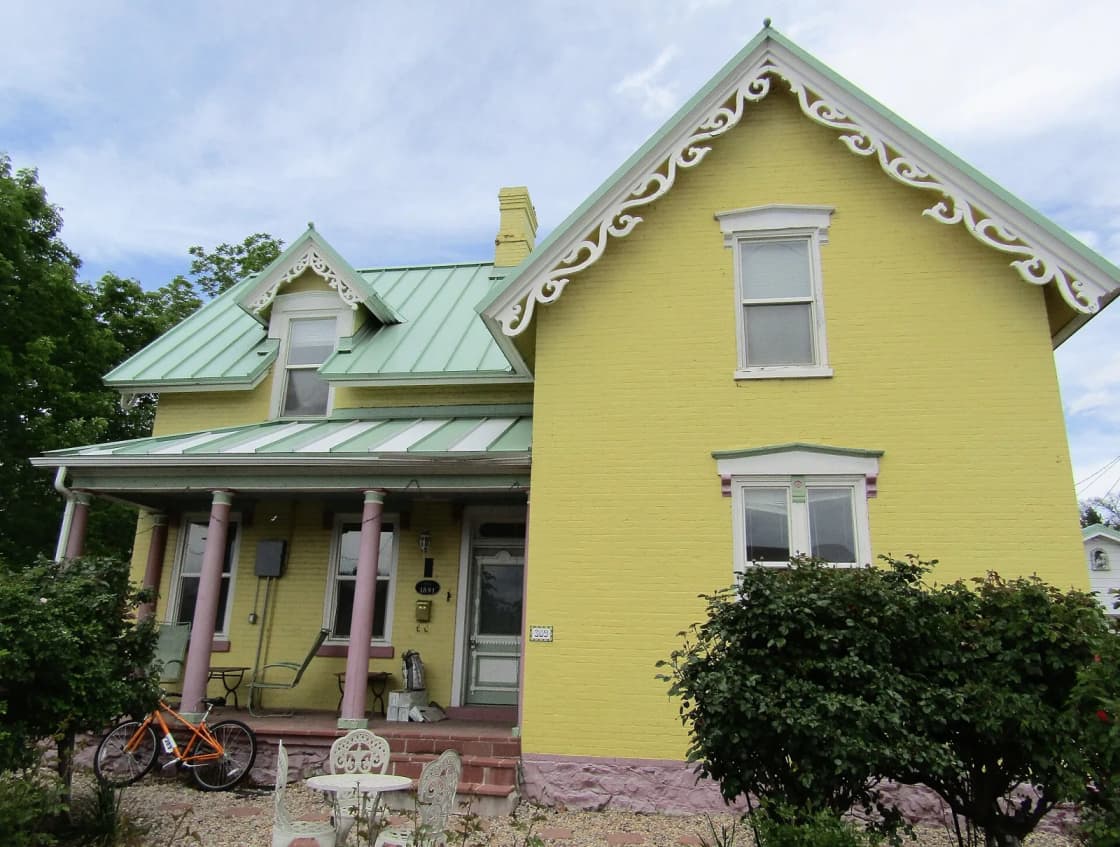
Thirty days from today, a new section of Utah Code takes effect that most Provo homeowners have never heard of and a smaller number have been waiting on for years. Utah Code § 10-21-304, enacted by S.B. 284 in the 2026 general session and effective October 1, 2026, requires every city over 5,000 people in the populous counties to permit a detached accessory dwelling unit — a backyard cottage, a garage apartment, a standalone unit — on any lot of 11,000 square feet or larger that already holds a single-family home.
The statute is not the story. The story is what each city does with it, because the statute tells cities to adopt an ordinance and then leaves the shape of that ordinance largely to them. Lehi has adopted one. Orem has been drafting. Provo — as of our last check — has published a map and held work sessions, and has not adopted a rule.
What the enrolled bill actually says
We read the enrolled copy rather than a summary, because summaries of this bill disagree with each other on a point that matters (more on that below).
Subsection (1) is the mandate: a specified municipality shall adopt a land use regulation that permits a detached ADU on any lot or parcel that is 11,000 square feet or larger and contains a single-family dwelling, if the single-family dwelling is a permitted use there. Subsection (1)(b) adds that nothing stops a city from permitting detached units on smaller lots. The definition of specified municipality — a city of the first through fourth class, or a fifth-class city of 5,000 or more in a first-, second- or third-class county — sweeps in every city of any size in Utah County.
Subsection (2) says the ordinance must require the unit to meet building, health and fire codes, and must include a process for converting a legally built accessory structure into a dwelling, subject to setbacks and those codes.
Subsection (3) is the short list of what a city may not do: require a conditional use permit in a primarily residential zone; require more than two on-site parking spaces for a unit of 650 square feet or larger; require more than one for a unit smaller than that; or impose design standards that conflict with § 10-20-618.
Subsection (4) is the long list of what a city may still do, and it is where the local ordinances will differ. A city may require the unit to conform to its rules on structure size, dimension, height and maximum lot coverage; to meet setbacks; and to be designed consistent with the main house. It may prohibit a unit larger than the primary dwelling, a unit inside a recorded easement, a unit in the front yard, and rental for fewer than 90 consecutive days. It may require the owner to live in either the house or the unit, limit the lot to one ADU, require that garage parking lost to a conversion be replaced on site, and refuse a unit where the sewer, water, electrical or storm-water system lacks capacity.
Subsection (5) says the section does not override rules for accessory buildings that are not dwellings, or restrictions in a development agreement a city signed on or before May 6, 2026.
The size-cap question, settled by the text
Coverage of the bill has split on whether a city can cap the size of a detached unit. The Daily Herald's July 15 report said cities cannot impose maximum sizes but may bar a unit larger than the primary home. Other summaries list size caps among retained powers.
The enrolled text supports a narrower reading than either. Subsection (3) contains no prohibition on size limits. Subsection (4)(a)(i) expressly allows a city to require conformance with land use regulations that regulate structure size, dimension, height and maximum lot coverage, and (4)(b)(i) allows a prohibition on any unit larger than the main house. What the statute does not do is authorize a city to invent an ADU-only size ceiling that has no counterpart in its general accessory-structure rules — and a city that tries may find itself arguing about whether that is a "land use regulation that regulates structure size" or a disguised prohibition. If the size of the unit you have in mind is the deciding variable, that is the question to put to your city's planners, and to put in writing.
Where Provo stands
Provo has done the visible preparatory work. In May the city posted a project page and an eligibility map showing, in yellow, the parcels that meet the S.B. 284 criteria alongside the existing ADU overlay in blue. The page — last updated July 8 — is careful to say that a yellow parcel is not a permit: the lot must actually hold a single-family home, and every ADU still goes through Provo's permitting and rental dwelling licensing process under Provo City Code 14.30.
The council has talked about it. The Daily Herald reported that in a June 9 work session, council policy analyst Melia Dayley proposed that all accessory structures on a lot be limited to 40 percent of the total parcel area. But the same July 15 report said the change had not yet gone before the Planning Commission or come to the council for a vote, and quoted council staff as saying the council was still hearing out how the new law would affect the city.
We looked for a later hearing. As of September 1 we could not find a Planning Commission or council agenda item amending Chapter 14.30 for S.B. 284 on the published notices. That is a statement about what we could find, not a statement that nothing is scheduled; a text amendment can be noticed and heard inside three weeks, and September has two Planning Commission meetings in it. If you are planning around this, the sources that count are provo.gov/agendacenter, the ADU page at provo.gov, and Development Services at 801-852-6427.
What happens if October 1 arrives with no Provo ordinance is not something the statute answers directly. The obligation is on the city to adopt a permitting regulation. A homeowner's permit application still lands on a reviewer's desk, and the reviewer applies the code as it stands that morning. Provo already permits detached ADUs inside its overlay; outside the overlay, on a qualifying lot, the state mandate and a silent local code would be in tension, and the honest answer is that we do not know how the city's counsel would read it. Ask before you draw plans.
Where Lehi and Orem stand
Lehi moved first. The Daily Herald reported the Lehi City Council approved its new policy on July 14. Lehi had already allowed detached units on lots of 14,520 square feet or more with a 1,300-square-foot cap on the unit; the new rule drops the lot threshold to match the state floor, requires the detached unit to sit six feet from the existing home, and requires owner occupancy of either the main house or the ADU. Community Development Director Kim Struthers told the council the number of eligible lots could rise by upwards of 20 percent.
Orem had not allowed detached ADUs at all. The council discussed a draft in a July 14 work session and the planning commission was scheduled to hear it the next night. Assistant Development Services Director Gary McGinn described the approach as common-sense regulation that protects existing neighborhoods while meeting the state requirement; the draft bars units in the front yard and bars short-term rental. We have not verified the final adopted text.
Both summaries are attributed to the Herald's reporting and both cities amend their codes regularly. Treat them as a map of where each city was in mid-July, not as the rule in force today.
What a homeowner can do in the next 30 days
None of this requires a designer yet, and all of it costs only time.
- Pull your lot area from the county record. The threshold is 11,000 square feet of lot, not of house. A plat you remember is not a number you can rely on.
- Confirm your zone and that a single-family home is a permitted use in it. Provo's map page lists the zones it counts.
- Check for a development agreement on your subdivision signed on or before May 6, 2026, and read your CC&Rs. The statute does not touch either.
- Ask the utility capacity question in writing — sewer, water, power, storm water. Inadequate capacity is an express statutory ground for refusal.
- Watch your city's agenda, not the state's calendar. The ordinance is what a permit reviewer reads.
The evergreen version of this — the statute section by section, with the financing questions — is our detached ADU guide. This page is the news: who has adopted, who has not, and where the reporting still disagrees with the text.
Sources: S.B. 284 enrolled copy, 2026 General Session (Utah Code § 10-21-304, effective October 1, 2026), read from the Legislature's enrolled PDF; Provo City, "Accessory Dwelling Unit (ADU) Eligibility Expansion," posted May 18, 2026, last updated July 8, 2026; Daily Herald, "Utah County cities prepare for statewide detached ADU changes," July 15, 2026. Provo agenda check performed September 1, 2026.
Related Guides
- Detached ADUs in Utah Valley: What S.B. 284 Requires — the statute, section by section
- Provo Zoning Explained — how the overlay and the zones fit together
- Building Permits in Provo — what a detached unit will trigger
- Impact Fees in Utah Valley — what a new connection may cost
- The Tree Streets — the Provo neighborhood where the lot-size question bites hardest
- Lehi Neighborhoods Guide — the city that adopted first
- Orem Neighborhoods Guide — the city that had no detached-ADU rule at all