
Utah Valley has a lot of places to take children. It has exactly one that was designed from the ground up on the principle that a museum should be climbed rather than read.
The Museum of Natural Curiosity opened at Thanksgiving Point in Lehi in May 2014. It is roughly 45,000 square feet across four indoor galleries plus a three-acre outdoor garden, holds a stated 400-plus interactive exhibits, and is built around a design brief that its own institution has described plainly: take the collection out of the cases and put it into an environment.
For families in Utah County it is one of the two or three most reliable rainy-day answers there are.
The short version
A large hands-on play-and-science museum at Thanksgiving Point in Lehi, with five exhibit areas, a three-acre outdoor garden, a separately-ticketed ropes course in the rafters, and rotating traveling exhibits. Closed Sundays. Best for ages three to ten. Plan half a day minimum.
Where it actually is
The address is 3605 North Garden Drive, Lehi.
This matters more than it usually would, because Thanksgiving Point is not a single building. It is a campus of separate venues at separate addresses — the Museum of Ancient Life, Farm Country, the Butterfly Biosphere, Ashton Gardens and this museum are all distinct destinations, some more than a mile apart.
Navigating to "Thanksgiving Point" will get you to the site. Navigating to the museum's own address will get you to the right car park. On a hot day with small children, that difference is not trivial.
Our Thanksgiving Point guide covers the whole campus and how the venues relate to each other.
The five areas, and what each is actually like
The Rainforest is the centerpiece and the thing children remember. It is a multi-level immersive environment with climbing structures, ancient-ruin-styled chambers and passages to discover. It occupies the tallest space in the building and it is where most of the noise comes from.
Waterworks is the water-play gallery, built around water, wind, sun and earth. It is enormously popular and children get wet. This is not a risk to be managed; it is a certainty to be planned for, and it is the single most common thing first-time visitors are unprepared for.
Kidopolis is a child-scale town with secret passageways — the role-play area, and generally the best fit for the youngest visitors.
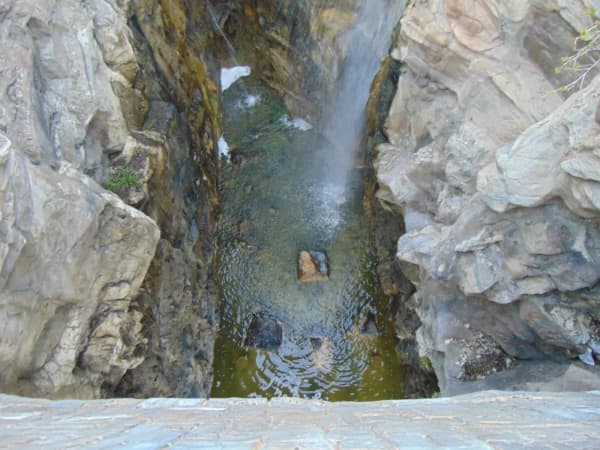
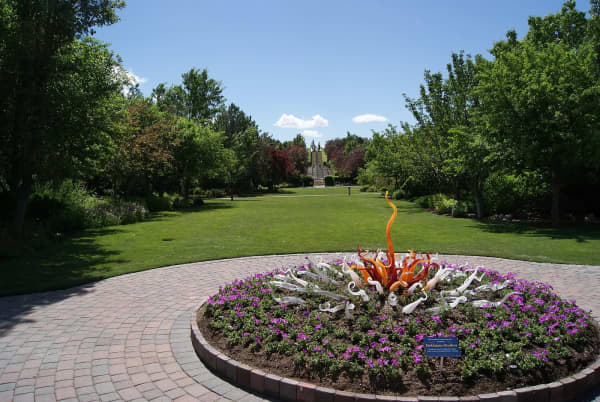
The Discovery Garden is the three-acre outdoor gallery, with two hedgerow mazes, an eco-pond, and — a lovely local touch — a replica of Timpanogos Cave, the real version of which is up American Fork Canyon a few miles away.
The traveling exhibit gallery rotates. Past installations have included large-scale maze and puzzle exhibits built by specialist producers. Because it changes, it is the reason a repeat visit six months later does not feel identical.
Bring a change of clothes
This is the practical advice that matters most and it belongs near the top rather than buried.
Waterworks is a genuine water-play area. Children will get wet, including children who were only going to watch. A spare set of clothes in the car — or ideally in a bag you carry — converts a difficult drive home into a non-event.
Older children generally manage with rolled sleeves. Under-fives do not.
The Canopy Tour, and the fact that it costs extra
Suspended in the rafters above the Rainforest is a ropes course, roughly forty feet up, marketed as the Canopy Tour.
Three things to know. It is not included in general admission — it is an add-on or a standalone purchase. Closed-toe shoes are required, which catches out summer visitors in sandals. And entry times are reserved, so it should be booked when you buy admission rather than decided on impulse at two in the afternoon.
The minimum age is around four, which makes it a genuine first ropes course for a young child rather than a teenager-only attraction. Accounts from families describe roughly forty-five minutes on the course being enough time to complete every element more than once.
Hours, and the early-closure problem
The broad pattern is late morning through evening, Monday to Saturday, closed Sunday, plus closure on Thanksgiving and Christmas.
The complication is early closures. Listings show a scatter of dates through the year when the museum shuts earlier than usual — typically for private events or around holidays. These are published in advance but they are not predictable from the outside, and they are exactly the kind of thing that ruins an afternoon plan made from a third-party listing.
Check the venue's own calendar before traveling. This applies to the whole Thanksgiving Point campus, not just this museum.
Tickets, passes and the membership maths
Thanksgiving Point sells single-venue admission and multi-venue passes, and has run summer promotions that extend a single-day price across several consecutive days.
The arithmetic is usually straightforward. If you are visiting one venue once, buy single admission. If you are visiting two or more, the combined pass is almost always cheaper. If you live in Utah County with children under ten, membership — which includes free admission across venues — tends to pay for itself in a small number of visits.
We do not print prices here, because admission pricing, promotions and pass structures change seasonally and a stale figure is actively misleading. The venue's own site carries current rates.
Timing your visit
The museum is busiest in the middle of the day at weekends and during school holidays, and busiest of all on the first genuinely bad-weather Saturday of the season, when the entire county has the same idea.
Weekday mornings during term time are dramatically quieter. Late afternoon on a weekday is the next best window. If your only option is a Saturday, arriving at opening rather than after lunch is worth an hour of queueing.
Summer adds a wrinkle: the Discovery Garden is genuinely good in warm weather and unusable in bad, so a summer visit gets you meaningfully more museum than a January one.
Food, and why to plan a break
There is a cafe on site, described by visiting families as convenient and moderately priced, with sandwiches, soups and salads.
The reason to plan a break rather than push through is specific to this kind of museum. This is physical play, not passive looking. Children burn energy here in a way they do not in a conventional gallery, and the resulting collapse arrives suddenly and without negotiation.
Building in a deliberate food stop around the two-hour mark converts a three-hour visit into a good one. Thanksgiving Point has other food options across the campus, and Lehi's wider restaurant scene is a few minutes away — our things to do in Lehi guide covers it.
Ages, honestly
The sweet spot is roughly three to ten.
Under three, Kidopolis and parts of the Discovery Garden work well and the rest is overwhelming. Between three and ten, essentially the whole museum lands. From about eleven, interest depends heavily on the current traveling exhibit and on the Canopy Tour, which is the main draw for older children.
Teenagers visiting without younger siblings will find it thin, and that is not a criticism — it is a museum with a clear target audience, and it hits it.
Accessibility and facilities
Listed amenities include a cafe, gift shop, family restrooms and nursing areas.
Beyond the checklist, the practical considerations are that the Rainforest involves climbing by design, and that the Discovery Garden is outdoor terrain over three acres. Families with a wheelchair user or a child with sensory sensitivities should contact the venue in advance — a large, loud, multi-level play environment is a specific kind of setting, and the staff will know it better than any listing does.
The noise level is worth flagging plainly. This is a busy building full of children being encouraged to be active.
The gift shop, and what it funds
There is a gift shop, and the museum notes that purchases support a program bringing science learning to children across the state.
That framing is worth taking at face value: Thanksgiving Point operates as a non-profit, and the outreach programs are a real part of what it does. It does not make the gift shop easier to walk past with a six-year-old, but it does mean the transaction goes somewhere useful.
How it fits the rest of Thanksgiving Point
The campus venues are genuinely different from one another rather than variations on a theme.
The Museum of Ancient Life is a large palaeontology museum with mounted skeletons — a looking museum rather than a climbing one. Farm Country is a working farm with animals. The Butterfly Biosphere is a conservatory. Ashton Gardens is a large formal garden.
Pairing this museum with Farm Country makes a good young-children day. Pairing it with the Museum of Ancient Life makes a good rainy day for a wider age range but is a lot of museum in one go.
Where else to go if it is closed
Sundays are the obvious gap, and Thanksgiving Point closing on Sunday catches out visitors from outside Utah constantly.
For a Sunday alternative with children, our family activities in Utah Valley and toddler activities guides cover what is actually open. For an outdoor alternative in decent weather, the county's parks are the reliable answer — including the All Together Playground in Orem, which is free and open daily.
The honest caveats
It is expensive for a family if you pay full single-venue admission and visit once. It is loud. It is exhausting. And on a peak Saturday, the popular areas get crowded enough that small children can be hard to keep track of in the Rainforest specifically, which is multi-level by design.
None of that is a reason not to go. All of it is a reason to go on a weekday morning if you possibly can.
The design idea, and why it holds up
The museum's founding brief — take the collection out of the cases and build an environment instead — sounds like marketing until you walk through it.
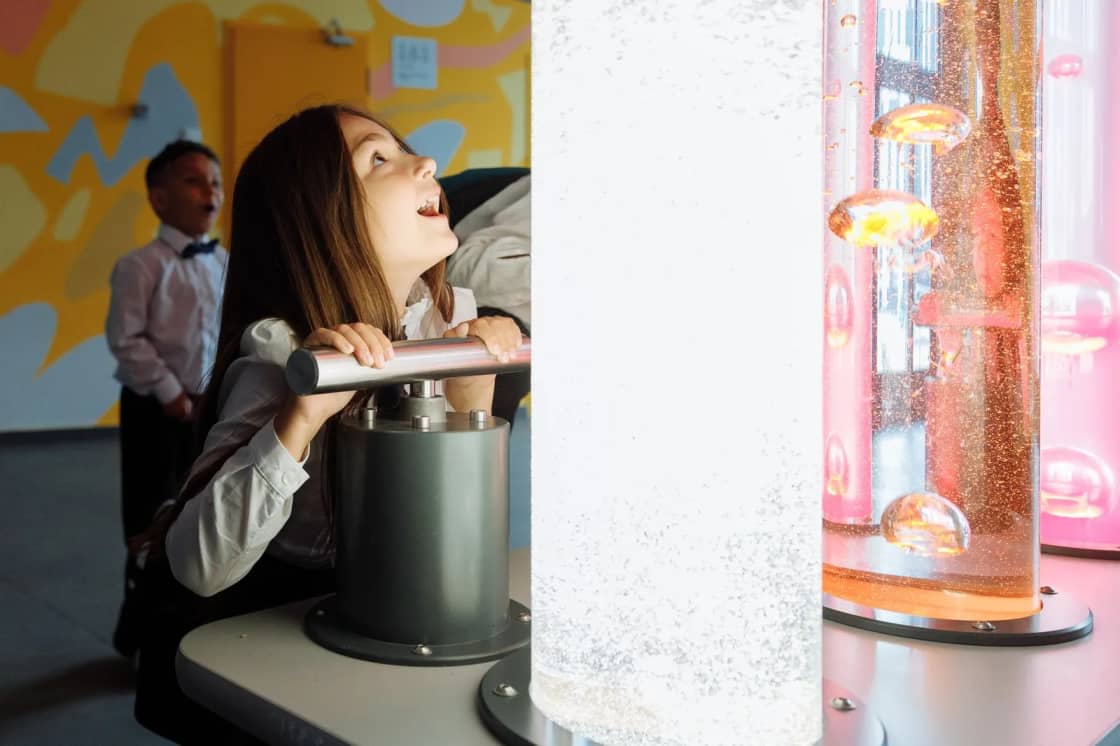
Conventional museums are organized around objects that must not be touched, with interpretation on labels. This one is organized around systems children can act on: water that can be diverted, structures that can be climbed, a town that can be inhabited. The learning is a byproduct of the play rather than a message attached to it.
That is a genuine pedagogical position rather than a decorating choice, and it is why the museum has aged better than a decade-old attraction usually does. Play environments do not date the way interactive screens do.
The Discovery Garden, in detail
The three-acre outdoor gallery deserves more attention than it usually gets, because visitors treat it as an afterthought and it is not.
It carries two hedgerow mazes, an eco-pond, and a replica of Timpanogos Cave — a nice piece of local grounding, since the real cave system is a short drive up American Fork Canyon and makes an excellent follow-up trip for slightly older children.
In good weather the garden is the best part of the museum and the part that most reliably tires children out. In bad weather it is unavailable, which effectively shrinks the museum by a third. Check the forecast; it changes what you are buying.
Repeat visits and membership
The traveling exhibit gallery is the reason a second visit is not a repeat. Installations rotate, and past ones have included large maze and puzzle exhibits from specialist producers.
For a Utah County family with children in the target age range, membership arithmetic is usually straightforward: free admission across the Thanksgiving Point venues means the break-even sits at a small number of visits per year, and the marginal cost of a rainy Tuesday afternoon drops to the petrol.
That changes behavior. Members visit for ninety minutes and leave, which is a much better experience than trying to extract full value from a day ticket.
Getting there
Thanksgiving Point sits just off I-15 in Lehi at the north end of Utah County, roughly twenty-five minutes from Provo outside peak traffic and considerably longer during the afternoon northbound build through the tech corridor.
Traffic on that stretch is genuinely bad at commuter times, and a 5 p.m. departure from Provo can double the journey. Going mid-morning avoids it in both directions.
A short plan for a first visit
Arrive at opening on a weekday. Start in the Rainforest while everyone has energy, because it is the most physically demanding area and the one that gets busiest later.
Move to Waterworks second, accepting that clothes will get wet. Break for food around the two-hour mark rather than waiting for the collapse. Finish in Kidopolis or the Discovery Garden depending on weather, both of which are gentler.
If you have booked the Canopy Tour, slot it at your reserved time and treat everything else as flexible around it.
Leave before anyone is finished. A visit that ends while children still want more is a visit they ask to repeat.
What it costs a family, realistically
Single-venue admission for a family of four visiting once is a real expenditure, comparable to a cinema trip with food. Visited that way it is a treat rather than a routine.
The pricing structure rewards commitment: multi-venue passes for a single trip, and membership for anyone visiting more than a few times a year. Families who go monthly are paying a small fraction per visit of what a one-off ticket costs.
Decide which of those you are before buying, because the wrong ticket type is the most common way to overpay here.
The bottom line
The Museum of Natural Curiosity is the best hands-on children's museum in Utah Valley and one of the better ones in the state, built on a genuine design idea rather than assembled from off-the-shelf exhibits.
Go on a weekday, bring dry clothes, book the ropes course in advance if you want it, and plan to eat before anyone melts down.
Reduced-Admission Programs: How to Check Rather Than Assume
Admission is the main barrier for a lot of families, and there are structured routes around it that have nothing to do with waiting for a sale. Two are worth knowing about — but the checking matters more than the knowing, so this section is written as a method rather than a promise.
Museums for All is a national initiative under which participating museums offer very low or free admission to visitors presenting a SNAP EBT card, and in many cases WIC documentation. It is not a discount code and it is not a coupon; it is a standing arrangement that a museum either participates in or does not, and the terms vary between participating institutions in the number of people admitted and the price charged. Do not assume any specific museum takes part. Participation changes, and the only two reliable ways to check are the program's own participant directory and a phone call to the museum's admissions desk asking the direct question: do you participate in Museums for All, what does it cover, and what do I need to bring.
Library passes are the other route, and they are widely under-used. Public library systems in Utah frequently hold passes to local attractions that a cardholder can reserve and borrow the way they would a book, typically for a fixed number of admissions on a particular day. Availability is genuinely limited and popular passes book out weeks ahead, which is the whole reason people conclude they do not exist. Ask at the desk rather than searching, ask specifically which attractions are covered this year, and ask how far ahead reservations open — those three questions get a complete answer in about ninety seconds. Our Provo City Library guide is a good starting point for what that system offers more broadly.
Two other angles worth a phone call. Reciprocal membership networks mean a membership bought at one science or children's museum sometimes admits you to others, occasionally in other states, which changes the calculation entirely if you travel or have family elsewhere. And many institutions run some form of reduced-price or free evening, community day, or educator and military arrangement. None of these are universal and all of them change, which is exactly why the useful skill is knowing the categories to ask about.
Why the Timing Advice Is Really Capacity Advice
It is worth saying plainly why a hands-on museum behaves so differently from a gallery, because it explains every piece of timing advice on this page.
In a gallery, more visitors mean more people between you and the wall. Unpleasant, but the experience degrades gradually. In an interactive museum the exhibits are the experience, and each one has a hard capacity — one water table, one climbing structure, one build station. Past a certain attendance the constraint stops being space and becomes queuing for turns, and a child's enjoyment falls off a cliff rather than sloping downward, because waiting is the specific thing young children do worst.
That is why arriving at opening is worth so much more here than at most attractions, why a rainy Saturday is a genuinely different building from a sunny Tuesday, and why the single most effective tactic is counterintuitive: go to the least popular area first, not the one your child most wants to see. The headline exhibit will still be there in ninety minutes, and by then the crowd that arrived with you will have dispersed across the site. Doing it the other way round means queuing for the best thing at the worst moment and then finding everything else full afterwards.
Related Guides
- The Hutchings Museum: Lehi's Strange, Wonderful Cabinet of Everything
- Thanksgiving Point's Freedom Celebration: The North Valley's Free Fourth of July Fireworks in Lehi
- Lehi Roller Mills: The Footloose Landmark That Quietly Changed Its Name
- Provo Beach: The Indoor Surf Park at Riverwoods, and How to Do It Without Overspending
- The Bean Museum: Provo's Free Natural History Collection
- Sphere of Light at Thanksgiving Point — the planned stained-glass center on the same campus
Frequently Asked Questions
Where is the Museum of Natural Curiosity?
What are the main exhibit areas?
When did it open?
Is the ropes course included in admission?
What are the hours?
Is there a combined ticket for the other Thanksgiving Point venues?
What ages does it suit?
How long should we plan for?