
There is a railway line running out of Heber City that has been carrying passengers, on and off, since 1899. It is run by a state authority created by the Utah Legislature. And for most people in Utah County it registers as a vague idea about a Christmas train rather than as a place you can go on an ordinary Saturday in June.
That is a shame, because the best of it runs into Provo Canyon.
The short version
A state-authority heritage railroad operating out of a depot in Heber City, running scenic excursions along Deer Creek Reservoir and down into Provo Canyon, plus a heavy calendar of themed and seasonal trains. Roughly 45 minutes from Provo. Not wheelchair accessible. Book the Christmas train early.
Where it is and how long the drive takes
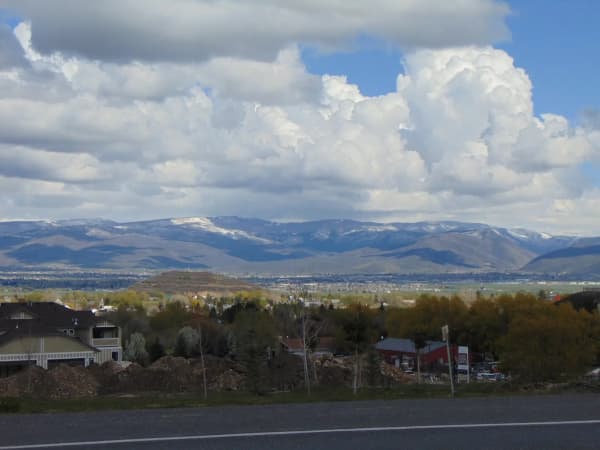
The depot sits at 450 South 600 West, Heber City. From Provo the route is the obvious one — up US-189 through Provo Canyon, past Bridal Veil Falls and Deer Creek Reservoir, into the Heber Valley. In normal traffic and normal weather that is about three quarters of an hour.
The thing worth understanding before you set out is that the track and the road are following the same corridor. You drive alongside a good part of the route to get to the start of it.
Our Provo Canyon guide covers the drive itself, and the Heber Valley and Midway guide covers what else is up there once you have made the trip.
The line is old
Grading began in March 1899, and the first Rio Grande Western train reached Heber on September 21, 1899, with regular service starting that October. The Rio Grande Western merged with the Denver & Rio Grande in 1921 to form the Denver & Rio Grande Western.
The building of Deer Creek Dam forced the tracks off the valley floor, and trains began using the relocated line in 1940. Passenger service was cut back in the 1920s, freight dwindled, and the last Rio Grande freight train ran in 1968.
What happened next is the part that matters: in 1970, local citizens and rail enthusiasts stepped in to save the line rather than let it be pulled up.
How it became a state asset
The Wasatch Mountain Railway, formed with Heber City businessmen and a railroad historical society chapter, ran steam tours from 1971 to 1990. In 1992 the Utah Legislature created the Heber Valley Historic Railroad Authority and appropriated $1 million for equipment and track work, and the railroad debuted on May 8, 1993. Tracks to Vivian Park were rebuilt in 1993 and 1994.
This is unusual enough to be worth stating plainly. Most American heritage railways are nonprofits or private companies. This one has a legislative authority behind it.
Why they call it the Heber Creeper
The nickname is about speed, or the lack of it. Local residents coined it; a 1972 brochure explained that "the narrow twisting canyon made the trip so slow people began to talk of the train just 'creeping.'"
It was not originally a compliment, but it has stuck, and locals use it often.
The three scenic trains
The Provo Canyon Limited is the one to take if you only take one. It runs down the canyon in spring and summer to the end of the track at Vivian Park, which puts you, on a train, in the canyon Provo residents drive through every week.
The Lakeside Limited and the Deer Creek Express are shorter runs along Deer Creek Reservoir. Which ones run depends on the season.
Which of the three is running in any given month varies, and the railroad reserves the right to change the schedule without notice.
The specials are the real business
A heritage railroad cannot survive on scenery alone, and this one does not try to. The calendar is dense with themed trains: the Pumpkin Train, the Halloween Express, Witches Night Out, a Wine Tasting Train, a Monday Night Train, the Red Caboose, Princess and Pirate trains for children, and the North Pole Express.
Prices for these are separate from the plain scenic fare. They are not a sideshow to the scenic trains; commercially they are the main event.
The North Pole Express
The Christmas train is the flagship. It is the reason the railroad advertises seasonal roles for elves, Santa's daughters and helpers.
If you want it, the practical advice is simple and slightly counter-intuitive: book it in early autumn. By the time Christmas feels close enough to plan for, the good dates have gone.
What a ride involves
Rides depart from the Heber depot unless noted otherwise, and the turn is part of the ride rather than a stop to explore.
Restrooms are available on the train. Car seats and strollers are not allowed on board, and alcohol cannot be brought on. Children 1 and under ride free on most trains, with exceptions including the North Pole Express, Princess & Pirate and Pumpkin trains.
Trains depart on time, and the railroad says so in blunt terms: it asks passengers to arrive 30 minutes before departure.
The accessibility problem, stated honestly
The railroad states that wheelchair access is not available due to the historic nature of the rail cars, that wheelchairs and walkers are not allowed on the train, and directs anyone affected to phone ahead.
This deserves more prominence than it usually gets. Heritage rolling stock predates every modern accessibility standard, and a century-old car with narrow vestibules and steep steps cannot be retrofitted without destroying the thing people came to see. That is an understandable trade-off, but it means a family with a wheelchair user needs to make a phone call before they make a booking, and most listings will not tell them that.
Pets, and the policy that surprises people
Pets are not allowed. The published policy also excludes comfort and emotional-support animals, which is a distinction that catches people out because the two categories are often treated as one.
Service animals are allowed on board with their owner; they must stay under the seat or at the owner's feet and be leashed at all times.
The seating trap for big groups
Most trains use pre-assigned seats in a specific car. Two families booking separately for the same train will, by default, be seated separately.
The railroad asks for a phone call at least 24 hours ahead to try to seat separate orders together. For a birthday party or a multi-family outing this single call is the difference between the trip you planned and four people in a different carriage.
Military and veteran tickets
Active-duty military and card-carrying veterans ride free on the three scenic trains, with immediate family at half price. It is arranged through the ticket office rather than online.
It applies to the scenic trains rather than blanket across the special events, so confirm before assuming it covers the Christmas train.
Historic equipment breaks, and they tell you so
The railroad warns that cars occasionally come out of service unexpectedly for maintenance, and that this may mean a change of coach or class of service from what you booked.
This is honest and it is worth reading before you spend heavily on a premium car. Anything mechanical from the steam era spends real time being repaired. A heritage line that never had a car out of service would be a heritage line that was not being maintained.
How busy it is
Passenger figures published about this railroad vary by source and by year, so treat any single number with caution. The practical point is that the popular trains, especially in the holiday season, are worth booking ahead.
What it costs, roughly
Fares depend entirely on which train and which class, and change orders can carry a $5 surcharge.
We deliberately do not publish a fare table here. Event pricing on this railroad changes by product and by season, and a stale figure on a guide page is worse than no figure. The ticket office is at (435) 654-5601.
When to go if you want the canyon
The Provo Canyon Limited is a spring and summer product. If the canyon run is the reason you are going, that constrains your window considerably, and it is the single most common way people end up disappointed — they book in October expecting the canyon and get the reservoir.
Autumn has its own argument, since the Pumpkin Train and the color on the canyon walls arrive at roughly the same time.
Combining it with the rest of the valley
A train ride is ninety minutes. The drive is ninety minutes round trip. That leaves most of a day unaccounted for, and Heber Valley has plenty to fill it.
Soldier Hollow is close by, Deer Creek and Jordanelle are on the way, and Midway's restaurants are a few minutes from the depot. Treating the train as the anchor of a day rather than the whole of it is the better plan.
Depot hours are not train times
The ticket office keeps its own hours.
Those hours are for buying tickets and asking questions. They are not when trains run. Departure times are per-product and published per-train, and the two get confused constantly by people trying to plan from a single web page.
Parking and arriving
The depot has its own lot, and it fills for the big specials.
The railroad's insistence that trains leave on time is not a slogan. The railroad asks you to arrive 30 minutes before departure, so allow extra time beyond what the drive should take: US-189 through the canyon is a two-lane road for much of its length, it carries construction traffic, and a single slow truck sets the pace for everyone behind it. Arriving with time to spare also means you get to look at the equipment, which for a certain kind of passenger is half the point.
Steam or diesel — which one will you get
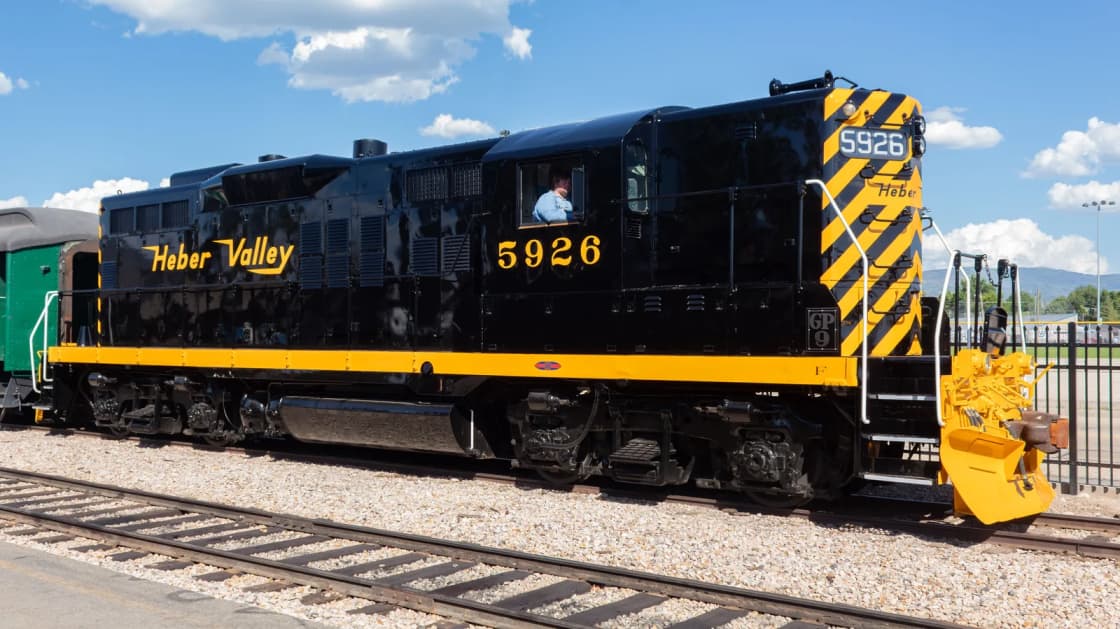
The railroad is best known for steam, and its steam locomotive is what appears in almost every photograph ever taken of the line. What it runs on any given day is a different question.
Steam locomotives are maintenance-hungry, expensive to fire, and subject to federal inspection cycles that take them out of service for extended periods. Diesel power handles a large share of ordinary scheduled runs. If seeing steam specifically is the reason for the trip — and for a lot of visitors it is — that is a phone call to the ticket office, not an assumption from the marketing photographs.
Where to sit for the views
The canyon is on one side of you and the valley on the other, and the interesting side changes depending on the direction of travel.
Because most trains use pre-assigned seating, this is decided when you book rather than when you board. The ticket office will advise if you ask. Open-air and vestibule cars, where they are running, beat any window seat in an enclosed coach for photography, and they are correspondingly colder.
What to bring
Layers, first and always. Heber City sits well above 5,000 feet, the valley runs colder than Provo year-round, and an evening train in September is a cold ride once the sun drops behind the ridge. The railroad's own advice on evening specials is to bring a jacket, which should be read as an instruction rather than a suggestion.
Beyond that: sunglasses for the westbound afternoon runs, cash or card for concessions, and something to occupy small children during the turn at the far end.
Private hire and group bookings
The railroad takes group and private bookings through its ticket office.
For groups it is worth asking about directly rather than buying twenty individual tickets and hoping. The pricing structure is different, the seating problem disappears, and the depot is set up to handle it.
How it compares to the alternatives
Utah does not have many heritage railways, and few are as easy to reach from Utah County.
Measured against the region's other family attractions, the honest positioning is this: it costs more than a museum, takes longer than a splash pad, and delivers something neither can — a slow, scenic, mildly antique experience that adults enjoy without pretending. Whether that is worth the fare depends mostly on whether anyone in the party likes trains.
Who this is really for
Families with children under about ten, without question. Railway enthusiasts, obviously. And a third group that gets overlooked: anyone with visitors in town who has already done the temples, the canyon and Bridal Veil Falls and needs something that is neither a hike nor a shopping center.
It is a strong answer to that problem, and it is forty-five minutes away.
The honest verdict
This is not a thrill ride and it is not cheap for a family once you have added the specials. What it is is a historic piece of Utah infrastructure that has survived by being useful, run by the state, doing a thing almost nothing else in the region does.
Go in spring or early summer, take the canyon run, book the Christmas train in September, and phone ahead if anyone in the party has mobility needs.
Related Guides
- The Lavender Farm in Mona: What to Know Before You Drive Down
- Park City from Provo: The Year-Round Day Trip Guide
- Bear Lake from Provo: Turquoise Water, Raspberry Shakes, Real Distance
- Capitol Reef from Provo: The Closest National Park Nobody Plans For
- Camping Near Provo: Best Campgrounds & Tips (2026)
- Dispersed Camping Near Provo: The Rules, The Roads & What Most Guides Get Wrong (2026)
- Hot Springs Near Provo & Utah Valley (2026)
- Logan and Cache Valley from Provo: The Other College Valley
- Rockhounding from Utah Valley: Topaz, Geodes, Trilobites and the 25-Pound Rule
- The Orem Line: Utah Valley’s Lost Electric Railroad
- Vivian Park and Nunn's Park — the picnic ground the train stops at
- The Heber Valley Cowboy Poetry Gathering: what it was, and why it stopped
Frequently Asked Questions
Where does the Heber Valley Railroad depart from?
Why is it called the Heber Creeper?
What are the three main scenic trains?
Is the train wheelchair accessible?
Do veterans ride free?
Can I bring a dog?
What is the North Pole Express?
Will we be seated together if we book separately?
Sources
The facts in this guide were checked against these sources. Hours, fees and rules change, so confirm anything time-sensitive with the source before you go. How we make Provo.com.
- Utah County Public Works: Parks, Utah County Public Works. Checked October 12, 2026.
- Heber Valley Railroad (home and policies), Heber Valley Railroad. Checked October 12, 2026.
- Heber Valley Railroad: Our History, Heber Valley Railroad. Checked October 12, 2026.