
More on Lehi: every guide we have published there, in one place.
There is a particular kind of museum that barely gets built any more: the one where a single obsessive person collected everything they found interesting for fifty years, and then gave it away.
Lehi has one. It is on Center Street, it is small, and it contains rocks, dinosaur material, stuffed birds, pioneer rifles and Native American artifacts in the same building — because that is what one man happened to be curious about.
The short version
A small, hands-on natural and cultural history museum in old downtown Lehi, built on the personal collections of John and Eunice Hutchings, donated in the mid-twentieth century. Closed Sundays and Mondays. Cheap. Genuinely good with children. The docents are the reason to go.
Where it is
55 North Center Street, Lehi.
That puts it in the older, original part of the city, several minutes and a completely different atmosphere away from the Thanksgiving Point campus and the Traverse Mountain outlets that most visitors associate with Lehi.
Coming off I-15, take exit 279 onto Lehi Main Street and head west about a mile to Center Street. Parking is in the lot immediately south of the building, with overflow in the Legacy Center parking area.
The couple who gave it away
In the mid-twentieth century John Hutchings and his wife Eunice handed over their collections — rocks, minerals, fossils, shells, mounted birds and eggs, Native American artifacts, pioneer items, Wild West guns and memorabilia — to a non-profit museum corporation, to be held in trust for the people of Lehi.
Why the collection is so miscellaneous
Modern museums specialize. This one does not, and the reason is simply that it reflects one person's curiosity rather than a curatorial strategy.
If you find that unsatisfying, it is the wrong museum for you. If you find it charming — a case of aragonite next to a case of arrowheads next to a nineteenth-century rifle — it is one of the more distinctive small collections in the state.
The minerals are the strongest holding
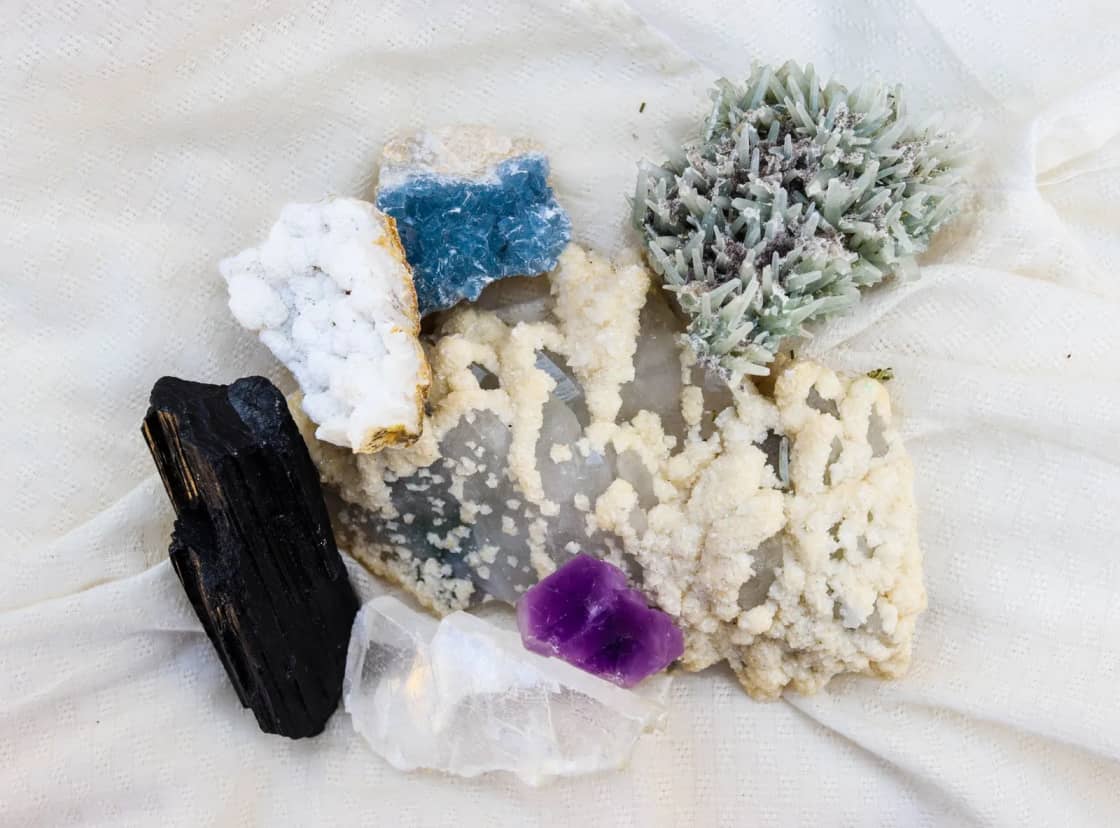
The mineral and geological material is what specialists single out. Visitor accounts mention aragonite crystals and varieties of rare Utah minerals, including specimens described as coming from a single location in the state.
Utah is geologically extravagant, and a collector working here through the middle of the twentieth century had access to material that would be far harder to assemble now.
The Smithsonian and Timpanogos Cave claims
Two claims attach themselves to John Hutchings wherever he is written about locally: that specimens of his ended up in the Smithsonian, and that he was involved in the discovery of Timpanogos Cave.
Both are repeated widely. Both circulate primarily through visitor accounts and local retelling rather than through documentation we can point at directly. We would rather flag that than launder local tradition into stated fact — so: strong local tradition, probably rooted in something real, not verified here.
Either way, Timpanogos Cave is twenty minutes up American Fork Canyon, which makes the connection worth knowing about whether or not it holds up.
The birds, and a quiet historical point
Among the mounted specimens are birds and eggs collected before a number of the species became endangered or protected.
That is worth pausing on. Collections like this exist partly because they were assembled under rules that no longer apply and could not be recreated today. A small-town museum in Utah holds material that has become, without anyone intending it, a scientific and ethical record of a different era of natural history.
The hands-on part is not marketing
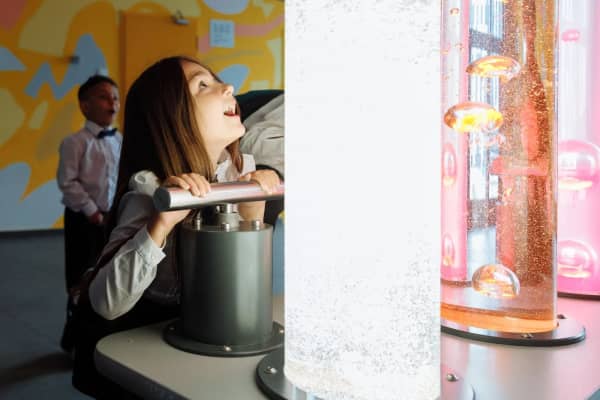
Plenty of museums describe themselves as interactive and mean they installed a touchscreen. This one means touch-and-feel exhibits that children are meant to handle, in a building small enough that staff can supervise it.
The museum has consistently described itself as a teaching museum, and the teaching is done by people rather than by signage.
The docents make the visit
Read any collection of visitor accounts about this place and the same theme recurs: the staff turn it from a small-town museum into something considerably better.
That is a genuine finding and it has a practical consequence. Go when someone is available to talk to you. A silent self-guided walk through the cases delivers maybe a third of what the place has to offer.
Internships and why that matters to you
The museum runs internships for students in anthropology, archaeology, geology, paleontology, biology and history, who give tours, help with exhibits and catalog artifacts.
For a visitor this is not an administrative detail — it is why there is usually someone knowledgeable and enthusiastic in the room. It also means the quality of the tour varies with who is on, which is the trade-off.
It is cheap
Admission sits at the low end of anything comparable in Utah County. The museum lists general admission at $8 for guests 13 and older and $6 for children 3 to 12 and for veterans.
Set against the ticket price of the large modern museums fifteen minutes north, this is the cheapest museum hour in the north of the county.
The evening hours are unusual
Small museums keep small hours. This one opens Tuesday through Saturday, from 11 a.m. to 5 p.m. on Tuesdays, Fridays and Saturdays and until 8 p.m. on Wednesdays and Thursdays, and is closed Sundays and Mondays.
If that holds when you visit, it is useful — it makes the museum an after-work or after-school option rather than something that requires taking a weekday afternoon off. Because small-museum hours change with staffing, confirm before you drive.
The events program
The calendar is more ambitious than the building. Past events have included lantern-light storytelling tours through the exhibits after dark, presentations built around historical figures such as Thomas Edison, and evening talks.
The museum has even scheduled a presentation on Skinwalker Ranch, a booking that tells you something about the museum's willingness to program for curiosity rather than respectability.
Night at the Museum
The after-hours events are the ones worth watching for. A small museum lit by lantern, with someone telling stories in front of the cases, is a fundamentally different experience from the same rooms at two in the afternoon.
These sell as ticketed evenings rather than regular admission, and they are not frequent. If one lands while you are planning a visit, take that date over an ordinary one.
How long to allow
An hour to ninety minutes is the realistic range. Longer if a docent has time for you and you are the sort of person who reads every label; shorter with impatient small children.
It is not a half-day museum and it does not pretend to be.
Who it is best for
Primary-school children, comfortably. Anyone with an interest in geology or Utah natural history. Grandparents with grandchildren, who tend to do very well here because the pace suits both ends.
Teenagers are the hard case, as they are everywhere, unless the evening programming catches them.
Accessibility
This is a small building in an old downtown. The museum has parking immediately adjacent and in the Legacy Center lot, which helps, but a century-old civic building in a historic street is not a purpose-built modern facility.
Phone ahead on (801) 768-7361 if it matters. That is a better use of five minutes than an assumption in either direction.
The name confusion
You will see the institution referred to as the John Hutchings Museum of Natural History, the Hutchings Museum of Natural and Cultural History, and Hutchings Museum Institute, depending on which listing you land on.
They are the same museum. The naming has drifted over the decades as the framing shifted from natural history alone toward the cultural material. The address is the thing to navigate by.
Pair it with the mill
The single best reason to plan this properly is that Lehi Roller Mills is a short distance away on Main Street.
Two pieces of old Lehi, both dating from the first half of the twentieth century or earlier, within a few minutes of one another, in the part of the city that existed before the tech corridor. That is a genuine morning out rather than a single stop, and almost nobody does it.
The rest of Lehi
Beyond the old town, things to do in Lehi covers the wider city, and living in Lehi covers it as a place to be.
If the museum is a warm-up for a bigger day, the Thanksgiving Point campus is ten minutes away and can absorb as much time as you have.
How it fits against the big museums
North Utah County has an unusual concentration of museums for its size: the Museum of Ancient Life, the Museum of Natural Curiosity, the Butterfly Biosphere, and this.
The first three are large, modern, professionally designed and priced accordingly. Hutchings is the outlier, and its argument is not that it competes with them. Its argument is that it offers something they structurally cannot: a small collection assembled by one curious person, explained by a human being standing next to you.
Where to eat
Old Main Street is not the dining strip. Our Lehi restaurants guide covers the city, most of which is concentrated nearer the freeway.
Plan food as a separate leg of the trip rather than expecting to walk out of the museum into it.
What it is not
It is not big. It is not slick. The lighting is not gallery-standard and the interpretation is not written by a design agency.
Anyone arriving expecting the production values of the Thanksgiving Point museums will spend the visit comparing rather than looking. The correct frame is a well-kept small-town collection with unusually good staff, and on that frame it substantially over-delivers.
Why places like this disappear
Small independent museums run on donations, volunteers, interns and municipal goodwill, and that is a fragile combination. Many of the collections assembled by mid-century amateurs have been broken up, absorbed or quietly lost.
This one survived because it was given to a non-profit corporation in trust for a town, and because that town kept it. Decades on, in a city that has been rebuilt around it by the technology industry, it is still open five days a week.
The Wild West material
The guns and frontier memorabilia are the part of the collection visitors least expect and often remember longest. Utah's territorial period was not the Hollywood West, but it was not entirely separate from it either, and the material here reflects a real settlement economy rather than a mythologised one.
It sits oddly next to the mineral cases, which is precisely the character of the place. A collector who is interested in everything ends up with a room where geology and firearms share a wall.
The pioneer artifacts and local memory
Lehi was settled in 1850, and a good deal of the museum's cultural material comes from the town's own first century.
This is the collection's quiet advantage over a bigger institution. A large regional museum tells you about pioneer settlement in general. A town museum holds objects that belonged to families whose descendants still live a few streets away, and the docents frequently know which families.
Photography inside
Small museums vary on this and policies change with staffing and with individual loans. Ask at the desk rather than assuming, and expect flash to be discouraged around textiles, mounted specimens and anything light-sensitive.
The mineral cases are the most photogenic thing in the building and also the hardest to shoot through glass. Turn the flash off and get the lens close to the pane.
School and group visits
The museum is set up for school groups and has been for decades, which is why the exhibits are pitched to be handled and why the interns are trained to give tours.
If you are organizing a group rather than turning up as a family, book it. A docent-led visit for a class is a different product from general admission and needs arranging in advance.
Best time of day to arrive
Mid-to-late afternoon on a weekday is the sweet spot. School groups have generally cleared, the evening hours mean you are not up against a four o'clock close, and staff have more time to talk.
Saturdays are busier and the docents are more thinly spread. Given that the docents are the main attraction, that matters more here than it would at a larger museum.
What it costs to keep open
Nothing about this museum's economics is comfortable. A small non-profit collection in a growth city sits on land that has become valuable, competing for attention against heavily funded attractions ten minutes away.
Admission does not cover a museum. Donations, memberships, the event program and the gift purchases do the rest of the work, which is worth knowing when you decide whether to round your admission up on the way out.
A note on expectations
The single most useful thing to fix in your head before going: this is a collection, not an experience.
There is no ride, no theater, no timed entry and no route through numbered rooms. You walk in, you look at things, and somebody who knows about them talks to you. Judged as an attraction it is modest. Judged as a museum it is exactly what a museum was for a hundred and fifty years before attractions were invented.
The honest verdict
Go, take children, go when a docent is on, and give it ninety minutes. Pair it with the mill and old Lehi becomes a proper morning rather than a detour.
It is one of the few places left in Utah Valley where you can see exactly what one person found interesting about the world, laid out in cases, because they wanted everyone else to see it too.
Who owns the things in a museum like this
A museum built on one couple's donated collections, grown since through further donations, sits on top of a legal question most visitors never think about and most small museums think about constantly: when an object has been in a display case for sixty years, who owns it?
Utah answers this in a statute with an unusually plain name — the Preserve Our Heritage Act, Utah Code Title 9, Chapter 8, Part 8 — and the answer is more generous to the museum than people assume.
The presumption runs in the museum's favor
Section 9-8-802 defines the terms. A collecting institution is a historical society, museum, archive or library operated by a Utah nonprofit corporation or by a Utah agency that preserves our heritage and benefits society by acquiring and preserving reposited materials. Reposited materials are materials of historical, artistic, literary or scientific value deposited in such an institution.
Section 9-8-803(1) then establishes a rebuttable presumption that any reposited materials held by a collecting institution are the property of that institution, and Section 9-8-803(2) requires anyone claiming otherwise to follow the rest of the part.
That is a meaningful default. A small museum does not have to prove title to everything on its shelves; a claimant has to unpick the presumption.
Twenty-five years of silence converts a loan into a gift
Section 9-8-804(1) is the provision that resolves the museum world's most common problem — the object left "for a while" by someone who never came back. Reposited materials not accompanied by a transfer of title are considered a gift to the institution when more than 25 years have passed since the last written contact between the depositor, or the depositor's successors, and the institution.
Section 9-8-804(2) closes the other side: no depositor or successor may bring an action to recover the materials after those 25 years have run from the date of last written contact.
Note the trigger. It is not 25 years since the deposit; it is 25 years since the last written contact. A letter, or a reply to one, restarts the clock.
Perfecting title, and the notice that has to go out
A museum that wants certainty rather than a presumption follows Section 9-8-805. It sends notice by registered mail to the last-known address of the last-known owner. If the owner or the address is unknown, if the mail comes back with no forwarding address, or if the owner does not claim the materials within 90 days of the mailing, the institution must also publish notice for two weeks — as a class A notice under Section 63G-30-102 for the county where it sits, and as required by Section 45-1-101.
Section 9-8-805(2) prescribes the contents: the name and last-known address of the last-known owner if known, a description of the materials, the name of the institution and a person to contact there, and a statement that if the materials are not claimed within 90 days of publication they are considered abandoned and become the institution's property. Section 9-8-805(3) makes that outcome automatic once the 90 days pass.
Claiming something back
Section 9-8-806(1) puts the burden on the claimant: a person claiming title must demonstrate, to the reasonable satisfaction of the collecting institution, that they own all right, title and interest in the materials. Someone acting on behalf of others must show they represent every person with any interest, and may do that with a notarized authorization from each of them (Section 9-8-806(2)).
The practical effect is that a partial heir cannot reclaim a family object alone. Everyone with an interest has to be assembled first.
Why this makes a museum like this one possible
A collection assembled by two people over decades and handed to a community is exactly the kind of holding that would be legally unmanageable without a rule like this. Records from the 1950s are incomplete everywhere. Deposits, gifts and long-term loans were not always distinguished in writing, and the people who could have explained the difference are gone.
The Act lets an institution stabilize its own collection through a documented, public process instead of leaving every object under a permanent cloud — which is also why a museum will politely refuse to accept anything today without paperwork. The chapter around it, Title 9, Chapter 8, also creates the Utah Historical Society (Section 9-8-201) and the Board of State History (Section 9-8-204), and provides endowment funds for qualifying history organizations under Part 7.
If you have an object you think belongs in a museum, the lesson is short: put the transfer in writing at the time. It protects the museum, and it protects your family from having to reassemble every interest-holder decades later.
Museum policies, holdings and hours change. Confirm current details with the museum directly.
Related Guides
- Dinosaur Museums in Utah Valley: The Big One in Lehi, the Free One in Provo, and Which Your Kid Actually Wants
- The Timpanogos of Utah Valley
Frequently Asked Questions
Where is the Hutchings Museum?
What is in the collection?
Is it hands-on?
Is it suitable for young children?
Are they open on Sunday?
How does it compare to the Museum of Ancient Life?
Does it host events?
Was John Hutchings connected to Timpanogos Cave?
Sources
The facts in this guide were checked against these sources. Hours, fees and rules change, so confirm anything time-sensitive with the source before you go. How we make Provo.com.
- Hutchings Museum Institute, Utah Division of Arts & Museums. Checked October 12, 2026.
- Utah Code 9-8-804. Statute of limitations for claiming reposited materials from a collecting institution., Utah State Legislature. Checked October 12, 2026.
- Utah Code 9-8-805. Collecting institutions -- Perfecting title -- Notice., Utah State Legislature. Checked October 12, 2026.
- Visit - Hutchings Museum, Hutchings Museum Institute. Checked October 12, 2026.
- Hutchings Museum, Hutchings Museum Institute. Checked October 12, 2026.