
Utah Valley builds a lot of houses. Drive the corridor north from Provo and the evidence is unavoidable — subdivisions in every stage from graded dirt to finished streets, and a construction sector that has been among the busiest in the country for most of a decade.
What almost nobody explains is how that industry is organized, who the parties in a new home are, and what the legal machinery around them does when something goes wrong. That machinery is unusually favorable to homeowners in Utah, and it is conditional on three things most buyers do not know they have to do.
The three kinds of builder, and why the difference matters
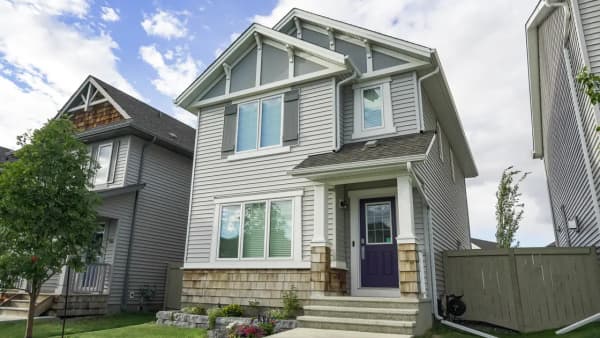
Production builders build a set of standard floor plans repeatedly across subdivisions they have developed. You choose a plan and a lot, then select from defined finish packages. The construction process is systematized, the timeline is comparatively predictable, and the price is set by a schedule rather than negotiated line by line. This is the dominant model in this valley, and it is why so much of the new stock looks related.
Semi-custom builders work from a plan library but allow substantial modification — moving walls, changing elevations, specifying finishes outside the standard packages. More flexibility, longer timeline, more decisions, more cost.
Custom builders build a one-off house on your lot from your architect's drawings. Everything is decided. Nothing is systematized. This is a different undertaking entirely, and our guide to building a home in Utah Valley walks through the sequence from land to keys.
The distinction is not about quality. There are excellent production builders and poor custom builders. It is about who is making decisions and where the risk sits. In production building, most decisions were made before you arrived, which limits both your exposure and your control. In custom building you own nearly all of both.
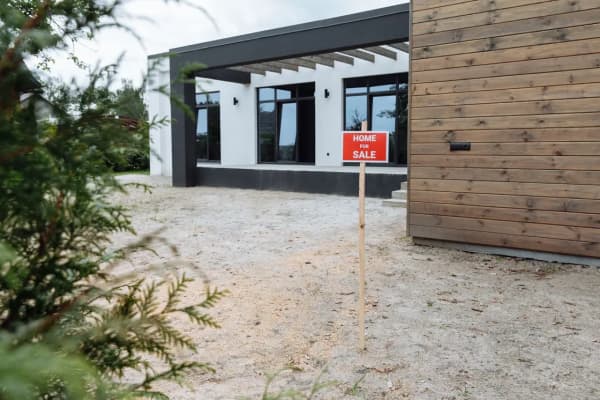
A fourth category worth naming: in a market with this much new supply, some homes are built speculatively and sold finished. Buying a completed spec home is closer to a resale transaction than to a build contract, and the negotiating dynamics differ — particularly for standing inventory a builder is carrying at the end of a quarter.
The protection almost no Utah homeowner knows they have
Here is the provision that matters most, and it is unusual.
In most of the country, a subcontractor who does not get paid by the general contractor can place a mechanic's lien on the homeowner's property — even if the homeowner already paid the general contractor in full. The homeowner ends up paying twice, or litigating.
Utah changed that. The Residence Lien Restriction and Lien Recovery Fund Act, Title 38, Chapter 11 of the Utah Code, does two things together. Section 38-11-107 bars a person who provided services under an agreement with someone other than the owner from maintaining a lien against an owner-occupied residence, or recovering a judgment against the owner, when the owner meets certain conditions. The unpaid subcontractor instead claims against the Residence Lien Recovery Fund.
The conditions, set out at Section 38-11-204(4), are precise and worth memorizing, because each one is something you control:
One — there must be a written contract. The owner or the owner's agent must have entered into a written contract with the original contractor for the performance or supervision of qualified services. A handshake deal with a builder does not qualify. Neither does a verbal change order for substantial additional work.
Two — the contractor must be licensed, or exempt from licensure. The statute specifies a contractor licensed or exempt from licensure under Title 58, Chapter 55, the Utah Construction Trades Licensing Act. Hiring an unlicensed builder does not merely risk poor work. It can put you outside the protection entirely.
Three — you must have paid in full, in accordance with the contract. The owner must have paid the original contractor in full according to the written contract and any amendments to it. Withholding a payment outside the contract's terms, or paying informally in a way that does not match the agreement, is how owners lose this.
The statute also extends protection in defined circumstances to a subsequent owner who buys the residence, where that owner occupies it as a primary or secondary residence — or has a tenant occupy it — within 180 days of transfer, and where the seller met the conditions. So the protection can follow the house into a resale, subject to those requirements.
The practical translation is short: get it in writing, verify the license, and pay exactly what the contract says. Do those three things and Utah has largely removed the double-payment risk that homeowners elsewhere carry. Skip any one and you have opted out of a protection you did not know you had.
Verifying a builder's license takes two minutes
Utah licenses construction trades under Title 58, Chapter 55, administered by the Division of Professional Licensing. Contractor licenses are searchable, and the search will show the license status and classification.
Two things to check beyond "is there a license."
Classification. Utah licenses contractors by classification, and a general building contractor license is a different thing from a specialty trade license. Confirm the license covers the work you are contracting for.
Status and history. A license can be active, expired, suspended or subject to conditions. Check the status on the day you sign rather than relying on a number printed on a business card, and look for disciplinary history the same way you would for a real estate agent.
For a large project, ask for a certificate of insurance directly from the insurer rather than a copy from the contractor, and confirm workers' compensation coverage. Utah requires most employers to carry it, and an uninsured injury on your property is a problem you do not want to discover afterward.
What to ask a production builder that the sales office does not volunteer
The sales office is a sales office. The questions that surface real information are mostly about process and paper.
Who builds this? Many builders subcontract nearly all trades. That is normal and not a red flag, but you should know whether the superintendent managing your house is an employee and how many houses they are running at once.
What does the warranty say? Not "we have a ten-year warranty" — the document. New home warranties in Utah are typically tiered: short coverage for workmanship and finishes, longer for systems, longest for structural elements, each with different exclusions and claim procedures. Our guide to builder warranties in Utah works through what the tiers usually cover and where the gaps are.
What is the allowance structure and what happens when I exceed it? Allowances for flooring, fixtures and appliances are set at a level that is frequently below what buyers choose. Ask what the allowance covers, at which supplier, and how overages are priced.
Which lot premiums apply, and for what? Corner, view, walkout basement capability, and lot size all carry premiums that are not in the base price.
What is the change order process and its cutoff dates? Every plan has a point after which changes stop being possible or become expensive.
What is not included? Landscaping, fencing, window coverings, and sometimes rear decks or basement finishing are commonly excluded. In this valley, landscaping and irrigation are a substantial line item and are often the buyer's problem.
How do you handle the walkthrough and the punch list? Ask what happens if items are unresolved at closing, and get the answer in the contract rather than from a conversation.
The build sequence, and where it usually slips
Knowing the order helps you read progress and makes builder updates interpretable.
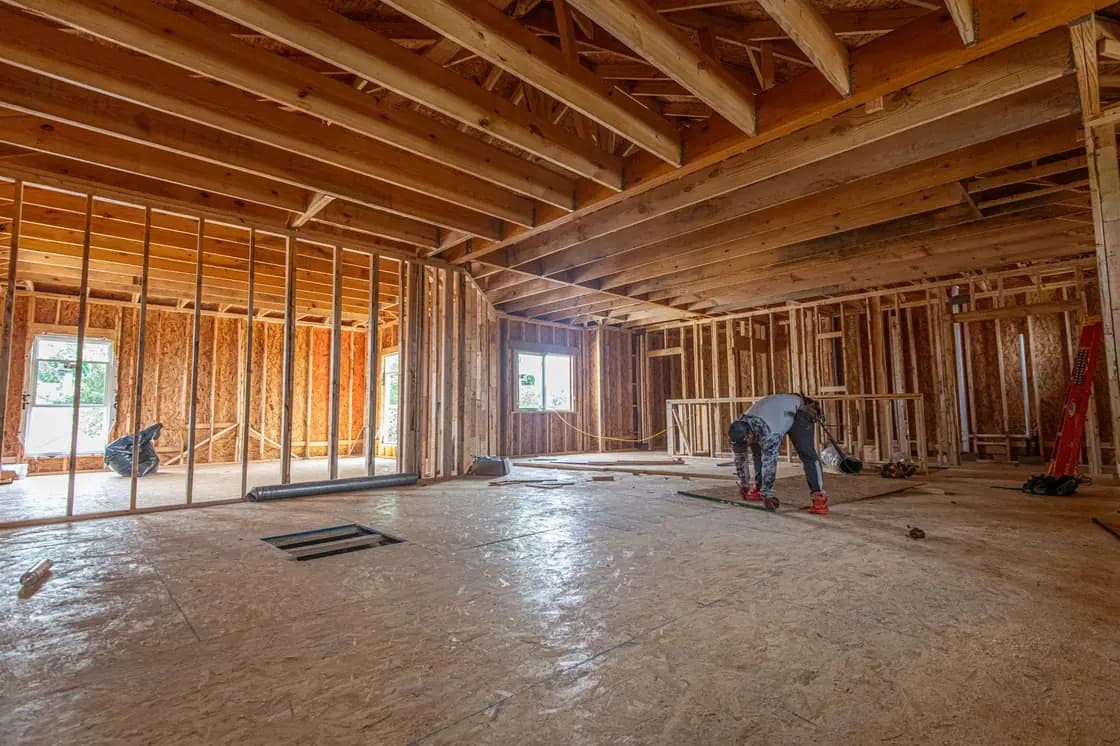
Ground is broken and the excavation and foundation go in. Framing follows, and framing is the stage that looks fastest — a house can go from slab to fully framed in a couple of weeks, which sets an expectation the rest of the build will not meet. Then the mechanical trades rough in plumbing, electrical and HVAC, and inspections gate each stage. Insulation and drywall follow, then interior finish, then exterior, then final inspections and the certificate of occupancy.
The stage where schedules most reliably slip is not framing. It is the long middle — the sequence of trades that each need the previous one finished and the inspection passed. One trade running late compounds through everything after it, because subcontractors are scheduled across many houses and a missed slot is not simply resumed the next day.
The second common slip is materials and appliances on extended lead times, which is worth asking about specifically for anything you have selected as an upgrade.
Both of these are why your rate lock and your completion date need to be discussed together rather than separately.
Inspections: the ones the city does, and the one you should
New construction is inspected by the municipality at defined stages, and passing those inspections is a code compliance question. It is not a quality question and it is not performed on your behalf.
Buyers of new homes routinely skip an independent inspection on the reasoning that the house is brand new and has already been inspected. This is the most common avoidable mistake in new construction, and independent inspectors find issues in new homes regularly — missing insulation, mechanical connections that were never completed, drainage and grading problems, roof and flashing defects.
The two useful points to inspect independently are before drywall goes up, when the mechanical rough-in is still visible, and at the pre-closing walkthrough. Our guide to home inspections and appraisals in Utah Valley covers what an inspection does and does not cover.
Grading and drainage deserve particular attention here. Water directed toward a foundation is among the most expensive problems a house can develop, and final grade is done late, quickly, and after most buyers have stopped paying close attention.
The financing and incentive question
Builders in this valley frequently offer incentives conditional on using their affiliated lender or title company — closing cost credits, rate buydowns, upgrade allowances.
These are sometimes good and sometimes not. The only way to know is to obtain a competing Loan Estimate on identical terms and compare total cost, not the size of the advertised credit. Our guide to shopping a mortgage lender in Utah explains how to run that comparison and what to look at on the form.
One financing detail specific to new construction: rate locks and completion dates do not naturally align. Completion slips. A thirty-day lock on a house that finishes in ninety days is a problem you will discover at the worst moment. Ask about extended lock options and float-down provisions at application, not later.
What new construction costs beyond the price
Impact fees are charged by cities on new development to fund the infrastructure that growth requires, and they are a real component of what a new home costs in this valley. Our guide to impact fees in Utah Valley explains who charges what and how they show up.
Property taxes on new construction lag. The assessment reflects what existed on the assessment date, so the first year's tax bill on a newly built home can be based on a partially built structure or a bare lot, and the second year's arrives substantially higher. Budget for the increase rather than being surprised by it.
HOAs are near-universal in new subdivisions. Read the governing documents, and read the assessment history if the community is not brand new.
Landscaping and fencing. Frequently excluded and rarely cheap, and in this climate establishing a yard is not a trivial project.
Working out who builds well here
There is no honest shortcut, and anyone selling you a definitive ranking is selling something. What works:
Start with our builder profiles. Each lists the builder's Utah County communities, its published starting prices and what its warranty page says: Ivory Homes, Edge Homes, Fieldstone Homes, Holmes Homes, D.R. Horton, Lennar, Richmond American, Woodside Homes, Candlelight Homes and Arive Homes.
Drive the subdivisions. Look at completed communities from the same builder that are three to seven years old, not the model home. Problems show up on that timescale, not at handover.
Talk to people living in them. Homeowners are candid about their builders, particularly about warranty responsiveness, which is the single best proxy for how a company treats customers after it has been paid.
Check licensing and disciplinary history through the state, as above.
Ask for the last three walkthrough punch lists, redacted. A builder confident in their finish quality can produce them. The response to the request is informative even when the answer is no.
Look at how long they have operated in this specific valley. Building here involves particular conditions — soil, seismic requirements, snow load, irrigation, city-by-city permitting differences — and local track record is worth more than a national brand.
Buying a finished spec home instead
A large share of what is available at any moment in this valley is standing inventory — houses a builder completed on speculation and has not sold. The dynamics differ enough from a build contract to be worth separating.
You are buying a finished product, so what you see is what you get and there are no selection decisions, no allowance overages and no completion-date risk. That removes most of the ways a new build goes wrong. Against that, you did not choose the finishes, and a spec house is generally built to the specification the builder judged most sellable rather than to your preferences.
The negotiating position is different too, and better than most buyers assume. A completed unsold house is carrying cost on a builder's balance sheet every month, which is a pressure that does not exist on a house being built to contract. Standing inventory at the end of a quarter, or a house that has sat through a season, is where builder incentives are most generous — and those incentives more often take the form of rate buydowns, closing cost credits and upgrade packages than headline price reductions, because builders are reluctant to cut a published price that would reset comparables across the whole subdivision.
Two things to check specifically. Ask how long the house has been complete, because that tells you about your leverage. And ask when the warranty period starts — at completion or at your closing — since on a house that has sat for months the difference is real coverage.
What happens if the builder goes out of business
Uncomfortable but worth planning for, because construction is cyclical and this valley has a lot of builders.
If it happens mid-build, your written contract and your payment position determine nearly everything, which is another reason the paperwork above matters. If it happens after closing, your warranty is only as good as the entity behind it — which is why third-party-backed warranty products differ meaningfully from a builder's own promise, and why the question of who stands behind the coverage belongs in your reading of the warranty document rather than in a conversation with a sales agent.
The short version
Utah gives homeowners a protection most states do not: subcontractors generally cannot lien your owner-occupied home if you had a written contract with a licensed original contractor and paid that contractor in full per the contract. Those three conditions are the whole game.
Everything else — the warranty tiers, the allowances, the lot premiums, the lender incentive — is ordinary diligence. The lien protection is the part that is specific to this state, unusually valuable, and quietly conditional on paperwork you control.
Related Guides
- Building a home in Utah Valley
- Builder warranties in Utah
- New construction vs resale in Utah Valley
- Impact fees in Utah Valley
- Home inspections and appraisals in Utah Valley
- Shopping a mortgage lender in Utah
Frequently Asked Questions
Can a subcontractor put a lien on my house if I already paid the builder?
How do I check whether a Utah contractor is licensed?
What is the difference between a production builder and a custom builder?
Should I get an independent inspection on a brand new house?
What is usually not included in a new home's base price?
Why is my property tax so much higher in the second year on a new build?
Do I have to use the builder's preferred lender to get their incentive?
How do I find out which builders are good in Utah Valley?
Sources
The facts in this guide were checked against these sources. Hours, fees and rules change, so confirm anything time-sensitive with the source before you go. How we make Provo.com.
- Specialty Contractor License - Utah Department of Commerce, Utah Division of Professional Licensing. Checked October 12, 2026.
- Verify Your Contractor | Springville City, Springville City. Checked October 12, 2026.
- Utah Code 38-11-204: Claims against the fund -- Requirements to make a claim, Utah State Legislature. Checked October 12, 2026.