
Most Utah Valley households buy homeowners insurance once, at closing, from whoever the lender's list suggested, and then renew it for a decade without opening the envelope.
That is a reasonable way to handle a small recurring cost. It is a poor way to handle the instrument standing between your household and the loss of its largest asset — particularly in a valley whose two catastrophic risks are both excluded from the standard policy by default.
The short version
Earthquake: excluded. Must be added. The Wasatch Fault runs along this valley.
Flood: excluded. Separate policy entirely.
Dwelling coverage ≠ market value. It is rebuild cost, and it goes stale.
Roof may be actual cash value even when the dwelling is replacement cost.
Loss of use is the coverage you will lean on.
Wildfire rating is now individual, not zonal.
What a standard policy is built from
Homeowners policies are broadly standardized into named sections, and knowing the names makes the document navigable. Breakdowns of furnaces and appliances are not insurance claims; that is what a home warranty is sold to cover.
Coverage A — Dwelling. The house itself and structures attached to it. This is the anchor number: several other limits are calculated as percentages of it.
Coverage B — Other structures. Detached garage, shed, fence, detached workshop. Commonly a percentage of Coverage A.
Coverage C — Personal property. Your possessions. Commonly a percentage of Coverage A, and subject to sublimits on specific categories — jewelry, firearms, cash, collectibles, business property. The sublimits are where people discover that their ring is covered to a fraction of its value. Our guide to engagement rings and jewelers in Utah Valley covers scheduling an item, which is the fix.
Coverage D — Loss of use. Additional living expenses while the home is uninhabitable.
Coverage E — Personal liability. If someone is injured and you are legally responsible.
Coverage F — Medical payments to others. Small, no-fault, for minor injuries on your property.
The perils covered, the exclusions, and the endorsements that modify both are what determine outcomes — and they live in the body of the policy rather than on the one-page declarations most people file away.
The earthquake problem
Utah Valley sits along the Wasatch Fault. This is not obscure information, and it is not a remote hypothetical: it is the defining geological fact of the corridor, and the reason our earthquake preparedness guide exists.
A standard homeowners policy does not cover earthquake damage. It is an exclusion, not an oversight, and it applies regardless of how comprehensive the rest of the policy is.
Coverage is available by endorsement or as a standalone policy. Two features of it deserve attention before you price it:
The deductible is usually a percentage, calculated against the dwelling coverage amount, rather than a flat dollar figure. A percentage deductible on a substantial dwelling limit produces an out-of-pocket number in the tens of thousands. That is not a reason to skip the coverage — it is a reason to calculate the figure in advance, so the deductible is a decision rather than a discovery.
The coverage may be structured differently from your main policy across contents, other structures and loss of use. Read what is included rather than assuming it mirrors Coverage A through D.
Whether to buy it is a genuine judgment call involving your equity, your mortgage balance, your savings and your tolerance for a low-probability, high-severity event. What is not a judgment call is knowing whether you have it. A surprising number of Utah households believe they do and have never checked.
The flood problem, which is a different problem
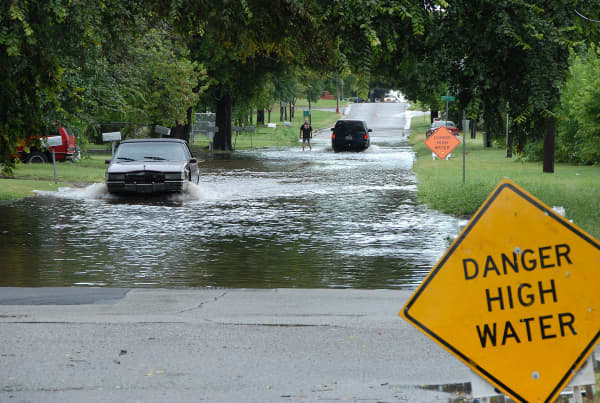
Flood is also excluded, and it is excluded in a way that catches people because the definition is broad — rising water, surface water, runoff, overflow of a body of water.
Meanwhile, sudden and accidental discharge from a plumbing system inside the house is typically covered. So a burst supply line that floods your basement is one thing, and three inches of spring runoff coming in through the window wells is another, and the two look identical when you are standing in them.
Flood coverage comes separately. Utah Valley's exposure is mostly seasonal and mostly tied to snowpack, runoff timing and stream capacity rather than to coastal storm — the mechanics are covered in our guide to spring runoff and flood risk, and the mapping and insurance side in our flood insurance and FEMA maps guide.
The critical point for anyone reading this in a low-risk zone: most flood claims in any given year come from properties that were not required to carry the coverage. Mandatory purchase follows the mapped high-risk zones and the lender's requirement. Water does not.
Dwelling coverage, and the number that quietly goes stale
This is the most common defect in an otherwise adequate policy. The first renewal is the natural time to check it; our first year as a homeowner guide lists the other first-year deadlines.
Coverage A should reflect the cost to rebuild your house — not what it would sell for, and not what you paid. Land is not rebuilt. Location is not rebuilt. What is rebuilt is a structure, using materials at their cost on the day of the loss, with labor at its availability on that day, and to the building code in force then rather than when the house was built.
Three forces push rebuild cost up over time, and none of them are visible on your renewal notice:
Construction cost inflation, which has moved sharply and unevenly in recent years.
Code changes. A house built decades ago is rebuilt to current code. Ordinance or law coverage is the endorsement that pays for the difference, and its absence is a frequent and unpleasant surprise.
Demand surge. After a widespread event, contractors and materials are scarce in the affected region at exactly the moment everyone needs them, and prices reflect that.
Ask your insurer for a current replacement cost estimate. Many carriers offer inflation guard endorsements that adjust the limit annually, and extended or guaranteed replacement cost endorsements that pay some percentage above the stated limit. These are the endorsements worth understanding, because they are the ones that determine whether a total loss is recoverable.
The roof clause
Utah Valley roofs take wind, hail, heavy snow load and a punishing freeze-thaw cycle. The roof is the component most likely to generate a claim.
It is also the component most likely to be treated differently from the rest of the house.
Many policies now settle roof claims on actual cash value — replacement cost minus depreciation — even where the dwelling is otherwise insured on a replacement cost basis. On a roof partway through its expected life, the depreciation deduction is substantial, and the difference between a full replacement and a depreciated payout is the difference between a manageable claim and a large unplanned expense.
This provision lives in an endorsement. It is worth finding it and knowing which basis applies before a storm, not after.
Two practical habits: keep dated photographs of your roof in good condition, and keep the documentation from any roof replacement. Causation and pre-existing damage are the two things disputed in nearly every roof claim, and dated evidence settles both.
Wildfire, and the individual rating shift
Homes along the bench and near the canyon mouths sit in the wildland urban interface. Insurers have moved from broad zonal assessments to individual property assessment using mapping, modeling and aerial imagery, and that assessment can influence availability, pricing and the conditions attached to a policy.
What that means for any particular household varies by carrier and changes over time. The reliable step is to ask your own insurer two questions: what do you assess, and what documentation of mitigation do you accept? Photographs of completed defensible space work, dated, are worth keeping either way — the work itself is covered in our defensible space guide.
Liability, which nobody thinks about until they need it
Coverage E is the part of the policy that has nothing to do with your house.
It responds when someone is injured and you are legally responsible — a fall on your walk, a dog bite, a child injured at your home, or damage you cause to someone else's property. It pays defense costs as well as damages, and the defense obligation is frequently worth more than the indemnity.
Two Utah Valley specifics. Trampolines and pools are attractive nuisances that some carriers surcharge, exclude or require fencing for. And snow and ice on a sidewalk you are responsible for clearing is a live liability question — our snow removal guide covers whose sidewalk is legally whose, which is the first question in any such claim.
For households with meaningful assets, an umbrella policy sits above the homeowners and auto liability limits and is generally inexpensive relative to what it covers.
A short annual review
Fifteen minutes, once a year, at renewal:
- Confirm the dwelling limit against a current replacement cost estimate.
- Check whether the roof is replacement cost or actual cash value.
- Check whether you have ordinance or law coverage.
- Confirm whether earthquake is on the policy. Not whether you meant to add it.
- Confirm whether flood is on a separate policy, and whether your zone or your risk has changed.
- Review personal property sublimits against what you own, and schedule anything above them.
- Look at the loss of use limit and ask yourself whether it would house your household for the time a rebuild takes.
- Update the home inventory. Photographs of every room and receipts for significant items, stored somewhere that is not inside the house.
None of this requires expertise. It requires opening the document, which is the step almost nobody takes.
How claims get paid
Knowing the sequence removes most of the anxiety and a good deal of the delay.
Report promptly. Policies require notice as soon as reasonably possible, and a long unexplained gap between the loss and the report is the first thing an adjuster asks about.
Protect against further damage. You have a duty to mitigate — tarp the roof, shut off the water, board the opening. Reasonable emergency expenses to do so are generally reimbursable, so keep the receipts. What you must not do is complete permanent repairs before the adjuster has seen the damage.
Document before touching anything. Photographs and video of everything, from several angles, before cleanup begins. This is the step people skip in the first frantic hour and regret for months.
The adjuster inspects and prepares an estimate. You are entitled to read it and to disagree with it. If it misses damage or underprices scope, say so in writing with your own contractor's estimate attached.
Payment usually arrives in stages on a replacement cost policy: actual cash value first, then the depreciation holdback once repairs are complete and documented. If your mortgage is outstanding, the lender is typically named on the check and has its own release process, which adds time.
Where you and the insurer cannot agree, most policies contain an appraisal provision — a contractual dispute mechanism where each side appoints an appraiser and an umpire resolves the difference. It is faster and cheaper than litigation and is under-used because few policyholders know it exists.
Choosing a deductible and reading a renewal
The deductible is the most direct lever on premium and the least examined. Raising it meaningfully often reduces the premium substantially, and the honest question is what size loss you would claim on. A household that would never file a claim for a small amount is paying every year for a low deductible it will never use.
Note that some policies apply separate deductibles to wind and hail, or a percentage deductible to specific perils. A policy with a flat deductible and a percentage wind-hail deductible has two different numbers, and the second is the one that applies to the most likely large claim in this valley.
The renewal notice is where changes are disclosed and where almost nobody looks. What to check each year: whether the dwelling limit moved, whether the roof settlement basis changed, whether a new deductible structure appeared, and whether any endorsement was dropped. Insurers do change terms at renewal, and the notice is the disclosure.
Claim history follows the property and the person. Small claims accumulate on your record and influence future pricing and, in some cases, availability. This is the strongest argument for treating homeowners insurance as catastrophe protection rather than as a maintenance fund.
Discounts, bundling and the things insurers reward
Premiums are built from a base rate and then adjusted, and the adjustments are worth asking about because they are rarely volunteered.
Bundling homeowners with auto is usually the largest single discount available and the most commonly taken.
Protective devices. Monitored alarms, smoke and heat detectors, water-leak sensors with automatic shutoff, and deadbolts. Water-leak detection in particular has become something insurers value, because interior water is the most frequent large claim in residential insurance and a device that shuts the supply off prevents most of the cost.
Roof age and material. A newer roof, and in some cases an impact-resistant one, is rated differently. In a hail-exposed market this can be substantial.
Claim-free history. Another argument for treating the policy as catastrophe protection rather than a maintenance fund.
Higher deductible, discussed above.
Paid in full and paperless, which are small and free.
New home or newly renovated systems. Updated electrical, plumbing and heating reduce risk and are frequently reflected once the insurer knows about them — which requires telling them.
What is generally not rewarded is loyalty. Insurers price to acquire, and a policy left untouched for a decade is frequently priced above what the same household would be quoted as a new customer. Re-shopping every few years is worth an hour, and it is the single most reliable way to find out whether your current pricing is competitive.
The condominium and townhome variation
Attached housing runs on a different structure and it catches people who move from a detached home.
The association carries a master policy covering the building, and what that master policy covers varies enormously between associations. The two common forms are bare walls, where the association covers the structure and everything inside your unit is yours, and all-in or single entity, where fixtures and original finishes within the unit are included. Which one governs is in the association's declaration, and it determines what your own policy has to cover.
The individual owner then buys an HO-6 unit-owners policy, covering personal property, liability, loss of use, and the portion of the interior the master policy does not.
Two provisions to look for specifically:
Loss assessment coverage. If a loss exceeds the master policy's limits or falls within its deductible, the association can assess owners for the shortfall. Loss assessment coverage responds to that assessment. Master policy deductibles can be large, and they are frequently allocated to the unit owners whose units were affected.
Building property or dwelling coverage at a limit that matches the gap between the master policy and your unit's actual finishes — particularly if you have upgraded anything.
Our HOA guide covers how these documents are structured and enforced, and the declaration is the document that answers all of this.
Related Guides
- Earthquake Preparedness in Utah Valley — the excluded peril this valley carries
- Flood Insurance and FEMA Maps in Utah County — the other excluded peril, and how the mapping works
- Wildfire Defensible Space for Utah Valley Foothill Homes — the mitigation insurers increasingly assess
- Renters Insurance in Utah Valley — the same structure, a tenth of the price
- Spring Runoff and Flood Risk in Utah Valley — why snowpack is not the number that matters
- Snow Removal in Provo — the sidewalk that is legally yours, and the liability that follows
- Frozen Pipes in Utah Valley — the vacancy clause and what a burst pipe claim turns on
- Dog Bite Liability in Utah — the strict-liability rule Coverage E has to answer
Frequently Asked Questions
Does homeowners insurance cover earthquake damage in Utah?
Does homeowners insurance cover flooding?
What is the difference between replacement cost and actual cash value?
Is my dwelling coverage amount the same as my home's market value?
What is loss of use coverage?
Are wind, hail and snow load covered in Utah?
Does my policy cover a tree falling on my house?
How do wildfire risk ratings affect coverage in Utah Valley?
Sources
The facts in this guide were checked against these sources. Hours, fees and rules change, so confirm anything time-sensitive with the source before you go. How we make Provo.com.
- Disaster Preparedness | Utah Insurance Department, Utah Insurance Department. Checked October 12, 2026.
- Earthquakes - Utah Geological Survey, Utah Geological Survey. Checked October 12, 2026.
- Renter's or Tenant's Insurance Policy, Utah Insurance Department. Checked October 12, 2026.