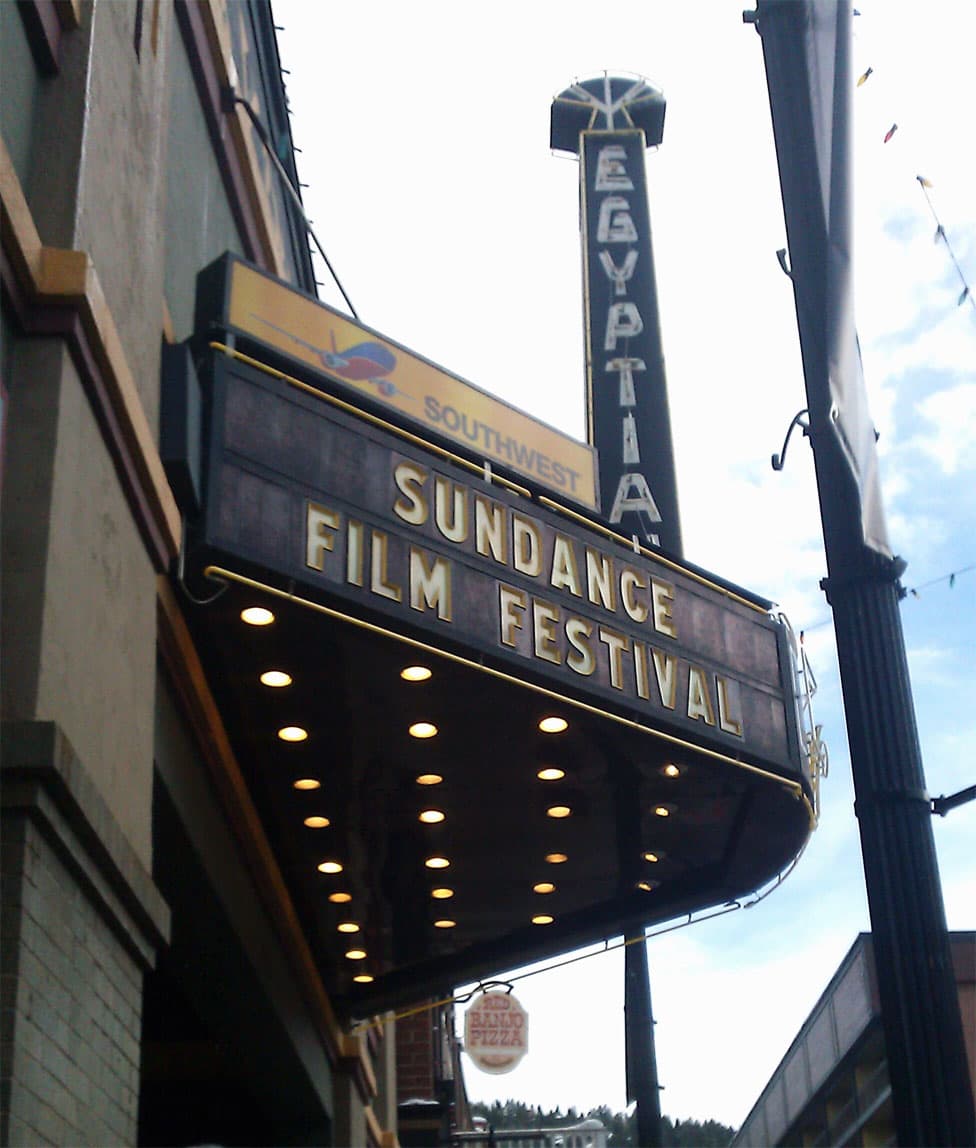

For more than forty years, one of the most recognizable names in world cinema was also the name of a canyon fifteen miles from downtown Provo. That coincidence generated a permanent, low-grade confusion — visitors booking Utah County hotels for a Summit County festival, people arriving at a ski resort in January looking for premieres — and it also gave this valley a strange kind of borrowed fame.
The borrowing is over. The Sundance Film Festival held its final Utah edition in early 2026 and moves to Boulder, Colorado. What follows is what happened, what it means, and the part of the story that is not going anywhere.
What was decided, and when
On 27 March 2025, the Sundance Institute's board announced that the festival would relocate to Boulder, Colorado, beginning with the 2027 edition. The agreement with Boulder runs ten years.
The final Park City festival ran 22 January to 1 February 2026.
Three cities made the shortlist: Boulder, Cincinnati, and a Salt Lake City bid that would have retained a presence in Park City. The search had been running publicly since 2023, timed against the expiration of the festival's existing contract.
Institute leadership framed the choice in terms of fit — Boulder as a college town, a tech town, an arts town and a mountain town, with a population near 100,000 that gave the festival room it no longer had. Utah's governor said publicly that Utah had wanted the festival to stay and that Sundance would come to regret leaving.
The two arguments: capacity and money
Organizers made a capacity case first. Park City is small. The festival had grown into one of the largest film events in North America, and the town could not supply the theater count or the affordable housing that scale required. Anyone who has tried to find a January bed within thirty miles of Park City understands the housing half of that argument without needing it explained.
Then there is the money, which is where the numbers get pointed. Colorado and Boulder assembled a package reported at roughly $34 million in tax credits over ten years. Utah's support was reported in the range of $1.3 million to $2 million per year — which, taken over a comparable decade, lands in broadly similar territory, though the structures and the certainty attached to them were not equivalent.
It would be tidy to say the festival was simply bought. It would also be too simple. Utah made a competitive offer and lost on a bundle of factors in which incentives were one input alongside venue capacity, lodging costs, airport access and a genuine institutional appetite for a fresh start. What is fair to say is that a festival citing a capacity problem chose a city more than three times Park City's size, and a state that put a large number on the table.
Where the festival came from
The origin story is more Utah than the Park City association suggests, and less Redford than most people assume.
The festival began in Salt Lake City in 1978 as the Utah/US Film Festival, created in significant part as an economic development effort — an attempt to draw filmmakers and film money into the state. It moved to Park City in the early 1980s on the logic that a winter date in a ski town would pull attendance that a summer date in Salt Lake could not.
Robert Redford founded the Sundance Institute in 1981, at his resort in Provo Canyon, as a workshop program for developing filmmakers. The institute took over the festival's operation in the mid-1980s, and the event eventually took the Sundance name — borrowed from the character Redford played in Butch Cassidy and the Sundance Kid, which he had also given to the canyon.
So the sequence runs: a Salt Lake economic development festival, relocated to a ski town for the calendar, absorbed by a Provo Canyon institute, renamed after a film character. The festival that became synonymous with Park City was not born there and was not originally called Sundance.
What Park City got, and what it lost
For four decades the festival gave Park City ten days that reorganized the town. Main Street became a venue. The Egyptian Theatre became a landmark to people who had never skied. Films that redirected American cinema — the independent wave of the late 1980s through the 2000s — premiered in a town of a few thousand permanent residents.
The economic effect was concentrated and real: hotel rates, restaurant volume, short-term rentals, seasonal hiring, and a burst of national coverage in the depth of the ski season.
It was never universally loved. Locals contended with closed streets, unaffordable January, and an event whose scale outgrew the place hosting it. Some of the same crowding that made Park City businesses money is what organizers eventually cited as the reason to leave.
Utah Valley's stake was always thinner and more indirect — overflow lodging, Salt Lake screenings within driving range, and the reputational oddity of an internationally famous festival carrying a Utah County place name. Our guide to Park City from Provo covers the drive and what the town is like outside festival season, which is now the only season it has.
The disambiguation that this valley needs most
Here is the thing worth being explicit about, because search engines have never handled it well.
The Sundance Film Festival and Sundance Mountain Resort are two different things.
The festival was an event held mainly in Park City, Summit County. The resort is a ski and summer resort in Provo Canyon, Utah County, about fourteen miles up the canyon from Provo. They share a name and a founder. They do not share an owner, a location, a season or a fate.
The festival has left Utah. The resort has not moved, is not moving, and had a strong claim to the name first — Redford bought the land and renamed the ski area long before the festival adopted the word.
Our Sundance Mountain Resort guide covers the resort as it operates today, including its ownership and recent expansion.
Redford, the resort, and what he did with the land
Robert Redford first saw the canyon as a young man driving a back route home from college, turned up a side road, and could not shake it. He bought a two-acre parcel, and over the following years acquired the small ski area then called Timp Haven, relaunching it as Sundance at the end of the 1960s.
What he then did with it is the part of the story that outlasts the festival. Rather than developing the canyon to its limit, Redford placed more than 1,400 acres into conservation easement with Utah Open Lands, including the 864-acre Redford Family Nature and Wildlife Preserve and the 316-acre Elk Meadows Preserve, which covers the hiking corridor from the Aspen Grove trailhead toward Stewart Falls. His own summary of the approach was to develop a little and conserve a great deal.
In 2020 he sold the resort — roughly 2,600 acres by then, with most of the surrounding land already protected — to Broadreach Capital Partners and Cedar Capital Partners. He had stepped down as president of the Sundance Institute the year before.
He died at his home at Sundance on 16 September 2025, aged 89, about six months after the Boulder announcement and a few months before the last Park City festival.
The easements do not expire when a festival relocates. Anyone hiking to Stewart Falls is walking through the part of this story that was designed to be permanent.
The Utah Valley film Sundance made
If you want one story that ties this valley to the festival directly rather than by geography, it is this one.
In 2002, a student in the BYU film program named Jared Hess made a black-and-white short called Peluca. It starred another BYU student, Jon Heder, as a deadpan, perpetually exasperated teenager in rural Idaho. Hess later described making it mostly to get the idea out of his system, and expected that to be the end of it.
Instead he and Jerusha Hess — his wife, co-writer and, on the eventual feature, costume designer, and also a BYU film graduate — spent the following year expanding the short into a feature script. They shot it in 22 days in the summer of 2003 in Preston, Idaho, where Hess grew up. Jerusha assembled the film's now-iconic wardrobe by working her way through Deseret Industries thrift stores between Provo and Idaho Falls.
Napoleon Dynamite premiered in dramatic competition at the 2004 Sundance Film Festival on 17 January, and became the breakout of that year. Fox Searchlight acquired it, and it went on to gross roughly $46 million worldwide.
Two figures in this story are disputed and worth flagging rather than smoothing over. The production budget is usually reported as $400,000, but Jared Hess has himself said $200,000 in more recent interviews. The acquisition price has been reported both as around $3 million and as nearly $5 million. Either version describes the same outcome — a student-short-turned-feature made outside the studio system returning many times its cost — but the specific numbers do not agree across sources and this page is not going to pick one.
The point for Utah Valley is structural rather than sentimental. A BYU student film became a national comedy through a festival ninety minutes up the road. That pathway — local film school, Utah crew, Utah festival, national distribution — is the thing that changes when the festival leaves. The Hesses have said publicly that having the festival in their backyard was an enormous advantage, and expressed real regret about the move.
What the labs were, and why they were in Provo Canyon
The festival is the visible half of the Sundance Institute. The half that lived in Utah County was the labs.
Beginning in the early 1980s at the resort, the institute ran residential workshops where selected filmmakers developed projects with experienced writers, directors and editors as advisers — the Directors Lab, the Screenwriters Lab and, later, programs for documentary, theater, music and episodic work. Participants stayed on the mountain, shot scenes, and reworked them with feedback, away from any commercial pressure.
The design was deliberate. The remoteness was the feature: a canyon at the end of a road is a place where a first-time director can fail at a scene repeatedly without an audience or a financier watching. A great deal of what the festival later premiered had passed through those cabins first.
This is why the resort's role in the story is substantive rather than just naming rights. Park City hosted the showcase. Provo Canyon hosted the development.
Why size, not popularity, was the constraint
It is worth being precise about the capacity argument, because "it outgrew the town" sounds like a euphemism and mostly is not one.
A film festival's hard limit is screens multiplied by slots. A feature runs roughly two hours; add turnover, introductions and a question-and-answer session, and a single screen delivers perhaps five or six screenings a day. Multiply by the number of usable theaters and by the number of festival days, and you have a fixed ceiling on how many films can be shown and how many tickets exist. Everything else — the parties, the industry meetings, the acquisitions market — is layered on top of that arithmetic.
Park City's theater inventory could not grow. The town's permanent population is small, its historic Main Street is fixed in size, and its lodging stock is largely committed to ski season pricing. A festival that keeps adding films, attendees and industry attention against a constant screen count eventually rations by price, and January in Park City became one of the more expensive weeks in American travel.
Boulder does not solve this permanently either. It buys headroom — more theaters, a university with venues, a larger accommodation base, and a bigger city to absorb the overflow. Headroom is not the same as a different model, which is the thing worth watching over the next decade.
What the departure changes for Utah Valley
Less than the headlines imply, and in a specific direction.
Utah County was never the festival's host. It did not run screenings at scale, it did not get the January hotel surge, and it did not build an economy around ten days in Park City. What it had was proximity and a shared name, and it will keep the name.
The practical changes are modest. January lodging demand across the northern half of the state loosens. The reflexive national association between "Sundance" and "Utah" fades over a decade. And the resort in Provo Canyon becomes, by simple elimination, the only major thing in the state carrying that name — which may finally resolve the confusion that four decades of coexistence never did.
There is also a quieter loss worth naming. The festival was one of the few things that regularly brought international attention to Utah for something other than skiing, national parks or religion. Utah's film industry — crews, equipment houses, location services — built real capacity partly on that gravity. That capacity does not vanish, but it loses an anchor.
What Colorado is betting on, and what could go wrong
Boulder is getting a genuine prize and a genuine problem.
The prize is obvious: an internationally known festival, ten days of global coverage, and a cultural asset that money alone does not usually buy.
The problem is that the festival's difficulties were not entirely about Park City. Independent film has had a hard decade — a pandemic that closed theaters, a distribution model reorganized around streaming, and a stretch of festivals that produced fewer breakout acquisitions than the 1990s trained everyone to expect. A larger town with more theaters solves a logistics problem. It does not by itself solve a business one.
Boulder also inherits the thing Park City complained about. A city of 100,000 hosting an event of this size in winter will discover its own version of unaffordable January.
The industry underneath the festival
One more thing changes, and it is the part that shows up in employment rather than in headlines.
Utah has a working film production sector — crews, grips, gaffers, camera operators, equipment rental houses, location scouts, post-production facilities — built over decades on a combination of landscape, a state incentive program, and proximity to a festival that made the state legible to the industry. That sector is not the festival, and it does not pack up when the festival does.
But an anchor event does something specific for a regional industry: it brings decision-makers physically into the state every year. Producers, acquisitions executives and financiers who came for ten days in January met local crews, saw local locations, and formed the habit of thinking of Utah as a place where a film gets made rather than only a place where one gets shown. That habit is not replaced by a tax credit.
The valley's own film infrastructure is smaller and more specific — a BYU program that has produced working directors, a cluster of commercial and corporate video work attached to the local tech and direct-sales economy, and a steady trade in wedding and event videography. That work continues regardless. What thins out is the ladder from a student short to a national release, which for two decades ran through a festival an hour and a half away.
The honest summary
Sundance was a Utah institution for over forty years, it was born in Salt Lake City rather than Park City, it took its name from a canyon in Utah County, and it has now gone to Colorado for reasons that were partly about capacity and partly about money.
What stays here is the canyon, the resort, the conservation easements, and a name that this valley has an older claim to than the festival ever did. For the rest of what Utah Valley does in winter, our guides to skiing near Provo and winter activities cover the season the festival used to interrupt.
Related Guides
- The Wasatch Front's Big Annual Events From Provo: The Calendar Utah Valley Keeps Missing
- Movies and TV Filmed in Utah Valley
Frequently Asked Questions
Has the Sundance Film Festival left Utah for good?
Why did Sundance leave Park City?
Is Sundance Mountain Resort in Provo Canyon closing too?
Was the Sundance Film Festival ever held in Provo Canyon?
Where did the Sundance Film Festival start?
What did the festival mean to Utah's economy?
Did Robert Redford see the move happen?
Can you still visit anything Sundance-related in Utah Valley?
Sources
The facts in this guide were checked against these sources. Hours, fees and rules change, so confirm anything time-sensitive with the source before you go. How we make Provo.com.
- Boulder, Colorado Named New Host of Sundance Film Festival Beginning in 2027, Colorado Office of Economic Development and International Trade. Checked October 12, 2026.
- Film Festival Tax Credit, Colorado Office of Economic Development and International Trade. Checked October 12, 2026.
- Colorado, It's Showtime! Governor Polis Signs Film Festival Tax Credit Bill Into Law, Office of Colorado Governor Jared Polis. Checked October 12, 2026.